The Arrest
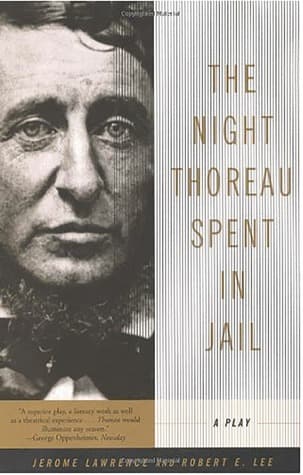
The play starts with Henry David Thoreau, a young philosopher and naturalist, being arrested by Sam Staples, the local tax collector and constable, for refusing to pay his poll tax. It is July 1846 in Concord, Massachusetts. Thoreau, discussing government and individual conscience with his mentor, Ralph Waldo Emerson, is taken to the Concord jail. His refusal is a protest against the Mexican-American War and slavery, which he believes his tax money would support. Emerson, though he agrees with Thoreau's ideas, believes in working within the system and is upset by Thoreau's act. Staples, while doing his job, shows some respect for Thoreau, recognizing his intelligence even if he disagrees with his methods.
A Night in Jail
Inside the jail, Thoreau is put in a cell with Bailey, a kind but uneducated man arrested for arson. Thoreau immediately talks to Bailey, trying to teach him and understand his view. He sees other prisoners, including a simple Irishman and a man named Williams, who cares more about practical things than principles. This night helps shape Thoreau's philosophy, as he deals with the real effects of his civil disobedience. He finds unexpected friendship and a chance to test his ideas against human experience, all while keeping his intellectual and moral stand against unfair laws.
Flashbacks to Walden Pond
Throughout the night, Thoreau thinks about his life at Walden Pond, shown in flashbacks. These scenes show him building his cabin, watching nature, and having deep talks with friends and family, especially his brother, John. These memories show his commitment to living a simple, self-sufficient life, free from society's expectations and material things. He remembers the joy of learning and his strong connection with nature. These flashbacks explain the philosophical basis of his protest, emphasizing his belief in individual truth and living intentionally.
The Influence of John Thoreau
A large part of Thoreau's flashbacks focuses on his relationship with his brother, John. Their intellectual and spiritual bond is clear, as they share dreams of opening a school and discuss deep philosophical questions. John's early death from tetanus greatly affects Henry, shaping his view of the world and making him more committed to living a life of purpose and honesty. The memory of John always reminds him of how short life is and how important it is to stick to one's principles. Their shared experiences, especially their decision to refuse to pay the church tax, hint at Henry's later act of civil disobedience.
The Schoolhouse Incident
One important flashback shows Henry and John as teachers. They started a progressive school where they used new teaching methods, valuing discussion and understanding over memorization and physical punishment. However, their refusal to use physical discipline, like whipping, on their students, as was common then, leads to a conflict with the school board. This principled stand, shared by both brothers, forces them to resign. This event further strengthens Henry's belief in the importance of individual conscience and his willingness to defy unfair authority, preparing him for his later civil disobedience.
Emerson's Visit
Ralph Waldo Emerson visits Thoreau in jail, showing concern and trying to understand Henry's reasons. Their talk is a rich philosophical debate about freedom, responsibility, and the individual's role in society. Emerson asks, famously, 'Henry, what are you doing in there?' to which Thoreau replies, 'Waldo, what are you doing out there?' This exchange shows their different ways of approaching social change. Emerson believes in intellectual influence and slow reform, while Thoreau wants direct action and moral purity. Despite their disagreements, there is deep mutual respect between them, showing the intellectual excitement of the Transcendentalist movement.
Lydian's Concern
Lydian Emerson, Ralph Waldo Emerson's wife, also visits Thoreau, bringing him food and showing real concern for him. She represents a more practical and caring view, worried about the real effects of Thoreau's actions. While she admires his spirit, she also fears for his future and how his defiance might affect his life and reputation. Her visit adds human warmth and concern to the strict jail setting, emphasizing the personal cost of Thoreau's principles. She tries to persuade him to compromise, but Thoreau remains firm in his beliefs.
The Unexpected Release
To Thoreau's surprise and slight annoyance, he is released from jail the next morning. His aunt, or another anonymous person, has paid his poll tax. This act, while freeing him, also frustrates him, as it weakens the full impact of his protest. He wanted to continue his stand, to show the state's powerlessness against a truly principled individual. His release highlights the tension between individual will and societal intervention, and the difficulty of maintaining a pure protest when well-meaning people interfere. He returns to Walden Pond, his resolve unchanged.
Legacy and Influence
The play ends by emphasizing the lasting impact of Thoreau's night in jail and his essay, 'Civil Disobedience.' Although his immediate protest was cut short, his ideas would greatly influence future generations of activists, including Mahatma Gandhi and Martin Luther King Jr. The final scenes and narration suggest that while Thoreau's act might have seemed small and ineffective at the time, its philosophical meaning grew. The play shows the power of individual conscience to make change, even if the impact is not immediate or directly seen by the protester, establishing his place as a pioneer of nonviolent resistance.
The Power of One
Throughout his time in jail and his thoughts afterward, Thoreau's core belief in the power of the individual conscience against an unfair state is strengthened. He argues that true freedom comes from following one's moral compass, even if it means breaking the law. His interactions with other inmates, his mentor Emerson, and his own memories all contribute to a deeper understanding of his commitment. He recognizes that while his act may seem small, it is a necessary step toward a more just society, where individuals are not just parts of a government machine but moral agents responsible for their own actions and the actions of their government.