“Life is a strange thing. One day you're a human being, and the next you're a number.”
— The narrator reflects on the dehumanizing experience of being a refugee.

Erich Maria Remarque (1961)
Genre
Historical Fiction
Reading Time
360 min
Key Themes
See below
Sign in to track this book
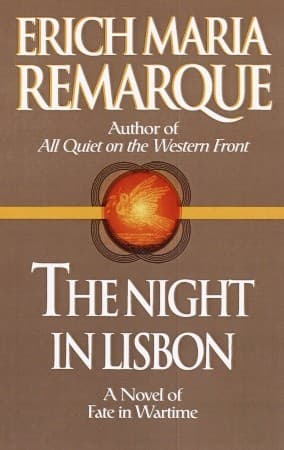
In Nazi-occupied Europe, a desperate refugee in Lisbon gets passage to freedom from a mysterious stranger, in exchange for an all-night confession of love, loss, and the will to survive.
In 1942, in Lisbon, a young, anonymous Austrian refugee, who has spent years avoiding the Gestapo across Europe, watches a ship bound for America with despair. He is penniless and stateless. A well-dressed stranger approaches him, offering two tickets for the ship, passage to the United States, and a large sum of money. The only condition is that the refugee must listen to his story, which he insists on telling that very night. The refugee, seeing no other option, agrees, and the two men go to a quiet bar, beginning a long night of confession that will reveal the stranger's past.
The stranger introduces himself as Josef Schwarz (though this is not his real name, which he keeps secret for much of the story). He begins his story from the early days of Nazi Germany, describing his escape from a concentration camp in 1938. He recounts the realities of the camp and his journey across the border into Switzerland. This escape sets the stage for the relentless pursuit and constant fear that will define his life and the lives of countless others fleeing the Third Reich. His narration immediately shows the listener the dangers of the era.
Despite the danger and the certainty of re-arrest, Josef cannot bear to leave his wife, Helen, behind in Germany. He gets forged papers and, against all reason, returns to Nazi territory. His love for Helen is his only motivation, overriding his instinct for self-preservation. This act of devotion highlights the central theme of love's power in the face of adversity, and sets the stage for their struggle to survive together, constantly hunted.
Josef and Helen begin a journey across war-torn Europe, constantly moving from one country to another, always one step ahead of the Gestapo. They live under assumed names, facing daily uncertainty, poverty, and the threat of discovery. Their journey takes them through Switzerland, France, Spain, and Portugal, each border crossing a new challenge, each temporary refuge a precarious illusion. Their love becomes their only constant amidst the chaos, a fragile but powerful shield against despair as they witness the horrors of war.
For a time, Josef and Helen find some peace in Paris, living under false identities and trying to build a normal life. They experience moments of joy and normalcy, hoping the war will not reach them there. However, this peace is shattered with the swift invasion of France by the German army. The fall of Paris forces them back into flight, showing the relentless nature of the persecution and the shrinking safe havens in Europe.
As they make their way through Spain, Helen's health begins to decline. The physical and emotional strain of years on the run, coupled with constant fear and lack of proper care, takes a heavy toll. Her illness adds another difficulty to their journey, forcing Josef to make agonizing choices and testing his endurance and devotion. This period highlights the human cost of war and displacement, beyond direct combat.
Josef and Helen finally arrive in Lisbon, the last port of escape from Europe. However, their arrival does not end their struggles. They face the challenge of securing passage to America, which requires large sums of money and rare visas. Lisbon, while a haven, is also a place of desperate refugees, black markets, and bureaucratic hurdles. Josef works tirelessly, navigating this complex world, trying to secure their future, all while Helen's health worsens, casting a shadow over their potential freedom.
One night, after years of hiding her true condition, Helen reveals to Josef the truth: she is suffering from an incurable illness, likely cancer, and has little time left. She had kept it secret to spare him worry and to maintain their hope for escape. This revelation shatters Josef, forcing him to confront heartbreak after all their struggles. It shifts the entire purpose of their journey, making their escape less about a shared future and more about fulfilling Helen's last wish.
Helen's condition quickly worsens. In her final days, she makes a request of Josef: she asks him to leave her behind in Lisbon and take the available passage to America alone. She does not want him to witness her death or be burdened by her memory in a way that prevents his own survival. This act of self-sacrifice shows her love and her desire for Josef to live, even if it means doing so without her. Josef struggles with this request, torn between his love and her desperate wish.
Despite Josef's attempts to keep her alive, Helen dies. Her death leaves Josef devastated, his reason for enduring years of hardship suddenly gone. He is left with the tickets for America, a symbol of a future they can no longer share. The weight of her loss, combined with the years of fear and uncertainty, pushes him to despair. He grapples with the meaning of his survival without her, feeling an immense void in his life.
As dawn approaches, Josef finishes his story, explaining to the young refugee why he has chosen him. He reveals that he has been looking for someone to take his place on the ship, someone who still has a life to live. He cannot go to America without Helen, and the thought of starting anew without her is unbearable. He sees in the young man a reflection of his past self, desperate and full of unfulfilled potential, and offers him the chance he no longer desires for himself, a final act of love and remembrance for Helen.
The young refugee, moved and understanding the sacrifice, accepts the tickets and the money. He prepares to board the ship, carrying not only his own hopes but also the weight of Josef and Helen's story. Josef, having unburdened himself, walks away into the Lisbon morning. The narrative suggests his ultimate fate is one of quiet despair, perhaps even suicide, though it is left ambiguous. He has given away his last chance at life, choosing instead to remain in the city where he lost everything, forever bound to Helen's memory.
The Protagonist
From a desperate fugitive driven by survival and love, Josef transforms into a man broken by loss, ultimately finding a final act of purpose in passing on his chance at life to another.
The Supporting Character
Helen's arc is one of unwavering love and quiet suffering, culminating in a selfless act that provides Josef with a path forward, even in his grief.
The Protagonist/Frame Narrator
From a desperate and hopeless refugee, he gains a profound understanding of human suffering and love, ultimately receiving a chance at a new life through another's sacrifice.
The Antagonist
The Gestapo's 'arc' is one of constant, unwavering threat, demonstrating the pervasive reach and inhumanity of the Nazi regime.
The Supporting Character
She remains a steadfast helper, symbolizing the resistance and kindness found even amidst war.
The Mentioned
They serve as static symbols of the systemic barriers to escape.
The Mentioned
Remains a symbol of the ultimate goal, not a character with an arc.
Love in the face of adversity is a central theme. Josef's struggle, his return to Germany, and years on the run are fueled by his love for Helen. Helen, in turn, sacrifices by concealing her illness and urging Josef to live without her. Their love transcends physical presence and guides Josef's final act of generosity towards the young refugee. The novel suggests that love, even in its tragic forms, can be a source of resilience and meaning.
“One day you will be free. And you will be free for both of us.”
The novel shows the psychological and physical toll of being a refugee. Josef and Helen lose their identity, home, and security, forced to live under false names, constantly moving, and facing the threat of deportation or death. This constant fear leads to trauma, evident in Josef's despair and Helen's suffering. The narrative highlights the dehumanizing effects of being 'stateless,' an individual without rights or a place, and the yearning for a safe haven.
“To be a refugee is to be nobody. To have no name, no country, no future.”
Josef recounting his story to the young refugee is not just a transaction for tickets; it is an act of catharsis and a way to ensure Helen's memory lives on. By sharing his experiences, Josef processes his trauma and gives meaning to his suffering. For the refugee, listening to the story is a way to understand the sacrifices made by others. Storytelling becomes a tool for emotional survival, a way to witness history, and to pass on the lessons and legacies of the past.
“One can live without hope, but not without meaning.”
Hope is a flickering, often deceptive, light throughout the novel. Josef and Helen cling to the hope of freedom and a new life in America, which sustains them through years of hardship. However, this hope is challenged by the Gestapo, the realities of war, and Helen's terminal illness. The novel explores how hope can be both a motivator and a source of anguish when it is crushed. Josef's despair after Helen's death shows the impact of shattered hope, leading him to abandon his own chance at survival.
“Hope is a trick of the imagination, a mirage in the desert of despair.”
A story within a story, with the refugee's present framing Josef's past.
The novel employs a frame narrative structure, where the anonymous young refugee's desperate situation in Lisbon in 1942 frames the much longer, more detailed story told by Josef Schwarz. This device allows Remarque to present a personal, intimate account of war and persecution through Josef's voice, while the outer frame provides a sense of immediate tension and illustrates the widespread impact of the conflict. It also creates a powerful sense of an unfolding confession, drawing the reader directly into the emotional core of Josef's experiences.
The use of an anonymous narrator to universalize the refugee experience.
By leaving the primary narrator (the young refugee) unnamed, Remarque universalizes his experience. He becomes an everyman figure, representing the countless nameless individuals displaced and suffering during World War II. This anonymity allows readers to project themselves onto him, making his desperate situation and his profound reaction to Josef's story more relatable. It emphasizes that Josef's tale is not just one man's tragedy, but a reflection of the collective trauma of an entire generation of refugees, enhancing the novel's thematic weight.
A powerful symbol of freedom, hope, and ultimate sacrifice.
The two tickets for passage to America serve as a central symbolic device. Initially, they represent the ultimate goal of freedom, safety, and a new life for Josef and Helen. They are the tangible manifestation of their years of struggle and hope. However, after Helen's death, the tickets transform into a symbol of Josef's profound loss and his inability to move on. His act of giving them away to the young refugee signifies his ultimate sacrifice, turning them into a symbol of bequeathed hope and the continuation of life, even if not his own. They embody the novel's core themes of hope, despair, and selfless love.
A liminal space representing both a last chance and a dead end.
Lisbon functions as a crucial plot device and symbolic setting. As a neutral port during WWII, it represents the last gateway to freedom from Nazi-occupied Europe, a beacon of hope for countless refugees. Yet, it is also a place of immense desperation, bureaucratic hurdles, and the black market, a 'dead end' for those who cannot secure passage. For Josef, Lisbon becomes the city where his hope for a shared future with Helen finally dies. It is a liminal space, poised between the horrors of the past and the uncertainty of the future, embodying both potential salvation and ultimate despair.
“Life is a strange thing. One day you're a human being, and the next you're a number.”
— The narrator reflects on the dehumanizing experience of being a refugee.
“Only the unhappy remember the past with such terrible clarity.”
— The narrator observes the tendency of those suffering to dwell on what they have lost.
“Hope is the most treacherous of all human gifts.”
— Josef reflects on the false promises and disappointments that hope can bring in dire situations.
“A man's worth is not in his possessions, but in his courage and his heart.”
— The narrator considers the true measure of a man in the face of adversity and loss.
“The dead are the only ones who can truly rest.”
— A somber reflection on the relentless struggle for survival and peace.
“Fear is a disease. It eats away at you, slowly, until there's nothing left.”
— The characters frequently grapple with the pervasive fear of capture and persecution.
“Love is not an anchor, it is a sail.”
— Josef speaks about the dynamic and often transient nature of love during wartime.
“One never knows what one is capable of until one is forced to do it.”
— Characters are often pushed to extreme measures for survival, revealing their hidden strengths.
“To forget is to betray.”
— A powerful statement about the importance of remembering the atrocities and sacrifices.
“The past is never dead. It's not even past.”
— The characters are constantly haunted by their past experiences and the ongoing war.
“We were not seeking happiness, but a brief respite from despair.”
— The narrator describes the modest aspirations of refugees, focused on momentary relief.
“Money is not everything, but it is a good deal of what is needed to survive.”
— The practical reality of needing funds for visas and escape is a constant concern.
“There are wounds that never show on the body, that are deeper and more hurtful than anything that bleeds.”
— The psychological scars of war and displacement are a recurring theme.
“Courage is not the absence of fear, but rather the judgment that something else is more important than fear.”
— Characters often act bravely despite their overwhelming fear for their lives.
Ready to see how well you understood this book? Take our interactive quiz with 10 questions.
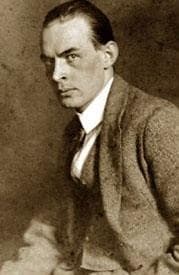
Erich Maria Remarque was a German-born novelist. His landmark novel All Quiet on the Western Front (1928), based on his experience in the Imperial German Army during World War I, was an international bestseller which created a new literary genre, and was adapted to film several times. Remarque's anti-war themes led to his condemnation by Nazi propaganda minister Joseph Goebbels as "unpatriotic". He was able to use his literary success to relocate to Switzerland and the United States, where he became a naturalized citizen.







