“I am half Hindu, half Muslim. I am a whole person.”
— Nisha reflects on her identity during the Partition of India.

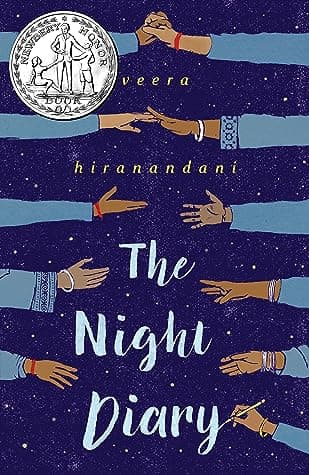
Veera Hiranandani (2018)
Genre
Children's / Historical Fiction / Young Adult
Reading Time
240 min
Key Themes
See below
Sign in to track this book
In 1947, during the partition of India, twelve-year-old Nisha, whose Muslim mother died at her birth, struggles with her identity and the loss of her home, writing her fears and hopes in a secret diary to her mother.
On her twelfth birthday in August 1947, Nisha gets a diary from her Papa. She decides to use it to write letters to her deceased Muslim mother. Nisha lives with her Hindu father (Papa), grandmother (Dadi), and twin brother Amil in Mirpur Khas, a city about to become part of Pakistan. Nisha feels a strong connection to her mother, who died giving birth to her and Amil. She often feels like an outsider because of her mixed heritage. She sees growing tension and rumors of partition, but her family first believes they will be safe. Nisha finds comfort cooking with Kazi, their Muslim cook. She values the familiar routines of their home, even as the political situation outside becomes more unstable.
News of India's partition and Pakistan's creation becomes official. Mirpur Khas is declared part of Pakistan. The peaceful community Nisha has known starts to break apart. Papa, a Hindu, realizes his family is no longer safe in their home. After much thought and hearing about increasing violence and forced conversions, Papa decides they must leave. This decision breaks Nisha's heart; she cannot understand why their home, full of memories of her mother and Kazi, is no longer theirs. She packs only a few things, including her diary, feeling the weight of an unknown future.
Nisha, Amil, Papa, and Dadi, with a few other Hindu families, begin their long walk towards the new India. Kazi, their loyal Muslim cook, helps them get ready and gives Nisha a small knife for protection. This gesture touches her deeply. The journey is hard right away, with hunger, thirst, and constant threats of violence. They walk for days under the hot sun, sleeping in fields or empty buildings. Nisha sees others' suffering, the fear in her family's eyes, and the harsh reality of being displaced. Amil, who is not as strong, struggles with the physical demands, and Nisha worries about him constantly.
After days of walking, the family finds temporary shelter in a small, crowded camp. Here, they feel a brief sense of community with other displaced people, sharing stories and small amounts of food. However, the rest does not last long. They see the brutality of the partition directly, hearing rumors of killings and seeing desperate people. Nisha's Papa tries to shield his children from the worst, but the fear is clear. Nisha holds onto her diary, finding comfort in writing to her mother, describing the horrors and her growing disappointment with the world. The family knows they cannot stay long and must continue their journey for a more lasting solution.
The family gets a spot on a crowded train going to Jodhpur. Conditions are terrible, with people packed tightly, suffering from heat, hunger, and sickness. During the journey, the train stops, and armed men attack, targeting passengers of a different religion. Nisha hides, terrified, and sees an old man murdered, a man who had offered them food earlier. This event affects Nisha deeply, making her lose more of her childhood innocence. Papa tries to protect them, but the image stays in Nisha's memory, showing the senseless violence of the partition.
Finally, the family arrives in Jodhpur, India, where Papa's cousin, Ashok, and his family take them in. It is a relief to be off the road, but their new living situation is not good. Ashok's house is already full of other relatives, and the family must share a small, cramped space. Nisha finds it hard to adjust to this new place, missing the privacy and familiarity of her old home. She feels like a burden and sees the quiet tensions among the relatives. Despite being physically safe, Nisha still feels a deep sense of loss and displacement, struggling to find her place in this new, temporary world.
In Jodhpur, Nisha continues to feel like an outsider. Her mixed heritage—half-Hindu, half-Muslim—makes her question where she belongs in a world so divided by religion. She hears conversations and feels unspoken judgment from some relatives. She misses Kazi, the Muslim cook, who represented a connection to her mother's heritage and a sense of home. Nisha thinks about what 'home' means and realizes it is not just a place but also the people and memories within it. Her diary becomes an even more important outlet, a safe space to explore her confused feelings and her changing understanding of her identity amid the chaos.
Despite the difficulties, Papa is determined to support his family. He eventually finds work as a pharmacist, a job he had to leave behind in Mirpur Khas. With his new income, Papa can rent a small apartment for the family, giving them much-needed privacy and independence from their relatives. This move is a big step towards rebuilding their lives. Nisha feels a bit of hope as they start to set up their new home, even though it is much smaller and simpler than their old one. The family begins a new routine, finding comfort in each other's presence.
While Nisha finds comfort in writing and observing, her twin brother Amil struggles more openly with the trauma of their displacement. He becomes withdrawn, often quiet, and finds it hard to engage with their new life. Nisha, who often feels less noticed than Amil's outgoing personality, now observes his pain and tries to understand it. She realizes that everyone deals with loss differently. She tries to connect with him, understanding his longing for their old life and his difficulty adapting. Their shared experience of loss, though shown differently, strengthens their twin bond, even as they deal with their individual grief.
Months pass, and the family slowly starts a new normal in their Jodhpur apartment. Dadi begins cooking again, filling their home with familiar smells. Nisha and Amil start attending a new school, carefully making new friends. The scars of the partition remain, and the memory of their old home is always there, but they find small moments of joy and connection. Nisha keeps writing in her diary, thinking about their journey, her mixed identity, and her family's strength. She realizes that while their home is gone, the love and connection within her family truly define her sense of belonging.
The Protagonist
Nisha transforms from a sheltered, somewhat naive girl into a resilient and self-aware individual who understands the complexities of identity and the enduring power of family. She learns to find home within herself and her loved ones.
The Supporting
Amil struggles to cope with the loss of his home and the trauma of the journey, eventually finding a new sense of stability and belonging in Jodhpur through the support of his family.
The Supporting
Papa endures immense loss and hardship but demonstrates unwavering strength and resourcefulness, successfully guiding his family to safety and providing them with a new home.
The Supporting
Dadi provides steadfast comfort and traditional wisdom to her family throughout their displacement, maintaining her resilience and helping to establish a sense of home in their new environment.
The Supporting
Kazi, initially a symbol of pre-Partition harmony and a mentor to Nisha, is forced to separate from the family, embodying the personal tragedy of the division.
The Mentioned
Though deceased, Mama's memory guides Nisha's journey of self-discovery and understanding of her mixed heritage.
The Supporting
Ashok provides crucial temporary refuge for Nisha's family, embodying the familial support network during the Partition.
Nisha's mixed Hindu-Muslim background is central to her search for identity during the Partition's religious divisions. She often feels like an outsider, not fully belonging to either community. Her diary entries explore what 'home' means and where she truly belongs, especially after losing her physical home. This theme appears in her longing for her Muslim mother and her connection to Kazi, who represents her lost Muslim heritage. As the story goes on, Nisha learns that identity is not just about religion or a place, but about family, memories, and personal values.
“Maybe home wasn't a place at all. Maybe it was an idea. A feeling.”
The entire story centers on the great loss Nisha and her family experience: the loss of their home, possessions, community, and peaceful way of life. Their move from Mirpur Khas to Jodhpur mirrors Nisha's emotional displacement. She grieves for the familiar smells, sounds, and routines of her old life. The journey itself reminds them of what they lost, forcing them to face hunger, fear, and the deaths of strangers. This theme explores how forced migration affects individuals and families long-term, and how hard it is to rebuild after such a break.
“How can a place just disappear? How can we be from nowhere?”
Despite great hardships and trauma, the family shows remarkable strength. Papa's determination to find work and a new home, Dadi's lasting spirit, and Nisha's ability to find comfort and process her experiences through writing all show this theme. Even in the worst times, they find small joys, share food, and support each other. Getting a new, simpler home in Jodhpur symbolizes their ability to adapt and rebuild. Nisha's continued writing in her diary, even as her world falls apart, is an act of hope and shows the human spirit's ability to last.
“I will make a new home inside of myself, with the parts of my old home I carry in my heart.”
The novel clearly shows how big political decisions, like the Partition of India, have terrible personal results. Nisha's family, like millions of others, is uprooted and traumatized by events they cannot control. The story points out the random nature of the division, which turned neighbors into enemies based on religion. The violence, fear, and forced migration are direct results of political change. Nisha's innocent view makes the tragedy more sad, as she struggles to understand why people who once lived peacefully together are now killing each other. The book reminds readers of the human cost of political conflict.
“It seems strange that a line on a map could make people into enemies.”
The entire story is told through Nisha's diary entries addressed to her deceased mother.
The novel is structured entirely as Nisha's diary entries, dated from August 1947 to August 1948. This epistolary format provides an intimate, first-person perspective on the Partition. It allows readers to directly access Nisha's thoughts, fears, and observations, making her experiences immediate and personal. The act of writing to her deceased mother serves as a coping mechanism for Nisha, a way to process trauma, maintain a connection to her past, and explore her identity. It also provides a unique, child's-eye view of a monumental historical event, filtering complex political realities through a lens of innocence and confusion.
Food represents comfort, cultural identity, and pre-Partition harmony.
Food and cooking are powerful symbols throughout the book. Before the Partition, cooking with Kazi, a Muslim, symbolizes the harmonious coexistence of religions and Nisha's connection to her Muslim mother's heritage. The shared act of preparing and eating food brings comfort and a sense of normalcy. During their journey, the scarcity of food highlights their desperation and vulnerability. When the family finally settles in Jodhpur and Dadi begins cooking again, it signifies a return to normalcy, the rebuilding of their lives, and the re-establishment of a 'home' through familiar cultural practices and comforting routines. It connects them to their past and anchors them in their present.
A small knife given by Kazi symbolizes protection, connection, and the harsh realities of the world.
Before the family leaves Mirpur Khas, Kazi gives Nisha a small knife for protection. This object holds multiple layers of symbolism. Initially, it represents Kazi's care and concern for Nisha, a tangible link to their bond and her Muslim heritage. As they journey, it becomes a symbol of the harsh, dangerous world they are forced to navigate, a tool for survival in a violent landscape. Nisha never uses it for its intended purpose, but its presence reminds her of the threat and the need for self-preservation, as well as the enduring connection to Kazi and the lost harmony he represents.
The deceased mother's absence serves as a constant motivation for Nisha's self-discovery and a symbol of lost unity.
Nisha's mother, Mama, is never physically present in the story, having died during childbirth. However, her absence is a central plot device, as Nisha's entire diary is addressed to her. This absence drives Nisha's quest for identity, as Mama was Muslim and Papa is Hindu, making Nisha's mixed heritage a significant theme. Mama's memory symbolizes the pre-Partition unity and the personal cost of the division. By writing to her, Nisha keeps her mother's memory alive, processes her grief, and attempts to understand a part of herself that was lost, ultimately finding a connection to both her parents' backgrounds.
“I am half Hindu, half Muslim. I am a whole person.”
— Nisha reflects on her identity during the Partition of India.
“Sometimes I think the world is divided into two kinds of people: those who leave and those who stay.”
— Nisha contemplates the choices people make during the migration.
“Home is not a place, it's the people you love.”
— Nisha realizes this after leaving her childhood home.
“Words are like seeds. They grow into something bigger.”
— Nisha writes in her diary about the power of writing.
“Fear is a heavy suitcase to carry.”
— Nisha describes the emotional burden of fleeing violence.
“We are all just stories in the end.”
— Nisha reflects on the importance of sharing experiences.
“The night is full of secrets, and so is my diary.”
— Nisha writes about the privacy of her nightly entries.
“Hope is a small, stubborn bird that refuses to stop singing.”
— Nisha finds hope amidst the hardships of the journey.
“Silence can be louder than words.”
— Nisha observes the unspoken tensions between communities.
“My heart is a map of all the places I've left behind.”
— Nisha expresses her longing for her lost home.
“Courage is not the absence of fear, but the decision to move forward anyway.”
— Nisha learns this from her family's journey to safety.
“Food tastes different when you're hungry for more than just a meal.”
— Nisha notes how basic needs take on deeper meaning during hardship.
“The stars don't care about borders.”
— Nisha looks at the sky, finding solace in nature's indifference to human divisions.
“A diary is a friend who listens without judging.”
— Nisha explains why she confides in her diary.
Ready to see how well you understood this book? Take our interactive quiz with 10 questions.

Dan Gemeinhart
4.5

Kate O'Hearn
4.4

Jeanne Birdsall
4.4

Jen Wang
4.4

Wendelin Van Draanen
4.3

John Marsden
4.3

Chris Van Allsburg
4.3
Jennifer A. Nielsen
4.2