“All you can do is not snitch. All you can do is not break. All you can do is not let them make you like them.”
— Elwood's internal resolve in the face of the Nickel Academy's abuses.

Colson Whitehead (2019)
Genre
Literary Fiction / Historical Fiction
Reading Time
240 min
Key Themes
See below
Sign in to track this book
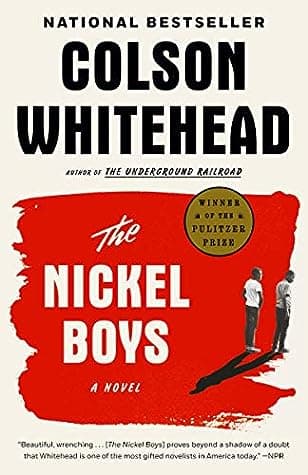
In Jim Crow-era Florida, two black boys forge a desperate friendship within a brutal reform school, their clashing ideals and cynicism leading to a decision that will ripple through their lives for decades.
Elwood Curtis grows up in Tallahassee, Florida, in the early 1960s, influenced by the speeches of Martin Luther King Jr. and committed to non-violence and striving for greatness. He works at a local dry cleaner and plans to attend college. One day, while hitchhiking to take an exam, he accepts a ride from a Black man who, unknown to Elwood, has stolen the car. They are pulled over, and despite Elwood’s innocence, he is unjustly convicted and sentenced to the Nickel Academy, a notorious juvenile reformatory for boys. His grandmother, Harriet, is devastated but powerless. Elwood arrives at Nickel, clutching a copy of King's speeches, his ideals about justice and progress about to be tested by the harsh reality of the institution.
Upon arrival at Nickel, Elwood immediately sees its brutal hierarchy and systemic abuse. He is assigned to the 'colored' dorm, where he meets fellow inmates like Turner, a cynical and street-smart boy, and Desmond, who warns him about the 'White House.' Elwood witnesses daily beatings, sexual abuse, and the constant threat of violence from staff and older boys. He learns about the 'White House,' a secluded building where boys are taken for severe, often life-threatening, whippings by Superintendent Spencer and other staff. His initial idealism clashes with the grim reality, and he struggles to reconcile King's teachings with the injustice he faces. He also learns about the system of 'big boys' and 'little boys,' where older inmates control younger ones.
Elwood's sense of justice leads him to try and intervene when he sees another boy, Corey, being unfairly beaten by a staff member. His attempt to report the injustice results in him being taken to the 'White House.' There, he endures a horrific beating with a leather strap, administered by Superintendent Spencer. The experience is agonizing and humiliating, leaving him physically scarred and deeply shaken. This event shatters much of his remaining innocence about the system, making him confront the powerlessness of the boys and the arbitrary cruelty of the staff. Turner later provides him with salve for his wounds, subtly showing his care.
Turner, having been at Nickel longer, tries to show Elwood the need for pragmatism and self-preservation. He advises Elwood to keep his head down, avoid drawing attention, and understand that the world is 'crooked.' Turner believes that survival at Nickel means navigating the system, not fighting it. Despite Turner's warnings, Elwood continues to believe in the possibility of justice and reform. He finds solace in the limited educational materials available and tries to maintain his dignity. He also starts working in the kitchen, a relatively safer assignment, but even there, he witnesses the pervasive corruption, such as staff stealing food meant for the boys.
The Nickel Academy hosts regular boxing matches, which are often rigged and serve as entertainment for the staff and local dignitaries. Boys are forced to fight each other, sometimes against much larger opponents. During one such event, a large, strong boy named Black Mike is forced to fight. He is severely beaten and later dies from his injuries. The staff quickly covers up the death, attributing it to a pre-existing condition, and buries him in the 'secret graveyard' on the Nickel grounds. This event further confirms Elwood's understanding of how disposable the boys' lives are at Nickel and how the staff acts without punishment, deepening his resolve to expose the truth.
Inspired by his idealism and the injustice he witnesses, particularly the death of Black Mike, Elwood decides to write a letter to the NAACP detailing the abuses at Nickel Academy. He entrusts the letter to a visiting inspector, hoping it will bring external scrutiny. However, the letter is intercepted by the Nickel staff. Superintendent Spencer, enraged, plans to take Elwood to the White House for another severe beating, likely intending to kill him. Knowing his life is in danger, Turner convinces Elwood that they must escape. They meticulously plan their escape, knowing the immense risks.
Under the cover of darkness, Elwood and Turner execute their escape plan, making their way through the grounds of Nickel. They are pursued by the staff, who are armed and intent on preventing their escape. As they approach the perimeter, the Nickel staff corners them. In an act of self-preservation and friendship, Turner pushes Elwood forward, sacrificing himself to draw the guards' attention. Turner is shot and killed by the Nickel staff, ensuring Elwood's escape. Elwood, heartbroken and traumatized, manages to get away, leaving the horrors of Nickel behind, but carrying the heavy burden of Turner's death.
After his escape, Elwood makes his way north, eventually settling in New York City under a new identity. He works various jobs, attends night school, and eventually builds a successful moving business. He marries, though his marriage eventually ends, partly due to his inability to fully open up about his past. The trauma of Nickel and the memory of Turner's sacrifice continue to haunt him, manifesting in nightmares and a deep-seated caution. He avoids any situation that reminds him of his time at the academy, never speaking about it to anyone, effectively burying his past to survive in the present. He lives a quiet, industrious life, always looking over his shoulder.
Decades later, in the early 2000s, news reports begin to surface about the discovery of a secret graveyard on the grounds of the former Nickel Academy. Archeologists and investigators uncover the remains of dozens of boys, confirming long-whispered rumors of abuse, murder, and cover-ups. The revelation sends shockwaves through the community and ignites a public outcry. Survivors of Nickel begin to come forward, sharing their stories and seeking justice. This news deeply affects Elwood, forcing him to confront the buried memories of his past and the injustices he and his fellow inmates suffered. He follows the news closely, experiencing a mix of validation and renewed pain.
Elwood, now an old man, decides to attend a gathering of Nickel Academy survivors in Florida. He feels compelled to bear witness and perhaps find some closure. At the event, he sees an old man, a former Nickel boy named Jack, who recognizes him. Jack mentions 'Turner,' and Elwood realizes that Jack believes *he* is Turner. It is then that the devastating truth is revealed: the man who escaped Nickel and built a new life was not Elwood Curtis, but Turner, who had taken Elwood's name and identity to ensure his survival, honoring his friend's sacrifice. Elwood Curtis was the boy who was shot and killed during the escape attempt, an act Turner perpetuated to give Elwood a chance at a real life.
The Protagonist
From naive idealism to a profound understanding of systemic evil, leading to his ultimate sacrifice, which is then revealed to be the foundation for Turner's survival.
The Co-protagonist and true survivor
From cynical survivor to a protector and ultimately a man living under a false identity, haunted by the past and the sacrifice of his friend.
The Antagonist
Remains a consistently cruel and unrepentant figure, facing no immediate consequences for his actions within the story's timeline.
The Supporting
A consistent source of unconditional love and stability for Elwood, her hope for his future is tragically dashed.
The Supporting
A static character who represents the decency and fairness Elwood finds in the outside world.
The Supporting
A tragic figure whose vulnerability and suffering demonstrate the depths of Nickel's depravity.
The Supporting
A static character who serves as an initial guide to the harsh realities of Nickel.
The Supporting
A consistently cruel figure, representing the everyday enforcers of Nickel's abuse.
The Mentioned
A symbol of the many lost lives at Nickel, his fate is a grim foreshadowing of the academy's true nature.
The novel powerfully exposes the pervasive injustice and systemic racism in American society, particularly in the Jim Crow South. Elwood's wrongful conviction and incarceration at the Nickel Academy show how the legal system was used against Black individuals. The academy itself, with its segregated dorms and disproportionate brutality against Black boys, is a small example of racist societal structures. Even the 'reform' aspect is a cruel joke, as the institution perpetuates violence rather than rehabilitation, particularly against those deemed 'undesirable' by a racist society. The discovery of the secret graveyard decades later confirms the historical cover-up of these atrocities, revealing how institutions were designed to harm and silence marginalized communities.
““They were good Negroes, that was the point. They were not going to make any trouble, not with their lives or their deaths.””
A central tension in the novel is the clash between Elwood's idealism, inspired by Martin Luther King Jr.'s teachings of non-violence and justice, and Turner's cynical pragmatism, born from a lifetime of navigating a 'crooked' world. Elwood believes in fighting for what's right, even at great personal cost, as seen in his attempt to expose Nickel's abuses. Turner, conversely, prioritizes survival through adaptation, caution, and avoiding confrontation. This struggle plays out in their friendship and ultimately culminates in Turner's act of taking Elwood's identity, a pragmatic choice to survive that is also an act of tragic loyalty. The book questions whether idealism can truly survive in the face of overwhelming evil, or if compromise and adaptation are the only paths.
““The outside world was crooked. It was bent, and you had to learn how to bend with it.””
Identity is a fluid and contested concept in the novel, particularly highlighted by the shocking twist that the 'Elwood' who escapes Nickel and lives a long life is actually Turner. This reveals how trauma can force individuals to shed their original identities to survive, and how the memory of the past can shape, or distort, who one becomes. The boys at Nickel are stripped of their names, dignity, and sense of self, becoming mere 'Nickel Boys.' The later discovery of the secret graveyard forces survivors to confront their buried memories and reclaim their identities, while Turner's assumption of Elwood's identity is an act of both survival and a memorialization of his lost friend, blurring the lines between who they were and who they became.
““He had been Elwood for fifty years. Had married, had worked, had bought a house, had paid his taxes, had voted, had lived. He was Elwood. But he was also Turner.””
The Nickel Academy is a stark illustration of how unchecked power can corrupt individuals and institutions. Superintendent Spencer and his staff have absolute authority over vulnerable boys, leading to systemic abuse, violence, and murder. The power dynamic is racialized, but the book shows how power itself, when unaccountable, inevitably leads to cruelty. The institution's ability to operate for decades, covering up its atrocities, shows how power can manipulate narratives and evade justice. The novel suggests that the structure of the institution, designed to control and punish, inevitably causes corruption, turning those in authority into oppressors.
““The Nickel Academy was a system, and systems were impervious to the will of an individual.””
The novel explores how historical injustices and personal trauma leave lasting marks on individuals and society. The 'Nickel Boys' carry the psychological scars of their experiences for decades, leading to fractured relationships, nightmares, and an inability to fully integrate into society. The discovery of the secret graveyard brings a collective trauma to the surface, forcing the nation to confront a dark chapter of its past that had been suppressed. The story emphasizes that ignoring or burying history does not erase it, but rather allows its wounds to fester, impacting generations. For Turner, the burden of living as 'Elwood' is a constant reminder of the past and the sacrifices made.
““The past was an anchor, a stone in the gut. He could not escape it.””
Alternates between Elwood's time at Nickel and his later life in New York.
The narrative frequently shifts between Elwood's harrowing experiences at the Nickel Academy in the 1960s and his seemingly successful but haunted adult life in New York decades later. This device builds suspense, as the reader constantly wonders how the young, idealistic Elwood could have survived and what secrets he carries. It also allows Whitehead to explore the long-term psychological impact of trauma and the insidious nature of unresolved historical injustices, culminating in the shocking revelation that recontextualizes the entire 'future' narrative.
The name suggests value, but the institution devalues human life.
The name 'Nickel Academy' is deeply ironic. A 'nickel' is a small coin, suggesting something of little value, yet it's also a common, foundational part of currency. The institution, despite its name implying a place of value or even reform, instead strips boys of their worth, dignity, and lives. This irony highlights the hypocrisy of the system, which outwardly presents itself as a place of rehabilitation while secretly operating as a chamber of horrors. The name itself becomes a symbol of the discarded and devalued lives of the boys within its walls, who are treated as less than human.
A euphemism for the place of brutal beatings.
The 'White House' is a chilling euphemism for the secluded building on Nickel's grounds where boys are taken for severe, often life-threatening, whippings. The use of such an innocuous, even prestigious, name for a place of extreme torture adds to the horror and hypocrisy of the institution. It symbolizes the hidden violence and corruption that lurks beneath a veneer of order and respectability, mirroring how systemic abuses are often concealed behind pleasant facades or official rhetoric. It's a place of absolute power and terror, where the boys' bodies and spirits are broken.
A physical manifestation of hidden atrocities and historical injustice.
The discovery of the secret graveyard on the Nickel Academy grounds serves as a powerful symbol and plot device. Initially a whispered rumor among the boys, its eventual unearthing in the present-day narrative confirms the scale of the academy's atrocities and the deliberate cover-up of countless deaths. It represents the buried truths of historical injustice and the physical evidence of lives discarded and forgotten. Its discovery forces a reckoning with the past, providing a catalyst for survivors to come forward and for society to confront its complicity in such horrors, bridging the gap between past trauma and present accountability.
A moral compass and source of idealism for Elwood.
Elwood's constant reference to and belief in Martin Luther King Jr.'s speeches serves as a significant plot device. These speeches represent Elwood's moral compass, his idealism, and his unwavering faith in justice and non-violent resistance. They stand in stark contrast to the brutal reality of Nickel, highlighting the profound gap between the promise of the Civil Rights Movement and the harsh realities faced by Black Americans. Elwood's attempts to live by King's principles within Nickel ultimately lead to his near-death experiences, questioning the efficacy of idealism in the face of absolute evil, but also inspiring his fight for truth.
“All you can do is not snitch. All you can do is not break. All you can do is not let them make you like them.”
— Elwood's internal resolve in the face of the Nickel Academy's abuses.
“The secret to not getting hit was to be invisible, to make yourself smaller, to disappear.”
— Reflecting on the survival strategies employed by boys at Nickel.
“Even in death, the boys were still being exploited.”
— Regarding the unmarked graves and the school's attempts to erase its past.
“He understood that there was no breaking out, only breaking in.”
— Elwood's realization about the systemic nature of the oppression at Nickel.
“They were trying to take away your dignity, but they couldn't take away your mind.”
— Elwood's internal struggle to maintain his intellectual and moral compass.
“The past was an anchor, a stone in the gut.”
— Reflecting on how the experiences at Nickel continued to affect the survivors.
“He wasn’t a bad boy, he was just a boy who’d been dealt a bad hand.”
— A thought about the innocence of many boys sent to Nickel.
“But you couldn't be a man if you weren't whole.”
— Speaking to the psychological and emotional damage inflicted by the academy.
“The world was a cruel place, but it was also a place of miracles.”
— Elwood's enduring hope despite the horrors he faces.
“He knew that the true measure of a man was how he treated those who could do nothing for him.”
— Elwood's moral compass, inspired by Martin Luther King Jr.'s teachings.
“Every time he opened his mouth, he was putting his life on the line.”
— Describing the danger of speaking out against the injustice at Nickel.
“The greatest trick the devil ever pulled was convincing the world he didn’t exist.”
— Used to describe how the Nickel Academy maintained its facade of respectability.
“He would not let them turn him into a brute.”
— Elwood's determination to resist the dehumanizing effects of the institution.
“The boys were not ghosts, they were real, and they had names.”
— A powerful statement about acknowledging the victims of Nickel and their stories.
Ready to see how well you understood this book? Take our interactive quiz with 10 questions.
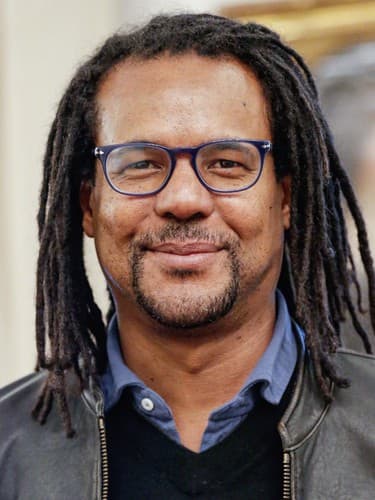
Arch Colson Chipp Whitehead is an American novelist. He is the author of eight novels, including his 1999 debut work The Intuitionist; The Underground Railroad (2016), for which he won the 2016 National Book Award for Fiction and the 2017 Pulitzer Prize for Fiction; and The Nickel Boys, for which he won the Pulitzer Prize for Fiction again in 2020. He has also published two books of non-fiction. In 2002, he received a MacArthur Genius Grant.







