“We are the Neptune Project. We are the children of the sea.”
— Nere introduces the group's identity and mission.

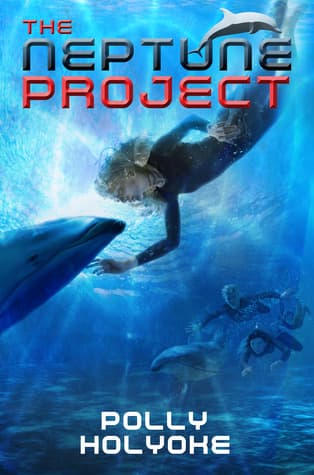
Polly Holyoke (2013)
Genre
Fantasy / Children's / Science Fiction / Young Adult / Romance
Reading Time
340 min
Key Themes
See below
Sign in to track this book
A genetically altered girl, more at home in the ocean than on land, discovers she's part of a secret project to build an underwater civilization and must lead a group of reluctant, super-powered kids across a perilous sea to escape a pursuing government.
Nere, a twelve-year-old girl in a future world with environmental disaster and lack of resources, has weak eyes and lungs, making her an outcast at school and needing an oxygen tank. She finds comfort only in swimming with the dolphins her marine biologist mother, Dr. Kate Chambers, studies. One day, Nere overhears her mother and a man, Dr. Zed, talking about 'the project' and 'the children.' Soon after, her mother tells her a shocking truth: Nere is not human in the usual way. She is one of the 'Neptune kids,' genetically altered humans made to live underwater, a secret experiment by a hidden group to help humanity survive under the ocean. This news changes everything Nere understands about herself and her future.
After the news, Nere and her mother must leave their home as government agents, the 'Surface Army,' get close. They go to a remote underwater cave where Nere learns about her new life. Her mother injects her with a serum that activates her dormant aquatic genes, causing painful body changes. Nere grows gills, her skin gets stronger, and her vision adapts to the underwater world. This change is hard but needed. Other Neptune kids and their guardians soon join them, all getting ready for the dangerous trip to the Neptune colony, a safe place deep in the ocean. Nere struggles with the physical changes and the huge danger, relying on her mother's help.
Nere meets the other Neptune kids, a diverse group with different personalities and levels of acceptance of their new identities. There is the strict Dai, the quiet Tethys, the loud Var, and the scared Lamia, among others. Their first interactions are full of tension and mistrust. Dai, especially, dislikes Nere's late arrival and perceived weakness, often bullying her. Nere struggles to find her place in this group, feeling like an outsider even among those who share her unique biology. The children also meet their dolphin companions, genetically enhanced for communication and protection, who will be very important for their survival during the journey.
With Dr. Zed and a few adult guardians, the Neptune kids and their dolphins start their long swim across hundreds of miles of open ocean. The journey is immediately dangerous. They must navigate strong currents, avoid predatory marine life, and, most importantly, avoid being seen by the Surface Army, who are hunting them. Nere, still getting used to her new body and the harsh realities of underwater survival, struggles with tiredness and fear. Her bond with her dolphin, Lyra, becomes her main source of comfort and support. The group faces their first big challenge when a Surface Army patrol boat finds them, forcing them into a desperate underwater escape.
During the journey, the Neptune kids and their guardians encounter a large underwater storm, a 'hurricane' that creates chaotic currents and dangerous debris. The storm separates the group, leaving Nere, Dai, Tethys, Var, and Lamia, along with their dolphins, alone and without adult supervision. This forced independence makes them rely on each other, despite their earlier dislikes. They must use their growing aquatic abilities and their dolphins' instincts to survive the storm. Nere, at first shy, starts to show her unique ability to talk to the dolphins better than the others, an unexpected skill that helps them navigate the storm-hit waters and eventually reunite with some of the scattered group.
As the journey continues, the Neptune kids face dangerous marine life. They barely escape a hungry shark and must work together to avoid a large kraken. These challenges make them improve their teamwork and trust in their dolphins. A big moral problem comes up when they find whales caught in fishing nets. Dai, only focused on reaching the colony, argues against helping, fearing it will attract unwanted attention. But Nere, with Var and Tethys's support, insists on helping the whales. Their act of kindness, despite the risks, shows the growing empathy in the group and solidifies Nere's role as a moral leader, further annoying Dai.
The Surface Army's pursuit gets more intense, using advanced sonar and submersible technology. The children and their remaining guardians are always running, having close calls that increase the tension. During one difficult chase, they are ambushed. Dr. Zed sacrifices himself to create a distraction, letting the children and Dr. Chambers escape, but leaving them without a key leader. This loss deeply affects the group, especially Nere. The confrontation shows how ruthless the Surface Army is and the huge stakes of their mission, reinforcing that their very existence is seen as a threat by the surface world.
The long journey, constant danger, and loss of Dr. Zed affect the children. Tensions rise among them, especially between Nere and Dai. Dai, increasingly frustrated and wanting power, challenges Nere's growing leadership and her kind approach, believing it makes them weak. He tries to take control, leading to a direct confrontation. Nere, with Var and Tethys's support, uses her growing confidence and the respect she has earned from the dolphins to counter Dai's aggression. This internal conflict makes the group decide who they will follow and what kind of community they want to build, solidifying Nere's unofficial leadership role.
As they get close to the Neptune colony, the children and Dr. Chambers discover that the 'safe place' is not the fully built, thriving underwater city they imagined. Instead, it is an unfinished, partly built base, needing much work to be livable. The news is a crushing blow, meaning their journey's end is only the start of another hard task. They also learn that Dr. Zed and the other adults had not told them the full truth to keep their hope alive. This discovery challenges their trust in the adults and makes the children face the reality that their future is entirely in their own hands, and they must build their new world from scratch.
Despite the initial disappointment, the Neptune kids, with Dr. Chambers' help, begin the big task of building their new underwater home. They combine their different skills and work together, slowly turning the unfinished base into a working colony. Nere's ability to talk to the dolphins helps greatly with scouting and underwater construction. Dai, though still resistant sometimes, starts to use his strength and strategic thinking for the group effort. The children learn to get resources, maintain their habitat, and build a new society based on cooperation and mutual survival. They realize that the real 'Neptune Project' is not just about reaching a place, but about creating a new way of life and a new future for humanity under the waves.
The Protagonist
Nere transforms from a physically weak and insecure girl into a strong, confident aquatic human and an empathetic leader for the Neptune colony.
The Supporting
She begins as a secretive protector and evolves into a guiding figure, helping the children build their new society.
The Supporting
Dai transitions from an antagonistic rival to a grudgingly cooperative member, learning the value of teamwork and compassion.
The Supporting
Var remains a steadfast protector and friend, embodying loyalty throughout the arduous journey.
The Supporting
Tethys develops into a trusted advisor, offering intellectual support and rational thought to the group.
The Supporting
Lamia remains largely fearful but finds some solace and safety within the group, representing the project's more vulnerable side.
The Supporting
Dr. Zed acts as a guiding figure who ultimately sacrifices himself to ensure the children's survival.
The Supporting
Lyra consistently serves as Nere's loyal companion and guide, demonstrating unwavering support.
The Antagonist
The Surface Army acts as a persistent, external threat, constantly pursuing the Neptune kids.
A main theme is Nere's journey to understand and accept her true identity as a genetically altered aquatic human. At first, she struggles with her physical weaknesses and feels like an outsider, but Nere goes through a big change both physically and emotionally. The news of the Neptune Project forces her to redefine who she is, not just as a human, but as a new species. This theme shows through her adaptation to her new abilities, her connection with the ocean, and her growing confidence in her unique place in the world, ending with her taking on the role as a leader of the Neptune kids.
“"I was a monster. A fish-girl. And I was beautiful."”
The whole story is driven by the urgent need for survival in a harsh, resource-depleted world. The Neptune kids are made to survive in a new environment—the ocean. This theme appears through their physical change, their hard journey across dangerous waters, and their constant escape from the Surface Army. It also includes their adaptation to living as a community, learning to work together, and developing new skills to live in an alien environment. The children's ability to adapt, both biologically and socially, helps them succeed in starting the new colony.
“"Life on the surface was dying. Our only hope was to build a new world beneath the waves."”
Despite initial dislikes and internal fights, the Neptune kids learn how important community and cooperation are for their survival. Nere's journey involves overcoming Dai's bullying and forming bonds with Var and Tethys. The challenges of the ocean, the pursuit by the Surface Army, and the task of building a new colony make them put aside differences and work together. This theme shows how working together, supporting each other, and having shared goals help overcome problems and create a working society, even among those who are at first unwilling.
“"We were a pod now, like the dolphins, and we had to protect each other."”
The novel takes place in a ruined surface world, full of famine, war, and environmental collapse. This is a clear warning about what happens when humanity's destructive actions continue. The Neptune Project itself is a desperate attempt to ensure humanity's future by creating a new species for a different environment. This theme looks at the ethical questions of genetic engineering as a solution to environmental disaster and asks what it means to be human in a post-apocalyptic world. It also supports preserving marine ecosystems as a possible last refuge for life.
“"The surface was a graveyard. The ocean was our last chance."”
Trust is a repeated idea, especially concerning the adults in the Neptune Project and among the children themselves. Nere at first struggles to trust her mother after the shocking news of her true identity. The adults, like Dr. Zed and Dr. Chambers, hide information from the children, such as the unfinished state of the colony, for what they believe is the greater good. This raises questions about whether deception is justified. Among the children, trust is slowly built through shared hardship and relying on each other, often tested by characters like Dai. The theme looks at the difficulties of forming bonds and what happens when trust is broken in a high-stakes situation.
“"How could she have kept such a secret from me? My own mother."”
The core scientific premise enabling human adaptation to underwater life.
Genetic engineering is the foundational plot device, as it directly creates the Neptune kids. It explains Nere's initial physical ailments and her dramatic transformation into an aquatic human with gills, enhanced vision, and other underwater adaptations. This device not only drives the central conflict and the characters' unique abilities but also raises ethical questions about manipulating human biology for survival. It's the catalyst for the entire project and the children's journey, making their existence possible and setting them apart from surface humans.
A classic quest narrative structure, driving character development and plot progression.
The journey across hundreds of miles of dangerous ocean to the Neptune colony serves as a classic quest narrative. It provides a clear objective for the characters and acts as a crucible for their development. Each stage of the journey introduces new challenges—environmental dangers, predatory marine life, and the relentless pursuit by the Surface Army—forcing the characters to grow, adapt, and cooperate. This device allows for episodic adventures while steadily advancing the overarching plot and revealing character arcs.
Genetically enhanced animals serving as guides, protectors, and communicators.
The genetically enhanced dolphins are crucial plot devices. They are not merely animal sidekicks but intelligent, loyal companions vital for the Neptune kids' survival. They serve as navigators, protectors against predators, and, most importantly, facilitators of communication, especially for Nere. Their special bond with the Neptune kids, particularly Nere's unique telepathic-like connection with Lyra, highlights the potential for interspecies cooperation and provides both practical assistance and emotional support throughout the dangerous journey.
A dystopian backdrop justifying the need for the Neptune Project.
The depiction of the surface world as a dying, war-torn, and resource-depleted dystopia serves as a critical plot device. It provides the urgent justification for the Neptune Project's existence and the extreme measures taken by its creators. This setting creates a sense of desperation and high stakes, emphasizing that the children's underwater colony is not just an alternative, but potentially humanity's last hope. It also establishes the Surface Army as an antagonist, representing the destructive forces of the old world trying to reclaim or destroy the new.
A twist that shifts the narrative from finding a haven to building one.
The revelation that the Neptune colony is not a fully established paradise but an unfinished construction site is a significant plot device. It functions as a twist, subverting expectations and shifting the narrative's focus. Instead of merely reaching a safe haven, the children realize they must actively build their future. This device forces them to take full responsibility, fosters greater cooperation, and provides a new, constructive goal that solidifies their community and underscores the theme of creating a new world rather than simply finding one.
“We are the Neptune Project. We are the children of the sea.”
— Nere introduces the group's identity and mission.
“Sometimes the hardest thing to do is to trust yourself.”
— Nere reflects on her doubts and inner strength.
“The ocean is our home now, and we must learn to live in it.”
— Nere adapts to her new underwater life.
“Fear is a choice. Courage is a choice. I choose courage.”
— Nere faces a dangerous situation.
“We're not just surviving; we're building a future.”
— Nere discusses the group's long-term goals.
“In the deep, we find our true selves.”
— Nere contemplates personal discovery underwater.
“The sea doesn't care about your fears. It only cares that you respect it.”
— Nere learns to navigate ocean dangers.
“Together, we are stronger than the currents that try to pull us apart.”
— Nere emphasizes unity among the group.
“Every breath underwater is a reminder of what we've lost and what we've gained.”
— Nere reflects on the trade-offs of their new life.
“Our gills are not a curse; they are a gift.”
— Nere redefines her genetic modifications positively.
“The surface world may have forgotten us, but we will not forget each other.”
— Nere bonds with her fellow modified children.
“In the silence of the deep, I hear the truth.”
— Nere finds clarity in underwater solitude.
“We swim not to escape, but to find a new way.”
— Nere explains their purpose beyond mere survival.
Ready to see how well you understood this book? Take our interactive quiz with 10 questions.







