“The greatest weapon in the world is the human mind. The greatest defense is a prepared mind.”
— A general reflecting on strategy and human intelligence.

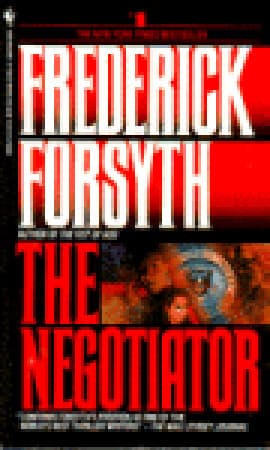
Frederick Forsyth (1989)
Genre
Thriller / Mystery / Romance
Reading Time
600 min
Key Themes
See below
Sign in to track this book
When the President's son is kidnapped to stop a disarmament treaty, a negotiator uncovers a conspiracy and risks everything to save a life and the free world.
The story starts with the kidnapping of William Cormack Jr., the only son of U.S. President John Cormack, while he is on vacation in Oxfordshire, England. William, an Oxford student, is ambushed on a country road by a professional team. The kidnappers, led by 'The Turk,' carry out the operation precisely, leaving no immediate witnesses or clues. This act becomes a major international incident, threatening to stop the upcoming disarmament treaty between the United States and the Soviet Union, a treaty President Cormack wants to sign. The U.S. government, desperate to get William back, decides to bring in a specialist.
Quinn, a skilled former special operative and hostage negotiator, is reluctantly brought out of his quiet life to handle the crisis. He is known for his unusual methods and success. Despite his personal reluctance, the seriousness of the situation—the son of the President held captive—compels him to take the assignment. Quinn immediately starts contacting the kidnappers, using his psychological tactics and demanding specific rules to ensure William's safety and gain an advantage. He operates with cold, calculated efficiency, quickly assessing the threat.
Quinn contacts 'The Turk,' the leader of the kidnappers, and the initial demands are made: a large sum of money. Quinn, however, senses there is more to the abduction than just money. He carefully analyzes every communication, delay, and nuance in 'The Turk's' voice and demands, looking for inconsistencies. He suspects a deeper, more sinister plan. His negotiation tactics involve a balance of firmness and strategic concession, all while trying to gather information on the kidnappers' location and true motives. He uses intermediaries and secure channels, always aware that time is critical for William's survival.
A carefully planned ransom drop is arranged in a remote location. Quinn, despite his suspicions, organizes the delivery of the large sum of money, using complex movements designed to prevent the kidnappers from escaping easily and to protect the money. However, during the exchange, the operation is ambushed, not by the kidnappers, but by a separate, unknown force. The money is lost, and the kidnappers escape, but Quinn realizes that the ambush was planned by a third party, and that the kidnappers' true goal was never the money. This confirms Quinn's earlier suspicions that he is dealing with a more complex conspiracy.
After the failed ransom drop, Quinn increases his investigation, now convinced that William's kidnapping is just a part of a larger political game. He uncovers evidence pointing to a powerful, hidden group of hardliners within the U.S. and Soviet military. Their goal is to prevent the signing of the U.S.-Soviet disarmament treaty, which they believe threatens their power. They plan to frame President Cormack for a scandal involving his son, forcing his resignation and stopping peace efforts. The kidnapping was designed to trap Quinn, making him an unwitting part of their scheme.
Quinn's investigation crosses international borders, revealing that the American conspirators have allies among Soviet hardliners. These groups within the KGB and military share the same goal: to prevent the disarmament treaty at all costs. They believe the treaty weakens their nation's strategic position and threatens their power. Quinn realizes that the conspiracy is a sophisticated, two-part operation, with both sides manipulating events to achieve their shared goal of maintaining the Cold War. This discovery forces Quinn to operate with extreme caution, as he cannot trust traditional intelligence channels.
Quinn understands that his role as the 'negotiator' was a key part of the conspirators' plan. They intended to manipulate him into a situation where William Cormack Jr. would appear to die under his watch, possibly during a botched rescue or a staged accident. This would then be used to create a scandal that would force President Cormack's resignation. The conspirators wanted to ensure that the blame for William's death could be placed on Quinn, discrediting the President and his administration, making him vulnerable to impeachment or political ruin.
With the full scope of the conspiracy revealed, Quinn creates a daring counter-plan. He knows that conventional methods will not work against such powerful enemies. His strategy involves playing the conspirators at their own game, using their tactics against them. He aims to not only rescue William Cormack Jr. but also to expose the individuals behind the plot, saving President Cormack's presidency and the disarmament treaty. This requires him to go completely off-grid, trusting only a few individuals and relying on his skills in intelligence gathering and strategic manipulation.
Quinn's plan ends in a high-stakes confrontation. He carefully sets a trap for the conspirators, forcing them into the open. Using his network and expertise, he orchestrates a complex series of events that leads him to William's hidden location. The rescue is dangerous, involving intense cat-and-mouse games and close calls. Quinn, with the help of a few trusted allies, outwits the conspirators and their operatives, ensuring William Cormack Jr.'s safety. The confrontation exposes the extent of the conspiracy, leading to major political consequences on both sides of the Iron Curtain.
Afterward, the full extent of the conspiracy is revealed to the world. The key figures behind the plot, both American and Soviet, are exposed and face justice. President Cormack, though deeply shaken, is cleared, and his disarmament treaty proceeds, starting a new era of peace. Quinn, having completed his mission, again retreats from the public eye. The novel ends with peace triumphing over those who wanted conflict, thanks to Quinn's courage and strategic brilliance, but also shows the constant need for vigilance to maintain it.
The Protagonist
Quinn is pulled from retirement, reluctantly embracing his past skills to navigate a complex conspiracy, ultimately reaffirming his commitment to justice and protecting the innocent.
The Supporting
President Cormack endures a severe personal and political crisis, ultimately holding firm to his principles and achieving his diplomatic goals with Quinn's help.
The Victim/Supporting
William is a passive victim throughout most of the story, his arc defined by his survival and eventual liberation from a harrowing ordeal.
The Antagonist/Pawn
The Turk's arc reveals him as a capable but ultimately expendable operative, a tool in a conspiracy far beyond his comprehension.
The Antagonist/Supporting
Petrov's arc demonstrates the international reach of the conspiracy, ultimately leading to his exposure and downfall.
The Antagonist/Supporting
Senator Kennedy's arc reveals the insidious nature of domestic political conspiracy, culminating in his public exposure and political ruin.
The Supporting
Weintraub evolves from a cautious observer to a vital and trusting ally of Quinn, witnessing firsthand the depths of political intrigue.
The Supporting
Jessup develops from a cautious colleague to a dedicated and courageous ally, proving her mettle in a dangerous international conspiracy.
The novel shows how political power, when unchecked or driven by extreme beliefs, can be dangerous. The conspiracy to undermine President Cormack and the disarmament treaty comes from individuals, both American and Soviet, who believe their view of national interest justifies any actions, including kidnapping and murder. Senator Kennedy and General Petrov are examples, using their positions to manipulate global events for personal or ideological gain. This theme is clear when William Cormack Jr.'s kidnapping is revealed to be about destabilizing the presidency and stopping peace, not ransom. This shows the corrupting influence of power and how far some will go to maintain the status quo or advance their agenda, as seen when the conspirators arrange the failed ransom drop to frame Quinn and the President.
“There are some who believe that peace is a weakness, and that true strength lies only in perpetual conflict.”
Frederick Forsyth explores the art and psychology of negotiation through Quinn. The theme looks at negotiation as a complex intellectual battle where information, psychology, and timing are crucial. Quinn's approach to 'The Turk' is a prime example, where every word, silence, and demand is analyzed for hidden meanings and leverage. He understands that negotiation is a performance, a dance of power and perception, where the true goal is often hidden. This theme is central to Quinn's character, as he constantly probes for the 'why' behind the 'what,' eventually realizing that the kidnappers' demands were a cover for a larger, more sinister plot, turning the negotiation into an intelligence-gathering operation.
“A good negotiator doesn't just hear what is said; he hears what is not said, and he understands why.”
The novel shows how fragile peace is, especially during the Cold War. The disarmament treaty, a symbol of hope for global stability, is constantly threatened by powerful groups on both sides who benefit from or believe in the need for ongoing conflict. The conspiracy to stop the treaty shows how easily peace efforts can be sabotaged by established interests and extreme beliefs. William Cormack Jr.'s kidnapping is a direct attack on this fragile peace, designed to create chaos and mistrust. The story emphasizes that achieving and maintaining peace requires constant vigilance and a willingness to confront those who profit from division, as shown by Quinn's relentless pursuit of the conspirators who want to continue the Cold War.
“Peace is not a given; it is a battle fought every day against those who thrive on discord.”
This theme explores the conflict between the moral integrity of individuals like Quinn and President Cormack, and the widespread corruption within powerful, hidden systems. Quinn, despite his cynicism, operates with a strong personal code, prioritizing human life and justice over political convenience. President Cormack also strives for a greater good, even under immense personal pressure. Conversely, the conspirators, embedded within government and military structures, show how systems can be exploited and corrupted by individuals driven by self-interest or extreme beliefs. The story supports the idea that even against overwhelming systemic corruption, the actions of a few principled individuals can make a difference, as Quinn takes on a global conspiracy with minimal official backing, relying on his own moral compass.
“When institutions fail, it falls to individuals to hold the line, no matter the cost.”
Misleading clues or plot points designed to distract the reader and characters.
The initial focus on the ransom demand for William Cormack Jr. serves as a major red herring. Quinn and the reader are led to believe that the kidnapping is a straightforward criminal act motivated by money. This misdirection is crucial to the conspirators' plan, allowing them to manipulate Quinn and the authorities while concealing their true political agenda: to sabotage the disarmament treaty and discredit President Cormack. The failed ransom drop further solidifies this device, making it appear as a botched criminal operation rather than a calculated move in a larger political chess game, thus deepening the mystery and complexity of the plot.
Information is presented from a limited or biased perspective, leading to reader misinterpretation.
While not a traditional unreliable narrator in the sense of a character's direct narration, the information presented to Quinn (and thus the reader) is often carefully curated and manipulated by the conspirators. The official channels and initial communications from 'The Turk' are designed to mislead. Quinn's genius lies in his ability to see through these layers of deception, but for a significant portion of the novel, the audience is only privy to the information the conspirators want known, creating a sense of mystery and forcing the reader to constantly question motives and events alongside Quinn. This device heightens the suspense and makes the eventual revelations more impactful.
An object, desire, or goal that drives the plot, but is ultimately secondary to the characters' development or thematic exploration.
The Disarmament Treaty serves as a central MacGuffin. While its signing is the ultimate goal President Cormack is striving for, and its prevention is the conspirators' primary motivation, the treaty itself is less important than the complex web of political intrigue, espionage, and character development it instigates. The kidnapping of William Cormack Jr. is a direct consequence of the treaty's existence, but the focus shifts to Quinn's negotiation skills, his uncovering of the conspiracy, and the high-stakes battle of wits. The treaty provides the impetus for the entire plot, yet the real story lies in the machinations surrounding it and Quinn's heroic efforts.
A highly intelligent and often hidden antagonist who orchestrates a complex plot.
The overarching conspiracy is orchestrated by a collective of 'mastermind villains,' primarily Senator William Kennedy and General Petrov, who operate behind the scenes. They are not direct, physical threats to Quinn but rather intellectual adversaries who manipulate events and people from a distance. Their power lies in their strategic thinking, their ability to leverage political influence, and their network of operatives. This device creates a sense of an unseen, powerful enemy, making Quinn's task far more challenging than a simple rescue mission, as he must uncover and dismantle a deeply entrenched and internationally connected plot rather than just confront a single kidnapper.
“The greatest weapon in the world is the human mind. The greatest defense is a prepared mind.”
— A general reflecting on strategy and human intelligence.
“Never make a threat unless you are prepared to carry it out. And if you are, make it count.”
— A negotiator's internal monologue about the nature of ultimatums.
“Love, like war, is a matter of strategy. But in love, the heart often overrules the head.”
— A character contemplating the complexities of his personal relationships amidst a crisis.
“Information is power, but knowing how to use it is the ultimate weapon.”
— An intelligence operative discussing the value of data analysis.
“In the world of shadows, trust is a luxury few can afford and even fewer truly possess.”
— A character reflecting on the constant deception in espionage.
“The past is a foreign country; they do things differently there. But it always finds a way to catch up.”
— A character haunted by past events that resurface.
“Sometimes, the most dangerous enemy is the one you underestimate, or worse, the one you never see coming.”
— A warning given about the nature of hidden adversaries.
“A good plan executed today is better than a perfect plan executed tomorrow.”
— A commander urging decisive action during a critical moment.
“The human heart, for all its vulnerability, is also capable of immense strength and surprising resilience.”
— A character observing the endurance of others in adversity.
“Even the most carefully constructed facade can crumble under the weight of truth.”
— An investigator uncovering hidden motives and secrets.
“The art of negotiation is not about winning, but about finding a solution where everyone believes they have gained something.”
— A seasoned negotiator explaining his philosophy.
“Fear can be a powerful motivator, but courage is what allows you to act despite it.”
— A character facing a life-threatening situation.
“There are no easy answers, only choices, and every choice has its price.”
— A character grappling with difficult moral dilemmas.
“The world is a chessboard, and those who understand the moves are the ones who control the game.”
— A powerful figure reflecting on global politics and influence.
Ready to see how well you understood this book? Take our interactive quiz with 10 questions.

Biography coming soon.







