“There are some things you can't outrun, even if you put a whole lifetime between them and you.”
— Gamache reflecting on the past and its impact on the present.

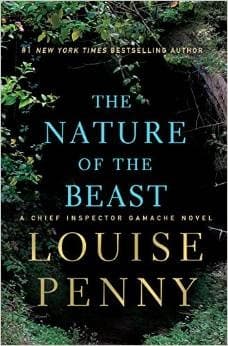
Louise Penny (2015)
Genre
Thriller / Mystery
Reading Time
450 min
Key Themes
See below
Sign in to track this book
A boy known for wild stories disappears, making the quiet village of Three Pines wonder if his tale of a monster in the woods was real. This unearths an old crime and a deep betrayal.
The quiet village of Three Pines is used to nine-year-old Laurent Lepage's outrageous stories, from alien invasions to dinosaurs. His latest claim involves a 'monster' – a giant, six-foot wooden man – hidden deep in the woods near the village. While the adults, including Clara Morrow, Myrna Landers, and Gabri Dubeau, mostly ignore his tale, there is some concern when Laurent goes missing. Chief Inspector Armand Gamache, retired and living in Three Pines, hears about the boy's disappearance. A frantic search begins, with villagers and Sûreté officers looking through the dense forest. They first think Laurent might be playing another trick. However, the lack of any sign of him increases their worry, suggesting this time, his story might be true.
The search for Laurent turns grim when his body is found in the woods, near where he claimed to have seen the 'monster.' To the villagers' horror and the Sûreté's confusion, Laurent is found next to a huge, crudely carved wooden puppet, over six feet tall and weighing hundreds of pounds. The puppet, which matches Laurent's description of his 'monster,' is old and appears to have been placed there on purpose. Laurent's death is quickly ruled a homicide, with the puppet itself possibly being the murder weapon or a major factor. This discovery shatters the peace of Three Pines and confirms that Laurent's final, most unbelievable story was tragically real, turning a child's fantasy into a chilling reality and a complex murder investigation.
Chief Inspector Gamache, along with his former second-in-command, Jean-Guy Beauvoir, who has also retired to Three Pines, starts to investigate the wooden puppet carefully. Its size and craftsmanship suggest it is no ordinary toy. They learn it is a 'marionnette à tringle,' a rod puppet, and its construction points to a specific time and style. Their questions lead them to find that the puppet was part of a forgotten theatrical production from decades ago, made by a well-known but reclusive puppeteer named Blaise Faucher. Faucher, now an elderly man living alone, becomes a person of interest. The puppet's sudden reappearance after so many years, and its connection to Laurent's death, raises questions about its true purpose and who might have moved it.
When asked, Blaise Faucher, the original creator of the giant puppet, admits he found and moved it. He explains he had recently rediscovered the puppet, which he called 'Old Sam,' and had been trying to repair it, leaving it in the woods for safekeeping. However, he strongly denies any part in Laurent's death. Faucher reveals he had been contacted by a shadowy organization, a private military contractor called 'The Peace Group,' which was interested in his work and possibly the puppet itself. This changes the focus of the investigation, adding a new, more sinister element and suggesting Laurent's murder might be connected to something far larger and more dangerous than a local dispute.
Gamache and Beauvoir look into The Peace Group, finding it is a highly organized private military company, essentially a private army, run by a charming but deeply unsettling man named General Alistair Billings. Billings, a former military hero, has built a public image of humanitarian aid, but Gamache suspects a darker agenda. The Peace Group's interest in Faucher and his puppets seems odd, yet Gamache feels a strong connection to Laurent's death. The investigation shows The Peace Group has been recruiting young, easily influenced individuals, and their operations are secret, making it hard for Gamache to get into their inner circle. The general's influence reaches deeply, even into the Sûreté, creating problems for the investigation.
The investigation becomes deeply personal when Gamache uncovers a shocking secret about Myrna Landers, the owner of the bookstore in Three Pines. Myrna, a beloved and seemingly gentle person, was once a child soldier in Africa, a victim of a brutal civil war. General Billings, then a young officer, was involved in the conflict, supposedly on the side of peacekeeping. It becomes clear that Billings's interest in Faucher's puppets, especially 'Old Sam,' is not about art, but about its symbolic power. Billings used the puppet in Africa to manipulate and control child soldiers, including Myrna, during the war. Laurent, having found the puppet, stumbled upon a deeply buried and horrific secret that Billings desperately wanted to keep hidden.
As Gamache and Beauvoir put together the General's past and his connection to Myrna and the puppet, General Alistair Billings himself arrives in Three Pines. His presence is not a coincidence; he has come to get 'Old Sam' and silence anyone who might expose his past actions. Billings, with his strong charm and ruthless intelligence, is a direct threat to Gamache, Beauvoir, and potentially anyone in the village who knows too much. He uses his influence and resources to stop the Sûreté's investigation, subtly intimidating witnesses and creating an atmosphere of fear. Gamache realizes that Billings is not just a murderer, but a dangerous manipulator capable of great harm, and that Laurent's death was a desperate act to protect a monstrous secret.
Knowing that a direct attack on Billings would be hard given his influence, Gamache plans to expose him publicly. He arranges for a puppet show, using 'Old Sam' and other puppets, to be performed in the village. The performance, carefully made, subtly re-enacts the events of the African conflict and Billings's role in manipulating child soldiers. Myrna Landers, facing her own traumatic past, plays an important part in this performance. The puppet show, at first seeming innocent, slowly reveals the horrifying truth, mirroring how Laurent's 'monster' story led to a real one. The goal is to make Billings react, to betray himself, and to make his crimes undeniable in front of witnesses.
During the puppet show, as the story of his past crimes unfolds, General Billings becomes increasingly agitated. Cornered and exposed, he finally breaks, confirming his guilt through his reactions and subtle admissions. Gamache, having expected this, has Sûreté officers ready. Billings is arrested, ending his manipulation and terror. However, the victory is bittersweet. The events have deeply shaken Three Pines, forcing its residents to face the dark side of humanity and the lasting scars of war. Myrna Landers begins a long journey of healing, facing the trauma of her childhood. While justice is served for Laurent, the innocence of the village is changed forever, and Gamache thinks about the nature of evil and its ability to take hold.
The Protagonist
Gamache grapples with the dark return of a past evil, reaffirming his commitment to justice and confronting the lasting trauma of war.
The Supporting
Beauvoir embraces his new life in Three Pines but willingly steps back into the world of crime-solving to support Gamache and protect the village.
The Mentioned
Laurent's story ends tragically with his murder, serving as the innocent victim who unwittingly uncovers a horrific secret.
The Supporting
Myrna is forced to confront her deeply buried past, moving from a victim of trauma to an active participant in bringing her abuser to justice.
The Antagonist
Billings attempts to suppress his past crimes, ultimately leading to his exposure and downfall at Gamache's hands.
The Supporting
Faucher, initially a suspect, becomes a reluctant but vital witness, helping Gamache understand the puppet's true history and its abuse.
The Supporting
Clara grapples with the intrusion of profound evil into her peaceful village, using her artistic lens to process the trauma.
The Supporting
Gabri's flamboyant exterior is tested by the dark events, revealing his underlying strength and compassion for his friends.
The Supporting
Lacoste demonstrates her growth as an inspector, balancing official procedure with Gamache's unconventional methods to achieve justice.
This theme explores how evil can appear in different ways, from murder to the manipulation of vulnerable people. General Billings shows this theme, presenting a kind public image while secretly committing acts of abuse. The novel looks at how evil can be hidden under charm and respectability, and how its effects can last for decades, impacting lives like Myrna Landers's. It asks if evil is born or made, and how societies deal with it, often only seeing it when it breaks the peace, as Laurent's murder does in Three Pines.
“Evil is not a monster in the woods, it's the monster in the mirror.”
The novel deeply explores the lasting impact of trauma, especially through Myrna Landers's hidden past as a child soldier. Her struggle to live a normal life while carrying the burden of horrific memories shows the strong and lasting effects of violence and exploitation. The story also shows resilience, as Myrna, with the help of her friends and Gamache, finds the strength to face her past and help bring her abuser to justice. This theme emphasizes the long path to healing, the courage needed to face buried pain, and the importance of community in overcoming personal devastation. It shows that even the calmest appearances can hide deep inner struggles.
“Some wounds never heal, but they can scar over, and with enough time, the scar can become a story.”
This theme is central, starting with Laurent Lepage's reputation for telling elaborate lies, which ironically prevents adults from believing his final, truthful claim about the 'monster.' The novel constantly challenges what people think, revealing that appearances can be very misleading, particularly with General Billings's carefully made public persona. Gamache's investigation is a search to remove layers of deception and expose the uncomfortable truths hidden underneath, both about the murder and the historical abuses. It shows how easily people can be fooled by charm or dismiss inconvenient truths, and the moral need to seek clarity even when it is painful. The puppet itself represents manipulated truth.
“The greatest trick the devil ever pulled was convincing the world he didn't exist.”
From Laurent's imaginative tales to the General's carefully made public story, narratives are a powerful force in the novel. Laurent's stories, though dismissed as lies, eventually lead to the discovery of a deep truth. Conversely, General Billings uses his story of heroism and humanitarianism to hide his bad acts, manipulating public perception. The wooden puppet itself is a storytelling tool, first used for innocent entertainment, then twisted into a tool of psychological warfare and later used by Gamache to expose the truth. This theme explores how stories can be used to entertain, deceive, control, or free, and the responsibility that comes with telling and interpreting them.
“Stories are weapons. They can be used to wound, or to heal.”
Laurent Lepage's murder shows this theme clearly. His imaginative nature, expressed through his tall tales, represents the innocence and endless creativity of childhood. His death, caused by an adult's desperate attempt to cover up past actions, shatters this innocence not only for Laurent but for the entire village of Three Pines. The use of puppets to manipulate child soldiers further highlights the exploitation and corruption of childhood. The novel mourns the loss of this innocence and highlights the strong moral need to protect children from the dark complexities and evils of the adult world.
“A child's imagination is a sacred place. To abuse it, to twist it for evil, is unforgivable.”
A physical object that is both the murder weapon and a symbol of past trauma.
The six-foot-tall wooden puppet, dubbed 'Old Sam,' is the central plot device. It serves multiple functions: it's the immediate cause of Laurent's death, the 'monster' from his stories, and a tangible link to General Billings's past crimes in Africa. Its physical presence in the woods drives the initial investigation, while its symbolic meaning as a tool for manipulating child soldiers provides the deeper, historical context for the murder. The puppet's journey from a work of art to an instrument of control and finally to a tool for justice demonstrates its profound narrative power and versatility as a device.
A narrative technique that misdirects initial suspicions and highlights the danger of dismissing children's stories.
Laurent Lepage's established reputation for telling outlandish stories serves as a classic 'crying wolf' trope. This device initially leads the villagers and even the Sûreté to dismiss his claims about the 'monster,' delaying the recognition of true danger. It creates dramatic irony, as the audience knows Laurent is telling the truth this time, even if the characters don't. This trope emphasizes the novel's theme of truth and perception, highlighting how preconceptions can blind people to reality and how easily vulnerable voices can be ignored, with tragic consequences.
A dramatic re-enactment used to expose hidden truths and provoke the antagonist.
Gamache's decision to stage a puppet show using 'Old Sam' and other puppets is a crucial plot device for the climax. This theatrical re-enactment, subtly mirroring the events of Billings's past abuses in Africa, serves as a powerful and unconventional method of exposure. It allows Gamache to present the truth in a way that bypasses Billings's influence and manipulation, forcing him to react and betray his guilt. The puppet show transforms an artistic medium into a weapon of justice, making the abstract horrors of war tangible and undeniable for the audience, and specifically for Billings himself.
A setting that contrasts with and amplifies the dark themes and events.
The village of Three Pines, a recurring setting in Louise Penny's novels, acts as a significant plot device by providing a stark contrast to the dark events that unfold. Its picturesque, close-knit, and seemingly utopian nature amplifies the horror of Laurent's murder and the revelation of General Billings's atrocities. The intrusion of such profound evil into this sanctuary highlights the vulnerability of peace and the idea that darkness can penetrate even the most protected spaces. The village's strong community bonds also serve as a source of strength and support for characters like Myrna, emphasizing the importance of human connection in the face of trauma.
“There are some things you can't outrun, even if you put a whole lifetime between them and you.”
— Gamache reflecting on the past and its impact on the present.
“Evil isn't born. It's made. It's built, piece by piece, by choices, by silence, by the turning away.”
— Gamache contemplating the origins of malevolence.
“The greatest trick the devil ever pulled was convincing the world he didn't exist. The second greatest was convincing people that love was enough.”
— A character's cynical view on love and its limitations.
“Sometimes the most dangerous things are the ones that look the most innocent.”
— Referring to the perceived harmlessness of a child's toy.
“We all have monsters under our beds. Some of us just keep them better hidden.”
— A character's internal struggle and hidden demons.
“The truth is a stubborn thing. It has a way of finding its way out, no matter how hard you try to bury it.”
— Gamache's belief in the eventual revelation of truth.
“It’s not what we do that defines us, but why we do it.”
— Considering the motivations behind human actions.
“Grief, like love, finds its own path. You can't force it, and you can't stop it.”
— Characters dealing with loss and the process of grieving.
“The greatest stories are often the ones we tell ourselves, to make sense of the senseless.”
— Examining the human need for narrative and meaning.
“Sometimes the quietest people have the loudest minds.”
— Observing a reserved character's internal world.
“Fear can make people do terrible things, but it can also make them brave.”
— Discussing the dual nature of fear as a motivator.
“The past is never really gone. It's just waiting for the right moment to reappear.”
— A recurring theme of past events influencing the present.
“Hope is a fragile thing, easily broken, but also incredibly resilient.”
— Considering the enduring power of hope amidst despair.
Ready to see how well you understood this book? Take our interactive quiz with 10 questions.

Biography coming soon.







