“It was enough to be alive, to be a body in the world, to be a name. The rest was illusion.”
— Reflecting on identity and existence amidst the cult's activities.

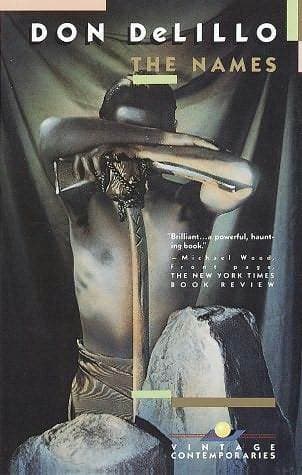
Don DeLillo (1982)
Genre
Literary Fiction / Mystery
Reading Time
9-12 hours
Key Themes
See below
Sign in to track this book
An American businessman in ancient Greece stumbles into a secretive cult that ritually murders people based on the alphabet, all while dealing with his estranged family and the unsettling power of language.
James Axton, an American risk analyst for a multinational company, arrives in Athens, Greece, feeling a deep sense of displacement. He struggles to connect with the city's history and present, instead focusing on his new apartment and expatriate routines. His job, assessing risks in the Middle East, further isolates him. He often sees a peculiar American couple, Frank and Ann, who seem to live a detached, almost artificial life. James's thoughts show deep anxiety and an obsession with language and the meaninglessness he sees in his own life, as he constantly analyzes his interactions and observations.
James's estranged wife, Kathryn, a filmmaker, arrives in Athens with their six-year-old son, Tap. Their reunion is tense, marked by unspoken resentments and the awkwardness of their separation. Kathryn introduces James to Owen Brademas, an American linguist and academic she met while working on a documentary. Owen is a mysterious figure, deeply involved in his research into ancient languages and cultures, especially those of the Middle East. He quickly becomes important in their lives, his intellectual intensity contrasting with James's more detached observations. Tap, meanwhile, shows unusual intelligence, often telling elaborate, dreamlike stories that his mother writes down.
Owen Brademas, intrigued by a cryptic message, takes James to a remote archaeological dig in the Greek countryside. There, they find a small, isolated community Owen believes is connected to an ancient cult. This group, mostly young men, performs strange rituals involving repeating names and seemingly sacrificing animals. James is disturbed by the eerie atmosphere and the cult members' intense, almost trance-like state. Owen explains his theory that the cult believes in the power of names to control reality and that their rituals are a way to communicate with a hidden, powerful force. This meeting marks James's unwilling entry into Owen's dangerous investigations.
James travels to India for his job, where he observes a different kind of cultural intensity and spiritual devotion. His experiences there, though separate from Owen's direct investigations, subtly echo themes of belief, ritual, and the power of language. While James is away, Owen's obsession with the cult grows. He continues to gather information, piecing together fragments of their practices and beliefs, which seem to involve the ritual murder of people whose names match specific patterns or sequences. Owen's letters to James become more urgent and filled with details of the cult's activities, drawing James further into the unfolding mystery, even from a distance.
When James returns to Athens, Owen shares an alarming discovery: the cult's activities are not just in Greece but are global. He shows evidence of similar ritual killings in various countries, including the Middle East and India, where victims' names align with specific, often obscure, linguistic patterns. Owen theorizes that the cult is not just a local group but a complex, interconnected network, possibly with ancient roots, that uses names as a sacred, destructive power. James is at first doubtful but becomes increasingly disturbed by the growing evidence and Owen's strong conviction, realizing the sinister implications of such an organization operating unseen.
Kathryn continues her documentary on American expatriates, interviewing various people and trying to capture their experiences of displacement and adaptation. Her artistic pursuit offers a contrast to the morbid focus on the cult. Meanwhile, Tap's storytelling becomes more noticeable. He dictates increasingly complex and often disturbing stories, full of vivid images and symbolic language, which Kathryn carefully records. These stories, though seemingly products of a child's imagination, sometimes echo the themes of violence, ritual, and linguistic power that Owen is investigating, suggesting a subconscious link or a child's unique way of processing the unsettling atmosphere around him.
Driven by his relentless search for understanding, Owen convinces James to go with him to a remote location where he believes a large cult gathering is happening. They watch the cult members perform an elaborate ritual, chanting names and seemingly preparing for a sacrifice. The tension is clear as James sees the cult's fervent devotion firsthand. During their surveillance, they are almost discovered, leading to a harrowing escape. This close call cements James's involvement, forcing him to face the terrifying reality of the cult's power and the danger Owen has put them both in.
Owen, acting alone in his growing desperation, manages to witness a full ritual murder by the cult. He describes the horrific scene to James, detailing how a victim's name is chanted before the person is killed in a precise, symbolic way. This direct observation of the cult's ultimate act deeply affects Owen, pushing him further into his obsession. However, his presence is detected, and he realizes he has become a direct target of the cult. The stakes become much higher, and James, despite his fear, feels a growing sense of responsibility for Owen's safety and the need to expose the cult.
After Owen's terrible experience, James finds himself increasingly drawn into the intellectual maze of names and language. He begins to research linguistic theories, ancient belief systems, and the historical power given to names across cultures. He considers the idea that names are not just labels but hold inherent power, able to shape destiny or even cause violence. This intellectual journey mirrors Owen's academic pursuits but is filtered through James's own anxieties. He starts to see the cult's actions not just as random violence but as a twisted form of faith, a dark exploration of language's ultimate potential.
James and Owen, driven by fear and a desperate need for understanding, begin a final, dangerous journey to confront the cult. They track a known cult leader to a remote location, hoping to find definitive proof or disrupt their activities. The confrontation is tense and unclear; the cultists are elusive, and their motives remain mysterious. In the ensuing chaos, Owen is either killed or disappears, his fate unknown. James is left alone, haunted by the events and the lingering questions about the cult's true nature and the power of names. He is deeply affected by Owen's sacrifice and the realization of the cult's widespread influence.
Afterward, James returns to a semblance of his former life, but he is forever changed. The cult's influence and Owen's fate continue to haunt him. He tries to make sense of the bizarre events, grappling with the blurred lines between reality and belief, sanity and fanaticism. The experience deepens his existing anxieties but also gives him a new, unsettling perspective on language, power, and the human need for meaning. He continues to observe the world with an intensified awareness of hidden patterns and the unspoken forces that govern human behavior, forever marked by his encounter with the cult of names.
The Protagonist
James begins as a detached observer, but his involvement with the cult forces him to engage with profound questions of belief and identity, ultimately leaving him irrevocably altered and more deeply connected to the power of language.
The Supporting/Catalyst
Owen's initial academic curiosity transforms into a dangerous obsession, culminating in his sacrifice in pursuit of the cult's secrets.
The Supporting
Kathryn remains a steadfast figure, focused on her art and motherhood, providing emotional stability amidst the narrative's chaos.
The Supporting
Tap's character remains consistent as a conduit for imaginative storytelling, his narratives subtly reflecting the surrounding themes.
The Mentioned/Supporting
Their role is primarily observational, serving as recurring background figures that reinforce James's sense of detachment.
The Antagonist
The cult's presence and methods are gradually revealed, acting as the primary antagonist and a manifestation of the novel's central themes.
The novel explores language not just as a way to communicate but as a powerful, almost magical force. The cult's belief in the inherent power of names, their ability to shape reality and even control life and death, is central. Owen's linguistic research looks into the ancient roots of this belief, while James's inner thoughts constantly break down words, phrases, and their deeper, often disturbing, meanings. Tap's imaginative stories show language's creative potential, sharply contrasting with the cult's destructive use of names. The novel suggests that language holds immense power, capable of both creation and deep destruction, depending on how it is used.
“A name is a form of power. It's a way of knowing and of being known. It's a way of living and of dying.”
James Axton's experience as an expatriate in Athens shows the theme of displacement. He feels disconnected from the local culture, his past, and even his own identity. His job as a 'risk analyst' further highlights this detachment, as he watches global events from afar. Kathryn's documentary on expats and the mysterious Frank and Ann also add to this theme, showing different ways people deal with being outsiders. The cult, ironically, offers its members a radical, though destructive, form of identity and belonging, highlighting the human need for connection and meaning in a fragmented world. The novel questions how people define themselves when removed from familiar settings.
“It was difficult for him to feel that he belonged anywhere, to any country or even to any moment.”
Both James Axton and Owen Brademas are driven by deep anxieties and obsessions. James's inner world is a constant stream of self-analysis, worry, and careful observation, almost paranoia. He dissects every interaction and feeling, struggling to find meaning. Owen, on the other hand, is consumed by his intellectual obsession with the cult of names, pushing him to reckless and dangerous extremes. His academic pursuit turns into a life-threatening fixation. The novel explores how these inner states can both drive intellectual inquiry and lead to psychological breakdown, blurring the lines between genius and madness, especially when faced with the unknown and the irrational.
“He was a man who lived inside his own head, a prisoner of his own thoughts.”
The cult of names is the main way the novel explores the nature of belief and fanaticism. Their firm conviction in the power of names, leading to ritual murder, challenges common ideas of reason and morality. The novel looks at the psychological and social reasons behind such groups, examining how people can give in to a group ideology, no matter how extreme. Owen's pursuit of the cult also touches on the nature of belief, as his academic curiosity becomes a nearly religious fervor for understanding. The story makes readers confront the terrifying potential of strong beliefs, whether intellectual or spiritual, when they lose ethical boundaries.
“There are truths that are not meant to be known, and some names are best left unspoken.”
A mysterious global organization performing ritualistic murders based on linguistic patterns.
The cult serves as the central enigma and antagonist of the novel. It is a shadowy organization whose members believe in the inherent power of names, using them in ritualistic murders across the globe. This device drives the plot, providing the mystery that Owen investigates and into which James is unwillingly drawn. The cult embodies the novel's central themes of language's power, the nature of belief, and the dark undercurrents of human society, creating a sense of pervasive threat and existential dread.
The precocious son's dictated narratives, often echoing the novel's dark themes.
Tap's elaborate, often disturbing, dictated stories serve as a unique narrative device. While seemingly products of a child's imagination, these narratives frequently mirror or foreshadow the themes of violence, ritual, and linguistic power explored through the cult. They act as a counterpoint to the adult world's anxieties, offering a raw, unfiltered perspective on the power of language and storytelling. This device highlights the tension between innocence and the encroaching darkness, and subtly suggests a deeper, subconscious connection to the world's hidden forces.
The protagonist's stream-of-consciousness observations and philosophical musings.
James's extensive internal monologue is a primary narrative device, offering deep insights into his neuroses, intellectual preoccupations, and detached perspective on the world. His constant analysis of language, human behavior, and his own anxieties shapes the reader's understanding of events and themes. This device allows DeLillo to explore complex philosophical ideas and psychological states directly through the protagonist's consciousness, creating a dense, introspective narrative voice that is both engaging and unsettling.
Owen's letters to James, conveying information and deepening the mystery.
Owen's frequent letters and other forms of communication to James serve as a crucial plot device, especially when the characters are separated. These communications convey vital information about the cult's activities, Owen's theories, and his growing obsession. They build suspense and draw James, and by extension the reader, deeper into the mystery. This device also highlights the theme of communication itself, and how information, even fragmented or cryptic, can shape perception and drive action.
“It was enough to be alive, to be a body in the world, to be a name. The rest was illusion.”
— Reflecting on identity and existence amidst the cult's activities.
“Language is a system of signs, and these signs are arbitrary. They don't relate to anything real.”
— James Axton's internal monologue about the nature of language.
“We're all the same, just a little less. A little less real, a little less whole.”
— Observation about the fragmented nature of modern life and identity.
“The past is a foreign country; they do things differently there. But the future is a foreign country too, and they do things differently here.”
— Contemplating the disjunction between past, present, and future.
“Terrorism is the thinking of the poor, and war is the thinking of the rich.”
— A character's cynical remark on global conflict and power dynamics.
“The more you know, the more you realize you don't know.”
— A recurring theme about the limits of knowledge and understanding.
“There are no innocent places, only places that have not yet been named.”
— Discussing the pervasive influence of human activity and meaning-making.
“Every object has a secret life. Every word has a secret meaning.”
— Reflecting on the hidden layers of reality and language.
“We live in a time of names. Everything is named, and the names are everything.”
— Central theme of the novel, concerning the power and significance of names.
“The true nature of things is always hidden. It's the nature of things.”
— A character's philosophical musing on the elusive nature of truth.
“History is a wound, and we are all bleeding from it.”
— Considering the inescapable impact of historical events on the present.
“To invent the world, you have to invent the names.”
— Exploring the idea that language and naming create reality.
“We are what we remember. We are what we forget.”
— Meditating on the role of memory and oblivion in shaping identity.
“The future is just the past waiting to happen in a new way.”
— A cyclical view of time and events, suggesting repetition and inevitability.
Ready to see how well you understood this book? Take our interactive quiz with 10 questions.
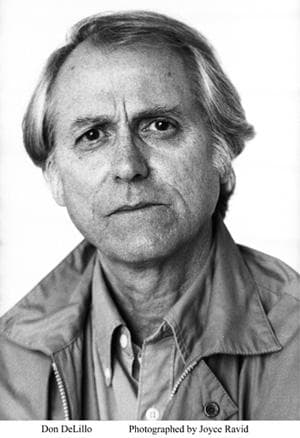
Donald Richard DeLillo is an American novelist, short story writer, playwright, screenwriter and essayist. His works have covered subjects as diverse as television, nuclear war, the complexities of language, art, mathematics, politics, economics, and baseball.







