“It's like everyone tells a story about themselves inside their own head. Always. All the time. That story makes you what you are. We build ourselves out of that story.”
— Kvothe reflecting on identity and self-perception.

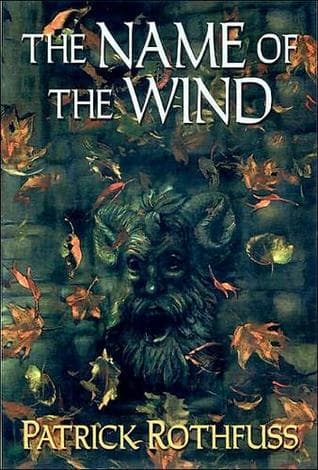
Patrick Rothfuss (2007)
Genre
Fantasy
Reading Time
15-20 hours (approx. 900-1200 min)
Key Themes
See below
Sign in to track this book
After his family is murdered, a talented boy named Kvothe grows into a legendary wizard, moving from a poor childhood to become a respected magic-user and kingkiller, telling his story in his own voice.
The story begins at the quiet Waystone Inn, run by Kote and his helper Bast. The inn is a safe place for travelers, but its calm is broken when a creature, a scrael, attacks some guests. Kote, despite looking old and tired, shows surprising skill in killing the creature. Soon after, a famous writer, Devan Lochees, arrives. He has heard rumors of Kvothe and found the inn. He knows Kote is the well-known Kvothe, the Kingkiller, and asks him to tell his true story. Kvothe, at first not wanting to and accepting his new life, eventually agrees to tell his life story, saying it will take three days. This sets up the story, moving between the present-day inn and Kvothe's past.
Kvothe starts his story as a young boy in the Edema Ruh, a traveling group of actors and musicians. His parents, Arliden and Laurian, are skilled performers, and Kvothe quickly shows he is a talented musician, actor, and quick learner. He gets an informal but complete education from his parents and the group, including history, storytelling, and music. He also meets Abenthy, a magic-user and teacher, who teaches Kvothe about sympathy and the Name of the Wind. This peaceful life suddenly ends when the Chandrian, a legendary group of evil beings led by Lanre (also called Haliax), kill everyone in his group. Kvothe sees what happened, hears their scary names, and sees the special blue flame, making him the only one left.
After the killing, Kvothe is upset and wanders for days before finding his way to Tarbean, a large, busy city. For the next three years, he lives as a street child, looking for food and shelter, often hungry and going through hard winters. He learns to pickpocket, beg, and steal to live, becoming very smart and good at observing and adapting. During this time, he often remembers the Chandrian and their signs, which makes him want knowledge and revenge. Despite the great difficulty, he continues to play music on a lute he saved and keeps his mind sharp by reading when he can, though books are rare.
At fifteen, Kvothe hears a traveling scholar talking about the University, a known place for learning and magic. Realizing it might have the answers he needs about the Chandrian, he decides to go there. He saves every coin, playing music and doing odd jobs, and eventually gets enough money for the trip. He travels to Imre, a city near the University, where he meets Denna, a beautiful and mysterious woman who will be important in his life. Their meeting is short but meaningful, starting a complex and often difficult relationship. He finally reaches the University gates, determined to get in even without formal education or money.
Kvothe presents himself for admission to the University, a place where only the smartest minds are accepted, often after years of preparation. Despite his poor appearance and no tuition, he impresses the Masters with his intelligence, quick thinking, and wide, though unusual, knowledge. During his interview, he performs a surprising act of sympathy, showing natural talent. He is accepted with a scholarship, which upsets Master Hemme and immediately makes Ambrose Jakis, a rich and proud nobleman also at the University, his enemy. Kvothe quickly becomes friends with Simmon and Wilem, two other students, and begins to learn the social and academic rules of the Arcanum.
At the University, Kvothe quickly shows he is very gifted, doing well in many areas, especially sympathy and naming. He studies Naming under Master Elodin, though Elodin's teaching is strange and frustrating. He continues to have money problems, often going hungry and doing risky things to pay his fees. His rivalry with Ambrose grows, leading to several fights, including a magic duel and Ambrose's attempts to hurt Kvothe's reputation and money. Kvothe also learns about the Archives, a huge library, and manages to get in despite strict rules. He meets Denna again during this time, and their on-and-off romance and friendship grow as he studies.
Kvothe finds a way to make money by working in the Fishery, the University's workshop for inventors, where he creates a new kind of bloodless knife. This cleverness further establishes his name as a smart, if unusual, student. His studies with Master Elodin remain hard, as Elodin pushes him to understand the true nature of Naming, not just memorize facts. During a moment of strong emotion and conflict with Hemme, Kvothe accidentally calls the Name of the Wind, silencing Hemme and showing his hidden power. This event confirms his ability as a Namer, though he still tries to use this power on purpose.
News of a draccus, a large, lizard-like creature, attacking a nearby town reaches the University. Kvothe, wanting to earn money and prove himself, offers to hunt it. He, along with some students including Denna, travels to the town of Trebon. There, he faces the draccus, which is powered by denner resin, and bravely defeats it, saving the town. While with Denna, he learns more about her hard-to-find and often harsh patron, a man she calls Master Ash. Kvothe becomes suspicious of this patron, feeling a dark and controlling influence, and thinks he might be connected to the Chandrian, especially after finding a strange, burned tree in the area that looks like the Chandrian's destructive touch.
Back at the University, Kvothe continues his studies and his search for information about the Chandrian. He decides to leave the University for a while to seek support from Maer Alveron, a powerful nobleman. He travels to Vintas and, after waiting, manages to impress the Maer with his music and wit. The Maer hires Kvothe to investigate a group of bandits causing trouble in his lands. This task leads Kvothe to meet the Adem, a private and very skilled group of mercenaries. He learns about their culture, their silent hand language, and their strong fighting skills. This meeting prepares for future events and adds more mystery and danger to Kvothe's life.
As the first day of storytelling ends, Kvothe, now Kote, stops his story at the Waystone Inn. Chronicler is very interested, barely able to hide his excitement, while Bast, Kvothe's fae helper, says he wants the story to continue. The present-day scenes are mixed with the past story, showing Kote's tiredness and the lasting shadow of his past successes and failures. The day ends with a promise of more, as Kvothe gets ready to tell more of his legend, hinting at the sad events and the 'Kingkiller' title that will come in the next days of his story. The question of why Kvothe, the legendary hero, is now a quiet innkeeper, remains strong.
The Protagonist
Kvothe transforms from a naive, gifted child into a resourceful, powerful, yet deeply scarred young man, constantly seeking knowledge and revenge while grappling with his growing legend.
The Supporting
Her character remains largely a mystery, serving as a catalyst for Kvothe's emotions and actions, while her own motivations and past are slowly hinted at.
The Supporting
Bast's primary arc is his unwavering effort to restore Kvothe's legendary status, often revealing his own fae nature and loyalty.
The Supporting
Chronicler's arc is largely observational, serving as the audience surrogate, slowly piecing together the truth of Kvothe's past.
The Antagonist
Ambrose remains a consistently antagonistic force, his character defined by his rivalry with Kvothe and his attempts to undermine him.
The Supporting
Ben serves as an early mentor, his influence shaping Kvothe's intellectual and magical development before his tragic loss.
The Supporting
Elodin serves as a mentor figure who teaches Kvothe profound, unconventional lessons about Naming, leading to Kvothe's breakthrough with the Name of the Wind.
The Supporting
Simmon's arc is primarily as a steadfast friend, offering emotional support and loyalty to Kvothe throughout his University years.
The Supporting
Wilem serves as a grounded, intellectual companion to Kvothe, offering practical advice and academic support throughout their time at the University.
The Antagonist
Haliax's arc is one of ancient, unchanging evil, serving as the ultimate, elusive target of Kvothe's revenge.
The novel looks at Kvothe's changing self, from the talented child performer to the wild street orphan, the smart University student, and then the legendary 'Kingkiller.' His journey is a constant search for who he is after tragedy and fame. He struggles with how his inner self compares to the legends about him, especially as Kote, the humble innkeeper. This idea helps explain his reasons and why he eventually left the world.
“I have, of course, been called many things. Most of them flattering, a few of them not. But I have only been called by one name, by one person, in all my life. And that name… was mine.”
Stories, rumors, and legends greatly influence Kvothe's world and his own reputation. The story itself is Kvothe telling his life, showing how truth can be seen differently and how tales can both make someone famous and change reality. 'Naming'—understanding the true nature of things to control them—is a basic magic system, directly linking knowledge of a name to power. This is seen when Kvothe calls the Name of the Wind, showing a deep understanding and control. The Chandrian's fear of their names being spoken further supports this idea.
“Words are a pale shadow of a scream. Names are the things that hold the world together.”
Kvothe's whole journey is driven by his desire for revenge against the Chandrian for killing his family. This search for justice leads him to seek knowledge at the University and to uncover the world's secrets. But seeking revenge often blurs moral lines and puts Kvothe in dangerous, morally unclear situations. Whether his actions are truly for justice or just revenge is an ongoing inner struggle, especially as he gains more power and his legend grows.
“I had gone looking for a monster, and found a man. But I had not found the Chandrian.”
Loss is a core part of Kvothe's character, starting with the terrible killing of his entire group. This early trauma shapes his feelings and causes his sadness. His complex relationship with Denna is a main part of his emotional life, marked by strong connection, longing, and repeated separations. Their inability to fully commit or be together, because of outside events and their own mysterious natures, brings both joy and deep sadness to Kvothe, showing how happiness can be brief and missed chances can cause lasting pain.
“There are three things all wise men fear: the sea in storm, a night with no moon, and the anger of a gentle man.”
Kvothe is certainly a genius, doing well in music, magic, and school with ease. However, his great talents often come with a high cost. His brilliance makes him alone, a target for jealousy (like Ambrose), and puts great pressure on him. As his fame grows, the legends about him become larger than life, creating a public image he struggles to live up to or escape. The present-day Kote, a shadow of his past self, shows the burden of his genius and fame, suggesting that his achievements ultimately led to his downfall or withdrawal.
“It was a silence of three parts, like the moments before a storm. Or the moments after a king has died.”
Kvothe's past is told to Chronicler in the present-day Waystone Inn.
The entire novel is framed by the present-day narrative of Kvothe, living as the innkeeper Kote, recounting his life story to Chronicler over three days. This allows for a dual perspective: the immediate, dramatic events of Kvothe's past and the melancholic, reflective tone of the older Kote. It builds suspense around what happened to the legendary Kvothe, why he's in hiding, and what led to his current state. The interjections from Bast and Chronicler provide additional context and remind the reader of the present-day stakes, enriching the narrative by contrasting the legend with the man.
The broken, quiet innkeeper Kote subtly hints at his tragic future.
The stark contrast between the legendary Kvothe of the past and the quiet, almost broken innkeeper Kote in the present serves as a powerful and constant source of foreshadowing. Kote's weariness, his reluctance to use his old skills, and the cryptic mentions of his 'Kingkiller' title and the 'silence of three parts' all hint at a tragic downfall or a profound loss of power. This creates an overarching mystery: what events led to this legendary figure's retreat from the world? It keeps the reader constantly questioning the outcome of Kvothe's grand adventures.
The mysterious Chandrian drive Kvothe's quest for knowledge and revenge.
The Chandrian, the ancient and mythical group responsible for the murder of Kvothe's family, serve as the primary catalyst for his entire journey. They are an elusive and powerful force, shrouded in mystery, whose motives and origins are largely unknown. While they are a clear antagonistic force, their infrequent appearances and the lack of concrete information about them make them function almost like a MacGuffin – a plot device that drives the narrative forward without necessarily being fully explained. Kvothe's relentless pursuit of information about them shapes his academic choices, his travels, and his interactions, giving his life a singular purpose.
A magical system based on scientific principles of energy transfer and linkages.
Sympathy is the primary form of magic practiced at the University, based on principles that mimic physics. It involves creating a 'sympathetic link' between two objects (a 'link' and a 'malfeance') and transferring energy between them. Its effectiveness depends on the alar (mental discipline) of the practitioner and the strength of the link. This system is presented with clear rules and limitations, making it feel grounded and believable within the fantasy world. Kvothe's mastery of sympathy, his ability to create complex links, and his understanding of its underlying science showcase his intellectual prowess.
“It's like everyone tells a story about themselves inside their own head. Always. All the time. That story makes you what you are. We build ourselves out of that story.”
— Kvothe reflecting on identity and self-perception.
“Words are pale shadows of forgotten names. As names have power, words have power. Words can light fires in the minds of men. Words can wring tears from the hardest hearts.”
— Kvothe explaining the significance of names and language.
“Call a jack a jack. Call a spade a spade. But always call a whore a lady. Their lives are hard enough, and it never hurts to be polite.”
— Kvothe's father giving advice on kindness and respect.
“It was the patient, cut-flower sound of a man who is waiting to die.”
— The narrator describing the atmosphere of the Waystone Inn.
“You have to be a bit of a liar to tell a story the right way.”
— Kvothe discussing the nature of storytelling and truth.
“Bones mend. Regret stays with you forever.”
— Kvothe reflecting on past actions and their lasting impact.
“The best lies about me are the ones I told.”
— Kvothe acknowledging his role in shaping his own legend.
“It's the questions we can't answer that teach us the most. They teach us how to think. If you give a man an answer, all he gains is a little fact. But give him a question and he'll look for his own answers.”
— Kvothe sharing wisdom about learning and curiosity.
“There are three things all wise men fear: the sea in storm, a night with no moon, and the anger of a gentle man.”
— Kvothe recounting a proverb about hidden dangers.
“I have stolen princesses back from sleeping barrow kings. I burned down the town of Trebon. I have spent the night with Felurian and left with both my sanity and my life. I was expelled from the University at a younger age than most people are allowed in. I tread paths by moonlight that others fear to speak of during day. I have talked to Gods, loved women, and written songs that make the minstrels weep.”
— Kvothe summarizing his legendary exploits to Chronicler.
“You may have heard of me.”
— The opening line of the book, introducing Kvothe's reputation.
“It's not over if you're still here.”
— A quiet moment of resilience and hope.
“The sympathy he'd learned at the University was a tool, and a subtle one. But the sympathy he'd learned in Tarbean was a weapon, and a vicious one.”
— Describing Kvothe's different approaches to magic based on his experiences.
Ready to see how well you understood this book? Take our interactive quiz with 10 questions.
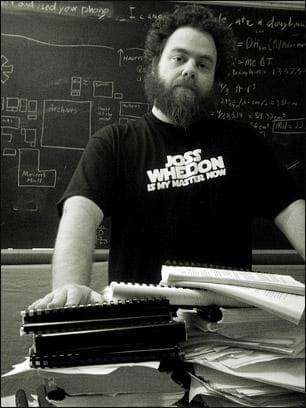
Biography coming soon.







