“The only thing worse than a man you can't trust is a man who trusts everyone.”
— General wisdom about leadership and human nature.


Norman Mailer (2018)
Genre
Historical Fiction
Reading Time
11-14 hours
Key Themes
See below
Sign in to track this book
On a Japanese-held Pacific island, American soldiers face not only a brutal enemy but also fear, power, and their own humanity, which shatters the romanticized view of World War II heroism.
General Cummings, a driven commander, begins the invasion of Japanese-held Anopopei. His forces, including the reconnaissance platoon led by Lieutenant Robert Hearn and Sergeant Sam Croft, land under naval bombardment. The men immediately face the harsh realities of jungle warfare. They must clear a path through dense terrain, always alert for ambushes. The first days involve small, brutal skirmishes, showing the dangerous environment and the psychological toll on soldiers, especially new recruits. The men start to form a tense bond, but also show their individual fears and biases under pressure.
Lieutenant Hearn's platoon goes on various reconnaissance and patrol missions deep into Anopopei's interior. These patrols are hard, with constant heat, humidity, and the threat of Japanese snipers and ambushes. Supplies run low, and morale drops. Tensions build between Hearn, who is more liberal, and the strict Sergeant Croft, who believes in rigid discipline. Croft's brutal methods, including his treatment of natives and disregard for the men's well-being, conflict with Hearn's more humane approach, leading to disagreements and a growing division in the platoon, with soldiers taking sides or trying to stay neutral.
General Cummings, in intense conversations, tries to teach Lieutenant Hearn his military and political ideas. Cummings, cynical and power-hungry, believes fear is the best motivator and that society is naturally hierarchical. He sees the war as a chance to create his vision of a disciplined, authoritarian order. He dislikes democracy and views common soldiers as tools. Hearn, despite his intelligence, finds himself increasingly disgusted by Cummings's cold practicality and disregard for human value. These discussions highlight the ideological conflict between them and hint at Hearn's tragic command.
General Cummings, wanting to show his strategic skill and win quickly, plans a daring but dangerous flanking maneuver against a strong Japanese position. He ignores warnings about the terrain and enemy strength. The operation results in many American casualties, as soldiers are caught in crossfire and struggle through impassable jungle. This failed offensive further demoralizes the troops and increases hostility towards Cummings's leadership. Hearn's platoon sees the devastation, strengthening their sense of the war's futility and waste.
Because of General Cummings's erratic behavior and Hearn's growing defiance, Cummings punishes Hearn by reassigning him to lead Croft's reconnaissance platoon, effectively demoting him to a more dangerous role. Hearn, despite his concerns about Croft's methods, tries to lead with more humanity. However, during a dangerous patrol, the platoon is ambushed by Japanese forces. In the chaos, Hearn is shot and killed, ending his attempts to keep his integrity amidst the war's brutality. His death leaves Sergeant Croft in command, free to use his ruthless vision without challenge.
With Hearn dead, Sergeant Croft takes undisputed command of the platoon. His leadership becomes even more severe. Driven by a desire for personal glory and pleasure in dominance, Croft pushes the men relentlessly, often for seemingly pointless goals. He forces them on increasingly dangerous and exhausting patrols, ignoring their fatigue and injuries. The soldiers, without Hearn's moderating influence, are subject to Croft's tyrannical will, creating fear and resentment. Croft's actions show the destructive potential of unchecked power in war.
Showing his obsession with conquest and disregard for his men's lives, Sergeant Croft decides to lead the platoon on a climb up Mount Anaka, the island's highest and most dangerous peak. This climb has no strategic value; it is purely a personal challenge for Croft. The ascent is grueling, dangerous from terrain, weather, and Japanese patrols. The men are pushed to their physical and mental limits, suffering injuries and near-mutiny. This hard journey symbolizes the futility and senselessness of much of the war, driven by individual ambition rather than collective purpose.
General Cummings, still wanting a decisive victory and to capture a high-ranking Japanese officer, orders the platoon, now under Croft's command, to find and capture the Japanese general believed to be hiding in the jungle. The men, already exhausted and demoralized, must continue their relentless pursuit through enemy territory. The search is futile, as they fail to find the general, reinforcing the sense of wasted effort and the arbitrary nature of their assignments. This mission further erodes the men's faith in their leadership and the purpose of their presence on Anopopei.
As the campaign continues, the platoon starts to break down. Individual soldiers reach their limits. Private Red Valsen, a tough but disillusioned working-class man, becomes more rebellious, clashing with Croft. Private Joey Goldstein, a sensitive and intellectual Jew, struggles with his faith and the brutality around him. Other soldiers, like Private Stanley Ridges, suffer injuries or get jungle diseases, further reducing the platoon's strength and morale. The physical and psychological toll of prolonged combat and Croft's leadership leads to a near-total breakdown of discipline and camaraderie, leaving the men isolated in their suffering.
After the long and fruitless operations, General Cummings's forces, including Croft's platoon, are ordered to retreat. The men are physically and emotionally drained, their spirits broken by constant combat, loss of comrades, and the perceived futility of their efforts. They trudge back, a shadow of their former selves, haunted by the horrors they have seen and caused. The retreat marks the end of their combat on Anopopei, but the psychological scars will remain. The war may be ending for them, but the impact of the 'naked and the dead' will last.
The Antagonist/Commanding Officer
Cummings's arc shows a man whose rigid ideology is tested by the realities of war, leading to a degree of frustration but ultimately reinforcing his belief in his own superiority.
The Protagonist/Platoon Leader
Hearn attempts to assert his moral compass but is ultimately crushed by the war's brutality and the cynical power structures he opposes.
The Antagonist/Platoon Sergeant
Croft's arc shows his unchecked power growing as the war progresses, leading him to increasingly sadistic and self-serving actions.
The Supporting/Platoon Member
Valsen's rebellion against authority is a constant struggle, ultimately showing the difficulty of maintaining individuality under severe duress.
The Supporting/Platoon Member
Goldstein's arc is one of increasing disillusionment and despair as his faith and ideals are shattered by the horrors of war.
The Supporting/Platoon Member
Ridges's arc shows his descent into fear and complicity, becoming a tool for Croft's ruthlessness rather than finding his own moral footing.
The Supporting/Platoon Member
Gallagher's prejudices remain largely unchanged, showing the stubbornness of bigotry even in the face of shared suffering.
The Supporting/Platoon Member
Martinez endures the war with quiet resilience, his character arc defined by his steadfastness in the face of adversity.
The novel explores how power is gained, used, and misused within a military hierarchy. General Cummings embodies the intellectual basis for authoritarianism, believing in the superiority of some individuals and the need for fear to control others. Sergeant Croft, however, shows the brutal use of power, finding pleasure in dominating others. Lieutenant Hearn's struggle to lead humanely against these forces, and the subjugation of common soldiers, highlight the corrupting influence of unchecked authority and how easily it leads to dehumanization. This is clear in Cummings's strategic decisions that ignore human life and Croft's pointless climb up Mount Anaka.
“''The only morality of the future is a power morality, and a man who cannot obey the will of his commander is a man who is not fit to live.''”
Mailer shows how war strips individuals of their humanity, turning them into tools for violence and survival. The constant threat of death, physical and psychological exhaustion, and moral compromises demanded by combat erode the soldiers' sense of self and empathy. Characters like Joey Goldstein struggle with this loss, while others like Sergeant Croft embrace it. The combat descriptions, the casual disregard for life, and the soldiers' internal conflicts show how the battlefield transforms men, often leaving them 'naked' of their former selves and surrounded by the 'dead' both literally and figuratively. This is clear in the platoon's breakdown and the men's growing callousness.
“''War was a place where men were stripped of their pretensions and their civility, where they became what they were underneath.''”
The novel examines the class divisions and social hierarchies within the American military. General Cummings's intellectual elitism and belief in a natural order where the strong lead the weak contrast with the working-class backgrounds of many privates, like Red Valsen and Gallagher. Tensions between officers and enlisted men, and prejudices among soldiers (e.g., Gallagher's anti-Semitism towards Goldstein), reflect wider societal inequalities. War often worsens these divisions, as those in power exploit existing prejudices and class structures to maintain control. This is especially clear in how Croft manipulates the fears and loyalties of working-class soldiers.
“''The rich had their way of doing things, and the poor had theirs, and the war was just another place where it showed.''”
A constant theme in the novel is the sense of futility and questioning the war's purpose. Soldiers often go on pointless patrols, enduring great suffering for objectives that seem to have little strategic value. General Cummings's grand strategic visions often cause many casualties without clear gains, as seen in the failed flanking maneuver. Lieutenant Hearn's death, during a standard patrol after his demotion, further emphasizes the arbitrary nature of life and death in combat. The men's growing disillusionment and their eventual broken retreat highlight that much of their sacrifice was in vain, leaving them questioning the meaning of their suffering.
“''They were tired of the war, tired of the jungle, tired of themselves. They were just tired, and there was no end to it.''”
The conflict between individual freedom and the military's demand for absolute conformity is a central tension. Characters like Lieutenant Hearn and Private Red Valsen resist the dehumanizing pressure to become cogs in the war machine, trying to assert their individuality and moral autonomy. However, the crushing weight of military discipline, the constant threat of death, and pervasive fear often force conformity. Sergeant Croft shows the extreme end of conforming to the military's brutal logic, while General Cummings represents the intellectual's attempt to impose rigid order. The novel explores the great difficulty, and often tragic cost, of keeping one's individual identity and moral compass in an environment designed to strip it away.
“''A man was either a part of the machine, or he was nothing. There was no in-between in this war.''”
Interspersed chapters detailing characters' pre-war lives.
Throughout the narrative, Mailer inserts chapters titled 'Chorus' that provide detailed flashbacks into the pre-war lives of various platoon members and officers. These sections reveal their backgrounds, motivations, personal struggles, and societal prejudices. This device serves to humanize the soldiers, allowing the reader to understand who they were before the war stripped them bare. It also highlights the stark contrast between their civilian lives and the brutal realities of Anopopei, emphasizing the transformative and often destructive impact of combat. The flashbacks deepen character understanding and add psychological complexity to their actions and reactions on the island.
The oppressive and dangerous island environment.
The island of Anopopei, particularly its dense, suffocating jungle, functions almost as a character in itself. It is not merely a setting but an active antagonist, constantly challenging the soldiers' physical and mental endurance. The oppressive heat, humidity, insects, and treacherous terrain contribute directly to the men's suffering, fatigue, and paranoia. The jungle's labyrinthine nature also mirrors the moral and psychological complexities the characters face, trapping them in a cycle of violence and despair. Its relentless presence emphasizes the dehumanizing power of the environment on the human spirit.
Accessing characters' inner thoughts and psychological states.
Mailer frequently employs internal monologues and a stream-of-consciousness style, particularly for characters like Lieutenant Hearn, General Cummings, and Joey Goldstein. This allows the reader direct access to their innermost thoughts, fears, moral dilemmas, and philosophical ponderings. This device is crucial for exploring the psychological impact of war, the characters' struggles with their consciences, and their attempts to make sense of the senseless violence around them. It provides a deeper understanding of their motivations and the profound internal conflicts that drive their actions and shape their experiences on Anopopei.
Representing humanity stripped bare and the omnipresence of death.
The title itself functions as a potent symbol throughout the novel. 'The Naked' refers to humanity stripped bare of its civilized pretenses, exposed to its rawest instincts, fears, and desires under the extreme pressure of war. It signifies the vulnerability and essential nature of man without the trappings of society. 'The Dead' not only refers to the literal casualties of war but also to the spiritual and moral death that many survivors experience, the loss of their former selves and their innocence. This symbolism underscores the novel's central theme of dehumanization and the profound, often irreversible, impact of combat on the human psyche.
“The only thing worse than a man you can't trust is a man who trusts everyone.”
— General wisdom about leadership and human nature.
“There was a law in the army that if you were a good man, you were a bad soldier.”
— Reflecting on the dehumanizing aspects of military service.
“Fear was a drug, it made you brave, it made you strong, it made you stupid.”
— Exploring the complex effects of fear in combat.
“Every man carried his own death, and every man chose his own way of dying.”
— A philosophical observation on mortality and personal agency.
“War was a disease, and it spread from man to man, and it ate at the heart of everything.”
— A metaphor for the destructive and pervasive nature of war.
“The truth was a slippery thing, and it changed its shape depending on who was looking at it.”
— Discussing the subjective nature of truth and perception.
“You could kill a man, but you couldn't kill an idea.”
— Reflecting on the enduring power of ideology.
“There was a loneliness to command, a terrible isolation that came with the responsibility.”
— Highlighting the burdens of leadership.
“The army was a machine, and men were just cogs in the machine, easily replaced.”
— A critique of military bureaucracy and the expendability of soldiers.
“Every man had his own war going on inside him, even when there was no war outside.”
— Suggesting internal struggles and psychological battles.
“Hate was a fire, and it burned everything in its path, even the one who carried it.”
— A warning about the self-destructive nature of hatred.
“The past was a weight, and it dragged you down, even when you tried to run from it.”
— Reflecting on the inescapable influence of past experiences.
“Freedom was a word, and like all words, it could be twisted and used to justify anything.”
— Questioning the manipulation of abstract concepts.
“It was impossible to be a man without being a beast, and impossible to be a beast without being a man.”
— Exploring the duality of human nature, civility and savagery.
Ready to see how well you understood this book? Take our interactive quiz with 10 questions.
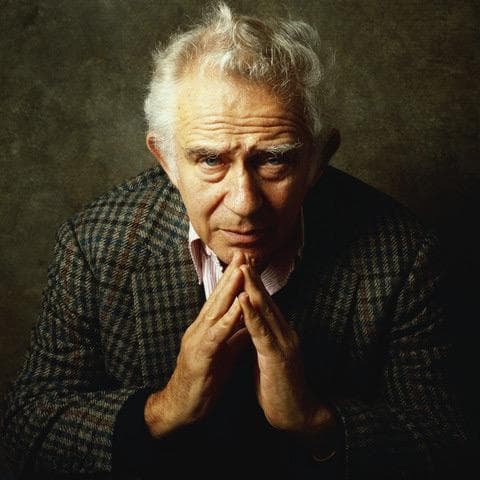
Nachem Malech Mailer, known by his pen name Norman Kingsley Mailer, was an American novelist, journalist, playwright, filmmaker and actor. In a career spanning over six decades, Mailer had 11 best-selling books, at least one in each of the seven decades after World War II.







