“The greatest mysteries are often those which take place in the most confined spaces.”
— A general observation on the nature of the mystery surrounding the Yellow Room.

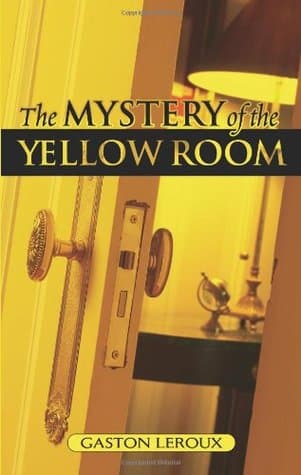
Gaston Leroux (2019)
Genre
Thriller / Mystery
Reading Time
240 min
Key Themes
See below
Sign in to track this book
A young woman is attacked in a room locked from the inside, but her assailant disappears without a trace, creating a mystery that defies logic.
Professor Stangerson and his daughter Mathilde are at the remote Château du Glandier. On the evening of October 25th, Mathilde goes to her bedroom, the 'Yellow Room,' which has a bolted door and barred window. Soon after, Professor Stangerson and his gamekeeper, Old Jacques, hear screams of 'Murder!' and two revolver shots from her room. They run to the door, calling out, but get no answer. After failing to open the door, they break it down with an axe. They find Mathilde unconscious and bleeding on the floor. The room is messy, showing signs of a struggle, but no one else is there. There is no clear way for an attacker to have left. The window is securely barred from the inside, and the door was bolted.
The local police, led by Judge d'Aubry and Police Chief Cauvin, are confused by the impossible details of the crime. Monsieur Darzac, Mathilde's fiancé, is also there and upset. News of the 'Yellow Room' mystery spreads quickly, attracting Joseph Rouletabille, a young reporter for 'Le Matin,' who arrives with his friend and photographer, Sainclair. Rouletabille, despite his age, has a sharp mind. He immediately rejects the idea that the attacker disappeared, insisting there must be a logical explanation, no matter how unlikely. He starts his own careful examination of the room and grounds, which the official investigators initially doubt.
Rouletabille quickly finds a small, round bone, described as a 'patella,' on the Yellow Room floor, which he thinks is very important. He also finds a hidden written message in the room. Meanwhile, the investigation focuses on Monsieur Darzac because of his close relationship with Mathilde and his presence outside the room during the attack. His strange behavior and a past threat against Mathilde increase suspicion. Mathilde, after waking up, cannot or will not clearly describe her attacker, only saying it was a 'monster.' The official investigation, led by Inspector Frédéric Larsan, a well-known detective, also starts to see Darzac as the likely suspect, despite the locked-room problem.
The mystery deepens when a second attack happens, this time in the Pavilion, a separate building on the estate. Old Jacques, the gamekeeper, is found unconscious after being strangled. This event seems to involve the same attacker and further casts doubt on Darzac being the only suspect, as he was being watched. Rouletabille believes the attacker must have a secret way to enter and leave the Yellow Room, despite all appearances. He continues to disagree with Larsan, who keeps focusing on Darzac, leading to a rivalry between the young journalist and the established detective. Rouletabille starts to connect the attacks to a larger, more complex plan.
Rouletabille, through careful observation and thought, finds a secret passage connecting the Yellow Room to the outside via a hidden entrance in the wall, accessible from the garden path. This passage, hidden by a movable wall section, finally explains how the attacker could have entered and left unseen. He also learns about Mathilde's past in America and her previous marriage to a man known as 'The Man in the Moon,' a clever but dangerous person named Frédéric. This discovery links the current attacks to events from Mathilde's past, suggesting a reason for revenge or a desire to control her and Professor Stangerson's scientific work.
Inspector Larsan, sure of Darzac's guilt, arranges his arrest. He presents a strong case based on circumstantial evidence, including Darzac's presence, his known jealousy, and a motive. However, Rouletabille, with his knowledge of the secret passage and Mathilde's past, is certain that Larsan has made a big mistake. He thinks the real criminal is a more clever and involved person, and that Darzac is just a convenient suspect. Rouletabille races against time to prove Darzac's innocence and expose the real attacker, even if it means challenging the well-known Inspector Larsan and risking his own safety.
Following his own clues, Rouletabille identifies 'The Man in the Moon' as the criminal. He concludes that this man is Frédéric Larsan himself, who has been controlling the investigation from the start. A dramatic confrontation takes place in the forest near the château. Rouletabille, with Sainclair and other witnesses, corners Larsan, revealing his true identity and his detailed plan. Larsan tries to escape, leading to a dangerous chase through the thick woods, during which he tries to kill Rouletabille. The chase ends in a tense standoff, where Larsan's true nature as a master criminal and liar is fully shown.
Rouletabille dramatically reveals that Inspector Frédéric Larsan is, in fact, Jean Roussel, Mathilde Stangerson's first husband, who was thought to be dead. Roussel, also known as 'The Man in the Moon,' faked his death years ago after committing another crime and then became Larsan, a celebrated detective. His reason for attacking Mathilde was to stop her from marrying Darzac and to regain control over her and her father's research, possibly for bad purposes. The 'patella' bone found in the Yellow Room was a false clue, placed by Larsan to mislead investigators, as it was a piece of plaster from a broken statue, not human bone.
Rouletabille carefully explains the 'impossible' locked-room mystery. Larsan, as Jean Roussel, entered the Yellow Room through the secret passage. He attacked Mathilde, but she fought hard. During the struggle, she wounded him, and he dropped his revolver. As Professor Stangerson and Old Jacques came to the door, Roussel, realizing he could not escape through the secret passage without being seen, hid under the bed. When the door was finally broken down, he slipped out unseen in the confusion, using the broken door as cover, and then escaped through the secret passage. Mathilde herself fired the two revolver shots in self-defense, not the attacker, and one bullet hit a wall, leaving a mark. The 'monster' Mathilde mentioned was indeed Roussel/Larsan.
With Rouletabille's clever thinking, Larsan's true identity and crimes are clear. He is caught after a final attempt to escape. Monsieur Darzac is cleared completely, and his reputation is restored. Mathilde Stangerson, though shaken, is finally safe from her dangerous ex-husband. Professor Stangerson is relieved that his daughter's life is no longer in danger. The 'Mystery of the Yellow Room' is solved, becoming a famous case of a criminal genius stopped by an even greater detective. Rouletabille's reputation as a detective is set, and he continues his career, always linked to this important investigation.
The Protagonist
Rouletabille begins as an unknown, underestimated journalist and rises to international fame as a brilliant detective, proving his unique deductive abilities.
The Victim/Central Figure
Mathilde endures a traumatic attack and the re-emergence of her past, ultimately finding peace and freedom from her tormentor.
The Supporting
Professor Stangerson moves from a state of bewildered distress to relief and understanding as the truth about his daughter's past and the attacker is revealed.
The Supporting
Darzac endures the agony of being falsely accused and imprisoned, only to be fully exonerated and reunited with Mathilde.
The Antagonist
Larsan, initially presented as a brilliant detective, is unmasked as a master criminal, his elaborate deceptions ultimately exposed by Rouletabille.
The Supporting
Sainclair observes Rouletabille's genius unfold, growing in admiration and understanding of his friend's unique abilities.
The Supporting
Old Jacques is a victim and witness, experiencing the terror of the attacks firsthand before the truth is revealed.
The Supporting
Judge d'Aubry's initial bewilderment gives way to acceptance of Rouletabille's extraordinary solution.
The book looks at the conflict between an impossible crime and the power of logic to find a rational explanation. The locked Yellow Room, with no clear way for the attacker to enter or leave, seems like an unsolvable problem. Rouletabille always argues that 'the criminal always leaves a trace' and that what seems impossible is just something not yet observed. His focus on small details and his ability to build a logical series of events, however complex, ultimately breaks down the idea of the impossible. This proves that human cleverness, both criminal and investigative, works within the rules of logic. This idea is central to the locked-room mystery genre.
“One must have the logic of a demon to discover the logic of a crime.”
The idea of identity is important, especially with Frédéric Larsan, who lives a double life as a well-known detective and a criminal. His ability to maintain two different identities, even fooling experienced investigators, shows how easily personal identity can change. Mathilde Stangerson's hidden past and her former identity as Madame Roussel further show this idea, how past identities can affect and shape present situations. The book questions who people really are underneath their public roles and how far they will go to hide or create new identities for their own reasons.
“The greatest criminal is the one who hides behind the mask of an honest man.”
The book criticizes the established legal and police systems by showing Inspector Larsan, a celebrated figure who is, in fact, the criminal. This challenges the reader's trust in authority and questions if those in charge of justice can make mistakes. Rouletabille, a journalist, often outsmarts the professional police, suggesting that finding truth and justice requires independent thought and a willingness to question common ideas. The quick judgment and focus on circumstantial evidence against Darzac further show the problems in the official investigation when faced with a truly complex and deceptive criminal.
“Justice, my dear Sainclair, is often blind, but the truth, never.”
The whole mystery comes from Mathilde Stangerson's past, specifically her first marriage to Jean Roussel (Frédéric Larsan). Events from years ago in America directly cause the attacks at the Château du Glandier. The book shows how unresolved problems, hidden secrets, and past relationships can have strong and violent effects in the present. Mathilde's attempts to escape her past do not work, as it catches up to her in a very dramatic way, showing that one's history is hard to avoid, especially when a dangerous person is involved.
“The past is a monster that always returns, especially when one tries to bury it.”
The central impossible crime that drives the narrative
The 'locked-room' scenario of the Yellow Room is the primary plot device. Mathilde Stangerson is attacked in a room with a bolted door and barred window, with no apparent means of entry or exit for the assailant. This seemingly impossible crime creates immediate suspense and bafflement, challenging the reader and the characters to find a rational explanation. The device functions to highlight Rouletabille's superior deductive reasoning, as he meticulously dismantles the illusion of impossibility, revealing the clever but ultimately logical method of the crime.
First-person perspective providing context and a relatable viewpoint
Sainclair, Rouletabille's friend and photographer, serves as the first-person narrator. This device allows the reader to experience the mystery through the eyes of a less brilliant, more emotionally engaged character. Sainclair's awe, confusion, and occasional frustration mirror the reader's own journey, making Rouletabille's deductions all the more impressive. The narrator's perspective also provides a layer of intimacy and allows for retrospective commentary on Rouletabille's genius, enhancing his legend.
A crucial red herring used to mislead investigators
The small, round 'patella' bone found by Rouletabille in the Yellow Room serves as a significant red herring. Initially presented as a piece of human bone, suggesting a struggle or injury, it later proves to be a fragment of plaster from a statue. This device is expertly used by the perpetrator, Larsan, to mislead the investigation, making it seem as though the attacker was wounded and left a trace. Rouletabille's eventual debunking of this clue highlights his meticulousness and ability to see through deception, even when others are convinced.
The hidden mechanism allowing entry and exit from the 'locked' room
The discovery of a cleverly concealed secret passage connecting the Yellow Room to the outside is the ultimate solution to the locked-room paradox. This device provides the logical, albeit hidden, means for the attacker to enter and exit. Its existence is crucial for explaining the 'impossible' crime and showcases the ingenuity of both the criminal (in creating/using it) and the detective (in discovering it). It's a classic element in mystery fiction that allows for a rational explanation of seemingly supernatural events.
The antagonist's use of multiple personas to deceive and commit crimes
The double identity of Frédéric Larsan, who is actually Jean Roussel ('The Man in the Moon'), is a central plot device. This allows the villain to operate with impunity, manipulating the investigation from within the police force while simultaneously being the perpetrator. It adds layers of complexity and deception to the plot, making the unmasking all the more dramatic and unexpected. This device highlights the theme of identity and deception, as the most trusted figure turns out to be the most treacherous.
“The greatest mysteries are often those which take place in the most confined spaces.”
— A general observation on the nature of the mystery surrounding the Yellow Room.
“There are no such things as miracles, only events whose causes are not yet understood.”
— Larsan's philosophical take on seemingly inexplicable events.
“The truth is often simpler than the fictions we invent to explain it.”
— Rouletabille's guiding principle in his investigation.
“When you have eliminated the impossible, whatever remains, however improbable, must be the truth.”
— A classic detective principle applied by Rouletabille.
“The human mind is a labyrinth, and one must know its secret passages to find the way out.”
— Reflecting on the psychological complexities of the characters and their motives.
“It is not enough to see; one must observe.”
— Rouletabille emphasizing the difference between passive sight and active observation.
“A locked room is a challenge to the intelligence, not a barrier to the criminal.”
— Discussing the seemingly impossible nature of the crime scene.
“Every detail, no matter how insignificant it may seem, can hold the key to the entire enigma.”
— Rouletabille's meticulous approach to gathering evidence.
“To understand a crime, one must first understand the criminal.”
— Highlighting the importance of motive and psychology in solving the case.
“The most dangerous lies are those that are closest to the truth.”
— Exploring the deceptive elements of the plot and witness testimonies.
“Fear is a powerful instigator of both good and evil.”
— Examining the motivations behind certain characters' actions.
“The more impenetrable the mystery, the more fascinating it becomes.”
— A reflection on the allure of the Yellow Room case itself.
“Chance plays its part, but logic always has the last word.”
— Rouletabille's belief in the ultimate triumph of reason over coincidence.
Ready to see how well you understood this book? Take our interactive quiz with 10 questions.
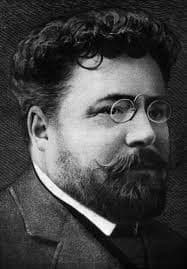
Biography coming soon.







