“Are you absolutely sure you saw a light in that tower room?”
— Peter questions Janet's observation of the supposedly abandoned tower.

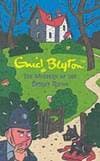
Enid Blyton (1950)
Genre
Children's / Mystery / Young Adult
Reading Time
150 min
Key Themes
See below
Sign in to track this book
During a foggy Christmas, the Five Find-Outers uncover a secret room in a deserted house, leading Fatty into a perilous trap with wanted criminals and Mr. Goon into a dusty cellar, all while deciphering hidden messages to solve a new mystery.
The Christmas holidays arrive, bringing thick fog and boredom for the Five Find-Outers: Fatty, Larry, Daisy, Pip, and Bets, along with their dog, Buster. Despite Fatty's excitement for his new disguises, there is no interesting mystery to solve. They spend their days feeling restless, wanting an adventure, much to Bets's frustration, as she is always eager for excitement. Even Mr. Goon, the local policeman, seems to be enjoying an unusual period of calm, making the season even duller. The children are almost ready to give up hope of any fun.
During a walk through the dense fog, Pip finds an old, seemingly deserted house named 'The Cedars'. Curious, he goes inside and makes a strange discovery: a single room on the first floor is fully furnished and looks recently used, with a fire laid in the grate and a book on the table. The rest of the house, however, is empty and dusty, clearly uninhabited for a long time. Pip tells the other Find-Outers about his findings, sparking their interest and providing the first hint of a potential mystery. This unexpected find immediately excites Fatty's detective instincts.
Excited by Pip's discovery, the Five Find-Outers decide to investigate 'The Cedars'. They discreetly watch the house, trying to find out who owns it and why only one room is furnished. Their initial questions to locals yield no useful information, as everyone believes the house is empty and possibly haunted. Fatty, using his observation skills and various disguises, tries to gather more clues, but the mystery deepens as no one seems to know anything about who is currently using the house. The children realize this is a more complex puzzle than they first thought, needing careful planning.
Frustrated by the lack of progress, Fatty, always the boldest, decides to act. Wearing one of his clever disguises, he sneaks into 'The Cedars' alone, hoping to find direct evidence about the mysterious occupants. Once inside, he explores for a short while, but his presence is soon detected. Two rough-looking men, who have been using the house, corner and capture him. They lock him in the secret room, unaware of his true identity or his friends waiting outside. This sudden turn of events puts Fatty in a dangerous situation, showing the real risks of their game.
Trapped in the secret room, Fatty remains calm. He convinces his captors that he is just a curious boy who wandered in and asks for paper and a pencil to write a note to his parents, saying he will be home late. The men, believing it to be an innocent request, agree. Fatty writes a seemingly harmless message, but within it, he includes a secret code, using specific words and phrasing to tell his friends about his situation and location. He then manages to slip the note out of the house, hoping it reaches the other Find-Outers before it is too late.
Meanwhile, Mr. Goon, having heard vague rumors about suspicious activity at 'The Cedars' and eager to solve a mystery before the children, decides to conduct his own investigation. He stealthily enters the house, but his clumsy attempts at detective work quickly lead to trouble. The criminals, alerted by his presence, easily outwit him. They trap him in the dusty, dark coal cellar, where he remains, frustrated and covered in grime, unable to help himself or anyone else. This incident shows Mr. Goon's incompetence and also highlights the dangerous nature of the men involved.
The other Find-Outers, growing worried about Fatty's long absence, are relieved when they find his note. However, their relief quickly turns to alarm as Larry, with his sharp mind, recognizes the subtle clues and hidden meaning within Fatty's seemingly innocent message. They work together to decipher the code, realizing that Fatty is not only trapped but is being held captive by dangerous individuals inside 'The Cedars'. The urgency of the situation becomes clear, and they know they must act quickly and carefully to rescue their friend.
Understanding that the situation is too serious for them to handle alone, and with Fatty's life potentially at risk, the Find-Outers decide to contact Inspector Jenks. They know he is the only adult they can truly trust to take their concerns seriously and act effectively. They explain everything they know, including Pip's initial discovery, Fatty's solo mission, and the decoded message, giving Inspector Jenks all the necessary information to understand the seriousness of the situation at 'The Cedars'. Their quick thinking and trust in Jenks prove vital.
Acting quickly on the Find-Outers' information, Inspector Jenks mobilizes his police force. They surround 'The Cedars' and carry out a well-coordinated raid. The criminals inside are surprised and quickly arrested. During the raid, both Fatty and Mr. Goon are found and safely rescued. Fatty is unharmed and proud of his role in the capture, while a very dusty and dishevelled Mr. Goon is freed from the coal cellar, much to his embarrassment. The successful operation shows how effective the children's detective work is when combined with official action.
After the arrests, the police search 'The Cedars'. They discover that the house has been used as a temporary hideout for a large amount of stolen goods, explaining the single furnished room and the criminals' presence. The arrested men are identified as a notorious gang wanted for various thefts across the country. Inspector Jenks praises the Five Find-Outers for their bravery and intelligence, acknowledging that without their help, the criminals might have escaped justice. Another mystery is solved, and the Find-Outers again prove their skills.
The Protagonist
Fatty demonstrates his growing resourcefulness and bravery, using his intelligence to escape a perilous situation and aid in the criminals' capture.
The Supporting
Larry's analytical skills are highlighted as he plays a crucial role in deciphering Fatty's coded message, proving his indispensable value to the team.
The Supporting
Daisy provides emotional support and practical assistance, contributing to the group's collective effort to solve the mystery and rescue Fatty.
The Supporting
Pip's initial accidental discovery sets the entire plot in motion, showcasing how a seemingly small observation can lead to a significant mystery.
The Supporting
Bets, despite her youth, contributes to the group's efforts, often highlighting the emotional stakes and the need for Fatty's safe return.
The Supporting
Buster remains a steadfast companion, his loyalty to Fatty reinforced by his presence during the stressful period of Fatty's capture.
The Antagonist (comic relief)
Mr. Goon's failed attempt to investigate the house independently leads to his capture, reinforcing his role as an incompetent foil to the children.
The Supporting
Inspector Jenks acts as the reliable authority figure who validates the children's findings and successfully resolves the dangerous situation.
The Antagonist
The criminals are initially successful in their illicit activities and in capturing Fatty and Mr. Goon, but are ultimately apprehended by the police, bringing their criminal enterprise to an end.
The story shows how the collective strengths of the Five Find-Outers lead to success. Each child contributes unique skills: Fatty's disguises and cleverness, Larry's logic, Daisy's practicality, Pip's initial discovery, and Bets' intuition. This is most clear when they work together to decipher Fatty's coded message, realizing that only by combining their minds can they understand his danger and plan. Their strong loyalty to Fatty, especially when he is in danger, drives their actions.
“"They were all very worried about Fatty now, and they looked at the note again. 'It must be a code,' said Larry, his brow furrowed. 'Fatty wouldn't send a meaningless note like this.'"”
The theme of cleverness is central, mainly seen in Fatty. His use of disguises, his ability to think quickly under pressure, and especially his creation of a coded message while captive, are key examples. The entire group also shows cleverness in deciphering the code and planning to alert Inspector Jenks without attracting the criminals' attention. This theme highlights the children's intelligence in solving problems that even adults like Mr. Goon cannot.
“"Fatty grinned to himself. He knew he was clever, and he knew his friends were clever too. They would understand his message, even if nobody else did."”
This theme is a recurring element in Blyton's mysteries and is clearly shown here through the contrast between the Five Find-Outers and Mr. Goon. While Mr. Goon blunders into trouble and gets trapped, the children's sharp observation, logical deduction, and willingness to trust their instincts lead them to the truth. Inspector Jenks, representing competent authority, acts on the children's findings, showing that children's perspectives can be very valuable, especially when adults dismiss them.
“"Mr. Goon, puffed up with self-importance, had decided to investigate 'The Cedars' on his own. He was sure he would solve the mystery before those meddling children."”
From Pip's first discovery of the secret room to the final arrest of the criminals, the story is driven by the excitement of uncovering secrets. The children are initially bored, but the prospect of a mystery energizes them, turning a dull holiday into an exciting adventure. The fog and the deserted house add to the atmosphere, making each step of their investigation feel like a real quest. This theme celebrates the joy of exploration and the satisfaction of solving a complex puzzle.
“"A mystery! At last! The words were like magic to the Find-Outers, chasing away the boredom of the foggy days."”
A single, furnished room in an otherwise deserted house.
The secret room serves as the central enigma of the plot. Its existence in a seemingly derelict house immediately creates a sense of mystery and intrigue, drawing the Find-Outers into the investigation. It acts as the criminals' temporary base and a crucial location for the story's events, including Fatty's capture. The contrast between the room's apparent recent use and the rest of the house's abandonment is the primary clue that something illicit is afoot.
Fatty's use of costumes and makeup to gather information.
Fatty's disguises are a hallmark of his character and a key plot device. They allow him to infiltrate various settings, observe without being recognized, and sometimes even interact with suspects under a false identity. In this story, his disguises are mentioned as a source of his initial holiday boredom, but his eventual use of them, even if it leads to his capture, is part of his signature detective style. They highlight his ingenuity and add an element of playful espionage to the narrative.
Fatty's subtly disguised note to his friends while captive.
The coded message is a critical turning point and a classic Blyton plot device. It demonstrates Fatty's intelligence and quick thinking under duress. The note, seemingly innocuous to the criminals, contains a hidden meaning that only his friends, knowing his methods, can decipher. This device not only raises the stakes by revealing Fatty's peril but also showcases the Find-Outers' collective problem-solving skills and their deep understanding of each other's communication methods.
A thick, pervasive fog that sets the atmosphere and aids concealment.
The persistent fog serves multiple purposes. Firstly, it establishes a gloomy, slightly mysterious atmosphere for the Christmas holidays, initially contributing to the children's boredom. More importantly, it acts as a practical plot device, aiding Pip's initial discovery by obscuring the house and making it seem even more deserted. Later, it provides cover for the Find-Outers' discreet observations and Fatty's infiltration, making it easier for them to move around unnoticed by the criminals or Mr. Goon.
“Are you absolutely sure you saw a light in that tower room?”
— Peter questions Janet's observation of the supposedly abandoned tower.
“We'll have to be as quiet as mice if we're going to find out anything.”
— Barnaby plans their stealthy investigation of the old house.
“It's no good just guessing, we need proof!”
— Sue insists on concrete evidence rather than speculation.
“This old house has more secrets than an owl has feathers.”
— Julian remarks on the numerous hidden aspects of the mansion.
“A good detective never gives up, no matter how puzzling the clues.”
— Barnaby encourages the group when they face a difficult puzzle.
“There's a hidden catch here somewhere, I just know it!”
— Janet examines a seemingly ordinary piece of furniture.
“It's always the most obvious things that people overlook.”
— Peter points out a simple detail that had been missed.
“We've stumbled onto something much bigger than we first thought.”
— Sue realizes the scope of the mystery is expanding.
“The secret room isn't just a room; it's a doorway to the past.”
— Julian contemplates the historical implications of their discovery.
“Courage isn't the absence of fear, but the triumph over it.”
— Barnaby reassures a frightened Janet during a tense moment.
“Every lock has a key, and every mystery has a solution.”
— Peter expresses his confidence in solving the puzzle.
“We're a team, and we'll stick together no matter what.”
— Sue emphasizes their unity when facing danger.
“Sometimes the greatest treasures are not gold, but knowledge.”
— Julian reflects on the value of their discoveries.
“A true adventure is never without its share of unexpected turns.”
— Barnaby comments on the unpredictable nature of their quest.
Ready to see how well you understood this book? Take our interactive quiz with 10 questions.

Biography coming soon.

Dan Gemeinhart
4.5
Kate O'Hearn
4.4

Jeanne Birdsall
4.4

Jen Wang
4.4

Wendelin Van Draanen
4.3

John Marsden
4.3

Chris Van Allsburg
4.3
Jennifer A. Nielsen
4.2