“The truth, however ugly in itself, is always curious and beautiful to seekers after it.”
— Hercule Poirot reflects on the nature of truth in a murder investigation.


Agatha Christie (1928)
Genre
Thriller / Mystery
Reading Time
317 min
Key Themes
See below
Sign in to track this book
On a luxurious night train to the French Riviera, a legendary cursed jewel vanishes and its mysterious owner is murdered, leaving Hercule Poirot to untangle a web of passion, greed, and deceit among the elite.
Katherine Grey, a young Englishwoman, lives a quiet life as a companion. Her life changes when she inherits a large fortune from her former employer, Miss Viner, a distant relative she barely knew. This sudden wealth gives her independence and the means to travel. Katherine plans a trip to the French Riviera on the luxurious Blue Train. Her journey starts in Paris, where she intends to spend time before continuing south, unaware her path is about to cross with a crime.
Ruth Kettering, an American heiress and daughter of millionaire Rufus Van Aldin, is unhappily married to Derek Kettering. She travels on the Blue Train from Paris to Nice, carrying the 'Heart of Fire' ruby, a magnificent and supposedly cursed jewel recently given to her by her father. Ruth is known for her romantic relationships and is secretly meeting her lover, the Comte de la Roche, on the train. Her father, Rufus, worried for her safety and aware of the jewel's value, has arranged for a detective, Monsieur Goby, to watch over her. Ruth's maid, Ada Mason, is also with her.
The Blue Train leaves Paris. The next morning, as the train nears Nice, Ruth Kettering is found murdered in her compartment. She was bludgeoned to death. The 'Heart of Fire' ruby is missing from her jewel case. The discovery shocks the train, and authorities are called. Katherine Grey, in an adjacent compartment, is among the first questioned, having heard a struggle but thinking it was a dream. The crime scene is chaotic, and the investigation begins amid confusion.
Rufus Van Aldin, devastated by his daughter's murder and the theft of his ruby, refuses to accept the initial findings of the French police. He is determined to find the killer and recover the 'Heart of Fire'. He contacts Hercule Poirot, who is vacationing on the French Riviera. Poirot, interested in the case's complexity and high stakes, agrees to investigate. He interviews witnesses, examines the crime scene, and pieces together the events leading to Ruth's death, using his insights.
Poirot's initial investigations focus on Ruth's estranged husband, Derek Kettering, who was also on the train and had a turbulent relationship with Ruth. Derek claims he was in another compartment and has an alibi, but his financial problems and temper make him a suspect. Comte de la Roche, Ruth's lover, is also questioned, but he denies involvement. Poirot considers other passengers and staff, including Katherine Grey, who heard noises, and the maid, Ada Mason, who is found dead soon after the murder. Poirot finds Ada's death suspicious. A mysterious man with a 'dancing girl' tattoo is also mentioned by witnesses.
Ada Mason, Ruth's maid, is found dead in her cottage soon after Ruth Kettering's murder. Her death is first attributed to natural causes, but Poirot suspects foul play, believing she knew something important. Poirot discovers that the 'Heart of Fire' ruby found in Ruth's jewel case after the murder was a replica. The real ruby was stolen before or during the murder. This adds complexity, suggesting a detailed plan and possibly multiple people involved. The focus shifts to who had access to the real ruby and when it was exchanged.
Katherine Grey, having overheard conversations and seen events on the train, gets more involved in the investigation, often giving Poirot valuable clues. She becomes friends with Major Knighton, Rufus Van Aldin's secretary, who seems to be helping Van Aldin find justice. Knighton appears reliable and trustworthy, and Katherine starts to have feelings for him. Meanwhile, Poirot continues to look into everyone's backgrounds, checking alibis and motives, and piecing together the timeline of events on the Blue Train.
Poirot's investigation connects the 'dancing girl' tattoo described by a witness to a jewel thief and smuggler named the Marquis. He realizes the murder and theft are part of a larger criminal operation. The Marquis works with a female accomplice, often disguised as a 'dancing girl' or an innocent woman. This discovery shifts the focus from a crime of passion to a planned professional heist. Ruth Kettering may have been an unwitting victim or a target of opportunity for thieves who knew about the ruby.
Through his deduction, Poirot unmasks Major Knighton, Rufus Van Aldin's trustworthy secretary, as the mastermind behind the murder and the 'Heart of Fire' theft. Knighton is the jewel thief known as the Marquis, who planned the scheme. He infiltrated Van Aldin's household to get information about the ruby and Ruth's travel plans. He used his position to manipulate events and divert suspicion, even faking his own identity. His accomplice, Kitty Kidd, was the 'dancing girl' seen on the train, who stole the real ruby.
Poirot explains that Knighton, as the Marquis, arranged for Kitty Kidd to steal the real 'Heart of Fire' ruby from Ruth's compartment and replace it with a fake. He then murdered Ruth Kettering later that night, framing Derek Kettering and making it seem like a crime of passion, while securing his escape. Ada Mason was also murdered by Knighton because she saw him near Ruth's compartment. Knighton's motive was greed, aiming to sell the ruby. With Poirot's evidence, Knighton is arrested. The 'Heart of Fire' ruby is recovered, and Derek Kettering is cleared. Katherine Grey, deceived by Knighton, finds closure and a new perspective, her inheritance having led her to dangerous adventures.
The Protagonist
Poirot's arc is less about personal development and more about the application of his established brilliance, demonstrating his unwavering commitment to justice and truth.
The Supporting
She evolves from an innocent, sheltered woman into a more worldly and perceptive individual, capable of navigating complex personal relationships and understanding deceit.
The Victim
Her arc is cut short by her murder, making her a static character whose past actions drive the plot.
The Supporting
He remains a determined and grieving father throughout, his primary motivation being justice for his daughter and the recovery of his property.
The Suspect
He is initially suspected and under scrutiny but is ultimately cleared of the murder, experiencing the relief of exoneration.
The Suspect
He remains a constant suspect but is ultimately cleared, maintaining his status as a romantic interest rather than a criminal.
The Antagonist
His arc is one of deception and eventual unmasking, revealing his true villainous nature.
The Supporting
Her brief arc involves witnessing the crime and then being silenced, making her a secondary victim.
The Supporting
She serves as a key component in the initial stages of the jewel theft, executing her part of the plan.
The novel explores how appearances can deceive. Major Knighton creates a false identity as a trustworthy secretary, hiding his true nature as the jewel thief, the Marquis. Characters like Kitty Kidd also use disguises. This shows how individuals can craft personas to manipulate others and achieve their goals, making Poirot and the reader look beyond the surface. Katherine Grey's journey also involves identity, as she leaves her old life and discovers who she is in a new, adventurous context.
“It is the little things, mademoiselle, that are infinitely the most important. The little things that reveal the truth.”
At the center of the crime is the 'Heart of Fire' ruby, a symbol of great wealth and the reason for the murder. Greed is clear in the Marquis's plan to steal the jewel, valuing material gain over human life. Ruth Kettering's wealth and her father's desire for the ruby's return show the allure and dangers of materialism. Characters' motivations are often tied to money, whether it is Derek Kettering's financial struggles or the thief's pursuit of riches. This illustrates how the desire for wealth can corrupt and lead to desperate acts.
“It is always the simple things that are the most difficult to believe.”
Rufus Van Aldin's determination to find his daughter's killer and recover the ruby drives the investigation, showing the pursuit of justice. Hercule Poirot is dedicated to ensuring the guilty are punished and the innocent are cleared. The story emphasizes the process of finding the truth and the satisfaction of seeing a criminal brought to account. The plot's resolution brings a sense of moral balance, where those who commit heinous acts face consequences.
“The truth, however ugly in itself, is always beautiful and pure.”
The novel explores different forms of love and the pain of betrayal. Ruth Kettering's complicated romantic life, involving her estranged husband Derek and her lover the Comte de la Roche, creates emotional turmoil. Katherine Grey's initial attraction to Major Knighton, only to discover his true, murderous identity, represents a personal betrayal. This theme shows the vulnerability in love and trust, and how easily these emotions can be exploited or broken by deceit and self-interest, leaving emotional scars on the characters.
“Human nature is a strange and complex thing.”
The central MacGuffin and catalyst for the entire plot.
The 'Heart of Fire' ruby functions as the primary MacGuffin in the story. It is a legendary, supposedly cursed jewel of immense value, and its theft is intertwined with Ruth Kettering's murder. Its significance isn't in its intrinsic properties, but in its ability to drive the plot forward, motivate characters (Rufus Van Aldin's desire for its return, the Marquis's greed), and provide a tangible object around which the mystery revolves. The discovery of a fake ruby further complicates the case, adding layers to the mystery and misdirecting the investigation.
Misleading clues and suspects designed to divert attention from the true culprit.
Christie masterfully employs red herrings to mislead both the characters and the reader. Derek Kettering, with his strained marriage and financial woes, is a strong initial suspect. The Comte de la Roche, as Ruth's lover, also fits the profile of a passionate killer. Even the discovery of Ada Mason's body initially suggests a different line of inquiry. These elements are carefully placed to create a complex web of suspicion, diverting attention from the seemingly innocuous Major Knighton, until Poirot meticulously unravels the truth, exposing the true villain's cunning deception.
The train setting confines suspects and limits external influences, intensifying the mystery.
While not entirely a 'closed circle' in the traditional sense, the Blue Train itself acts as a crucial closed environment for the initial crime. The limited number of passengers and staff on the train who could have committed the murder creates an intense atmosphere where suspicion can fall on anyone. Poirot's investigation extends beyond the train, but the initial confinement of the crime to this luxurious, moving setting allows for focused scrutiny of a specific group of individuals and their interactions, typical of Christie's use of contained settings to heighten suspense and limit suspects.
Characters' subjective observations and memory create ambiguity.
Several characters provide observations that are either incomplete, misinterpreted, or outright unreliable, contributing to the mystery. Katherine Grey's initial dismissal of the noises she heard as a dream is a key example. Witnesses describing the 'dancing girl' tattoo provide fragmented clues that only Poirot can piece together. This device highlights how human perception can be flawed, and how a detective must sift through subjective accounts to find objective truth. It also serves to obscure the true events, making Poirot's deductive reasoning all the more impressive when he clarifies the timeline and identities.
“The truth, however ugly in itself, is always curious and beautiful to seekers after it.”
— Hercule Poirot reflects on the nature of truth in a murder investigation.
“Money is a good servant but a bad master.”
— A character discusses the corrupting influence of wealth.
“The impossible could not have happened, therefore the impossible must be possible in spite of appearances.”
— Poirot uses his logical reasoning to approach a seemingly unsolvable crime.
“One must never neglect the psychological side of a case.”
— Poirot emphasizes the importance of understanding human motives.
“It is the brain, the little gray cells on which one must rely.”
— Poirot advocates for using intellect over brute force in solving crimes.
“The past is the father of the present.”
— A reflection on how history influences current events in the story.
“There is nothing so dangerous for anyone who has something to hide as conversation!”
— Poirot warns that talkative suspects often reveal clues inadvertently.
“A woman can keep a secret, but she cannot keep from telling that she has one.”
— An observation about human nature, particularly regarding female characters.
“The more elaborate the lie, the more likely it is to be believed.”
— Commentary on deception and the complexity of falsehoods in the plot.
“It is a capital mistake to theorize before one has data.”
— Poirot advises against jumping to conclusions without evidence.
“The heart has its reasons which reason knows nothing of.”
— A philosophical note on emotions versus logic in the characters' actions.
“Crime is terribly revealing. Try and vary your methods as you will, your tastes, your habits, your attitude of mind, and your soul is revealed by your actions.”
— Poirot explains how criminal behavior exposes a person's true nature.
“The best way to hide a thing is to leave it in the open.”
— A strategic insight into how clues or secrets might be concealed.
“There is no detective in England equal to a spinster lady of uncertain age with plenty of time on her hands.”
— A humorous acknowledgment of the observational skills of certain characters.
Ready to see how well you understood this book? Take our interactive quiz with 10 questions.
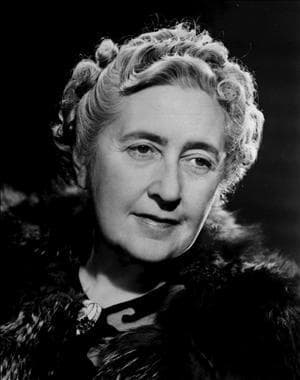
Dame Agatha Mary Clarissa Christie, Lady Mallowan, was an English writer known for her 66 detective novels and 14 short story collections, particularly those revolving around fictional detectives Hercule Poirot and Miss Marple. She also wrote the world's longest-running play, the murder mystery The Mousetrap, which has been performed in the West End since 1952. A writer during the "Golden Age of Detective Fiction", Christie has been called the "Queen of Crime". She also wrote six novels under the pseudonym Mary Westmacott. In 1971, she was made a Dame (DBE) by Queen Elizabeth II for her contributions to literature. Guinness World Records lists Christie as the best-selling fiction writer of all time, her novels having sold more than two billion copies.







