BookBrief
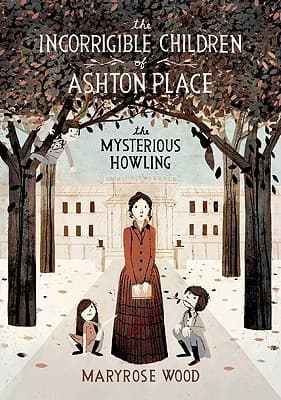
The Mysterious Howling cover
Archivist's Choice

The Mysterious Howling

Maryrose Wood

Genre

Fantasy / Children's / Historical Fiction / Mystery / Young Adult

Reading Time

270 min

Key Themes

See below

Track Your Reading

Sign in to track this book

A determined young governess must civilize three wild, dog-like children at a mysterious estate, all while unraveling the secrets of their past before Lady Constance's holiday ball.

Synopsis

Miss Penelope Lumley, a recent graduate of the Swanburne Academy for Poor Bright Females, accepts a governess position at Ashton Place. She quickly finds her new charges are far from ordinary. Alexander, Cassiopeia, and Beowulf, known as the Incorrigibles, were found living wild in the forest and act like wolves. Penelope works to civilize them, teaching them language, manners, and basic human society. She also prepares them for Lady Constance's upcoming holiday ball. Ashton Place has many mysteries. Penelope questions the children's origins, the strange behavior of the coachman Old Timothy, and Lord Fredrick and Lady Constance's true intentions. As the ball nears, a mysterious howling in the woods, a strange woman, and glimpses into the past hint at a deeper truth about the Incorrigibles' identity and the secrets hidden at Ashton Place.
Reading time
270 min
Difficulty
Easy
Pacing
Moderate
Mood
Whimsical, Humorous, Mysterious, Charming
✓ Read this if...
You enjoy whimsical, witty mysteries with unique characters and a touch of the absurd, perfect for young readers and adults alike.
✗ Skip this if...
You prefer straightforward, realistic narratives without fantastical elements or a strong emphasis on wordplay and literary allusions.

Plot Summary

A Most Unusual Arrival

Penelope Lumley, a recent Swanburne Academy graduate, arrives at the isolated Ashton Place, owned by Lord and Lady Ashton. She is hired as a governess and is eager to use her education. She meets her charges: Alexander, Cassiopeia, and Beowulf. Penelope is surprised to find the three children were found living wild in the forest and act like dogs, barking, howling, and chasing squirrels. Lady Constance Ashton explains their origins are unknown, and they call themselves 'The Incorrigibles.' Penelope accepts the challenge of civilizing them.

First Lessons in Civilization

Penelope begins teaching basic human behaviors. She tries to teach Alexander, Cassiopeia, and Beowulf to speak English, use silverware, and walk upright. The children struggle, preferring growls and barks, and often revert to wild instincts, frustrating Penelope and amusing Lady Constance. Penelope discovers their sharp hearing and sense of smell, which she tries to use in their learning. She also starts reading 'The Pilgrim's Progress' to them, hoping to inspire a love for books and provide moral guidance.

The Mysterious Coachman

As Penelope settles in, she notices the strange behavior of Old Timothy, the estate's old coachman. He often appears unexpectedly, watching Penelope and the children from a distance, and seems to have a deep secret. Penelope overhears parts of conversations and notices his intense interest in the Incorrigibles. She also learns he found the children in the woods and brought them to Ashton Place, increasing her suspicions about his connection to their past and the estate's secrets.

Preparations for the Ball

Lady Constance announces the annual holiday ball is coming soon and insists the Incorrigible Children must attend. This puts pressure on Penelope, who must quickly change the children from wild beings into presentable young people. She increases lessons on table manners, social graces, and proper clothes. The children, especially Cassiopeia, resist formal clothing and social rules, leading to funny and frustrating moments as Penelope tries to prepare them for their public debut.

The Howling in the Woods

During their time at Ashton Place, Penelope and the children often hear mysterious howls from the forest at night. These howls seem to affect the Incorrigibles deeply, who often respond with their own barks and whimpers, showing a clear connection to whatever or whoever is in the woods. Penelope is uneasy about these sounds, which reinforce the children's wild nature and suggest there might be other creatures or people like them in the dense forest. The howls add to the mystery of the children's origins.

A Glimpse of the Past

While exploring Ashton Place, Penelope finds a forgotten portrait of a young woman who looks like Cassiopeia. This discovery sparks Penelope's interest and strengthens her belief that the children's past is linked to the estate. She discreetly investigates, gathering clues from old staff and forgotten rooms. The portrait is the first solid evidence that the Incorrigibles might be connected to the Ashton family or the history of Ashton Place, deepening the mystery of their identity.

The Ball and its Complications

The night of the holiday ball arrives. Despite Penelope's efforts, the Incorrigible Children struggle to keep their refined behavior. Alexander tries to dance a schottische, Cassiopeia is fascinated by the decorations, and Beowulf chases a squirrel indoors. Their wild instincts often appear, causing small problems and attracting curious looks from guests. Amidst the chaos, Penelope notices Old Timothy watching the children intently. She also sees a mysterious woman who seems very interested in the Incorrigibles, making the evening more complex.

A Confrontation with Old Timothy

Driven by her growing suspicions, Penelope confronts Old Timothy, asking what he knows about the Incorrigible Children. Timothy is at first evasive, but under Penelope's questions, he reveals bits of information. He hints at a tragic past involving the Ashton family and a secret kept for many years. He implies the children are not just wild animals but have a human connection to the estate. He is reluctant to tell the full truth, fearing consequences or breaking a long-held promise. His revelations only make Penelope more determined to uncover the full story.

The Mysterious Woman

Penelope investigates the mysterious woman she saw at the ball and discovers she is a distant relative of the Ashton family, Mrs. Clarice Ashton. Mrs. Ashton also seems to know more about the Incorrigibles than she says. She shows an unusual interest in the children, especially Cassiopeia. Her presence raises more questions about the children's lineage and the secrets Lord and Lady Ashton are keeping. Penelope suspects Mrs. Ashton might be connected to the children's past or could have important information, making her another piece in the unfolding mystery.

A Glimpse of the Truth

Through her observations, the portrait, Old Timothy's hints, and the mysterious howls, Penelope starts to form a picture, though still incomplete. She concludes that the Incorrigible Children are likely not just abandoned orphans but have a direct, family connection to Ashton Place, possibly even to the Ashton family itself. The howls from the forest suggest other individuals with their wild nature are present, hinting at a larger, hidden community or family. Penelope realizes the true scope of the mystery and what it means for the children's identity.

The Ongoing Mystery

Despite the partial revelations, the full truth of the Incorrigible Children's origins remains unclear. Penelope understands that Lord and Lady Ashton either do not know the full story or are hiding it. Old Timothy has important information but is unwilling to share everything. The howls from the forest continue, a constant reminder of the unanswered questions. Penelope is not discouraged. She is more committed than ever to solving the mystery, not just for herself, but for Alexander, Cassiopeia, and Beowulf, whose true identities and heritage are still hidden at Ashton Place.

Principal Figures

Miss Penelope Lumley

The Protagonist

Penelope transforms from a naive, by-the-book governess into a determined investigator, deepening her bond with the children and growing in confidence.

Alexander Incorrigible

The Supporting

Alexander begins to shed some of his wilder habits, showing a growing capacity for human speech and understanding, while retaining his protective instincts.

Cassiopeia Incorrigible

The Supporting

Cassiopeia slowly begins to accept human comforts and interactions, though her wild nature remains a significant part of her identity.

Beowulf Incorrigible

The Supporting

Beowulf, while still very wild, shows initial signs of adapting to a more structured environment, particularly through imitation of his siblings.

Lady Constance Ashton

The Supporting

Lady Constance remains largely static, serving as a foil to Penelope's earnestness and embodying the superficiality of some upper-class society.

Lord Ashton

The Supporting

Lord Ashton's character remains largely unchanged, serving as a background figure who embodies the complacent, secretive nature of the estate.

Old Timothy

The Supporting

Old Timothy slowly reveals pieces of the children's past, shifting from a silent observer to a reluctant confidant for Penelope.

Mrs. Clarice Ashton

The Mentioned

Her character is introduced as a potential future source of information, her role in the overarching mystery yet to be fully explored.

Themes & Insights

Nature vs. Nurture

This theme explores whether the Incorrigible Children's wild behaviors are inborn (nature) or from their upbringing in the forest (nurture). Penelope believes education and socialization (nurture) can change them into proper human beings. Her efforts to teach them language, manners, and social graces show this. However, the children's constant howling, tracking instincts, and dislike of clothes suggest their 'nature' is deeply set, questioning the limits of human influence. The mysterious howls from the forest further highlight their wild origins.

“They are, to be sure, quite wild,” Lady Constance had admitted, “but then, that is what governesses are for, is it not? To tame the wild.”

Lady Constance Ashton

Identity and Belonging

The Incorrigible Children's unknown parents and wild upbringing create a central question of identity. Are they human children who just lived like animals, or are they fundamentally different? Penelope's effort to civilize them is also an effort to help them discover and accept a human identity. Their attempts to act human, mixed with their natural wildness, show their struggle to find where they belong. The mystery of their origins, hinted at by the portrait and Old Timothy, suggests a deeper, perhaps noble, identity that has been lost or hidden.

“Who are you, really?” Penelope sometimes wondered, watching Alexander, Cassiopeia, and Beowulf chase squirrels with alarming efficiency.

Narrator

The Power of Education

Penelope Lumley, from the Swanburne Academy, shows that education can change people. She believes knowledge, books, and proper teaching can improve individuals, even those as wild as the Incorrigibles. Her dedication to teaching them Latin, reading, and social graces reflects her belief that education is key to their humanity and future. Despite the children's initial resistance, Penelope's efforts slowly show results, proving that learning can shape behavior and understanding, even if their wild instincts remain.

“A well-placed Latin verb,” Penelope often thought, “can solve almost any problem.”

Narrator (reflecting Penelope's thoughts)

Secrets and Deception

Ashton Place is full of secrets and unspoken truths. The mysterious origins of the Incorrigible Children are the main puzzle. Lord and Lady Ashton either do not know the full story or are hiding it. Old Timothy, the coachman, clearly has important knowledge but is bound by a promise of silence or fear. The unexplained howls from the forest and the discovery of the portrait further deepen the feeling that a major truth is hidden. Penelope becomes an accidental detective, slowly uncovering layers of deception that protect the estate's past.

“Ashton Place,” Penelope mused, “was a house built on whispers.”

Narrator

Plot Devices & Literary Techniques

Feral Children Trope

Children raised in the wild, exhibiting animalistic behaviors.

This device immediately establishes the core mystery and conflict of the story. The Incorrigible Children's animalistic behaviors—howling, chasing, communicating through barks—create both humor and a profound challenge for Penelope. It highlights the 'nature vs. nurture' theme and drives the plot as Penelope attempts to civilize them. The trope also allows for an exploration of what it means to be human, contrasting learned behaviors with innate instincts, and creates a sense of wonder and otherworldliness within the seemingly mundane setting of a grand estate.

The Mysterious Howling

Unexplained howls from the forest that resonate with the children.

The recurring mysterious howling serves as both a plot catalyst and a symbol. It constantly reminds the reader and Penelope of the children's wild origins and the secrets lurking in the surrounding forest. The howls create an atmosphere of suspense and foreshadowing, suggesting the presence of other beings or a deeper connection to the children's past. For the Incorrigibles, the howls are a call from their former life, creating a pull between their developing human identity and their wild instincts, thus driving their internal conflict and hinting at external forces at play.

The Eccentric Aristocracy

Wealthy but peculiar employers who are oblivious to or complicit in secrets.

Lord and Lady Ashton embody this device, providing both comic relief and a source of narrative frustration. Their peculiar habits, disinterest in the children's true welfare, and general obliviousness allow the central mystery to flourish unchecked. By being either ignorant or deliberately evasive, they force Penelope to become the primary investigator, pushing the plot forward through her independent inquiries. Their social standing also provides the setting for events like the ball, creating opportunities for the Incorrigibles' wildness to be highlighted against a backdrop of strict social etiquette.

The Cryptic Confidant

A minor character who holds key information but reveals it slowly and ambiguously.

Old Timothy, the coachman, perfectly fits this device. He is the first person to interact with the Incorrigible Children and holds crucial knowledge about their past. His reluctance to speak directly, instead offering hints and partial truths, builds suspense and forces Penelope to piece together the mystery herself. This device ensures that information is not simply handed to the protagonist, but earned through persistent investigation, making the revelations more impactful and drawing the reader deeper into the puzzle of the children's origins and the secrets of Ashton Place.

Critical analysis

Notable Quotes

There are people who believe that children should be seen and not heard. And there are people who believe that children should be neither seen nor heard. Lady Constance was one of those people.

Introducing Lady Constance and her view on children.

Never underestimate the power of a well-placed comma.

Miss Lumley reflecting on the importance of grammar.

Sometimes, the most important things are invisible.

Penelope considering hidden truths and feelings.

A good story, like a good cup of tea, can solve almost anything.

Alexander musing on the comforting power of narrative.

Fear, like a bad smell, can cling to you long after the source is gone.

Simon reflecting on his lingering anxieties.

It is a truth universally acknowledged, that a single orphan in possession of a good fortune, must be in want of a governess.

A playful nod to Jane Austen, setting up the premise.

The world is full of wonders, if only you know where to look.

Miss Lumley encouraging the children to observe their surroundings.

Even the smallest creature can make the loudest noise, if it's in the right place at the right time.

Penelope thinking about the impact of seemingly insignificant things.

Curiosity, like a cat, can lead you into all sorts of interesting places.

Alexander's thoughts on the nature of inquiry.

A secret is like a seed; once planted, it can grow into something unexpected.

Simon contemplating the nature of hidden information.

Sometimes, the best way to find something is to stop looking for it.

Penelope's realization about problem-solving.

Manners are like a coat of paint; they can cover a multitude of sins, but they don't change what's underneath.

Miss Lumley's observation about appearances versus reality.

The past is like a tangled ball of yarn; it takes patience to unravel it.

Alexander reflecting on the mysteries of their history.

Quiz

Test Your Knowledge

Ready to see how well you understood this book? Take our interactive quiz with 10 questions.

10
Questions
~5
Minutes
?
Best Score

Key Questions (FAQ)

The book introduces Miss Penelope Lumley, a recent graduate of Swanburne Academy, who takes on the seemingly impossible task of governess to three feral children—Alexander, Cassiopeia, and Beowulf—who behave like wolves. She must civilize them while uncovering the mysteries surrounding their origins at Ashton Place.

About the author






