“The evidence of the witness is not to be believed unless it is corroborated.”
— Hercule Poirot explaining his investigative philosophy to Hastings.

Agatha Christie (2013)
Genre
Thriller / Mystery
Reading Time
240 min
Key Themes
See below
Sign in to track this book
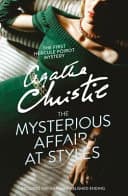
A recuperating war veteran's peaceful country retreat turns deadly when a poisoning at Styles Priory forces him to partner with an eccentric Belgian refugee detective to unmask a cunning killer.
Captain Arthur Hastings, recovering from war injuries, accepts an invitation from his old friend John Cavendish to stay at Styles Court in Essex. Upon arrival, Hastings notices the strained atmosphere in the household. John and his brother Lawrence Cavendish are stepsons to the wealthy Emily Inglethorp, who recently married the much younger Alfred Inglethorp, a man disliked by the family. Emily's companion, Evelyn Howard, a strong-willed woman, recently left Styles after openly disapproving of Alfred. Hastings also meets Cynthia Murdoch, an orphan Mrs. Inglethorp has taken in, and Dr. Bauerstein, a toxicologist who lives nearby. Hastings quickly sees the family's dislike for Alfred Inglethorp, especially concerning his influence over Emily's money.
One morning, the household finds Emily Inglethorp dead in her locked bedroom. Her death is from strychnine poisoning, and the police are called. The night before, Emily had argued fiercely with someone, though the identity of the other person is unclear. She had also made a will, leaving her fortune to Alfred, but had later burned it, reportedly after an argument with him. The will's destruction is complicated because a new will, favoring Alfred, might have been made. Suspicion immediately falls on Alfred Inglethorp, as he stands to gain much from her death, and his behavior is notably calm, almost too calm.
Shocked and suspecting foul play, Hastings remembers that his old friend, the famous Belgian detective Hercule Poirot, is living as a refugee in the nearby village of Styles St. Mary. Hastings contacts Poirot, who, bored with retirement, agrees to investigate the murder. Poirot immediately interviews the household members, carefully observing every detail. He notes the family's dislike for Alfred, the odd behavior around the will, and the general tension at Styles Court. Poirot's methodical approach and insight quickly uncover inconsistencies and hidden motives among the residents.
As Poirot and the local police, led by Inspector Japp, investigate, circumstantial evidence builds against Alfred Inglethorp. A locked box belonging to Emily, containing her private papers, has been tampered with. Alfred's behavior before Emily's death, including his purchase of strychnine for a supposed 'photographic' purpose, seems more incriminating. Also, a letter from Emily to her lawyer, expressing her intention to disinherit Alfred, is found, but its timing is important. Despite Alfred's calm manner and claims of innocence, the evidence, especially a coffee cup with traces of strychnine near his room, leads to his arrest for his wife's murder.
Despite Alfred Inglethorp's arrest, Poirot has doubts about his guilt. He believes that the evidence is too perfect, too neatly pointing to Alfred, suggesting a clever setup. Poirot focuses on small details, such as the position of furniture, the nature of the various wills, and the specific timing of events on the murder night. He also re-examines the movements and alibis of other household members, including John and Lawrence Cavendish, Cynthia Murdoch, and even Evelyn Howard, who returns to Styles. Poirot's investigation becomes a careful search for the overlooked, the seemingly unimportant clue that could solve the case. He even considers the possibility of a second, less obvious, method of poisoning.
Evelyn Howard, Emily's former companion, returns to Styles and, despite her initial dislike for Alfred, begins to help in his defense. Poirot observes her closely, noting her fierce loyalty and intelligence. It is revealed that Evelyn had previously helped Alfred Inglethorp in a legal matter, suggesting a deeper connection than first thought. Her knowledge of Emily's habits and the household dynamics helps Poirot, though he remains suspicious of everyone. Evelyn's sudden change from condemning Alfred to defending him raises questions about her true motives and her possible involvement, or at least her knowledge of the true killer.
Alfred Inglethorp's trial begins, with the prosecution presenting a strong case based on the circumstantial evidence. Poirot, though initially working with the police, has been pursuing his own investigation, often frustrating Inspector Japp with his cryptic statements and unusual methods. As the trial progresses, Poirot gathers all the pieces of his puzzle. He prepares to present his findings, which he believes will not only clear Alfred Inglethorp but also expose the true, unexpected murderer. Poirot carefully reconstructs the night of the murder, focusing on when the poison was given and the subtle deceptions used by the real killer.
In a dramatic revelation, Poirot gathers all the suspects and explains the plot. He reveals that Alfred Inglethorp was the murderer, but not in the way the police first believed. Alfred, a master manipulator, had conspired with Evelyn Howard, who was secretly his cousin and lover. Evelyn, disguised as Alfred, had bought the strychnine. The 'argument' heard the night before was staged. The poisoned coffee was not the cause of death; rather, Emily was poisoned by bromide, which was substituted for her usual sleeping draught, and then the strychnine was given later, to make it appear as though she died from the coffee, thus framing Alfred and ensuring his inheritance. Evelyn's 'help' in his defense was a calculated move to mislead the investigation.
Poirot explains that the poisoned coffee was a red herring, meant to be discovered and point to Alfred. The real poison, strychnine, was given to Emily Inglethorp through her nightly bromide dose, which had been switched with a similar-looking bottle containing the deadly substance. The timing was important: the bromide was taken, then the lights were put out, allowing the killer to enter and give the strychnine when Emily was already drowsy or unconscious from the bromide. The subsequent 'discovery' of the strychnine in the coffee was a deliberate plant. The entire scheme was designed to frame John Cavendish, using his dislike for Alfred and his known financial difficulties to create a believable motive. Evelyn Howard's role was critical in arranging the details and misdirecting suspicion.
With Poirot's careful explanation, the full extent of Alfred Inglethorp and Evelyn Howard's plan is revealed. Their motive was Emily's money, and they had planned every detail, including the staged argument and the manipulation of evidence to frame John Cavendish. John, who had been under suspicion, is completely cleared. Alfred Inglethorp and Evelyn Howard are arrested for their roles in the murder. The Styles household, though shaken by the betrayals and the murder, can finally begin to heal. Hastings reflects on Poirot's intellect and the complex nature of human deceit, concluding his account of the mysterious affair at Styles.
The Protagonist
Poirot re-establishes his reputation as a brilliant detective after a period of idleness, showcasing his unique investigative methods.
The Narrator/Supporting
Hastings learns to appreciate the complexities of detective work and the subtleties of human nature through his experiences with Poirot.
The Victim
Her death is the catalyst for the entire story, revealing the hidden tensions and greed within her household.
The Antagonist
Initially appearing to be wrongly accused, he is ultimately exposed as the mastermind behind the murder.
The Supporting
John is wrongly suspected and nearly framed, but is ultimately cleared, finding a path to rebuilding his life.
The Supporting
Mary navigates suspicion and her troubled marriage, ultimately finding a clearer path forward.
The Supporting
Lawrence's quiet nature is tested by the murder, leading him to a deeper understanding of himself and his desires.
The Antagonist/Supporting
Initially appearing as a trustworthy, if blunt, character, she is unmasked as a key accomplice in the murder.
The Supporting
Cynthia navigates the trauma of the murder and her budding romantic feelings amidst the chaos.
The Supporting
His professional expertise and personal connections play a minor role in the investigation, highlighting the scientific aspect of the crime.
The Supporting
Japp works through the case, learning to respect, if not always understand, Poirot's unique genius.
The novel explores how appearances can be deceiving, both in human character and in the evidence. Alfred Inglethorp's calm manner and Evelyn Howard's pretended dislike are examples of calculated deception. Poirot always emphasizes looking beyond the obvious, as the most 'obvious' suspect is often a carefully built facade. The entire murder plot relies on a series of misdirections and planted clues meant to mislead the police and frame an innocent person, making the reader question every character's actions and motives.
“''It is the brain, the little grey cells, on which one must rely. One must not be too clever. One must not be too stupid. One must be just right.'”
The main reason for Emily Inglethorp's murder is her wealth and the inheritance that follows her death. The strained family dynamics at Styles Court are largely driven by financial worries and the expectation of inheriting from Emily. Alfred Inglethorp's marriage to Emily is clearly for her money, and the manipulation of her wills becomes a key plot point. The theme shows how greed can corrupt people and drive them to extreme acts, breaking family bonds and leading to murder.
“'Ah, money! It is always money, is it not? The root of all evil, as they say.'”
Poirot's belief in logic and justice is a core theme. He approaches the murder with careful, scientific exactness, refusing to be swayed by emotion or circumstantial evidence that seems too neat. His 'little grey cells' show rational thought overcoming chaos and deception. The novel demonstrates that true justice comes from careful deduction and an unbiased examination of all facts, even when they contradict initial assumptions. Poirot's pursuit of truth, even when it means challenging the police, supports this theme.
“'One fact leads to another, so, little by little, the whole truth is revealed.'”
The book looks at the complexities and often troubled nature of family and romantic relationships. The Cavendish brothers' dislike for their stepmother's new husband, John and Mary's strained marriage, and the hidden relationship between Alfred Inglethorp and Evelyn Howard all add to the tense atmosphere at Styles. The murder reveals the underlying tensions, jealousies, and betrayals that exist beneath polite society, showing how trust can be shattered and love can be twisted into manipulation.
“'Every human being is a mystery, Hastings. Every one of us has secrets.'”
Though not the main focus, the context of the Great War subtly affects the story. Captain Hastings is recovering from war injuries, and Poirot is a Belgian refugee, both displaced by the conflict. This background creates a sense of societal change and personal vulnerability, where traditional structures are breaking down. It adds a layer of sadness and a reason for Hastings' presence at Styles, placing the domestic murder within a larger world of violence and displacement, suggesting that even in peaceful country estates, danger can exist.
“'The war, Hastings, it has changed everything. Even the quietest corners of England are not immune to its shadow.'”
A classic mystery trope where the victim is found in an apparently sealed environment.
Emily Inglethorp is found dead in her locked bedroom, with the windows also secured from the inside. This classic 'locked room' scenario immediately presents a seemingly impossible crime, raising the stakes and challenging the detective to explain how the killer entered and exited without detection. Poirot meticulously examines the room for any hidden access points, forcing him to consider an alternative method of poisoning that doesn't require direct physical entry at the moment of death, ultimately leading to the discovery of the delayed action of the poison.
Captain Hastings provides a first-person account, but his perspective is often naive and incomplete.
The story is narrated by Captain Arthur Hastings, who is present for most of the events. While he is a 'reliable' narrator in that he honestly reports what he sees and hears, his limitations in observation and deduction are a key device. Hastings often misinterprets clues, jumps to incorrect conclusions, or fails to grasp the full implications of a situation, serving as a foil to Poirot's genius. This allows Christie to mislead the reader through Hastings' perspective, making Poirot's eventual revelations more impactful and surprising, as the reader has been privy to the same information but interpreted it differently.
Numerous false clues and suspicious characters designed to mislead the reader and the police.
Christie masterfully employs red herrings throughout the novel. The poisoned coffee cup, Alfred Inglethorp's purchase of strychnine, John Cavendish's open animosity, and the seemingly incriminating wills are all meticulously placed to point suspicion away from the true, more complex plot. Each character has a plausible motive or suspicious behavior, making almost everyone a potential culprit at some point. This device ensures that the reader is constantly guessing and that the eventual solution, involving a deliberate framing and a more subtle poisoning method, comes as a genuine surprise.
Poirot's metaphorical representation of his intellectual prowess and deductive reasoning.
Poirot's frequent references to his 'little grey cells' symbolize his reliance on pure intellect, logic, and psychological insight rather than brute force or conventional police methods. This phrase becomes a leitmotif, highlighting his unique approach to detection. It emphasizes that the solution to the mystery lies in meticulous thought and the arrangement of facts, rather than simply uncovering physical evidence. It's a character-specific device that defines Poirot's methodology and becomes synonymous with his genius.
Emily Inglethorp's various wills and their destruction are central to the motive and plot.
Emily Inglethorp's changing wills, particularly the one favoring Alfred Inglethorp and its subsequent alleged destruction, are crucial to the murder's motive and the unfolding plot. The confusion surrounding which will is valid, and the potential financial gains for different characters, creates strong motives and opportunities for manipulation. The killer's understanding of inheritance law and the timing of the wills' changes are integral to their scheme, making the legal documents themselves a significant plot device that drives much of the initial suspicion and investigation.
“The evidence of the witness is not to be believed unless it is corroborated.”
— Hercule Poirot explaining his investigative philosophy to Hastings.
“I do not argue with obstinate men. I act in spite of them.”
— Poirot asserting his determination to solve the case regardless of opposition.
“The truth, however ugly in itself, is always curious and beautiful to seekers after it.”
— Poirot reflecting on the nature of truth in a conversation with Hastings.
“It is the brain, the little gray cells on which one must rely. One must seek the truth within—not without.”
— Poirot emphasizing his reliance on deduction over physical evidence.
“A woman can keep a secret better than a man, but she cannot keep it as long.”
— Poirot making a general observation about human nature during the investigation.
“The impossible cannot have happened, therefore the impossible must be possible in spite of appearances.”
— Poirot reasoning through a seemingly contradictory clue in the case.
“There is nothing so dangerous for anyone who has something to hide as conversation!”
— Poirot warning a suspect about the risks of talking too much.
“I have a little idea...”
— Poirot's frequent phrase when he begins to form a hypothesis about the crime.
“The facts are there, but they are not in the order you think.”
— Poirot correcting Hastings' misunderstanding of the case details.
“It is completely unimportant. That is why it is so interesting.”
— Poirot commenting on a seemingly trivial detail that becomes crucial.
“The murderer is in this room.”
— Poirot's dramatic revelation during the final gathering of suspects.
“One must see the whole picture, not just the frame.”
— Poirot advising Hastings to consider the broader context of the case.
“There is no such thing as a coincidence in crime.”
— Poirot dismissing a chance event as potentially significant.
“The mind is like a parachute. It works best when it is open.”
— Poirot encouraging openness to all possibilities in solving the mystery.
Ready to see how well you understood this book? Take our interactive quiz with 10 questions.
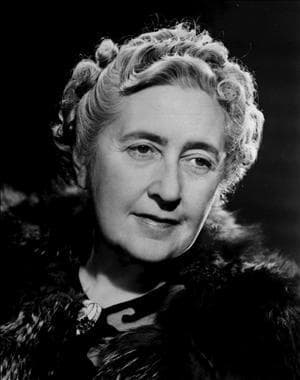
Dame Agatha Mary Clarissa Christie, Lady Mallowan, was an English writer known for her 66 detective novels and 14 short story collections, particularly those revolving around fictional detectives Hercule Poirot and Miss Marple. She also wrote the world's longest-running play, the murder mystery The Mousetrap, which has been performed in the West End since 1952. A writer during the "Golden Age of Detective Fiction", Christie has been called the "Queen of Crime". She also wrote six novels under the pseudonym Mary Westmacott. In 1971, she was made a Dame (DBE) by Queen Elizabeth II for her contributions to literature. Guinness World Records lists Christie as the best-selling fiction writer of all time, her novels having sold more than two billion copies.







