“There are some things in this world that are not meant to be changed.”
— Coney Island is being transformed, but some things remain.

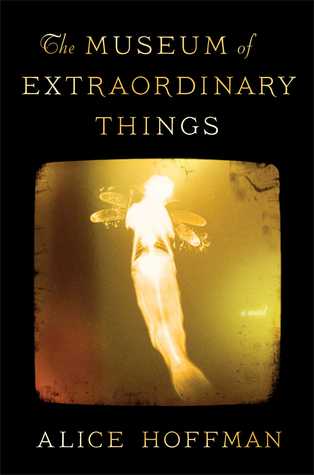
Alice Hoffman (2014)
Genre
Fantasy / Historical Fiction / Mystery / Romance
Reading Time
7-8 hours
Key Themes
See below
Sign in to track this book
A mermaid with webbed hands and a renegade photographer find their lives connected in a story of love and mystery, set against a Coney Island freak show and the aftermath of a city fire.
Coralie Sardie is raised by her strict father, Professor Sardie, in his Coney Island 'Museum of Extraordinary Things.' From a young age, Coralie performs as a mermaid, spending hours in cold water, developing webbed fingers and toes from her father's training. She lives in isolation, with only her father and the other 'exhibits'—like the Wolfman, the Butterfly Girl, and her governess, Miss Pauline—for company. Her father's focus on the unusual and his desire to profit from human oddities shape Coralie's life, limiting her understanding of the outside world and giving her a deep sense of being an outsider.
Eddie Cohen, born Ezekiel, is a young Russian Jewish immigrant living in Manhattan's Lower East Side. Feeling trapped by his traditional upbringing and his father's tailoring business, Eddie wants a life beyond his community. He secretly loves photography, seeing it as a way to show the truth and beauty of the world. One night, after an argument with his father, Eddie leaves home, taking only his camera. He begins to explore the city, using his camera to document the lives of working people and the varied, often harsh, realities of New York City.
During one of her rare trips outside the museum, Coralie goes into the woods near the Hudson River. There, she meets Eddie Cohen, who is photographing the moonlit trees. This meeting is important; Coralie, with her unusual look and sheltered life, is intrigued by Eddie's artistic eye and directness. Eddie, in turn, is drawn to Coralie's beauty and mystery, feeling a connection with her. This first, brief meeting sparks a mutual interest, hinting at a bond that crosses their different worlds.
The Triangle Shirtwaist Factory fire breaks out, burning the building and trapping hundreds of young immigrant women. Eddie Cohen happens to see the terrible event from a distance and is deeply affected by the tragedy. He uses his camera to document the aftermath, capturing the sadness, loss, and strength of the city's people. This experience strengthens his commitment to using photography for truth and social comment. The fire also sets the stage for a mystery, as a young woman named Lena is reported missing, not among the identified dead or injured.
Driven by a sense of fairness and a personal tie to the immigrant community, Eddie begins to investigate Lena's disappearance. Lena worked at the Triangle Shirtwaist Factory, and her body was not found. His search leads him through the city's hidden areas, connecting him with various people, including Lena's family and friends. Meanwhile, Coralie is forced by her father to help with his illegal activities, which involve getting bodies from the river for a doctor's anatomical studies. This secret work exposes Coralie to death and further isolates her, while also giving her an unusual understanding of the city's hidden ways.
As Eddie looks deeper into Lena's disappearance, he learns she was active in union organizing, working for better conditions for factory girls. He finds that Lena was a strong and brave young woman, not easily scared. His investigation suggests her disappearance might be more than just from the fire, possibly involving foul play or an attempt to silence her. He gathers clues that point to a deliberate act, not just an accident, raising the stakes of his search.
Coralie, increasingly limited by her father's control and disturbed by his morally questionable actions, begins to subtly resist. She is drawn to Eddie's passion and honesty, and their paths continue to cross. Their meetings become more frequent and close, with Eddie sharing his photographs and his search for truth, and Coralie showing parts of her lonely, unusual life. Their growing romance gives Coralie a sense of freedom and a link to a world outside the museum, encouraging her to question her father's authority more directly.
Eddie's investigation eventually uncovers a shocking truth: Professor Sardie, Coralie's father, is involved in Lena's disappearance. Lena, after escaping the fire, found Sardie and his partners committing a crime. Sardie, fearing exposure, took Lena and later disposed of her body in the river, using his knowledge of the waterways and his illegal connections to hide his actions. This discovery puts Coralie in a difficult position, forcing her to face the true nature of her father's evil.
With the truth, Coralie confronts her father about his role in Lena's death. The confrontation is tense and emotional. Professor Sardie tries to manipulate Coralie as he always has. He denies his involvement or tries to justify his actions, but Coralie, now brave because of her love for Eddie and her desire for justice, refuses to be swayed. This direct challenge to his authority pushes Professor Sardie to his limits, creating a dangerous situation for Coralie and threatening to expose all his secrets.
As the truth about Professor Sardie's crimes comes out, the Museum of Extraordinary Things faces its end. The fantastical world Coralie has always known begins to fall apart. Coralie must make a choice: stay loyal to her father and the only life she's known, or embrace a future with Eddie, one built on truth, love, and a life outside the shadows. This decision marks her final break from her father's influence and her full acceptance of her own will and identity. The museum, a symbol of her confinement, is destroyed by a storm.
After the museum's destruction and Professor Sardie's downfall, Coralie and Eddie begin a new life together. Coralie, finally free from her father's control, uses her unique swimming abilities not for performance but for a real connection with nature. Eddie continues his photography, documenting ordinary people and finding beauty in everyday life. Their love story ends in a shared future where they find acceptance and belonging in each other, celebrating their unique qualities and finding strength in their unusual partnership. They combine the magical and the real, finding their place in a changing world.
The Protagonist
Coralie transforms from a submissive, isolated performer into an independent woman who embraces her true self and defies her oppressive father.
The Protagonist/Love Interest
Eddie evolves from a runaway seeking personal freedom to a determined advocate for justice, finding purpose and love in his pursuit of truth.
The Antagonist
Professor Sardie remains a static, malevolent force, ultimately meeting his downfall as his secrets are exposed and his control crumbles.
The Supporting
Miss Pauline struggles with her complicity in Sardie's actions, eventually finding some measure of peace by prioritizing Coralie's well-being.
The Mentioned
Lena's story serves as a catalyst for others' arcs, representing the silenced voices of the exploited.
The Supporting
The Wolfman's arc is less about personal transformation and more about enduring hardship with quiet dignity, finding a new, freer life after the museum's closure.
The Supporting
Like the Wolfman, the Butterfly Girl's arc is tied to her liberation from the museum, hinting at a future where her unique qualities are appreciated rather than exploited.
The Supporting
Mrs. Cohen's arc is one of gradual acceptance, coming to terms with her son's chosen path despite her initial heartbreak.
The Supporting
Mr. Cohen's arc is about learning to reconcile his traditional expectations with his son's individual desires, eventually finding a different form of paternal love.
The novel questions common ideas of beauty and abnormality. Coralie's webbed fingers and her father's 'extraordinary things' are shown as both strange sights and sources of unique beauty and strength. The book suggests that what society calls 'abnormal' can be a deep source of strength and identity, especially for Coralie, whose 'mermaid' qualities help her navigate the world in unique ways. This theme appears in Eddie's photography, which finds beauty in the unusual and marginalized, contrasting with Professor Sardie's exploitative view. The story reclaims the word 'extraordinary' from its negative meanings.
“Extraordinary things are always true.”
This theme is key to both Coralie's and Eddie's stories. Coralie is physically and emotionally trapped by her father and the museum, wanting a life beyond its walls. Her swimming is a form of escape and freedom. Eddie, similarly, feels confined by his traditional upbringing and actively seeks freedom through his art and independent life. The Triangle Shirtwaist Factory fire clearly shows the deadly confinement faced by working women. The struggle for freedom—from society, family control, or literal entrapment—drives many characters' actions and desires, ending in Coralie's freedom.
“She had been born of the water and belonged to no one but herself.”
The novel explores how stories, both real and made up, shape how people see things. Professor Sardie creates complex, often cruel, stories for his exhibits, controlling how they are viewed. In contrast, Eddie uses photography to tell the truth, capturing the raw reality of New York City and giving a voice to the voiceless, especially after the Triangle Shirtwaist fire and during his investigation into Lena's disappearance. His camera serves as a witness, documenting both beauty and unfairness. The story itself is a form of storytelling, putting together different lives to reveal a larger truth, highlighting the responsibility in shaping narratives.
“He understood that a photograph was a way to stop time, to capture a moment, to tell a story without words.”
Amidst the harsh realities of early 20th-century New York, the novel highlights the power of love and real human connection. Coralie, isolated and used, finds comfort and strength in her growing relationship with Eddie. Their love crosses their very different backgrounds, offering both characters a sense of belonging and acceptance. This theme contrasts with the manipulative relationships created by Professor Sardie. The strong bond between Coralie and Eddie offers hope and resilience, allowing them to overcome difficulties and create a new life together, celebrating their unique identities.
“Love, like magic, was always there, waiting to be found.”
The novel clearly shows the social inequalities and injustices common in early 20th-century New York. The struggles of immigrant factory workers, especially young women, are shown through the Triangle Shirtwaist Factory fire and Lena's story. Eddie's dedication to investigating Lena's disappearance and documenting the lives of working people emphasizes a commitment to social justice. The use of the 'extraordinary things' in Sardie's museum also points to a broader theme of people being treated as objects and denied their dignity. The story advocates for empathy and for giving a voice to those society ignores.
“Some tragedies were so immense they swallowed up the truth.”
A central setting symbolizing exploitation, otherness, and a contained world.
The museum functions as both a physical setting and a powerful symbol. It represents Coralie's confinement and her father's exploitative nature, a place where people's unique qualities are commodified rather than celebrated. It embodies the theme of what society deems 'extraordinary' or 'abnormal,' showcasing the public's fascination with the grotesque. Its eventual destruction by a storm symbolizes Coralie's liberation and the end of her father's reign, allowing for a new beginning outside its dark shadow.
A physical manifestation of Coralie's uniqueness and her father's manipulation.
Coralie's webbed digits are a key symbol of her 'mermaid' identity, directly resulting from her father's cruel training. They are both a mark of her exploitation and a source of her extraordinary swimming ability. These physical traits set her apart, making her an 'other' but also connecting her profoundly to the water, where she finds freedom and a sense of self. They represent the blurred line between natural difference and unnatural alteration, and ultimately become a part of her embraced identity.
A tool for truth-telling, social commentary, and capturing beauty.
Eddie's camera is more than just an object; it is an extension of his character and his moral compass. It allows him to document the harsh realities of immigrant life, the devastation of the Triangle Shirtwaist fire, and the hidden truths behind Lena's disappearance. His photographs serve as evidence, social commentary, and a means of preserving moments of beauty and sorrow. They symbolize the power of art to reveal truth and give voice to the marginalized, contrasting sharply with the staged illusions of Professor Sardie's museum.
Symbolic spaces representing freedom, mystery, and the flow of life and death.
The waters of the Hudson River and Coney Island serve as significant symbolic spaces. For Coralie, the ocean and river are places of profound freedom, where she feels most at home and where her unique abilities truly shine. They also hold darker connotations, as the river is where her father disposes of bodies and where Lena's fate is sealed. The waters represent the mysterious, the untamed, and the cyclical nature of life and death, constantly flowing and changing, much like the lives of the characters themselves.
A historical event serving as a catalyst for plot and a symbol of social injustice.
The Triangle Shirtwaist Factory fire is a real historical event that anchors the novel in a specific time and place. It acts as a major plot catalyst, prompting Eddie's investigation into Lena's disappearance and setting in motion the unraveling of Professor Sardie's secrets. Beyond its plot function, the fire symbolizes the devastating social injustices faced by working-class immigrants in early 20th-century New York, highlighting themes of exploitation, dangerous working conditions, and the struggle for labor rights. It injects a sense of grim reality into the more fantastical elements of the story.
“There are some things in this world that are not meant to be changed.”
— Coney Island is being transformed, but some things remain.
“Every life has a story, and every story has a secret.”
— Coralie reflecting on the lives around her.
“The world was full of magic, but you had to know where to look for it.”
— Coralie's father's perspective on the world.
“Sometimes the things we fear are the very things that set us free.”
— Coralie learning to embrace her uniqueness.
“It was impossible to be lonely when you had a city full of stories.”
— Coralie finding comfort in the narratives of New York.
“Love was a dangerous thing, a force that could destroy as easily as it could create.”
— A reflection on the intensity of love.
“The past was a ghost that haunted every street corner, every brick building.”
— Exploring the historical atmosphere of New York City.
“Even in the darkest places, there was always a spark of hope.”
— Characters facing difficult circumstances.
“Some people were meant to be extraordinary, and others were meant to watch them shine.”
— Coralie's father's views on people's roles.
“There was a language in the silence, if you only knew how to listen.”
— Coralie's ability to perceive more than others.
“The city was a living, breathing creature, with its own heart and soul.”
— The personification of New York City.
“Beauty was in the eye of the beholder, but sometimes, the beholder needed a little help seeing it.”
— Coralie's unique appearance and how others view her.
“Sometimes, the greatest escape was not from a place, but into another's heart.”
— The developing romance between Coralie and Eddie.
“Every person carried their own museum of extraordinary things inside them.”
— A reflection on the uniqueness and hidden depths of individuals.
Ready to see how well you understood this book? Take our interactive quiz with 10 questions.

Alice Hoffman is a celebrated American novelist known for her magical realism and explorations of family, love, and loss. Her notable works include the bestselling 'Practical Magic' series, 'The Museum of Extraordinary Things,' and 'The Rules of Magic.' Hoffman's poignant storytelling and vivid imagery have earned her widespread critical acclaim and a dedicated readership.







