“The truth, however ugly in itself, is always curious and beautiful to seekers after it.”
— Hercule Poirot reflects on the nature of truth in a murder investigation.

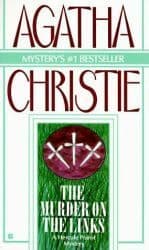
Agatha Christie (1923)
Genre
Thriller / Mystery
Reading Time
270 min
Key Themes
See below
Sign in to track this book
Hercule Poirot uncovers a web of lies, secret identities, and a double murder on a French golf course after a millionaire's urgent plea for help ends in his mysterious death.
Hercule Poirot gets an urgent letter from Monsieur Paul Renauld, a rich South American in Merlinville-sur-Mer, France, asking for immediate help. Poirot and Captain Hastings travel to France, but when they arrive, they learn Renauld has been murdered. His body is found on the golf course next to his villa, 'Genevieve', stabbed in the back with a paper-knife and put in a fresh grave. Madame Renauld is found tied up in her room, claiming two masked men broke in, kidnapped her husband, and stole his money. Local French Sûreté detective, Monsieur Giraud, immediately takes charge, disagreeing with Poirot's careful methods.
Poirot starts his investigation by looking at the crime scene and interviewing the household. He notices several strange details, such as Renauld wearing an overcoat too big for him, and a passionate love letter in his pocket addressed to an 'Eloise'. Madame Renauld's account of the kidnapping is vague, and her son, Jack Renauld, seems unusually calm. Jack says his father recently disinherited him, giving him a strong reason. The police focus on Marthe Daubreuil, a neighbor Jack loves, who has a mysterious past involving a former lover of Paul Renauld. Poirot also learns of a secret passage connecting the Renauld and Daubreuil properties.
The case changes when a second body is found, similarly murdered and buried in a grave nearby. This body is identified as Georges Conneau, a known criminal. More investigation shows that Paul Renauld had a secret past; he was once Georges Rowland, who left England years ago after being wrongly accused of murder. This connects to Madame Renauld, who was once Bella Duveen, an actress involved in Rowland's past. The love letter found on Renauld's body is now thought to be from a different woman, adding another layer of deception.
Jack Renauld admits to a secret marriage with Marthe Daubreuil, which his now-dead father disliked. Meanwhile, a young woman named Cinderella, who had been seen on the golf course, says she is the daughter of Georges Conneau and Bella Duveen. She explains that Conneau had been blackmailing Renauld, threatening to expose his past as Georges Rowland. This suggests Renauld might have faked a kidnapping to escape his blackmailer, but it does not explain his actual murder or the second body.
Poirot carefully puts the events together. He concludes that the first body found was not Paul Renauld but Georges Conneau. Renauld, desperate to escape Conneau's blackmail, planned to fake his own disappearance and frame Conneau. He arranged to meet Conneau on the golf course, intending to incapacitate him and switch clothes. However, someone else intervened. The overcoat being too large for the first victim (Conneau) was a key clue, showing it belonged to Renauld.
Poirot confronts Madame Renauld, revealing she killed Paul Renauld. She confesses, explaining she found out about her husband's plan to fake his disappearance and frame Conneau. She also knew about his affair with a young woman named Bella Duveen (not her own past identity, but a different woman), and feared he would leave her. In anger and desperation, she met Renauld on the golf course after he had incapacitated Conneau and switched clothes, and stabbed him with the paper-knife. She then tied herself up to pretend to be a victim of the 'kidnapping'.
Jack Renauld and Marthe Daubreuil helped cover up the crime. Jack, finding his mother upset and his father dead, helped her move Paul Renauld's body from where she killed him to the grave where Conneau was supposed to be buried. Marthe, knowing the situation and protecting Jack, also helped hide details and give misleading information to the police. Their actions, while not directly involving murder, made the investigation much harder and kept Madame Renauld from immediate suspicion.
The love letter found in the pocket of the deceased (Conneau, but wearing Renauld's overcoat) was from Paul Renauld, but it was addressed to another woman named Bella Duveen. This Bella Duveen was a young English actress with whom Paul Renauld was having an affair. This affair was a significant reason for Madame Renauld's jealousy and, ultimately, her decision to kill her husband, fearing he would leave her for this younger woman and take his money.
With all the parts of the puzzle in place, Poirot presents his full solution to Monsieur Giraud and the other authorities. Madame Renauld is arrested for the murder of her husband, Paul Renauld. The complications of the two bodies, the switched identities, the blackmail, and the various love affairs are explained, proving Poirot's superior understanding of people and attention to detail over Giraud's more direct, but flawed, approach. Hastings, as always, is impressed by Poirot's skill.
After the case, Jack Renauld and Marthe Daubreuil face the results of their involvement but move on. Captain Hastings, who liked Cinderella during the investigation, learns she is Lucia, the daughter of Georges Conneau and Bella Duveen (the younger actress). They fall in love and decide to marry, planning a new life together in Argentina. The ending brings closure for everyone, with justice done and new futures formed from the deception and murder.
The Protagonist
Poirot begins by being underestimated by local police but systematically unravels a highly intricate case to reveal the truth.
The Supporting
Hastings initially struggles to understand the case but eventually finds love and a new direction for his life.
The Victim/Antagonist
His past crimes and present deceptions lead directly to his murder, which he unwittingly orchestrated.
The Antagonist
She begins as a seemingly helpless victim but is revealed to be a calculating murderer driven by fear and jealousy.
The Supporting
He is initially a suspect due to his strained relationship with his father, but his role shifts to an accomplice in the cover-up, protecting his mother.
The Supporting
She begins as a mysterious love interest and evolves into an accomplice in the cover-up, protecting her husband.
The Victim/Antagonist
His blackmail attempts and eventual murder are central to the initial misdirection of the case.
The Supporting
She evolves from a mysterious, seemingly minor character to a key figure whose true identity helps unravel the plot and becomes Hastings's love interest.
The Supporting
Giraud consistently underestimates Poirot and follows red herrings, ultimately being proven wrong by Poirot's superior intellect.
The novel has strong themes of identity and deception. Paul Renauld lives under a false name (Georges Rowland), having escaped a past crime. His wife, Madame Renauld, also has a hidden past as Bella Duveen. Finding two bodies, one first misidentified, further blurs who is who. Characters like Cinderella also have secret identities. This theme shows how people create and hide their pasts, and how these hidden identities eventually affect them, driving much of the plot's complexity and the characters' reasons.
“The truth, Monsieur Poirot, is often more fantastic than any lie.”
The entire murder plot happens because of past actions and secrets. Paul Renauld's original crime as Georges Rowland, his escape, and the blackmail he faces from Georges Conneau all come from his past. Madame Renauld's own past and her fear of being left because of her husband's affairs and hidden life directly lead to her killing him. The novel shows that no matter how far one runs or how complex the deception, past wrongs eventually appear and require payment or cause more problems, shaping the characters' present and future.
“The past, my friend, is a ghost that always returns to haunt us.”
These strong emotions are central to why the murder happened. Paul Renauld's affair with a younger Bella Duveen makes Madame Renauld jealous and afraid of abandonment, which leads her to kill him. Jack Renauld's secret marriage to Marthe Daubreuil and his father's disapproval show family betrayal. The passionate love letter found on the first victim's body adds another layer of romantic problems and deceit. These intense emotional drives show the human side of the crime, demonstrating how love can become possessiveness and betrayal, leading to sad results.
“Ah, the human heart, Hastings, it is a complicated mechanism, full of dark corners and surprising impulses.”
The difference between Poirot's careful, psychological approach to justice and Giraud's more direct, evidence-based methods shows different ways of finding truth. Giraud is quick to accuse and wants quick answers, while Poirot looks deeper into reasons, character, and the events. The novel favors Poirot's method, showing that real justice needs a full understanding of the human element, the hidden truths, and the small inconsistencies that lead to the correct solution, rather than just surface evidence.
“It is the little details, my friend, the seemingly insignificant things, that often hold the key to the greatest mysteries.”
A core misdirection involving two bodies and exchanged roles.
This is the central plot device that creates much of the mystery and confusion. The discovery of two identically murdered bodies, with the first body initially misidentified as Paul Renauld, is a brilliant red herring. Poirot deduces that the first body found was actually Georges Conneau, wearing Renauld's overcoat, and Renauld himself was the second victim. This device forces the reader (and Hastings) to constantly re-evaluate who is dead, who is alive, and what their true motives were, making the solution incredibly intricate and satisfying.
A misleading clue used to point towards an incorrect motive or suspect.
The passionate love letter found in the pocket of the first victim (Conneau, but in Renauld's coat) is a classic misdirection. Initially, it suggests that Renauld was killed by a jealous lover or that the letter was from a secret admirer. Poirot eventually reveals that the letter was indeed from Renauld, but to a different woman (the younger Bella Duveen), adding to Madame Renauld's motive, and was part of Renauld's own elaborate deception. This device manipulates reader expectations and provides a false trail.
A physical link between properties symbolizing hidden relationships and opportunities for crime.
The secret passage connecting the Renauld and Daubreuil properties serves a dual purpose. On a literal level, it provides a means for characters like Jack and Marthe to move between houses unobserved, facilitating their secret relationship and later, their involvement in the cover-up. Symbolically, it represents the hidden and intertwined histories of the two families, particularly the past connection between Paul Renauld and Madame Daubreuil, and the complex web of relationships and secrets that bind them together.
A contrasting detective character used to highlight the protagonist's unique abilities.
Monsieur Giraud serves as a direct foil to Hercule Poirot. Giraud represents the more conventional, aggressive, and evidence-driven approach to detective work, often boasting about his speed and dismissing Poirot's psychological methods. His repeated incorrect conclusions and missed details, contrasted with Poirot's meticulous deductions, highlight Poirot's superior intellect and unique 'little grey cells'. This device allows Christie to showcase Poirot's brilliance by having him triumph over a seemingly competent, but ultimately flawed, rival.
“The truth, however ugly in itself, is always curious and beautiful to seekers after it.”
— Hercule Poirot reflects on the nature of truth in a murder investigation.
“The little grey cells—it is up to them.”
— Poirot emphasizes the importance of using one's intellect to solve the case.
“One must always look at the psychology of the case.”
— Poirot explains his method of solving mysteries by understanding human behavior.
“The impossible cannot have happened, therefore the impossible must be possible in spite of appearances.”
— Poirot deduces that an apparent impossibility in the case must have a logical explanation.
“It is the brain, the little grey cells on which one must rely.”
— Poirot reiterates his reliance on mental acuity over physical evidence.
“A man's past is not like a woman's—it is not so easily forgotten.”
— A character discusses how past actions can haunt individuals, particularly in the context of the murder.
“There is nothing so dangerous for anyone who has something to hide as conversation!”
— Poirot warns that talking too much can reveal hidden truths in a criminal case.
“The facts are there, but they are not in order.”
— Poirot describes the challenge of organizing evidence to see the full picture.
“It is a capital mistake to theorize before one has data.”
— Poirot advises against jumping to conclusions without sufficient information.
“The murderer is not necessarily the one who has the most obvious motive.”
— Poirot points out that appearances can be deceiving in a murder investigation.
“In a case like this, one must look for the little things.”
— Poirot emphasizes attention to detail as key to solving the mystery.
“The heart of the mystery lies in the past.”
— Poirot suggests that the solution to the murder is rooted in historical events.
“It is not the criminal things which are difficult to believe, but the coincidences.”
— Poirot comments on how coincidences can be more suspicious than overt criminal acts.
“Every murderer is probably somebody's old friend.”
— A reflection on how murderers can be hidden in plain sight among acquaintances.
Ready to see how well you understood this book? Take our interactive quiz with 10 questions.
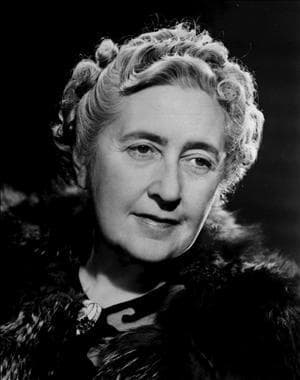
Dame Agatha Mary Clarissa Christie, Lady Mallowan, was an English writer known for her 66 detective novels and 14 short story collections, particularly those revolving around fictional detectives Hercule Poirot and Miss Marple. She also wrote the world's longest-running play, the murder mystery The Mousetrap, which has been performed in the West End since 1952. A writer during the "Golden Age of Detective Fiction", Christie has been called the "Queen of Crime". She also wrote six novels under the pseudonym Mary Westmacott. In 1971, she was made a Dame (DBE) by Queen Elizabeth II for her contributions to literature. Guinness World Records lists Christie as the best-selling fiction writer of all time, her novels having sold more than two billion copies.







