“The truth, however ugly in itself, is always curious and beautiful to seekers after it.”
— Hercule Poirot reflecting on the nature of truth in a murder investigation.


Agatha Christie (2023)
Genre
Thriller / Mystery
Reading Time
270 min
Key Themes
See below
Sign in to track this book
In a village full of secrets, a doctor gets caught in a web of lies and murder, where an unexpected confession shatters trust.
Dr. James Sheppard, the narrator, introduces King's Abbot, a quiet village recently affected by Mrs. Ferrars' death. She was a rich widow, widely thought to have poisoned her first husband, Ashley Ferrars, a year earlier. Dr. Sheppard goes to her home on September 17th and finds her dead from an overdose of veronal. While officially a suicide, the timing is odd. It happened a day after she told Roger Ackroyd, a rich local gentleman, about a secret. Many think she confessed to poisoning her husband, and that this confession led to her death.
Roger Ackroyd asks Dr. Sheppard to come to his estate, Fernly Park. Ackroyd wants to discuss a letter from Mrs. Ferrars. In it, she admits to poisoning her husband and says she was being blackmailed. Ackroyd reads the letter to Dr. Sheppard but stops before saying the blackmailer's name. After Dr. Sheppard leaves, Ackroyd's stepson, Ralph Paton, is seen entering the study. Later that evening, Ackroyd's niece, Flora Ackroyd, finds her uncle dead in his locked study, stabbed in the neck. Ralph Paton, who has disappeared, is immediately suspected.
News of Roger Ackroyd's murder spreads fast in King's Abbot. Flora Ackroyd wants to clear Ralph Paton's name. She asks Hercule Poirot, who recently retired to the village to grow vegetables, to investigate. Poirot is interested in the case and thinks there is more to it than it seems. He agrees to investigate. He immediately starts questioning people at Fernly Park and other key village figures, including Dr. Sheppard, who becomes his unofficial assistant and record-keeper.
Poirot carefully examines Ackroyd's study, noting the locked door, the open window, and the body's position. He finds a dictaphone, which Ackroyd often used, is missing. Caroline Sheppard, Dr. Sheppard's gossipy sister, says she overheard Ackroyd talking to a woman on the night of the murder. This suggests Ackroyd had a secret meeting after Dr. Sheppard left. Poirot also learns that Ralph Paton was secretly engaged to Flora Ackroyd, a fact hidden from Roger Ackroyd, and that Paton was deeply in debt.
More investigation shows a mysterious stranger was seen near Fernly Park on the murder night. Parker, the butler, first denies seeing anyone but later admits to speaking with a man looking for Roger Ackroyd. Footprints are also found in the garden leading to the study window, suggesting an intruder. Meanwhile, the police, led by Inspector Raglan, focus on Ralph Paton as the main suspect. Poirot has growing doubts and believes the evidence points too easily to Paton.
Poirot questions everyone connected to Fernly Park. He discovers that Ursula Bourne, the parlor maid, secretly married Ralph Paton and Ackroyd fired her just before his death. Major Blunt, a big-game hunter, was also staying at Fernly Park and provides an alibi. Geoffrey Raymond, Ackroyd's secretary, admits to money problems. Poirot also learns that Ackroyd had been discussing his will and planned to change it, possibly disinheriting Flora and leaving a lot to Ralph. This makes the motive more complicated.
Poirot focuses on the timeline and the missing dictaphone. He concludes that the conversation Caroline Sheppard overheard could not have been with Roger Ackroyd himself, as Ackroyd was already dead. He thinks a dictaphone recording was played to create a false alibi for the killer, making it seem Ackroyd was alive and speaking after Dr. Sheppard left. This changes the investigation's focus, moving away from a simple break-in.
Through careful questioning and observation, Poirot concludes that Ursula Bourne, the parlor maid, blackmailed Mrs. Ferrars. Her secret marriage to Ralph Paton and her firing by Roger Ackroyd left her with money problems. She had found out Mrs. Ferrars' secret about her first husband's death and used this to get money. However, she did not murder Roger Ackroyd; her reason was financial gain from Mrs. Ferrars, not killing her employer.
Poirot gathers everyone involved—the household staff, family members, and Dr. Sheppard—in the drawing-room at Fernly Park. He systematically rules out each suspect, revealing their individual secrets and reasons, but none are the murderer. He then reconstructs the murder night, focusing on the exact timing of events and small details. He reveals that the dictaphone created the illusion of Ackroyd being alive, and that the killer was someone in the room.
In a shocking reveal, Poirot names Dr. James Sheppard, the narrator and his seemingly loyal assistant, as Roger Ackroyd's murderer. Poirot explains that Dr. Sheppard killed Ackroyd. Knowing Ackroyd would be found later, he placed the dictaphone with a recording of Ackroyd's voice to create a false timeline and alibi. Dr. Sheppard had also blackmailed Mrs. Ferrars, a secret he could not let Ackroyd reveal. He admitted his crime in his own written account, which Poirot uses as proof. Poirot gives Dr. Sheppard a chance to write a final note before the police are told, suggesting a choice between public shame and suicide.
The Protagonist/Antagonist
He begins as a seemingly reliable narrator and Poirot's confidante, but is gradually unmasked as the cunning and manipulative murderer, culminating in his silent confession.
The Protagonist
He transitions from a retired gentleman to an active detective, meticulously unraveling a complex murder case and exposing the unexpected killer.
The Victim/Central Figure
His character arc is cut short by his murder, but his actions and secrets before his death are crucial to the unraveling of the mystery.
The Supporting
Remains consistent as the village gossip, unknowingly assisting Poirot's investigation through her detailed observations.
The Supporting/Red Herring
Starts as the prime suspect, goes into hiding, and is eventually cleared by Poirot.
The Supporting
From a grieving niece and key witness, she becomes a suspect with a hidden motive, eventually cleared by Poirot.
The Mentioned/Catalyst
Her death sets the entire plot in motion, revealing a chain of secrets and crimes.
The Supporting
Introduced as a dismissed parlourmaid, her secret marriage and role as blackmailer are gradually revealed.
The Supporting
Initially appears as a reliable but reserved servant, then his suspicious past is revealed, only to be cleared of the murder.
The Supporting
His stoic facade hides a secret affection, which is revealed but does not implicate him in the murder.
The novel is a great example of deception, where almost every character has a secret, and the most trusted person is the ultimate deceiver. Mrs. Ferrars' secret about poisoning her husband, Ursula Bourne's secret marriage and blackmail, Flora's secret engagement and theft, and most importantly, Dr. Sheppard's hidden identity as the murderer and blackmailer, all create an atmosphere of hidden truths. Poirot must uncover these layers of lies, showing that appearances are always misleading, and that even small details can hide a dark reality.
“''Everyone in King's Abbot, as in most other places, was always far more interested in other people's affairs than in their own.''”
The main theme is the use of an unreliable narrator in Dr. James Sheppard. His first-person story guides the reader, shaping their views and making them misinterpret clues and suspect the wrong people. The narrator's apparent fairness and careful record-keeping hide his own guilt. His eventual unmasking is a deep betrayal of the reader's trust. This device makes the reader re-evaluate every detail, showing how easily one can be fooled by a seemingly trustworthy voice.
“''I am writing this at Poirot's suggestion. He seems to think that I have a flair for marshalling facts, and that I may be able to present the case in a more interesting fashion than a mere police report.''”
The story starts with Mrs. Ferrars' confession of a past murder and her death, which begins the events. Roger Ackroyd's murder is directly linked to his knowledge of her confession and the blackmailer's identity. This theme explores how guilt, both admitted and hidden, drives characters' actions. The twist shows that the murderer himself is driven by the guilt of his blackmail and the fear of being exposed. This leads him to commit more crimes to protect his secret, ending with his silent, indirect confession within his own story.
“''She had poisoned her husband. I had known that for a fact.''”
Poirot's search for truth and fairness is central, but the ending questions what justice means. Poirot unmasks the killer, but he gives Dr. Sheppard a chance to take his own life to avoid public scandal, instead of immediately handing him to the police. This decision shows Poirot's unique moral code, where restoring order and the psychological effect of truth can sometimes be more important than legal punishment. It highlights the complexities of morality and personal responsibility.
“''The truth, however ugly in itself, is always beautiful in its effect.''”
King's Abbot's strict social structure helps hide the true nature of its residents. Characters like Parker the butler and Ursula Bourne the parlor maid have secrets linked to their social status and financial needs. The respectable appearance of upper-class residents, such as Roger Ackroyd and Dr. Sheppard, hides their questionable actions. Christie shows how society's expectations and the wish to maintain appearances can push people to desperate acts, and how these appearances can mislead investigators and readers, proving that bad deeds are not limited to any social group.
“''The criminal, you know, is a person just like yourself. He has a mother, a father, perhaps a wife and children. He has his feelings, his aspirations, his hopes. He is not a monster.''”
The story is told by the murderer, who subtly misleads the reader.
The most famous plot device in the novel is the use of Dr. James Sheppard as the first-person narrator, who is ultimately revealed to be the murderer. His narrative is meticulously crafted to appear objective and helpful, guiding the reader's suspicions away from himself through selective omission and clever phrasing. He records the investigation, including details that incriminate him, but presents them in a way that suggests innocence. This device creates a shocking twist, forcing the reader to re-read the entire story with a new understanding of the narrator's true role and the subtle clues embedded in his account.
Roger Ackroyd is found dead in a seemingly locked study, adding to the puzzle.
Roger Ackroyd's murder takes place in his study, which appears to be locked from the inside. This classic 'locked room' scenario presents a seemingly impossible crime, as there is no apparent way for the killer to have entered or exited without being seen. Poirot meticulously investigates the room, the windows, and the timeline, eventually demonstrating how the illusion of a locked room was created. The solution involves an ingenious use of the dictaphone and the killer's strategic actions, circumventing the apparent impossibility.
A seemingly innocuous recording device used to create a false alibi.
The dictaphone, a relatively new piece of technology at the time, serves as a crucial plot device. Roger Ackroyd uses it regularly for dictation. On the night of the murder, the killer uses a recording of Ackroyd's voice, played from the dictaphone, to create the illusion that Ackroyd was still alive and speaking after the actual time of his death. This misleads witnesses and creates a false timeline, allowing the murderer to establish an alibi and escape detection for a crucial period. Its presence and subsequent disappearance are key to Poirot's unraveling of the deception.
The murderer is the character least likely to be suspected by the reader.
Christie masterfully employs the 'least suspected person' trope by making the narrator, Dr. Sheppard, the killer. This device plays on reader expectations, as the narrator is typically assumed to be reliable and separate from the criminal element. By placing the killer in the role of the investigator's assistant and chronicler, Christie achieves a profound shock when his true identity is revealed. This subversion of narrative conventions is central to the novel's enduring impact and its reputation as one of the most innovative mysteries ever written.
Village gossip, particularly from Caroline Sheppard, provides clues but also misdirection.
Caroline Sheppard's constant stream of village gossip acts as a dual-edged sword. While her detailed observations and overheard conversations provide Poirot with valuable, granular information about the community's secrets, relationships, and movements, her interpretations and conclusions are often flawed. This device highlights how easily information can be distorted and how popular opinion can create strong, yet incorrect, suspicions (e.g., regarding Ralph Paton). Poirot must sift through the 'chaff' of gossip to find the 'grain' of truth, demonstrating his superior analytical skills.
“The truth, however ugly in itself, is always curious and beautiful to seekers after it.”
— Hercule Poirot reflecting on the nature of truth in a murder investigation.
“I have a little idea...”
— Poirot's famous catchphrase, often signaling a breakthrough in the case.
“It is completely unimportant. That is why it is so interesting.”
— Poirot discussing a seemingly trivial detail that becomes crucial to solving the mystery.
“The impossible cannot have happened, therefore the impossible must be possible in spite of appearances.”
— Poirot reasoning through the paradoxes of the murder case.
“Every murderer is probably somebody's old friend.”
— A reflection on the shocking nature of discovering a killer among acquaintances.
“The facts, they are there, you understand, but they are the wrong facts.”
— Poirot explaining how misleading evidence can derail an investigation.
“One must seek the truth within—not without.”
— Poirot advising on looking beyond surface appearances to find answers.
“I do not argue with obstinate men. I act in spite of them.”
— Poirot asserting his determination to pursue the investigation his own way.
“The simplest explanation is always the most likely.”
— A principle Poirot applies to unravel the complex murder mystery.
“There is nothing so dangerous for anyone who has something to hide as conversation!”
— Poirot noting how talkative suspects often reveal their guilt.
“The dead cannot cry out for justice. It is a duty of the living to do so for them.”
— A moral reflection on the responsibility to solve murders.
“It is the brain, the little gray cells on which one must rely.”
— Poirot emphasizing the importance of intellect over brute force in detection.
“A man's past is not a mere sequence of events. It is a pattern.”
— Poirot analyzing how past actions reveal character and motives.
“Fear is a very terrible thing.”
— A comment on how fear drives characters' actions in the story.
Ready to see how well you understood this book? Take our interactive quiz with 10 questions.
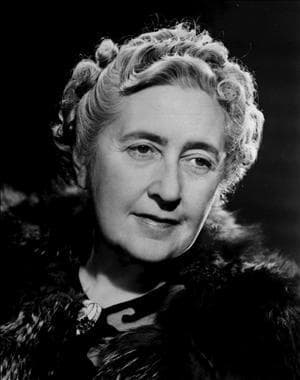
Dame Agatha Mary Clarissa Christie, Lady Mallowan, was an English writer known for her 66 detective novels and 14 short story collections, particularly those revolving around fictional detectives Hercule Poirot and Miss Marple. She also wrote the world's longest-running play, the murder mystery The Mousetrap, which has been performed in the West End since 1952. A writer during the "Golden Age of Detective Fiction", Christie has been called the "Queen of Crime". She also wrote six novels under the pseudonym Mary Westmacott. In 1971, she was made a Dame (DBE) by Queen Elizabeth II for her contributions to literature. Guinness World Records lists Christie as the best-selling fiction writer of all time, her novels having sold more than two billion copies.







