“Every man has his own idea of paradise.”
— Allie Fox's philosophy on escaping society.

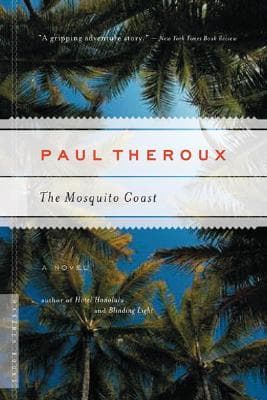
Paul Theroux (1981)
Genre
Literary Fiction / Lifestyle
Reading Time
9.5 hours
Key Themes
See below
Sign in to track this book
A brilliant but increasingly unhinged inventor drags his family into the Honduran jungle to build a 'perfect' society, only to shatter their lives with his escalating paranoia and disastrous ambition.
Allie Fox, an inventor, lives with his wife, Mother, and four children—Charlie, Jerry, April, and Clover—in Hatfield, Massachusetts. Allie constantly tinkers with inventions, from an ice-making machine to a giant bicycle. He strongly dislikes modern American life, seeing it as wasteful, corrupt, and morally bankrupt. His eldest son, Charlie, narrates their story, often reflecting on his father's grand statements and increasingly erratic behavior. Allie frequently rants about the coming collapse of civilization, fueled by his paranoia and desire to escape what he sees as a decaying society. He begins to plan an escape, believing he can build a better world elsewhere.
Driven by his utopian vision and growing contempt for America, Allie sells his house and most of their belongings, to the confusion and quiet worry of his family. He buys an old freighter, the 'Sybil', which he meticulously overhauls and fills with tools, machinery, and supplies. With his family, they embark on a dangerous sea journey to the Mosquito Coast of Honduras. Allie's determination is unwavering, despite the obvious dangers and the family's underlying anxieties. He believes this remote, untamed land offers the perfect place for his new civilization, free from the perceived evils of the developed world. Charlie, though often bewildered, remains loyal to his father's grand scheme.
Upon reaching the Mosquito Coast, Allie finds a suitable location deep within the jungle, a remote clearing he renames Jeronimo. He immediately sets his family to work clearing land and building a basic shelter. His main project is building a large ice-making machine, which he believes will change the lives of the local people and prove his ingenuity. The first days are filled with hard work and the constant threat of the jungle, but Allie's infectious energy and strong belief in his vision keep the family going. They meet a small community of Miskito Indians, who watch the strange newcomers with a mix of curiosity and suspicion.
Through sheer will and tireless effort, Allie manages to build his colossal ice-making machine. The machine, an engineering marvel in the remote jungle, begins to produce ice. This technological feat amazes the local Miskito Indians, who have never seen anything like it. Allie distributes the ice, and its cooling properties become a source of wonder and use for the community, especially for preserving fish. This success boosts Allie's confidence and reinforces his belief in his own genius and the viability of his utopian experiment. For a time, Jeronimo thrives, and the family finds a sense of purpose in their isolation, even as the jungle's challenges remain.
The family's fragile peace is broken by the arrival of Reverend Spellgood and his family, American Christian missionaries. Allie immediately sees them as an ideological threat, representing the very society he sought to escape. He dislikes their religious dogma and their attempts to 'civilize' the Miskito people, seeing it as an imposition on native culture. Allie argues with Reverend Spellgood, mocking his beliefs and asserting his own secular, scientific worldview. This confrontation marks a turning point, as Allie's paranoia and hostility towards outsiders grow, foreshadowing future conflicts and the breakdown of his rational judgment.
One day, while trying to repair or modify his ice machine, Allie accidentally causes it to malfunction. The machine, which uses highly flammable chemicals, becomes unstable. Despite his family's pleas to abandon it, Allie stubbornly tries to fix it, resulting in a massive explosion that completely destroys the machine and much of their settlement. The blast is devastating, both physically and psychologically. Allie, deeply affected by the loss of his greatest invention and the symbol of his utopian dream, begins a rapid descent into delusion and paranoia. He interprets the destruction as sabotage, blaming external forces and further retreating into his own distorted reality.
After the explosion, Allie becomes convinced that America has been destroyed by nuclear war and that their former settlement is no longer safe. He forces his family to abandon Jeronimo and embark on a grueling journey up a remote river, seeking a new, even more isolated refuge. The family's resources dwindle, and the journey is filled with danger, disease, and starvation. Charlie watches his father's increasing irrationality and dictatorial behavior, as Allie enforces his will with growing severity. The children, especially, suffer from the extreme conditions and their father's unyielding demands, losing their innocence and facing the harsh realities of survival.
Deep in the interior, Allie builds a new, elaborate dwelling: a large, self-sufficient floating house on a river. This mobile home is designed to be safe from outside threats and to provide for all their needs, further cementing their isolation. Allie continues to preach his distorted version of reality, insisting that the outside world is gone and that they are the last people left. The children, though weary and skeptical, are bound by their loyalty and dependence on their father. The floating house becomes a symbol of Allie's increasingly fractured mind, a physical representation of his desire to control every aspect of his family's existence and their perceived reality.
Their isolation is violently interrupted when armed bandits attack the floating house, seeking supplies and plunder. The family is forced to fight for their lives, and in the chaos, the floating house is severely damaged. This traumatic event shatters any remaining illusion of safety and reinforces Allie's paranoia. He sees the attack as further proof of the world's hostility and their need for deeper concealment. The family, now even more lacking in resources and hope, is forced to abandon their latest refuge and continue their desperate, aimless flight further into the wilderness, their survival becoming increasingly uncertain.
After months of wandering, suffering from starvation and illness, the Fox family slowly makes their way back towards the coast, their utopian dream completely shattered. Allie is severely weakened, both physically and mentally; his delusions become more pronounced and his leadership falters. They eventually find a small coastal settlement, where some of the Miskito Indians they had known from Jeronimo recognize them. The family's desperate state evokes pity and concern, a stark contrast to Allie's former pride and self-sufficiency. This brief return to a semblance of civilization brings them face-to-face with the reality they had tried so hard to escape.
In a final, desperate act of defiance and delusion, Allie, now gravely ill and barely coherent, encounters Reverend Spellgood's mission. Still believing himself to be in a post-apocalyptic world and seeing the missionaries as everything he dislikes, he tries to set fire to the mission. His actions are driven by his deep-seated hatred for organized religion and what he perceives as its corrupting influence. This act is the culmination of his unraveling, a tragic attempt to destroy the remnants of the 'old world' that he believes still threatens his family, even in his dying moments.
During his attempt to burn down the mission, Allie is shot by one of Reverend Spellgood's followers. Mortally wounded, he is carried away by his family. In his final moments, Allie remains in his delusion, believing he has succeeded in his mission and that they are truly free. His death, though tragic, ends his tyrannical hold over his family. With Allie gone, the children are finally free to make their own choices. Charlie, Mother, and the younger children decide to leave the Mosquito Coast, seeking passage on a boat to return to the world Allie so strongly rejected, forever marked by their father's grand, destructive experiment.
The Protagonist/Antagonist
Allie transforms from an eccentric but functional visionary into a tyrannical, delusional figure whose utopian dream devolves into a desperate, destructive flight from reality.
The Protagonist/Narrator
Charlie evolves from an obedient, admiring son into a weary, independent young man who eventually recognizes and rejects his father's destructive path.
The Supporting
Mother remains a steadfast and enduring figure, her quiet resilience and love for her children providing a constant in the face of her husband's escalating madness.
The Supporting
Jerry maintains a more consistent, pragmatic view throughout the ordeal, serving as a foil to Allie's idealism and Charlie's initial admiration.
The Supporting
Reverend Spellgood remains consistent in his beliefs, serving as the primary ideological antagonist to Allie's secular, utopian vision.
The Supporting
Mr. Haddy transitions from cautious helper to a concerned observer, eventually witnessing the tragic collapse of Allie's dream.
The Mentioned
Ma Kennywick's character serves as a static, symbolic warning of the dangers of isolation and delusion, mirroring Allie's eventual fate.
The Supporting
April endures the hardships of her father's quest, serving as a poignant reminder of the cost of his choices on his children.
The Supporting
Clover remains largely a symbol of innocence lost and forced endurance throughout the family's ordeal.
The novel explores how the pursuit of an idealized, perfect society can lead to destruction and tyranny. Allie Fox's initial dream of creating a purer civilization, free from the perceived evils of America, slowly becomes a nightmare of isolation, delusion, and suffering. His rigid adherence to his vision, without regard for reality or the needs of others, ultimately destroys his family and himself. This theme is clear from Allie's initial rants about American society to his desperate, delusional attempts to burn down the mission, showing how good intentions can be corrupted by unchecked fanaticism.
“What I have in mind is a place where we won't need money, where we won't need doctors, where we won't need the government. Where we can be free.”
As the Fox family becomes more isolated, Allie's control over them grows, turning him into a dictatorial figure. His initial charisma and ingenuity give way to a paranoid and manipulative dominance, where he dictates their reality, suppresses dissent, and punishes any challenge to his authority. This is powerfully shown through Charlie's narrative, as he watches his father's transformation from a beloved leader to an oppressive tyrant, especially after the destruction of the ice machine and their subsequent flight upriver. Allie's power, born from his vision, ultimately corrupts him and enslaves his family.
“He didn't just want us to obey him, he wanted us to believe him. He wanted us to think what he thought.”
The novel contrasts the perceived corruption of 'civilization' (America) with the raw, unforgiving reality of the 'wilderness' (the Honduran jungle). Allie believes he can build a superior civilization in the jungle, but the wilderness does not care about his ideals, posing constant threats of disease, starvation, and natural disaster. Ultimately, the jungle strips away the family's illusions and exposes the fragility of human constructs. This is clear in the constant struggle against the elements, the family's declining health and resources, and the eventual failure of all of Allie's grand inventions to truly conquer or tame the environment.
“The jungle was not a place for new beginnings. It was a place for endings.”
The narrative deeply explores the complex dynamics of family loyalty, especially between Charlie and his father. Initially, Charlie's admiration for Allie is absolute, driving him to support his father's every decision. However, as Allie's paranoia grows and his actions become increasingly dangerous and irrational, Charlie experiences deep disillusionment. This theme is central to the story, as Charlie struggles with his love for his father versus the need to protect himself and his siblings, culminating in his eventual acceptance of Allie's madness and the necessity of their escape. Mother's unwavering, though quiet, loyalty also highlights this theme.
“I loved him, but I was afraid of him. And I was afraid of what he was doing to us.”
Allie Fox's entire endeavor is based on his belief that he can control his environment and provide for his family entirely through his own ingenuity, free from outside dependencies. He builds an ice machine, a self-sufficient floating house, and tries to dictate every aspect of their lives. However, the novel consistently shows the futility of this illusion. Natural disasters, bandit attacks, and his own mental decline expose the limits of his control and the inherent interconnectedness of human existence. The destruction of his ice machine and the floating house are powerful symbols of his inability to truly control his destiny.
“He thought he could make his own world. He thought he could make his own rules. But the world had its own rules.”
The story is told through the eyes of Allie's eldest son, Charlie.
Charlie's first-person narration provides an intimate and subjective perspective on the events, filtering Allie's increasingly erratic behavior through the lens of a loyal but increasingly disillusioned son. This allows the reader to witness Allie's descent into madness and the family's suffering, while also experiencing Charlie's internal conflict and growth. His youthful perspective also highlights the impact of Allie's choices on his children, making the narrative more poignant and empathetic. The reader relies on Charlie's observations and interpretations, which evolve as he matures and understands more.
Allie's grand invention, symbolizing his utopian aspirations and eventual downfall.
The ice machine is a central symbolic object. Initially, it represents Allie's genius, his ability to harness technology for a better world, and his hope for a self-sufficient utopia. Its successful operation brings temporary admiration and utility. However, its dramatic destruction through Allie's own carelessness marks a critical turning point, symbolizing the fragility of his dreams and the beginning of his mental unraveling. It becomes a powerful metaphor for the collapse of his entire project and the dangers of unchecked ambition.
The setting functions as both an idealized escape and a hostile, indifferent force.
The Honduran jungle is more than just a backdrop; it acts as a character itself. For Allie, it initially represents a pristine, untainted canvas for his new world. However, it quickly becomes a relentless, indifferent antagonist, presenting constant challenges of disease, heat, insects, and isolation. Its vastness and wildness strip away the family's comforts and illusions, forcing them into a raw struggle for survival. The jungle symbolizes the unyielding reality that Allie's idealism cannot overcome, ultimately breaking his spirit and his grand vision.
Allie's escalating mental instability and false beliefs drive the plot's tragic trajectory.
Allie's progressive delusions, particularly his belief in an impending nuclear war and his absolute conviction in his own rightness, serve as a primary plot device. These delusions directly dictate the family's movements and actions, pushing them further into isolation and danger. They create internal conflict for Charlie and Mother, who must navigate their love and loyalty against the undeniable evidence of their father's failing mind. The delusions escalate throughout the book, ultimately leading to Allie's fatal confrontation and the tragic end of his experiment.
A bizarre, mobile dwelling symbolizing Allie's increasing isolation and control.
The floating house is a physical manifestation of Allie's deepening paranoia and his desire for absolute control and self-sufficiency. It represents his attempt to create an impenetrable, self-contained world, completely cut off from any perceived external threats. Its mobility reflects his constant flight from reality. When it is attacked and damaged by bandits, it further emphasizes the futility of his attempts to escape the world's dangers, highlighting how his efforts to create safety only lead to greater vulnerability and the stripping away of their last remaining resources.
“Every man has his own idea of paradise.”
— Allie Fox's philosophy on escaping society.
“The world is going to hell in a handbasket.”
— Allie Fox's frequent lament about modern civilization.
“You can't eat money, you can't drink money, you can't build with money.”
— Allie Fox explaining the perceived uselessness of currency.
“We were going to make a new world, a better world.”
— Charlie's initial belief in his father's vision.
“A man's got to make his own way, even if he has to smash everything in sight to do it.”
— Allie Fox's aggressive approach to problem-solving.
“The jungle doesn't care who you are or what you think you're going to do.”
— Charlie's realization about the indifference of nature.
“He always had a reason, even if it was a crazy one.”
— Charlie reflecting on his father's justifications.
“It's not what you do, it's what you think you're doing.”
— Allie Fox's emphasis on intent and self-perception.
“The more you try to get away from something, the closer you get to it.”
— Charlie's observation about their failed escape.
“You can't escape your own head, no matter how far you go.”
— A realization about internal struggles.
“He wanted to live in a place where he could make all the rules.”
— Describing Allie Fox's desire for absolute control.
“The silence was so heavy you could almost hear it.”
— Describing the profound quiet of the remote jungle.
“Sometimes you have to break things to make them better.”
— Allie Fox's radical approach to progress.
“He built a world, and then he broke it.”
— Charlie's summary of his father's ultimate failure.
Ready to see how well you understood this book? Take our interactive quiz with 10 questions.
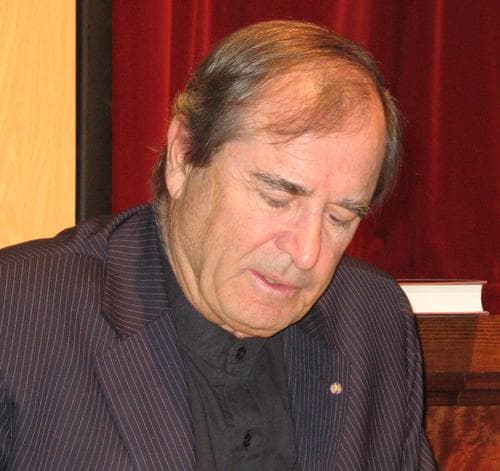
Biography coming soon.







