“Moorish art had always been a thing of the imagination, not of the eye; a thing of the mind, not of the hand.”
— Reflecting on the nature of Moorish artistic expression and its abstract qualities.

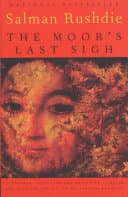
Salman Rushdie (1997)
Genre
Literary Fiction / Historical Fiction
Reading Time
12-15 hours
Key Themes
See below
Sign in to track this book
From Cochin's spice markets to Spain's sun-drenched landscapes, Moraes 'Moor' Zogoiby, a storyteller and the last of a powerful dynasty, tells a witty and surreal story of wild passions, family hatreds, and love's terrifying power that shaped modern India.
Moraes Zogoiby, the narrator, says he is the last of the Zogoiby family, a long line of Cochinese spice merchants and crime lords. He is born in Bombay, India, to Aurora da Gama, a famous artist, and Abraham Zogoiby, a businessman and criminal leader. From birth, Moraes ages twice as fast as normal humans. This fast aging shapes his early life and makes him an outsider even in his unusual and powerful family. His birth comes with a series of lucky, yet troubling, events, hinting at the dramatic and often sad path of his life and his family's fate.
Moraes explores his family's history, especially its strong women. His mother, Aurora da Gama, is a painter, known for her 'palimpsest' style, layering history and myth onto her canvases. She is the granddaughter of Francisco da Gama, a Portuguese spice merchant, and his Jewish-Indian wife, Isabella. Isabella is a strong figure, the true founder of the Zogoiby dynasty's wealth and power, known for her business sense and strong will. The complex link between Aurora and Isabella, marked by both love and strong competition, shapes the family's future and greatly affects Moraes's understanding of his background.
Abraham Zogoiby, Moraes's father, starts as a successful spice trader. But, driven by ambition and wanting to secure his family's place, he slowly moves into the world of organized crime, becoming a known figure in Bombay's underworld. His empire grows through smartness, ruthlessness, and a skill for controlling political and economic forces. Despite his criminal acts, Abraham is very dedicated to Aurora and their children. His rise to power connects with India's political state after independence, bringing both great wealth and dangerous enemies, setting the stage for future fights and betrayals.
Moraes grows up in a big, messy, and rich home in Bombay, full of servants, artists, and criminals. He has three older sisters – Ina, Minnie, and Mynah – called 'the Three Graces.' His fast aging makes him unusual, often feeling like an old man in a child's body. He forms a close, almost too close, bond with his sister Ina, who is both protective and possessive. The family constantly deals with its mixed background – Portuguese, Jewish, Indian – and the tensions between different cultures and religions. This complex setting shapes Moraes's identity and his view of the world.
Aurora da Gama starts her most ambitious painting, 'The Moor's Last Sigh,' a large canvas she intends as her best work. This painting becomes a place for her ideas about family history, myths, and personal secrets. As she paints, her art mixes with the breaking down of family relationships. Moraes finds out about a betrayal involving his father, Abraham, and his mother's muse and lover, Vasco Miranda. This news deeply hurts Moraes and shatters his perfect view of his parents' marriage, planting seeds of anger and distrust that will have lasting effects on the family.
After the betrayal and India's growing political problems, the Zogoiby family's once strong empire begins to fall. Abraham's criminal businesses face tough competition and government crackdowns. The family's great wealth and power decrease, leading to a time of decline and disorder. Moraes sees the slow, painful end of his family's power, a process sped up by internal fights and outside pressures. This time marks a turning point, making Moraes face the harsh facts of their lower status and their legacy's weakness, leading to the Zogoiby home's eventual scattering and destruction.
A series of bad events, including his sisters' deaths and his parents' final end, leaves Moraes the only survivor of his immediate family. Overwhelmed by sadness, guilt, and his family's history, Moraes goes into exile. He travels to Spain, specifically to Andalusia, wanting to find his family roots and the historical legacy of 'the Moors' in Europe. This trip is both a physical escape and a search for himself, as he tries to make sense of his broken identity with his rich, complex heritage and his past pain.
In Spain, Moraes looks for Aadam Sinai, a former lover of his mother, Aurora, and an important, mysterious figure in her artistic life. Aadam, now an old, private artist, gives Moraes a place to stay and a fragile sense of belonging. Their relationship is complex, marked by Aadam's past link to Aurora and Moraes's own unresolved feelings about his mother. Aadam's house is full of Aurora's paintings, including a version of 'The Moor's Last Sigh,' which reminds him of his family's legacy and its secrets. This meeting helps Moraes put together more of his mother's story and his own.
As Moraes lives with Aadam Sinai, he starts to fully grasp the many meanings in his mother's painting, 'The Moor's Last Sigh.' The painting, a mix of history, personal story, and myth, shows the depths of Aurora's soul and how her family's past connects with the wider history of the Moors in Spain. Moraes realizes that the painting is not just about Boabdil, the last Moorish king of Granada, but also about himself – the 'Moor' of his own family's fall. This realization is a key moment in his journey of self-acceptance and understanding.
Moraes's time in Spain ends with a confrontation with his past, both inside himself and outside. He thinks about his heritage's good and bad parts, the destructive power of love and hate in his family, and his own place as the last Zogoiby. The novel ends with Moraes, still aging quickly, continuing to tell his story, making sure his extraordinary family's legacy, with all its wins and losses, will not be forgotten. He accepts his role as the storyteller, the living example of his family's 'last sigh,' forever tied to the story he carefully creates.
The Protagonist/Narrator
Moraes evolves from a bewildered child grappling with his condition and family secrets to a mature, albeit rapidly aging, man who accepts his role as the chronicler of his family's legacy and the 'Moor' of his own story.
The Supporting/Central Figure
Aurora's arc is largely told through Moraes's memories and interpretations, depicting her rise as an artist and her complex personal life, culminating in her masterpiece that encapsulates her family's fate.
The Supporting
Abraham's story traces his ascent to power as a crime lord and his eventual downfall, driven by both external forces and his own internal flaws and betrayals.
The Supporting
Isabella's story is told through historical recounting, establishing her as the powerful origin point of the Zogoiby dynasty's financial and social standing.
The Supporting
Ina's arc is one of youthful vibrancy leading to a tragic, premature end, deeply impacting Moraes's emotional landscape.
The Supporting/Antagonist
Vasco's arc is defined by his role as a catalyst for betrayal and the subsequent breakdown of the Zogoiby family unit.
The Supporting
Aadam's arc is largely static, serving as a mentor and confidante for Moraes, providing context and emotional support in his journey of discovery.
The novel looks at the complex parts of identity, especially for Moraes, who deals with his mixed background (Portuguese, Jewish, Indian) and his fast aging. His trip to Spain is a search to understand his roots, both personal and historical, and to bring together the different cultural influences that shape him. The family's history, mixed with India's history and the Moors in Spain, constantly makes Moraes question who he is and where he belongs. Aurora's art, especially 'The Moor's Last Sigh,' is a main comparison for this layered identity.
“What we are, we are, because of what we were. Every new thing is a thing that was.”
Storytelling is central to the novel, with Moraes acting as the narrator, putting together his family's broken history. His mother's art, especially the 'palimpsest' paintings, is a similar way of telling stories, layering narratives and meanings. Art is shown as a way to understand, keep, and even create reality. Telling the past, whether with words or paint, gives meaning to chaotic events and lets characters deal with their legacy. The novel itself shows the lasting power of stories.
“I am the story of myself, and the story of my family. I am the story of India, too, in a way.”
The Zogoiby family has intense, often destructive, love and many deep betrayals. The love between Aurora and Abraham is passionate but broken by Abraham's manipulation and Vasco Miranda's part. The close bond between Moraes and Ina highlights family affection's dangerous excesses. The novel suggests betrayal and its results happen in cycles, almost like a family curse passed down. These complex emotions drive much of the plot and lead to the family's eventual fall.
“Families are the cradles of love, but also the crucibles of hatred.”
The novel often blurs the lines between personal memory, family history, and big historical stories. Moraes's memories are subjective and shaped by his view, while Aurora's paintings rethink history. The story connects the Zogoiby family's fortunes to important historical events in India and the Moors' legacy in Spain. Memory is shown as a fluid, often unreliable, force that can be both a burden and a source of identity. The past is not just told but actively reinterpreted and lived through the characters.
“History is a wound, and we are its endless scar.”
Moraes ages twice as fast as normal humans.
This unique biological condition is a central plot device. It isolates Moraes, makes him an eternal outsider, and provides a constant, poignant reminder of the fleeting nature of life and time. It directly influences his perspective, making him an 'old soul' from childhood, and physically manifests the rapid decline and eventual end of his family line. It also serves as a metaphor for the accelerated pace of change in post-colonial India and the rapid decline of once-powerful dynasties.
Aurora's artistic technique of layering paintings, mirroring the novel's structure.
Aurora da Gama's artistic method of painting over previous works, allowing faint traces to show through, is a powerful metaphor for the novel's narrative structure. Just as Aurora's canvases contain multiple layers of history and meaning, Moraes's story is a palimpsest of personal memories, family myths, and historical events. This device emphasizes the idea that the past is never truly erased but always present, influencing and shaping the present. It highlights the subjective and layered nature of truth and memory.
Aurora's magnum opus, a canvas containing the family's secrets and destiny.
This painting is not merely a piece of art but a living, evolving entity within the narrative. It represents Aurora's artistic genius, her personal struggles, and her interpretation of family history and myth. As Moraes unravels the layers of the painting, he simultaneously uncovers the secrets and betrayals within his own family. It becomes a central symbol of heritage, identity, and the enduring legacy of the Zogoiby family, connecting Moraes's personal story to the historical 'Moor' of Granada.
Moraes's subjective and often biased recounting of events.
Moraes Zogoiby is a highly subjective and at times unreliable narrator. His accelerated aging gives him a unique, often melancholic, perspective, and his deep emotional investment in his family's story means his accounts are colored by love, resentment, and a desire to shape his own legacy. This device allows Rushdie to explore the nature of truth, memory, and the construction of history, inviting the reader to question and interpret the events alongside Moraes.
“Moorish art had always been a thing of the imagination, not of the eye; a thing of the mind, not of the hand.”
— Reflecting on the nature of Moorish artistic expression and its abstract qualities.
“We are all immigrants from the past.”
— A philosophical reflection on the human condition and the constant movement away from what was.
“To be born again, you must first die. And to die, you must first live.”
— A cyclical observation about life, death, and rebirth.
“History is a dream from which we are trying to awaken.”
— A poignant statement about the often nightmarish or illusory nature of historical narratives.
“Love is a thing of the imagination, a thing of the mind, not of the eye.”
— Parallel to the description of Moorish art, applying the same concept to love.
“The past is a foreign country; they do things differently there.”
— A famous line, though here re-contextualized within the narrative's exploration of history and memory.
“Every act of creation is first an act of destruction.”
— Discussing the transformative and often disruptive process of creating something new.
“The artist is a man who is forever trying to escape from his own skin.”
— Describing the restless, transformative nature of an artist's identity and work.
“Memory, like a house, has many rooms.”
— A metaphorical description of memory's complexity and multifaceted nature.
“We are all made of stories.”
— Highlighting the narrative essence of human identity and existence.
“To forget is to die a little.”
— Emphasizing the vital connection between memory and life.
“The world is full of ghosts, and we are among them.”
— A haunting observation on the presence of the past and the transient nature of existence.
“Language is the only homeland.”
— A profound statement on the enduring power of language as a source of belonging and identity, especially for those displaced.
“Time is a great devourer.”
— A concise and powerful statement on the relentless, consuming nature of time.
Ready to see how well you understood this book? Take our interactive quiz with 10 questions.

Sir Ahmed Salman Rushdie is an Indian-born British-American novelist. His work often combines magic realism with historical fiction and primarily deals with connections, disruptions, and migrations between Eastern and Western civilizations, typically set on the Indian subcontinent. Rushdie's second novel, Midnight's Children (1981), won the Booker Prize in 1981 and was deemed to be "the best novel of all winners" on two occasions, marking the 25th and the 40th anniversary of the prize.







