“There was a time when the world was round and green, and the Folk lived in it, and no one knew they were there except the ones who saw them.”
— Opening lines, establishing the magical world and the hidden nature of the Folk.

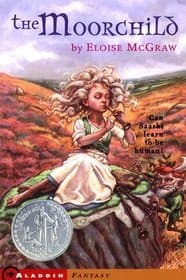
Eloise Jarvis McGraw (1996)
Genre
Fantasy / Children's / Historical Fiction / Young Adult
Reading Time
240 min
Key Themes
See below
Sign in to track this book
Banished for her inability to shapeshift, a half-moorfolk girl raised as a changeling must navigate prejudice and forgotten memories to right the ancient wrong done to her human family, even if it means confronting the magical world that cast her out.
In the hidden world of the moorfolk, Moql is born. She is part human and cannot shape-shift or disappear like her kind. Her difference makes her a threat to the Band's secrecy, causing fear among the Folk, especially the Old One. The Folk decide to banish Moql, replacing a human baby, Tam, with her in the village of Oatlands. Moql is left in the human cradle, while Tam goes to the moorfolk realm. This act removes the perceived danger Moql poses to their society, changing the lives of both children and the human family.
The human couple, Da and Mumma, find the strange baby in their cradle. Though confused and sad about losing their own child, they name her Saaski. Saaski grows up as an outcast in Oatlands. Her peculiar appearance, large dark eyes and unusual walk, along with her strange abilities, such as her connection to the moor and unexplained knowledge, make her feared. The village children tease her, calling her 'Moorchild,' and adults avoid her. Her only comfort is the wild moor, where she feels a mysterious connection, and the bagpipes she plays, making haunting, un-human music.
As Saaski nears adolescence, she has vivid dreams and fragmented memories of a life before Oatlands, a world of shadows, strange voices, and ancient beings. These memories often surface when she is on the moor or by certain sounds and sights. At the same time, the Old One, the leader of the Folk, senses Saaski's growing power and her ability to disrupt the balance between human and moorfolk worlds. The Old One, watching Saaski through magic, worries that Saaski will uncover the truth and seek revenge, endangering the Folk's existence.
A traveling harper, Brother Wilfred, passes through Oatlands and is drawn to Saaski's sad bagpipe music. He recognizes its ancient, un-human quality and encourages her, unknowingly validating her difference. Brother Wilfred's stories and old lore, though not about changelings, make Saaski curious about her origins. His presence is one of her few positive human interactions outside her family, and his appreciation for her music strengthens her desire to understand her uniqueness and the unsettling memories.
Through her intensifying memories, overheard village talk, and a painful talk with a frightened Mumma, Saaski learns the truth: she is not Da and Mumma's child, but a changeling, left by the Folk. The revelation is upsetting, causing Saaski much emotional pain. She struggles with the injustice done to her human parents and the fact that their real baby, Tam, was stolen and taken to the moorfolk world. This discovery changes her from feeling sorry for herself to wanting to right the wrong.
Driven by loyalty to Da and Mumma, and understanding their sorrow, Saaski decides to get Tam back from the Folk and return him to his parents. She knows this will be a dangerous journey, taking her back to the world that rejected her, a world she barely remembers. Her unique heritage, once a source of pain, now becomes her greatest strength. She believes her half-moorfolk nature will help her navigate the hidden paths and overcome the challenges of the Folk's realm. This decision marks a turning point, as she uses her dual identity for a good cause.
Saaski prepares for her journey, gathering what she needs. She uses her connection to the moor, following paths and signs only she can see. The moor seems to guide her, its ancient magic responding to her unique blood. She faces challenges, from the harsh wilderness to the elusive moorfolk trails. As she goes deeper, her moorfolk senses sharpen, and her memories become clearer, guiding her toward the hidden entrances to the Folk's domain. Her journey includes both physical and mental obstacles, testing her resolve and making her rely on her unusual strengths.
Saaski finally enters the world of the moorfolk. She meets the Folk, who are initially cautious and unfriendly. Her appearance, a reminder of their past mistake, makes them uncomfortable, especially the Old One, who sees her return as a bad sign. Saaski must deal with their old customs, their distrust, and the dangers of their magical world. She learns more about their reasons and fears, especially their strong desire for secrecy and protection from humans. She finds out that Tam has grown up believing he is a moorchild, though he is also different.
The Folk do not want to give up Tam, whom they raised as their own, despite his human nature. They see him as a symbol of their power over humans and a way to protect their secrets. Saaski must use her intelligence and her position as both human and moorfolk to argue her case. She appeals to their sense of justice, explaining the pain their actions caused. Tam is confused, having no memory of his human parents. Saaski must convince him of his true identity and the love waiting for him, all while under the watchful, often hostile, eyes of the Folk, especially the Old One, who fears the results of Saaski's mission.
The Old One, fearing the disruption Saaski causes, uses her old magic and influence to try and stop Saaski from taking Tam. She tries to manipulate the Folk and Tam. However, Saaski, using her human empathy and moorfolk understanding, makes a strong plea. She argues that the Folk's actions were unfair and that keeping Tam captive will only cause more suffering for both worlds. She stresses the importance of belonging and a child's right to their true family. Her words connect with some of the younger Folk, who are less tied to old traditions.
After much thought and Saaski's efforts, Tam decides to leave the moorfolk world and return to his human parents. The change is not easy for him, as he has known no other life. Saaski, having successfully arranged his release, guides him back through the moor. She helps him adjust to the unfamiliar human world, acting as a link between the two realms. The journey back shows Saaski's growth; she is no longer just a changeling, but a protector and a guide, fulfilling her purpose and correcting the past wrong.
Saaski returns Tam to Da and Mumma. The reunion is emotional, a mix of joy and sadness. Tam, at first overwhelmed, slowly connects with his birth parents. Saaski, having completed her mission, realizes that while she restored their family, her own place is still unique. She is no longer just a changeling, but a bridge between two worlds. She continues to live with Da and Mumma, with a new understanding of her identity and purpose. She finds peace in her dual heritage, embracing both her human empathy and her moorfolk wisdom, changed by her journey and her act of kindness.
The Protagonist
Saaski transforms from a lonely, ostracized changeling into a courageous, self-assured individual who embraces her dual heritage to bridge the gap between two worlds.
The Supporting
Da remains a constant source of love and stability, his steadfast nature helping Saaski to develop a sense of belonging.
The Supporting
Mumma evolves from a fearful and conflicted mother to one who embraces Saaski, understanding her unique place in their family and the world.
The Antagonist
The Old One remains largely static, representing the rigid, unchanging traditions and fears of the moorfolk, ultimately being forced to concede to Saaski's justice.
The Supporting
Tam undergoes a profound identity crisis, ultimately choosing to embrace his human heritage and return to his true family.
The Supporting
Brother Wilfred serves as a catalyst for Saaski's self-discovery, providing external validation for her unique talents.
The Supporting
The Folk, as a collective, are initially resistant to change but are ultimately swayed by Saaski's plea for justice, demonstrating a slight shift in their rigid views.
Saaski's journey is about understanding who she is and where she belongs. As a half-human, half-moorfolk changeling, both worlds initially reject her. Humans fear her differences, and the Folk banish her. Her quest to return Tam is a quest for her own identity, as she learns to embrace her dual nature instead of seeing it as a curse. This theme shows in her isolation in Oatlands, her longing for the moor, and her eventual realization that her unique heritage is her greatest strength, allowing her to connect two different worlds. This theme is clear when Saaski understands she is 'not Moorfolk, not human, but Saaski'.
“She was not Moorfolk. She was not human. She was Saaski. And that was enough.”
Prejudice is strong in how villagers treat Saaski, who is ostracized and feared just for being different. Her unusual appearance and intuitive understanding of the moor make her an outsider, leading to teasing and suspicion. The Folk's banishment of Moql (Saaski) comes from their prejudice against her half-human nature, seeing her as a threat to their purity and secrecy. The story explores the harm caused by such fear and shows the power of acceptance, especially through Da's love for Saaski and Saaski's eventual acceptance of her dual self. The novel shows how fear of the unknown can lead to cruelty, but also how love can overcome it.
“They called her 'Moorchild,' and the name was a stone they threw.”
A main theme is seeking justice for the wrong done to Da and Mumma, and to Tam. Saaski's discovery of the changeling swap sparks a strong desire to return Tam to his parents. This mission is about making amends, trying to heal the pain caused by the Folk's selfish act. Saaski's journey is not about revenge, but about restoring balance and correcting a moral wrong. Her argument to the Folk for Tam's return highlights the importance of a child belonging with its true family, showing a universal sense of fairness and the impact of family bonds. This moral goal guides her actions throughout her dangerous quest.
“It was not right. It was not fair. And she, Saaski, would make it right.”
The novel looks at the tension between the wild, magical world of the moorfolk and the ordered, human world of the village. The moor represents wild nature, instinct, and old magic, while Oatlands shows human society, its rules, fears, and home life. Saaski, living between these two worlds, embodies this conflict. Her connection to the moor is natural and comforting, while her attempts to fit into human society are difficult. The Folk's desire for secrecy shows their fear of humans intruding on their natural world. The story suggests that true harmony might come not from separation, but from understanding and connecting these two parts of existence.
“The moor called to her, a wild, ancient song that only she could hear.”
A magical substitution of a human child with a fairy child.
The changeling trope is the central plot device, setting the entire story in motion. Saaski, a half-moorfolk child, is swapped for the human baby, Tam, by the Folk. This act creates the initial conflict and drives Saaski's identity crisis and later her quest for justice. It establishes the magical premise, the tension between the human and supernatural worlds, and the profound emotional impact on the human family. The uniqueness of Saaski's half-human nature within this trope also allows for a unique resolution, as she can navigate both worlds.
A wild, mystical landscape that serves as a bridge between worlds.
The moor functions as a powerful liminal space, a mystical boundary between the human village and the hidden world of the Folk. It is Saaski's sanctuary, a place where she feels most at home and where her moorfolk instincts awaken. The moor is imbued with ancient magic and secrets, guiding Saaski on her journey and symbolizing her own dual nature. Its untamed, mysterious quality reflects the wildness within Saaski and provides the setting for much of the story's magical encounters and self-discovery.
A unique musical talent that connects Saaski to her heritage and emotions.
Saaski's bagpipes and the strange music she plays are a significant plot device. The music is a manifestation of her moorfolk heritage, carrying ancient, un-human melodies that only she can produce. It serves as an outlet for her emotions, her loneliness, and her yearning for belonging. Brother Wilfred's recognition of its unique quality validates Saaski and provides a clue to her true nature. The music acts as a non-verbal language, connecting her to the moor and hinting at her magical origins, eventually becoming a symbol of her unique identity.
Recollections that hint at Saaski's past and guide her towards the truth.
Saaski experiences vivid, fragmented memories and dreams of her early life with the Folk. These are not fully formed recollections but rather sensory flashes, sounds, and feelings that surface intermittently. This device creates suspense and gradually reveals the truth of her origins to both Saaski and the reader. They serve as internal clues, guiding Saaski towards her true identity and the injustice committed. As she ventures deeper into the moor, these fragments coalesce, providing her with the knowledge and direction needed to confront the Folk.
“There was a time when the world was round and green, and the Folk lived in it, and no one knew they were there except the ones who saw them.”
— Opening lines, establishing the magical world and the hidden nature of the Folk.
“She was not like the others. She was a changeling, and she knew it.”
— Moorchild Moql's self-awareness of her unique nature among humans.
“The wind was her brother, and the rain her sister, and the earth her mother.”
— Describing Moql's deep connection to nature and the elements.
“Humans could be cruel, but they could also be kind, in their own strange, clumsy way.”
— Moql's observation of human behavior, highlighting their duality.
“It was hard to be a changeling. Hard to be always in between, belonging nowhere fully.”
— Moql's internal struggle with her identity and lack of true belonging.
“The magic was still there, even in the human world, if you knew how to look for it.”
— Moql's realization that magic isn't confined to the Folk's realm.
“Sometimes the things you wanted most were the very things that kept you from being truly happy.”
— A reflection on desires and their potential to hinder contentment.
“She had two names, and two families, and two worlds, and none of them quite fit.”
— Emphasizing the core conflict of Moql's dual existence.
“The Folk were not evil, not truly. They were just… different. With different rules, and different ways of seeing the world.”
— Moql's nuanced understanding of the Folk, moving beyond simple good/evil.
“To be truly free, she had to choose. Not just one world over another, but a way of being.”
— Moql's journey towards self-determination and defining her own path.
“The moor had its own language, and she understood it better than any human tongue.”
— Highlighting Moql's innate connection to her wild, natural origins.
“Love was a strange thing, a complicated thing, especially when it crossed the boundaries of worlds.”
— Reflecting on the complexities of affection and connection in her unique situation.
“She was a bridge between two worlds, whether she wanted to be or not.”
— Recognizing her unavoidable role as a link between humans and the Folk.
“Sometimes, the greatest strength was in accepting who you were, even the parts that seemed to clash.”
— A profound realization about self-acceptance and integration of one's identity.
Ready to see how well you understood this book? Take our interactive quiz with 10 questions.

Biography coming soon.







