“A man who has an honest reason for secreting himself, is much more to be dreaded than a man who has a bad reason for secreting himself.”
— Gabriel Betteredge's observation on Sergeant Cuff's secrecy.

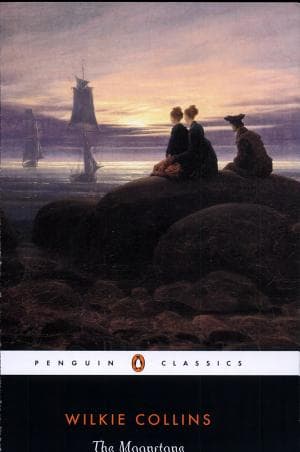
Wilkie Collins (1993)
Genre
Historical Fiction / Mystery
Reading Time
12-15 hours
Key Themes
See below
Sign in to track this book
A cursed Indian diamond, plundered and left to an English heiress, unravels a web of secrets, betrayals, and a baffling disappearance within a Victorian country house.
The story begins with Gabriel Betteredge, Lady Verinder's steward, telling about the Moonstone. He explains how Colonel Herncastle, a disgraced officer who looted the diamond from an Indian temple during the Siege of Seringapatam, leaves it to his niece, Rachel Verinder, on her eighteenth birthday. This is a final, cruel act, as the Colonel knows the diamond is believed to be cursed and guarded by three Hindu Brahmins. The diamond's history is full of violence and disrespect, creating a dark mood for its arrival at Lady Verinder's country estate. This immediately causes worry and superstition among the staff, especially Betteredge, who has heard the Colonel's disturbing stories.
Rachel Verinder's eighteenth birthday party is a large event, with guests including Franklin Blake, Rachel's cousin and a close friend, and Godfrey Ablewhite, a charitable but somewhat self-serving relative. The Moonstone, a large yellow diamond, is clearly displayed in Rachel's sitting-room cabinet, despite warnings from the Indian jugglers who appear on the estate and are thought to be agents of the Brahmins. That night, after the party, the Moonstone mysteriously disappears from Rachel's cabinet. The house is searched thoroughly, but no trace of the diamond or forced entry is found, causing confusion and suspicion. Rachel herself appears very upset and secretive about the theft.
Sergeant Cuff, a famous London detective known for his rose-growing hobby and sharp mind, is called to investigate the theft. He carefully examines the scene, questioning everyone in the house. His first theory points to Rachel herself, or someone she is protecting, because of her strange behavior and refusal to fully cooperate. Cuff finds a smudge of paint on Rachel's dressing-gown and a smeared doorframe, suggesting a deliberate attempt to hide something. Despite his observations, Cuff cannot recover the diamond or clearly identify the thief. He leaves Lady Verinder's estate, advising her to fire the housemaid Rosanna Spearman, whom he suspects knows more than she admits, but Lady Verinder refuses.
Rosanna Spearman, a former convict trying to reform, falls deeply in love with Franklin Blake. She acts erratically after the theft, showing great anxiety and secrecy. She is seen making a suspicious package and later disappears. Gabriel Betteredge discovers that Rosanna has drowned herself in the Shivering Sands, a dangerous quicksand area near the house. Before her death, she leaves a letter for Franklin Blake, revealing her knowledge of the theft and her wish to protect him, but her true involvement or what she knows remains unclear. Her tragic end adds more mystery and sadness to the events, further complicating the investigation into the Moonstone's disappearance.
Years after the theft, Lady Verinder dies, and Rachel, now living in London, remains distant from Franklin Blake because of his implied suspicion. Franklin, still bothered by the unsolved mystery and his strained relationship with Rachel, returns to England from abroad, determined to find the truth. He believes that by finding the Moonstone and identifying the real thief, he can clear his own name and make up with Rachel. He begins to interview the various narrators, collecting their accounts of the events, starting with Gabriel Betteredge, then Miss Clack, and later Ezra Jennings. This multi-perspective narrative lets the reader put together the fragmented clues alongside Franklin.
Franklin Blake consults Ezra Jennings, a strange and sickly doctor with a dark past, who had been treating Lady Verinder. Jennings, having watched Franklin's behavior on the night of the theft and knowing about his insomnia and a dose of opium he took, develops a new theory. He suggests that Franklin, without knowing it, stole the Moonstone while sleepwalking under the influence of a strong dose of laudanum (opium), which had been given by Mr. Candy, the local doctor, to help his insomnia. Jennings explains that the opium could have made him act out a subconscious desire or suggestion, making him the unwitting thief.
To prove his theory, Ezra Jennings plans an experiment. With help from Betteredge and Sergeant Cuff (who has been called back), Franklin Blake is given another dose of opium, exactly like the one he took on the night of the theft. The household staff and the investigating team watch him as he reenacts the theft in a trance-like state. Franklin, while sleepwalking, takes a substitute diamond (a mock Moonstone) from the cabinet and places it in Godfrey Ablewhite's room. This dramatic reenactment confirms Jennings's theory: Franklin Blake was indeed the unconscious perpetrator of the theft, his actions driven by the drug and a subconscious wish to protect Rachel's property, as he had been asked to secure it earlier that evening.
The experiment shows that Franklin Blake, in his opium-induced state, had indeed taken the Moonstone from Rachel's cabinet. However, he had not kept it. Instead, he had given it to Godfrey Ablewhite for safekeeping, believing he was protecting it. Ablewhite, a man of seemingly perfect reputation, had then kept the diamond for himself, planning to sell it. Sergeant Cuff, now fully involved, pursues Ablewhite to London. The three Indian Brahmins, who have been tracking the Moonstone, confront Ablewhite in a boarding house. In a violent struggle, they recover the diamond, and Ablewhite is killed, fulfilling the prophecy of the Moonstone's curse.
After recovering the Moonstone from Godfrey Ablewhite, the three Indian Brahmins skillfully avoid capture by the authorities. They begin a dangerous journey back to India, carefully planning their escape and the return of the sacred gem. Their strong dedication to their religious duty drives them, as they believe the Moonstone's rightful place is in the forehead of the idol in the temple from which it was stolen. The final part of the story, told by Mr. Murthwaite, an Indian traveler, describes the Moonstone being successfully put back in its original setting in the temple, ending the curse and the trouble it caused among the English characters. The Brahmins' mission is complete, and the diamond is finally at peace.
With the mystery solved and Franklin Blake's innocence proven, he and Rachel Verinder reconcile and eventually marry, finding happiness after years of misunderstanding and pain. The various narrators—Gabriel Betteredge, Miss Clack, Mr. Bruff, Ezra Jennings, and Mr. Murthwaite—finish their accounts, each offering their unique view of the events and their personal thoughts. The novel ends with a sense of closure, though the lasting effects of the Moonstone's curse and the moral complexities of its theft and recovery are not entirely forgotten. The story highlights the cultural clash and the consequences of colonial appropriation, leaving a lasting impression on everyone involved.
The Protagonist
Franklin transforms from a somewhat aimless young man into a determined investigator, ultimately proving his own innocence and finding love.
The Protagonist
Rachel endures public suspicion and personal anguish, eventually reconciling with Franklin after the truth is revealed.
The Supporting
Cuff's initial failure to solve the case is overcome when he returns to assist Franklin, ultimately identifying the true human culprit.
The Supporting
Betteredge remains a steadfast and loyal servant, his perspective offering a foundational, if sometimes misguided, view of the events.
The Supporting
Rosanna's arc is tragic, as her past and unrequited love lead her to a desperate act of self-sacrifice and suicide.
The Supporting
Jennings, initially a peripheral character, becomes crucial to the plot's resolution by applying his medical expertise to solve the central mystery, finding a measure of redemption.
The Antagonist
Ablewhite's arc reveals his true villainous nature, culminating in his death at the hands of the Brahmins as he attempts to sell the Moonstone.
The Supporting
Miss Clack remains steadfast in her rigid beliefs, her narrative serving to highlight the diverse and often clashing perspectives surrounding the Moonstone.
The Supporting
Lady Verinder's arc is one of decline and sorrow, as the stress of the Moonstone's theft and her daughter's unhappiness lead to her death.
The Antagonist
The Brahmins consistently pursue their goal, culminating in the recovery of the Moonstone and its return to India, thus fulfilling their sacred duty.
The Moonstone itself is a direct result of British colonialism, stolen from an Indian temple by Colonel Herncastle. The story repeatedly shows how wrong this act was and the lasting curse that follows the diamond. The relentless pursuit by the three Indian Brahmins highlights rightful ownership and the spiritual effects of stealing cultural artifacts. This theme is clear from the first chapter, where Betteredge tells of Herncastle's violent acquisition, and ends with the Moonstone's return to India, suggesting a moral reckoning for colonial wrongs.
“''The Moonstone was a sacred gem, and to steal it was to incur the wrath of the gods.'”
Guilt and secrecy fill the novel, driving much of the characters' actions and the plot's complexity. Rachel's refusal to talk about the theft, because she mistakenly believes Franklin is the thief, creates a wall of secrecy that prolongs the mystery and causes great personal suffering. Rosanna Spearman's past as a convict and her later actions, driven by guilt and desperate love, further show this theme. Even Godfrey Ablewhite's outwardly philanthropic life hides a secret world of debt and hypocrisy. The novel explores how hidden truths and unconfessed burdens can warp perceptions and lead to tragedy.
“''There is no such thing as a secret in this world. The very stones of the street would speak, if there were a secret to be told.'”
A main theme is how unreliable human perception is and how ambiguous evidence can be. Sergeant Cuff's initial investigation, despite his intelligence, is flawed because he lacks key information and misinterprets Rachel's behavior. Franklin Blake is wrongly suspected by Rachel, and vice versa, due to incomplete knowledge. Ezra Jennings's theory of opium-induced sleepwalking completely changes what counts as 'proof' and challenges common ideas of guilt and intent. The multi-narrator structure itself emphasizes how different viewpoints can lead to very different conclusions about the same facts, showing how subjective truth is.
“''What is the use of the Moonstone being gone, if we are not all to be made miserable?'”
The novel criticizes Victorian society's focus on outward respectability and the hypocrisy often hidden beneath it. Godfrey Ablewhite is a perfect example, presenting himself as a pious philanthropist while secretly living a life of debt and immorality. Miss Clack, with her constant evangelism and judgmental nature, embodies religious hypocrisy. The novel suggests that appearances can be very misleading, and that social standing or claimed virtue do not always mean moral integrity. This theme exposes the superficiality and moral compromises common among the era's upper classes.
“''It is a melancholy truth that even the best of us are not proof against the seductions of money.'”
Justice, both earthly and spiritual, drives the story. The Brahmins' relentless pursuit of the Moonstone represents a quest for ancient justice, returning a sacred artifact to its proper place. Franklin Blake's investigation is a personal quest for justice, seeking to clear his name and reconcile with Rachel. Rosanna Spearman, despite her past, tries to find redemption through her actions, however misguided. The novel ultimately delivers a complex form of justice, where the true human thief is punished, the innocent are cleared, and the Moonstone is returned, suggesting that balance is eventually restored.
“''The ways of Providence are indeed wonderful.'”
The story is told through a series of first-person accounts from different characters.
This device creates a fragmented, multi-faceted perspective on the events, allowing Collins to build suspense and mislead the reader. Each narrator (Betteredge, Miss Clack, Mr. Bruff, Franklin Blake, Ezra Jennings, Mr. Murthwaite) brings their own biases, personality, and limited knowledge to the story, reflecting the fallibility of human perception. This technique allows for the gradual revelation of information, keeping the reader engaged in piecing together the truth, much like a detective. It also provides social commentary through the diverse viewpoints of different classes and temperaments.
A priceless, cursed diamond that drives the entire plot.
The Moonstone serves as the central object of desire and conflict. Its value, historical significance, and purported curse initiate the entire chain of events, from its theft from the Indian temple to its final return. While the mystery is ostensibly about who stole it, the Moonstone itself is the catalyst for exploring themes of colonialism, guilt, and human nature. It motivates the actions of nearly every character, from the Brahmins to Godfrey Ablewhite, and its presence or absence dictates the emotional and physical trajectory of the plot.
A scientific reenactment of the theft under the influence of a drug.
This ingenious plot device, conceived by Ezra Jennings, is the key to unlocking the mystery. It allows Franklin Blake to unknowingly reenact the theft, proving that he was the unconscious perpetrator while under the influence of laudanum. This device introduces a scientific, almost proto-forensic, element to the detective story, moving beyond simple deduction to a controlled experiment. It not only solves the 'who' but also the 'how' of the theft, highlighting the complexities of human consciousness and the unexpected ways in which truth can be revealed.
Narrators whose accounts are colored by personal bias, limited knowledge, or hidden agendas.
Almost every narrator in 'The Moonstone' is, to some extent, unreliable. Gabriel Betteredge is superstitious and prone to rambling; Miss Clack is intensely prejudiced by her religious fervor and admiration for Godfrey Ablewhite; even Franklin Blake's initial account is limited by his own ignorance of his opium-induced actions. This device enhances the mystery, forcing the reader to constantly question the information presented and to synthesize conflicting accounts. It underscores the novel's theme of the fallibility of perception and makes the eventual revelation of the truth all the more impactful.
“A man who has an honest reason for secreting himself, is much more to be dreaded than a man who has a bad reason for secreting himself.”
— Gabriel Betteredge's observation on Sergeant Cuff's secrecy.
“The one thing that is certain in this world is that we are all of us in the dark.”
— Gabriel Betteredge reflecting on the general state of knowledge.
“It is not the business of the law to make you moral. It is the business of the law to make you obey.”
— Sergeant Cuff explaining the practicalities of legal enforcement.
“There is no such thing as being too particular in a case of this kind.”
— Sergeant Cuff emphasizing the need for meticulous investigation.
“I may be an old fool, but I know what I know.”
— Gabriel Betteredge asserting his personal understanding despite his age.
“Human ingenuity can always find a way where there is money to be made.”
— Mr. Franklin Blake on the motivations behind certain actions.
“The true secret of being a happy fool is to be a fool without knowing it.”
— Gabriel Betteredge's musings on happiness and self-awareness.
“We are all of us more or less mad. We only differ in the way we are mad.”
— Dr. Ezra Jennings discussing the nature of human eccentricity.
“The one thing that is more remarkable than the wisdom of the wise is the folly of the foolish.”
— Gabriel Betteredge on the contrast between wisdom and folly.
“It is the small things that betray us.”
— Sergeant Cuff's insight into the clues that lead to discovery.
“There is no perfect crime, just imperfect detection.”
— A general sentiment expressed by the investigative characters.
“The best way to keep a secret is to pretend there isn't one.”
— A strategy for concealment, hinted at by various characters' actions.
“Experience is a good school, but the fees are high.”
— Gabriel Betteredge reflecting on the cost of learning through life.
“It is not every man who has the courage to be an honest man.”
— A commentary on the difficulty of maintaining integrity.
Ready to see how well you understood this book? Take our interactive quiz with 10 questions.
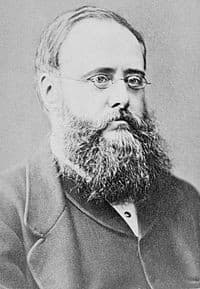
William Wilkie Collins was an English novelist and playwright known especially for The Woman in White (1859), a mystery novel and early "sensation novel", and for The Moonstone (1868), which established many of the ground rules of the modern detective novel and is also perhaps the earliest clear example of the police procedural genre.







