“The world is not always as it seems, and sometimes, the truth is hidden in the mists.”
— A recurring theme about the veil between worlds and the unseen forces at play.


Marion Zimmer Bradley (2001)
Genre
Fantasy / Historical Fiction / Romance
Reading Time
1500-2000 min
Key Themes
See below
Sign in to track this book
Through the eyes of priestesses and queens, this saga reclaims the Arthurian legend, showing the pagan heart and political schemes that shaped Camelot's rise and fall as Avalon's mists vanished.
Young Morgaine, daughter of Igraine and Gorlois, is taken to the Isle of Avalon by her aunt, Viviane, the Lady of the Lake. This happens after her father Gorlois dies and her mother Igraine marries Uther Pendragon, Morgaine's stepfather. Viviane sees strong magic in Morgaine and plans to train her as a priestess of the Great Goddess, to keep the Old Ways alive. Morgaine, at first resistant and missing her mother, slowly adapts to the strict spiritual and magical training under Viviane and the High Priestess, Taliesin. She learns about ancient gods, elements, and Avalon's sacred rituals, preparing her to protect the Goddess's traditions against the growing Christian faith.
As a young priestess in training, Viviane chooses Morgaine for the sacred Beltane ritual, the Great Rite, meant to bring fertility and prosperity to Britain. Under powerful spells and disguised as the May Queen, she unites with the May King, a figure chosen to embody the land's spirit. Unknown to her, the May King is her half-brother, Arthur, Uther's son and heir, also brought to Avalon for a similar ritual by Viviane. This ritual, meant to connect him to the land and the Goddess, leads to Morgaine conceiving a child, Mordred. This incestuous union, though sacred in Avalon, causes deep shame and confusion for Morgaine once their identities are revealed, hinting at future conflicts.
Gwenhwyfar, a beautiful and devout Christian princess, arrives in Camelot to marry Arthur and become his queen. Her strong faith immediately creates tension with the pagan traditions and Avalon's influence. She finds Camelot's customs, especially the celebrations and pagan symbols, unsettling. Gwenhwyfar's inability to have children causes her constant worry and guilt, making her believe it is a punishment from God. She struggles with her perceived failures as a queen and her inability to give Arthur an heir, which deepens her religious devotion and pushes her to promote Christianity in the kingdom, often opposing Morgaine and Viviane.
After learning her son Mordred's parents are Arthur and herself, Morgaine feels alienated and ashamed. She leaves Camelot and entrusts baby Mordred to her aunt, Morgause, the Queen of Orkney. Morgause, a clever and ambitious woman, raises Mordred with deep resentment towards Arthur, fueling his desire to take the throne. She manipulates Mordred, convincing him he is Britain's rightful heir, conceived in the sacred Dragon ritual. This upbringing by Morgause shapes Mordred into a strong, though ruthless, contender for power, setting up his eventual conflict with Arthur and Camelot's destruction.
Sir Lancelot, Arthur's closest friend and greatest knight, develops an intense, unspoken love for Queen Gwenhwyfar. Despite his loyalty to Arthur and his vow of chastity, he is deeply drawn to Gwenhwyfar's beauty and piety. Gwenhwyfar, in turn, feels strongly for Lancelot, seeing in him a purity and devotion she values. Their mutual attraction creates a deep inner conflict for both, leading to a strained relationship where they fight their desires against their duties and religious beliefs. This forbidden love becomes a quiet tension in Camelot, eventually contributing to the kingdom's downfall as it weakens the trust and loyalty Arthur's reign is built upon.
Driven by a vision and Gwenhwyfar's strong Christian influence, Arthur's knights begin the Quest for the Holy Grail. This quest is filled with Christian symbolism and a search for spiritual purity, moving away from older pagan traditions. Many knights, including Lancelot and Percival, commit to this difficult spiritual journey, leaving Camelot vulnerable. The quest, while noble in its Christian aim, further divides the kingdom, shifting focus from earthly rule to spiritual pursuits. It shows the growing split between Camelot's Christian ideals and Avalon's fading pagan beliefs, as the knights seek a relic of Christ instead of the Goddess's sacred objects.
Morgaine, having gained more power and wisdom as a priestess, returns to Camelot, hoping to sway Arthur to remember his roots in the Goddess and to balance Christian faith with the Old Ways. She tries to remind him of the sacred promise he made to the land and the Goddess in his youth. However, she finds herself increasingly isolated and marginalized by Gwenhwyfar's Christian influence and Arthur's growing devotion to the new religion. Morgaine's attempts to preserve Avalon's traditions are met with suspicion and fear, as the Christian court sees her magic and beliefs as demonic. She struggles to keep a place for the Goddess in a kingdom quickly embracing Christ.
Mordred, raised with a strong claim to Arthur's throne, eventually starts a full rebellion against his father. Driven by Morgause's manipulations and his own sense of entitlement, Mordred uses the growing unrest and moral decay in Camelot, especially the scandal of Lancelot and Gwenhwyfar's affair. The kingdom is weakened by internal conflict, the Grail Quest's draining of its best knights, and the religious split. Mordred's rebellion ends in the Battle of Camlann, where he faces Arthur directly. This battle destroys Arthur's dream of a unified Britain and marks the end of an era.
In the Battle of Camlann, Arthur is mortally wounded by Mordred, who also dies. Morgaine, seeing the destruction and the failure of her attempts to unite the old and new worlds, takes her dying half-brother to Avalon's shores. With the help of the remaining priestesses, she carries him through the mists to the sacred isle, where he can find peace and healing, or a final resting place, in the Goddess's heart. This act shows Morgaine's lasting, complex love for Arthur and her dedication to the Old Ways. As Arthur passes into Avalon, the mists around the island become impenetrable, signaling the final retreat of the Goddess and ancient magic from the visible world, leaving Britain to Christianity.
After Arthur's death and Avalon's retreat into the mists, Morgaine remains as one of the last true priestesses of the Goddess. She reflects on her life's events, her love for Arthur, her sorrow over Mordred, and her constant fight to preserve the ancient religion. While she acknowledges Christianity's triumph, she finds a quiet strength in knowing the Goddess lives on in some hearts, even if hidden. Morgaine accepts her role as the last Lady of Avalon, a keeper of memory and faith, even as the world around her changes. Her journey ends with a bittersweet understanding of loss, resilience, and the lasting power of myth and belief, as the age of magic gives way to the age of humanity.
The Protagonist
Morgaine evolves from a bewildered child to a powerful, yet ultimately melancholic, priestess who witnesses the decline of her world and finds a difficult peace in preserving its memory.
The Protagonist/Supporting
Arthur rises as a unifying king but slowly loses his way, becoming increasingly detached from the Old Ways, leading to the tragic destruction of his dream.
The Antagonist/Supporting
Gwenhwyfar's unwavering faith and personal struggles lead her to inadvertently undermine Arthur's reign, ending her life in a convent, seeking atonement.
The Supporting
Viviane dedicates her life to preserving Avalon, ultimately sacrificing much and facing the decline of her world with stoic determination.
The Supporting
Lancelot's unwavering loyalty to Arthur is ultimately shattered by his consuming love for Gwenhwyfar, leading to his exile and a life of penance.
The Antagonist
Mordred grows from a neglected child into a ruthless, vengeful man, driven by a twisted sense of destiny to destroy Arthur and claim the throne.
The Supporting
Morgause consistently schemes for power and influence, ultimately succeeding in raising a child (Mordred) who brings down Arthur's kingdom, but without true personal fulfillment.
The Supporting
Igraine lives a life largely defined by the choices of others, moving from a pawn in political marriages to a distant, often regretful, observer of her children's destinies.
The Supporting
The Merlin serves as a constant, guiding presence, attempting to maintain the balance of power and faith, ultimately witnessing the passing of the age he represents.
This is the main theme, exploring the conflict between the ancient, nature-based religion of the Goddess (Avalon) and the patriarchal, monotheistic faith of Christianity (Camelot). The book shows the decline of the Old Ways as Christianity becomes dominant, and how this conflict affects people like Arthur and Morgaine, ultimately destroying the unified kingdom. Scenes like Gwenhwyfar's prayers and her insistence on Christian symbols in Camelot contrast with Morgaine's rituals on Avalon and her attempts to remind Arthur of his pagan promises, showing the deep differences that tear society apart.
“For the Christian God was a jealous God, and he would not share his altar with the Goddess, nor his worship with the ancient rites.”
The novel reclaims the Arthurian legend by focusing on the powerful women behind the men, looking at their agency, wisdom, and suffering in a patriarchal society. Women like Viviane, Morgaine, and Igraine have great power, both magical and political, yet they are often limited by societal expectations, male ambition, and the growing Christian doctrine that lessens female spiritual authority. The book explores how their power is both celebrated in Avalon and feared/suppressed in Christian Camelot, showing the loss of female spiritual leadership as the Old Ways fade. Morgaine's entire life shows this struggle, from her training as a priestess to her marginalization in Arthur's Christian court.
“We are the mothers, and we are the daughters, and we are the priestesses, and we are the Queens. And they cannot live without us, though they would try to forget it.”
The story constantly deals with the idea of fate and whether characters can truly escape their predetermined roles. Many characters, especially those from Avalon, believe in a grand plan set by the Goddess. Viviane's manipulation of events, such as the Great Rite, is driven by a belief in fulfilling prophecy and ensuring the Old Ways' survival. However, characters like Morgaine and Arthur often fight against what seems fated, making choices that sometimes align with, and sometimes defy, their destiny. The tragic outcomes, like the Battle of Camlann, raise questions about whether these events were inevitable or the result of individual choices and failures to reconcile opposing forces.
“It is not for us to choose our destinies, but only how we shall meet them.”
These personal connections form the emotional center of the story, driving much of the plot. The complex relationships—Arthur's love for Gwenhwyfar, Lancelot's forbidden love for Gwenhwyfar, Morgaine's many-sided love for Arthur, and Mordred's twisted love/hatred for his father—explore the destructive power of conflicting loyalties and desires. The betrayal of Arthur by Lancelot and Gwenhwyfar, and by Mordred, breaks the Round Table and leads to the kingdom's collapse. Even within Avalon, betrayals of trust and purpose are clear, showing how personal failings contribute to wider societal downfall.
“There are some loves that can never be spoken, and some loyalties that are a bitter poison.”
A sense of sadness fills the novel as it tracks the gradual fading of magic and the spiritual connection to the land. Avalon, once strong and influential, slowly withdraws into the mists, becoming unreachable as the Christian world takes hold. This theme is seen in Morgaine's lifelong fight to keep the Old Ways alive and her eventual acceptance of their retreat. The loss is not just about magic but about a way of life, a respect for nature, and a spiritual understanding replaced by a more rigid, dogmatic faith. The mists themselves become a strong symbol of this fading enchantment.
“The mists were gathering, not just around Avalon, but around the hearts of men.”
A magical barrier and symbolic representation of the ancient world's retreat.
The mists serve as both a literal and symbolic plot device. Literally, they are a magical barrier that conceals Avalon from the outside world, allowing its pagan traditions to persist. Symbolically, the mists represent the gradual fading of the Old Ways and the ancient magic from Britain. As Christianity gains dominance, the mists become increasingly impenetrable, signifying Avalon's complete withdrawal from human sight and influence. This device underscores the theme of loss and the end of an era, making the magical realm inaccessible as the world becomes more 'rational' and Christian.
A Christian artifact that symbolizes the new faith's dominance and the knights' spiritual quest.
The Holy Grail acts as a powerful symbol and motivator for the Christian knights. Its quest signifies the shift in spiritual focus from the Goddess to Christ. While Avalon has its own sacred objects, the Grail becomes the ultimate object of spiritual pursuit for Arthur's court, reflecting Gwenhwyfar's strong influence. The quest itself drains Camelot of its best knights and resources, inadvertently weakening the kingdom for Mordred's rebellion. It highlights the growing schism between the old pagan and new Christian values, as the knights seek a relic of Christ rather than the sacred objects of the Goddess.
A sacred pagan fertility ritual that leads to Mordred's conception and binds Arthur to the Goddess.
This ancient pagan ritual is a crucial plot device. Viviane orchestrates it to ensure the fertility of the land and to bind Arthur, the future king, to the Goddess. Unknowingly, Morgaine and Arthur participate, resulting in the conception of Mordred. This act, while sacred in Avalon, becomes a source of scandal and shame in the Christian world. It directly creates the character of Mordred, the catalyst for Camelot's downfall, and establishes a complex, often tragic, bond between Morgaine and Arthur that influences their future interactions and loyalties. It represents the raw, primal power of the Old Ways and its clash with Christian morality.
Arthur's magical sword, a symbol of his kingship and his connection to Avalon.
Excalibur is more than just a weapon; it is a symbol of Arthur's divine right to rule and his initial connection to the magical world of Avalon. Given to him by Viviane, the Lady of the Lake, it represents the power and blessing of the Goddess. As Arthur embraces Christianity more fully, his connection to Excalibur and its pagan origins becomes strained. The sword's eventual return to the lake symbolizes the final severing of Arthur's ties to Avalon and the complete triumph of the Christian era, marking the end of the age of magic and the passing of the Old Ways from Britain.
“The world is not always as it seems, and sometimes, the truth is hidden in the mists.”
— A recurring theme about the veil between worlds and the unseen forces at play.
“For always I have been the one who must be strong, the one who must make the decisions, the one who must carry the burden.”
— Morgaine reflecting on her life and the heavy responsibilities placed upon her.
“There are no good men and bad men. There are only men and women, and what they do.”
— A pragmatic view on morality, suggesting actions define individuals rather than inherent good or evil.
“The land is the Goddess, and we are her people.”
— A core tenet of the Old Religion, emphasizing the sacred connection between people and nature.
“Always the land must have its king, and the king must have his queen, and the queen must hold the land.”
— A description of the symbiotic relationship between the ruler and the land, central to the fertility rites and kingship.
“It is not the sword that makes the king, but the heart that serves the land.”
— A comment on true leadership, prioritizing devotion to the land and its people over military might.
“Love is a choice, not a fate.”
— Gwenhwyfar (Guinevere) grappling with her feelings and the expectations placed upon her.
“Sometimes it seems to me that the only people who really know what is going on are the ones who are not supposed to know.”
— Morgaine's observation about the hidden knowledge and power wielded by those outside traditional hierarchies.
“The Gods are not mocked, but they are often misunderstood.”
— A reflection on the human tendency to misinterpret divine will or spiritual forces.
“We are all prisoners of our own making, and the chains are forged of our own desires.”
— A philosophical insight into the self-imposed limitations and consequences of human desires.
“There is a knowing that is beyond words, a wisdom that comes from the earth itself.”
— Emphasizing the intuitive, deep connection to nature and ancient knowledge in the Old Religion.
“The greatest magic is to live your own life, not the life that others expect of you.”
— Morgaine's journey of self-discovery and rejection of societal expectations.
“It is not always easy to see the truth, especially when it is hidden behind the face of love.”
— A poignant observation on how emotional attachments can blind one to reality or deception.
“To be born a woman is to be born into a world of compromise, where your very body is a battleground.”
— Viviane's (Lady of the Lake) perspective on the challenges and struggles faced by women in their society.
Ready to see how well you understood this book? Take our interactive quiz with 10 questions.
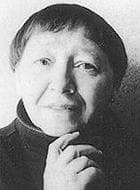
Marion Eleanor Zimmer Bradley was an American author of fantasy, historical fantasy, science fiction, and science fantasy novels, and is best known for the Arthurian fiction novel The Mists of Avalon and the Darkover series. Noted for the feminist perspective in her writing, her reputation has been posthumously marred by her daughter Moira Greyland's accusations of child sexual abuse, and for allegedly assisting her second husband, convicted child abuser Walter Breen, in sexually abusing multiple unrelated children.







