“I remember thinking that if I had a gun, I'd shoot myself. It would be a messy business, but it would be over.”
— David's internal thoughts as the situation in the store devolves.

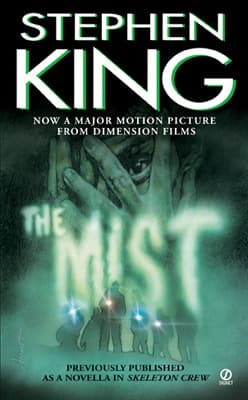
Stephen King (1925)
Genre
Thriller / Fantasy / Mystery / Science Fiction
Reading Time
4-5 hours
Key Themes
See below
Sign in to track this book
Trapped in a supermarket by a strange mist with unseen monsters, survivors must face their fears and the truth behind a secret government project to fight an otherworldly invasion.
David Drayton, an artist, his wife, Amanda, and their five-year-old son, Billy, are at their lake house in Bridgton, Maine. A sudden, strong thunderstorm hits, causing a tree to crash through their living room window, damaging the house and cutting power. After the storm, a strange mist rolls in from the lake, hiding everything. David, Billy, and their neighbor, Brent Norton, who blames David for a tree falling on his property, drive to the local Foodland supermarket for supplies and to check the damage.
At Foodland, David, Billy, and Norton find the supermarket busy with people stocking up after the storm. As they shop, the mist quickly gets thicker, covering the building and the area around it. A panicked man, Dan Miller, stumbles into the store, bleeding, screaming that something in the mist took his friend, Norm. People panic as they realize they are trapped. The store's windows become cloudy, and strange, deep sounds come from outside, confirming Dan's frightening story and the presence of unseen, dangerous things.
The first attack happens when Norm, a bag boy, goes outside to clear a blocked loading dock door and is pulled into the mist by unseen tentacles. Later, flying, insect-like creatures, drawn by the store's lights, break through a window, killing two people, including Myron LaFleur, and hurting others. Mrs. Carmody, an older, very religious woman, starts saying the mist is God's judgment and the creatures are divine punishment. Her words, at first ignored, gain followers as fear and desperation grow among the trapped survivors.
Brent Norton, a lawyer who believes in logic, refuses to believe in the creatures, thinking the mist is a government trick or mass hysteria. He accuses David of trying to scare people and gathers a small group of skeptics to go outside, aiming to prove the mist is harmless and find help. David tries to warn them, but Norton ignores him. The group vanishes into the mist, their screams confirming the creatures are real and Norton's mistake. This event makes Mrs. Carmody's influence stronger over a growing number of the trapped community.
With medical supplies running low and a woman, Sally, needing surgery for appendicitis, a small group led by David volunteers to go to the nearby pharmacy. They set up a rope between the two buildings to guide them through the thick mist. Inside the pharmacy, they find large, spider-like creatures with acidic webs and the body of a dead soldier. Jim, a young man, gets badly burned by spider acid. Ollie Weeks, the assistant manager, shows courage by shooting one of the creatures. They return to Foodland with needed supplies, but the trip shows how dangerous it is outside.
As days turn into a week, food runs out, and desperation increases. Mrs. Carmody's influence takes over a large part of the survivors, who now look to her for guidance and believe her predictions. She demands sacrifices to please God and stop the mist. Her followers, including the religious Mrs. Reppler, become more aggressive and unreasonable. David, Ollie, Amanda Dumfries, and other sensible survivors form a counter-group, fearing Mrs. Carmody's growing madness and potential for violence.
A small group of soldiers from the nearby Arrowhead Project, including Private Jessup, were also trapped in the store and admitted to opening a portal to another dimension. Mrs. Carmody's cult, driven by fear and religious fervor, blames the soldiers for the mist. They grab Private Jessup, calling him a 'sacrifice' to please God. Despite David's and Ollie's efforts to stop them, Mrs. Carmody's followers stab Jessup many times, dragging his body outside into the mist as an 'offering,' shocking the remaining sensible survivors and cementing the cult's deadly power.
Realizing they cannot stay in Foodland under Mrs. Carmody's increasingly wild rule, David plans an escape. He, Billy, Ollie, Amanda, Dan, and a few others plan to steal a car and drive out of town. As they try to leave, Mrs. Carmody and her zealous followers block their way, demanding Billy be sacrificed next. In self-defense, Ollie Weeks shoots Mrs. Carmody, killing her at once. Her followers are stunned and scatter, letting David's group escape the supermarket.
David, Billy, Ollie, Amanda, and Dan drive away from Foodland in a station wagon, hoping to find safety or a clearer area. They see huge, multi-legged creatures, pterodactyl-like beasts, and other terrifying things in the mist. Ollie dies when he goes out of the car to clear a path and is torn apart by a giant insect. The remaining survivors continue their desperate journey, their hope fading with each mile and each new, horrible encounter, finding the world outside the supermarket even more deadly.
After days of driving through the thick mist, the car runs out of gas in a deserted, unknown place. David, Billy, Amanda, and Dan are completely tired, their hope gone. They hear a huge, unseen creature coming closer. Facing certain, horrible death by the creatures in the mist, David makes the terrible choice to use his last four bullets to kill Billy, Amanda, and Dan, saving them from a worse fate. He then waits, alone, for the creature to take him.
Just as David prepares for his own end, he hears heavy machinery. Through the thinning mist, a U.S. Army convoy appears. David, the only survivor, is rescued. He learns that the military is fighting the creatures and the mist is slowly going away. The convoy is heading south, to areas that are clearing up. Despite the rescue, David is left with deep grief and trauma from his actions and the loss of everyone he loved, haunted by the memory of Billy, Amanda, and Dan.
The Protagonist
David begins as an ordinary man and evolves into a hardened survivor, forced to make impossible, tragic choices for the perceived good of his loved ones.
The Supporting
Billy remains a child throughout, his arc defined by the events happening around him and his father's efforts to shield him.
The Supporting
Norton's arc is a tragic one, defined by his unwavering denial leading to his demise.
The Antagonist
Mrs. Carmody's arc is one of escalating power and madness, culminating in her violent demise.
The Supporting
Ollie develops from a background character into a heroic figure, making the ultimate sacrifice for the group.
The Supporting
Amanda remains a compassionate and supportive character, sharing the group's tragic fate.
The Supporting
Dan transitions from a terrified witness to a brave and loyal survivor, sharing the group's tragic end.
The Supporting
Jessup's arc is brief and tragic, serving to reveal the mist's origin before his death.
The Supporting
Mrs. Reppler remains a fanatic, her arc defined by her unwavering loyalty to Mrs. Carmody.
The main conflict in 'The Mist' is not just between humans and monsters, but how humans react to extreme fear. The supermarket becomes a small world where logic and survival instincts fight with religious extremism and mass panic. David Drayton and his group use reason, trying to understand and fight the threat logically. In contrast, Mrs. Carmody and her followers give in to fear, seeking comfort in unreasonable beliefs and eventually turning on each other. This theme is clear in Brent Norton's denial leading to his death, and the brutal sacrifice of Private Jessup, showing how internal divisions and unchecked fear can be as harmful as any outside monster.
“Human beings are not always rational creatures, even the ones who think they are.”
Stephen King uses cosmic horror well, where the main terror comes from the unknown and alien nature of the threat. The mist and its creatures are never fully explained; they are simply 'from another dimension,' a result of the Arrowhead Project's arrogance. This lack of understanding makes the threat scarier, as it defies human logic and control. The creatures themselves are monstrous and varied, suggesting a world entirely foreign to Earth. The vastness and indifference of this 'other' world, with humanity's complete helplessness against it, highlight how unimportant human existence is when facing cosmic forces. The mist staying, even after the rescue, shows this unknown terror lasts.
“It was like looking into the face of something that had no face, something that was all face.”
The story shows a quick breakdown of social rules and personal morals under extreme pressure. The supermarket, at first safe, quickly becomes a battleground for human nature. The slow loss of civility is clear in the shift from small arguments to accepting human sacrifice. Billy's presence highlights the theme of lost innocence, as he sees unspeakable horrors. David's final, painful decision to kill his son and friends, though from love and a wish to spare them worse suffering, shows the ultimate moral corruption forced on him by the situation. The ending suggests that even if people survive physically, the moral and psychological scars remain.
“There was a part of me that thought it was good, that it was right, that it was just what we needed. That was the part that scared me the most.”
Throughout 'The Mist,' traditional sources of power and social structures prove weak or even harmful. The government's 'Arrowhead Project' directly causes the horror. Inside the supermarket, established leaders (like the store manager) quickly fail, leaving a power vacuum. Brent Norton, representing law and reason, is tragically useless because of his denial. Military help is slow and mostly ineffective until the very end, and even then, it is a desperate, ongoing fight. This theme suggests that against truly unimaginable threats, human institutions are fragile and often fail, leaving individuals to manage in a morally unclear world.
“The government was the problem, not the solution.”
The mist itself, concealing and creating terror through ambiguity.
The mist functions as a primary plot device, creating a persistent sense of dread and claustrophobia. By obscuring vision, it forces characters (and readers) to rely on sound and imagination, making the unseen creatures far more terrifying than if they were constantly visible. This ambiguity heightens tension and allows for a wide range of creature designs to be hinted at without over-exposing them. The mist also physically traps the survivors, forcing the internal conflict to escalate within the confined space of the supermarket.
A familiar, mundane location transformed into a psychological pressure cooker.
The Foodland supermarket serves as a crucial closed setting, transforming an everyday space into a crucible for human behavior under extreme pressure. Its familiar aisles and products create a stark contrast with the alien horrors outside and the escalating madness within. The confined space prevents escape, forcing characters to confront each other's fears, prejudices, and beliefs, accelerating the breakdown of social order and highlighting the internal conflicts that parallel the external threat.
A scientific experiment gone wrong, providing a pseudo-scientific origin for the mist.
The Arrowhead Project acts as a convenient, albeit vague, scientific explanation for the mist's origin. It provides a 'reason' for the horror without needing to delve into complex sci-fi exposition, maintaining the story's focus on human reaction. By attributing the disaster to a government experiment, it taps into public distrust of authority and secret scientific endeavors, adding a layer of contemporary relevance and a sense of human-made catastrophe to the cosmic horror.
A rescue that offers little solace, leaving the protagonist with profound trauma.
The ending of 'The Mist' is a powerful plot device, leaving David Drayton rescued but utterly broken. The military's appearance and the receding mist offer a glimmer of hope for humanity, but David's personal tragedy – having killed his son and friends moments before rescue – is irreversible. This ambiguous resolution denies the typical 'heroic' ending, instead focusing on the profound and lasting psychological scars of survival, making a strong statement about the true cost of horror and the nature of hope.
“I remember thinking that if I had a gun, I'd shoot myself. It would be a messy business, but it would be over.”
— David's internal thoughts as the situation in the store devolves.
“There are things in the mist. Things you can't even imagine.”
— Mrs. Carmody's early pronouncements about the mist's contents.
“The human mind is not built to comprehend the truly alien.”
— David's reflection on the creatures in the mist.
“We're going to die here, aren't we?”
— A common sentiment expressed by various survivors trapped in the store.
“God's not in here, you fool. He's out there. Waiting.”
— Mrs. Carmody's increasingly fanatical declarations.
“It was a mistake to come in here, a mistake to ever have been born.”
— David's grim thoughts as the situation becomes hopeless.
“Sometimes you have to make a choice between two bad things.”
— David's realization about the difficult decisions they face.
“The world had gone insane, and we were just a few of its last, bewildered inhabitants.”
— David's observation of the chaos and unreality around them.
“You can never tell what people will do when they're scared enough.”
— David's thoughts on the changing behavior of the people in the store.
“There was a sound, a low, wet, sucking sound, and then something else, a high, thin keening.”
— Description of the sounds made by the creatures in the mist.
“Hope is a dangerous thing. It can drive a man insane.”
— David's cynical reflection on the fleeting nature of hope in their situation.
“The mist had come, and it had brought its own kind of justice.”
— David's thought on the indiscriminate nature of the threat.
“We drove on into the mist, into the unknown, because there was nothing else to do.”
— The final desperate decision made by David and his companions.
“I just want to know what it is. What's out there.”
— One of the character's desperate pleas for understanding.
“The world was ending, not with a bang, but with a wet, squelching sound.”
— David's grim assessment of the end of civilization.
Ready to see how well you understood this book? Take our interactive quiz with 10 questions.
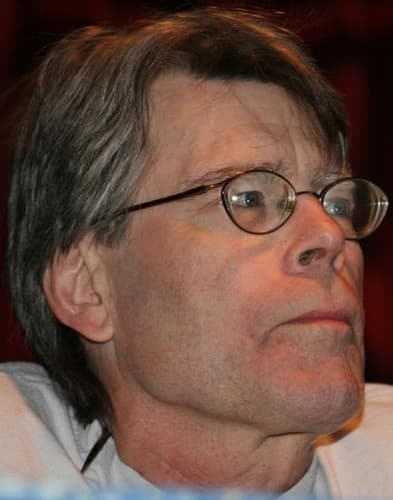
Stephen Edwin King is an American author of horror, supernatural fiction, suspense, crime, science-fiction, and fantasy novels. Described as the "King of Horror", his books have sold more than 350 million copies as of 2006, and many have been adapted into films, television series, miniseries, and comic books. King has published over 65 novels/novellas, including seven under the pen name Richard Bachman, and five non-fiction books. He has also written approximately 200 short stories, most of which have been published in book collections.







