“The past is a phantom, but it's a phantom with teeth.”
— Olivia reflecting on the lingering impact of her sister's disappearance.

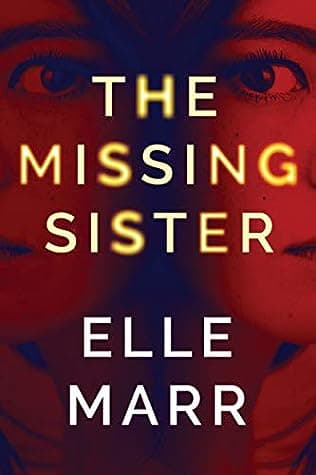
Elle Marr (2020)
Genre
Thriller / Mystery
Reading Time
294 min
Key Themes
See below
Sign in to track this book
A woman travels to Paris to identify her twin sister's body, only to discover a chilling message: her sister is alive and trusts no one, plunging her into a dangerous search through the city's underbelly for answers.
Shayna Darby, still reeling from her parents' recent death, receives a call from Detective Fabien Moreau in Paris. He tells her a body, believed to be her estranged twin sister, Angela, has been found in the Seine River. Angela had moved to Paris years ago, and their relationship had become distant. Shayna, a forensic anthropologist in Portland, Oregon, is asked to come to Paris to identify the remains. The news plunges Shayna into fresh grief and regret over their unresolved estrangement, compelling her to travel to France despite her emotional turmoil.
Upon arriving in Paris, Shayna meets Detective Moreau. She identifies the body at the morgue, a harrowing experience that forces her to confront the reality of her sister's presumed death. Later, while sifting through Angela's apartment, Shayna finds a hidden note in a copy of 'The Count of Monte Cristo' – a book they both loved as children. The note, written in their childhood code, reads: 'Alive. Trust no one.' This discovery shatters Shayna's grief and replaces it with desperate hope and a sense of danger, making her realize Angela is alive and in hiding.
Armed with the knowledge that Angela is alive, Shayna decides to maintain the lie of her sister's death. She confirms the identification of the body to Detective Moreau, knowing this will buy Angela time and keep her hidden from whoever she fears. Shayna begins to search Angela's apartment for more clues, trying to understand what Angela was involved in that would necessitate such extreme measures. She realizes she must navigate this path alone, unable to trust even the police, as Angela's message warned.
Shayna looks into Angela's life, discovering her sister had become a successful photographer specializing in candid shots of Paris's lesser-known figures and underground scenes. She visits Angela's gallery, 'The Eye of Paris,' and meets Angela's colleague, a charming but evasive man named Louis. Louis tells Shayna about Angela's recent obsession with a specific, dangerous project, hinting at the secretive nature of her work and the people she encountered. Shayna suspects Louis knows more than he's letting on, but he claims ignorance about Angela's current whereabouts or specific troubles.
Shayna finds a series of photos in Angela's apartment featuring a distinctive homeless man she recognizes from Angela's notes. She realizes Angela was documenting the lives of Paris's marginalized. Following Angela's trail, Shayna ventures into the city's underbelly, eventually locating the homeless man, Monsieur Dubois, whom Angela had befriended. Dubois, initially wary, eventually reveals that Angela was investigating a network exploiting the homeless, using them for illicit activities. He gives Shayna a coded message from Angela, leading her to believe Angela was close to exposing something significant.
Following clues from Dubois and Angela's notes, Shayna uncovers a human trafficking operation preying on the homeless and undocumented immigrants in Paris. This network, more extensive and dangerous than she initially imagined, uses the vulnerable for forced labor, organ harvesting, and other illicit activities. Shayna realizes Angela was not just photographing them; she was trying to expose the ring, putting herself in great danger. The scope of the operation and the ruthlessness of its perpetrators become clear, raising the stakes for Shayna's search.
As Shayna looks deeper, she uncovers evidence pointing to a powerful, shadowy figure known only as 'The Benefactor' who orchestrates the entire trafficking operation. This individual uses charitable fronts and influential connections to maintain anonymity and control. Shayna realizes Angela's investigation was getting too close to exposing this person, which is why she had to disappear. The Benefactor's reach seems to extend everywhere, making it difficult for Shayna to know who to trust and increasing the sense of peril surrounding her pursuit of the truth.
Detective Moreau, suspicious of Shayna's persistent inquiries and evasiveness, begins to question her account of Angela's death. Shayna, feeling cornered, struggles to maintain her lie while trying to discern if Moreau is genuinely trying to help or if he is somehow compromised by the network. She observes inconsistencies in his behavior and statements, making her increasingly wary of him, despite his official position. This confrontation highlights the isolation Shayna feels, unable to confide in anyone about Angela being alive.
Shayna follows a final clue, believing it will lead her to Angela. Instead, she walks into a trap set by The Benefactor's associates. She manages to escape, but not before realizing the true danger she is in. The experience, however, inadvertently leads her to a hidden location – an abandoned warehouse on the outskirts of Paris – where she finally finds Angela, held captive but alive. Angela is weak but able to confirm the extent of The Benefactor's operations and the identity of the person responsible for the presumed 'dead' body in the Seine.
The Benefactor is revealed to be Louis, Angela's colleague from the gallery, who had been feigning ignorance. He had used the gallery as a front and exploited his artistic connections to identify and abduct vulnerable individuals. His motive was not solely financial; he harbored a twisted artistic vision, seeing himself as a modern-day collector of human 'specimens' for his macabre 'art.' Louis had orchestrated the planting of a lookalike body to throw off investigators and allow him to continue his operations unimpeded, while keeping Angela alive to 'document' her eventual demise.
Shayna, using her forensic knowledge and quick thinking, manages to free Angela from her restraints. Together, the twin sisters, using their unique bond and complementary skills, confront Louis. A tense struggle ensues within the warehouse. Shayna uses her strength and wits, while Angela, despite her weakened state, provides crucial information and diversions. They manage to overpower Louis and send a distress signal, alerting Detective Moreau to their location and the truth about Louis's operations, finally exposing him.
Detective Moreau arrives with reinforcements, arresting Louis and dismantling his human trafficking ring. The body found in the Seine is confirmed to be a different victim, meticulously staged to resemble Angela. Angela, safe but traumatized, begins her recovery. The ordeal forces Shayna and Angela to confront their past estrangement and rebuild their relationship. They decide to stay in Paris for a while, supporting each other and beginning the long process of healing, both individually and as sisters. The experience forges an unbreakable bond between them.
The Protagonist
Shayna evolves from a grieving, somewhat passive individual into a courageous and proactive detective, ultimately mending her fractured relationship with Angela.
The Missing Sister/Secondary Protagonist
Angela's arc involves her initial disappearance and subsequent survival, leading to a reunion and reconciliation with her sister.
The Supporting
Moreau moves from a standard investigator to a more open-minded ally, eventually helping to expose the true criminal.
The Antagonist
Louis's arc is one of exposure, as his carefully constructed facade crumbles under Shayna's investigation, leading to his downfall.
The Supporting
Dubois serves as a pivotal informant, helping Shayna connect with Angela's hidden world.
The Antagonist (initial perception)
The Benefactor's arc is one of mystery and eventual revelation, transforming from a shadowy concept into a concrete villain.
At its core, the novel explores the complex bond between twin sisters, Shayna and Angela. Their estrangement, fueled by past misunderstandings and separate lives, is a central emotional conflict. Angela's disappearance forces Shayna to confront her regrets and embark on a dangerous quest, driven by love and a desire for reconciliation. The shared trauma and the act of saving each other ultimately heal their rift, emphasizing the power of family and forgiveness. This is evident when Shayna risks her life to find Angela, and their reunion solidifies their bond.
“Alive. Trust no one.”
The story is steeped in layers of truth and deception. Shayna must maintain the lie of Angela's death to protect her, forcing her to mislead the police and others. Characters like Louis appear trustworthy but harbor sinister secrets. The entire human trafficking operation relies on a facade of charity and legitimate business. Shayna's journey is a constant struggle to discern reality from illusion, highlighting how easily trust can be manipulated and how difficult it is to uncover hidden truths in a world of lies. The misidentification of the body in the Seine is a prime example of this theme.
“Every person has a story, a truth hidden beneath the surface. My job is to find it, to expose it.”
The novel shines a light on the marginalized and often unseen populations within a bustling city like Paris – the homeless, undocumented immigrants, and those living on the fringes of society. Angela's photography project focused on giving a voice to these individuals, which ultimately led her to uncover their exploitation. The human trafficking ring preys specifically on these vulnerable groups, emphasizing their lack of protection and the ease with which they can disappear. Shayna's journey takes her into this underbelly, forcing readers to confront the harsh realities faced by the invisible. Monsieur Dubois's character embodies this theme.
“There are people living in plain sight that no one ever truly sees.”
Paris, often romanticized as the 'City of Lights,' is depicted with a darker, more sinister undercurrent. The story goes into its hidden catacombs, abandoned warehouses, and the shadowy corners where illicit activities thrive. This theme explores the contrast between a city's beautiful facade and the grim realities that exist beneath it. The beautiful setting becomes a backdrop for horrific crimes, creating a sense of unease and demonstrating that danger can lurk in the most unexpected and seemingly picturesque places. The revelation of Louis's operations within the art community further emphasizes this contrast.
“Paris has many faces. Some are beautiful, some are hidden, and some are truly monstrous.”
A secret message from Angela to Shayna, using their childhood code.
The coded message, 'Alive. Trust no one,' found by Shayna, serves as the primary inciting incident and a crucial plot device. It immediately shifts the narrative from a mournful search for a deceased sister to a dangerous quest for a missing one. The use of a childhood code emphasizes the sisters' deep, unique bond and ensures the message is meant only for Shayna, reinforcing the 'trust no one' warning. It propels Shayna into action and establishes the central mystery of Angela's survival and who she is hiding from.
The unique, intuitive bond between Shayna and Angela.
The inherent connection between Shayna and Angela as identical twins is a significant plot device. It allows Shayna to understand Angela's thoughts and motivations, even when they are physically separated. This bond is not just emotional; it enables Shayna to interpret Angela's clues and retrace her steps with a deeper understanding than an ordinary investigator. It also provides the emotional core of the story, making Shayna's desperate search for her sister feel more urgent and personal, ultimately leading to their reconciliation.
Shayna's professional expertise used in her personal investigation.
Shayna's background as a forensic anthropologist is a key plot device. Her scientific training allows her to analyze clues, observe details, and interpret evidence in ways an ordinary person or even a detective might miss. Her understanding of human remains, crime scenes, and observation techniques proves invaluable in deciphering Angela's last movements and the nature of the crimes she uncovered. This expertise gives her an edge in navigating the dangerous world she enters and is instrumental in piecing together the truth.
A crucial red herring that fuels the initial deception.
The body pulled from the Seine, initially identified as Angela, serves as a powerful red herring and a central plot device. Its presence allows Angela to disappear and operate in secret, while also creating a false sense of closure for the authorities. This misidentification is the foundation of Shayna's deception and the catalyst for her personal investigation. It highlights the cunning of the antagonist and the lengths they go to cover their tracks, raising the stakes and suspense for both Shayna and the reader.
“The past is a phantom, but it's a phantom with teeth.”
— Olivia reflecting on the lingering impact of her sister's disappearance.
“Sometimes the greatest secrets are hidden in plain sight, because no one believes they could be there.”
— Olivia musing on the difficulty of uncovering the truth about her sister.
“Grief is a house with many rooms, and you can get lost in any of them.”
— Olivia contemplating the multifaceted nature of her sorrow.
“You can't outrun your own shadow, especially when it belongs to someone else.”
— Olivia feeling haunted by her sister's absence and identity.
“The quiet ones often have the loudest stories to tell.”
— Olivia observing a seemingly unassuming character.
“Trust is a fragile thing, easily broken, almost impossible to fully repair.”
— Olivia's growing suspicion of those around her.
“Every family has its cracks, but some are fissures that run to the very core.”
— Olivia uncovering deeper dysfunction within her family.
“The truth is a shape-shifter; it looks different depending on who's telling it.”
— Olivia realizing the subjective nature of accounts about her sister.
“Sometimes, the person you think you know best is the one you know least of all.”
— Olivia's realization about a close family member.
“Fear is a compass, but it doesn't always point to danger. Sometimes it points to what you need to face.”
— Olivia pushing past her anxieties to find answers.
“The line between memory and imagination can blur until you can't tell where one ends and the other begins.”
— Olivia struggling with fragmented recollections of her past.
“You can't truly find someone until you've stopped looking for who you thought they were.”
— Olivia realizing she needs to let go of her idealized image of her sister.
“The greatest prison isn't made of bars, but of unspoken words and buried lies.”
— Olivia reflecting on the psychological toll of her family's secrets.
Ready to see how well you understood this book? Take our interactive quiz with 10 questions.







