“It was missing a piece. And it was lonesome.”
— Introducing the main character, a circular shape.

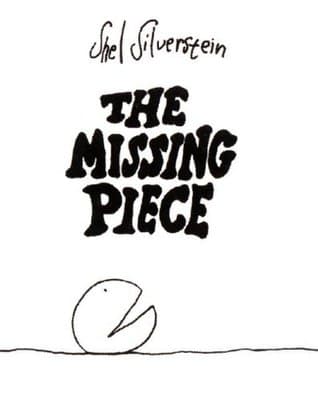
Shel Silverstein (1976)
Genre
Children's / Young Adult
Reading Time
15 min
Key Themes
See below
Sign in to track this book
A charming circle goes on a musical journey to find its missing wedge, only to discover that being complete might be an unexpected, changing state.
The story begins with a large, circular shape that has a wedge-shaped piece missing. This makes it unhappy. Because it lacks a piece, it cannot roll smoothly or quickly. It moves slowly, bumping along, and often stops to rest. Feeling a deep sense of longing, the shape decides to go on a journey to find the missing piece it believes will make it whole and content. It starts to roll, slowly and awkwardly, singing a simple song about its quest: "Oh, I'm lookin' for my missin' piece, I'm lookin' for my missin' piece. Hi-dee-ho, here I go, Lookin' for my missin' piece."
As the rolling shape continues its journey, it finds various small pieces along its path. With each discovery, it tries to see if the piece will fit into its empty space. Some pieces are too small, falling out immediately. Others are too large, unable to fit. Some are the wrong shape, while others are the right shape but don't quite connect. The shape feels repeated disappointment, its hopes rising with each potential piece only to be crushed when it doesn't fit. These failures teach the shape about what its missing piece really needs to be.
Not discouraged by its first failures, the shape continues its slow, bumping journey across different places. It rolls through fields, over hills, and by water, always singing its song about looking for its missing piece. The journey is long and sometimes hard, but the shape keeps its determination. It watches the world around it, sometimes pausing to rest or think about its quest. The repeated action of rolling and singing keeps its single goal in focus.
At one point, the shape finds a piece that seems to fit perfectly. It slides right into the empty space, completing the circle. For a short time, the shape is whole and happy. However, as it tries to roll, the new piece falls out. It wasn't truly its missing piece; it just fit. This experience is bittersweet, offering a glimpse of wholeness only to have it taken away, showing that a true missing piece must not only fit but also stay attached and work.
Because it is missing a piece, the shape cannot roll quickly, which ironically allows it to experience the world more deeply. It can talk to a worm, smell a flower, and watch a butterfly. It meets both good and bad experiences, like being too hot or too cold, or getting caught in the rain. Its incompleteness, while causing longing, also gives it unique interactions and observations that a complete, fast-rolling circle might miss. These experiences change its view and add depth to its journey.
The shape eventually finds a piece that it believes is its missing one. However, this piece does not want to join. It prefers to be on its own, independent and unattached. The rolling shape tries to convince it, but the piece makes it clear that it is happy as it is. This encounter teaches the shape that not every piece is meant to complete it, and that other pieces may have their own paths and desires, separate from its own search for wholeness.
Finally, the rolling shape finds a piece that not only fits perfectly but also seems to belong. When the piece joins the circle, the shape becomes whole. Now, as a complete circle, it can roll smoothly and quickly. The two parts, now one, begin to roll together. This is a moment of success, as the long search seems to have ended, and the shape's wish for completeness is met. The new piece, however, has its own special quality.
With its missing piece found and now whole, the circle rolls very fast. It rolls so fast, in fact, that it can no longer sing its song about looking for its missing piece. The speed and smoothness of its movement mean it passes by the worms, flowers, and butterflies without noticing them. The very act of being complete, which it had wanted, now stops it from experiencing the world in the way it had become used to. The joy of wholeness comes with an unexpected loss of connection and expression.
The piece that joined the circle also had its own song, a beautiful melody that it sang when it was alone. However, now that it is part of the fast-rolling, whole circle, it can no longer sing its song. The speed and the combined movement of the complete circle make it impossible for the piece to express itself. This creates a new problem: the circle's quest being fulfilled has accidentally silenced the very piece that completed it, showing a possible conflict between individual expression and being a whole group.
Seeing that the new piece cannot sing its song while they are together and rolling fast, the now-complete circle stops. It understands that its wholeness has come at the cost of the piece's individuality and happiness. With gentle understanding, the circle carefully sets the piece down, allowing it to be free once more. This act is selfless, putting the well-being and freedom of the piece before its own desire for completeness, showing a new kind of wisdom gained through its journey.
Once again, the circle is missing a piece. It is no longer whole. However, this time, its state of incompleteness is different. It is not unhappy in the same way it was at the beginning. It has experienced wholeness and understood what that means. It has also learned to let go. As it begins to roll again, slowly and bumping along as before, it starts to sing its original song: "Oh, I'm lookin' for my missin' piece, I'm lookin' for my missin' piece. Hi-dee-ho, here I go, Lookin' for my missin' piece." The journey continues, but with a new understanding.
The story ends with the incomplete circle continuing its journey, still searching for its missing piece and still singing its song. However, the meaning of the song and the nature of the quest have subtly changed. The circle has learned that true happiness might not just be about being physically complete, but in the journey itself, the experiences gained, and understanding what it means to be connected, or even disconnected. It has accepted its state of becoming, rather than just focusing on a fixed goal of being whole.
The Protagonist
Transforms from a naive seeker of external completeness to a wiser entity that understands the nuances of wholeness and individual freedom, eventually embracing its journey for its own sake.
The Supporting
Starts as an independent entity, briefly experiences a symbiotic relationship, and ultimately reaffirms its need for individual expression.
The Mentioned
None, serves as a symbolic interaction.
The Mentioned
None, serves as a symbolic observation.
The Mentioned
None, serves as a symbolic observation.
The main theme explores what it truly means to be 'whole' and find happiness. At first, the Missing Piece believes wholeness comes from finding an outside part to complete it. However, its journey shows that physical completeness (when it finds the Singing Piece) can mean giving up other forms of happiness, like connecting to the world and individual expression. The story suggests that true happiness might be an inside feeling, or found in the journey itself, rather than a fixed end goal. The circle's choice to free the Singing Piece shows a deeper understanding of happiness that puts mutual well-being before selfish completeness.
“Oh, I'm lookin' for my missin' piece. I'm lookin' for my missin' piece. Hi-dee-ho, here I go, Lookin' for my missin' piece.”
The book shows that the process of searching and experiencing life is as valuable, if not more, than just reaching a specific goal. Because the Missing Piece is incomplete, it rolls slowly, allowing it to "talk to a worm, and smell a flower, and watch a butterfly." These rich interactions would be impossible if it were whole and rolling fast. The journey is full of lessons, disappointments, and unique observations that shape its understanding. In the end, even after experiencing wholeness, the circle returns to its journey, suggesting that the continuous search, with its experiences, has important meaning.
“It was too hot, then it was too cold. Sometimes it rained, and sometimes it snowed. But it kept on rolling.”
This theme is explored through the relationship between the Missing Piece and the Singing Piece. The Singing Piece has its own identity and song, showing its individuality. When it joins the circle, it loses its ability to sing, showing how merging with another for 'completeness' can sometimes silence individual expression. The circle's kind act of setting the Singing Piece free emphasizes the importance of respecting individuality and recognizing that true connection might not require losing oneself. It suggests that healthy relationships allow for both connection and individual freedom.
“The piece had its own song, and it sang it beautifully. But when it became part of the whole, it could no longer sing.”
The story ends with the Missing Piece accepting and letting go. After finally finding a piece that fits, and feeling the short joy of wholeness, it realizes the cost of this wholeness for its new companion. Its decision to set the Singing Piece free, even though it means returning to its incomplete state, shows a deep acceptance of its condition and a selfless act of letting go. This change from a relentless seeker to a caring entity suggests that true peace can come from accepting what is, rather than always trying for a perfect state.
“And the missing piece, who had its own song, could no longer sing it. So the circle gently set the piece down.”
The entire story functions as a symbolic narrative about life's journey.
The Missing Piece uses simple shapes and a straightforward narrative to convey deeper philosophical ideas about human existence. The 'missing piece' represents a sense of incompleteness, a longing for purpose, love, or self-actualization that many people experience. The journey symbolizes life's quest, filled with trials, errors, and moments of discovery. The ultimate resolution, or lack thereof, serves as a commentary on the nature of happiness and fulfillment, making the story resonate on multiple levels beyond its literal interpretation.
Inanimate objects are given human-like emotions and motivations.
The main character, a simple geometric shape, is imbued with human emotions like unhappiness, longing, determination, and eventually, compassion. It 'sings' a song, 'talks' to a worm, and makes conscious decisions. This personification allows young readers to connect with the abstract concept of searching for meaning, while also enabling adult readers to contemplate deeper philosophical questions through the relatable lens of a character's emotional journey. It makes the abstract accessible and engaging.
The recurring song and actions emphasize the ongoing nature of the quest.
The repeated refrain of the Missing Piece's song – "Oh, I'm lookin' for my missin' piece..." – serves multiple purposes. It reinforces the central theme of the quest, creates a rhythmic and memorable element for children, and highlights the cyclical nature of life's search. The repetition of trying and failing to find a suitable piece, and the continuous act of rolling, underscores the perseverance required in any significant endeavor and the iterative process of self-discovery.
Objects and actions carry deeper, abstract meanings.
Various elements in the story hold symbolic weight. The 'missing piece' itself symbolizes whatever an individual feels is lacking in their life – be it a partner, purpose, or inner peace. Rolling slowly represents a contemplative, experiential approach to life, while rolling fast symbolizes a rushed, goal-oriented existence that might miss out on life's subtle joys. The 'song' of the Singing Piece symbolizes individual expression and identity. These symbols enrich the narrative, allowing for diverse interpretations.
“It was missing a piece. And it was lonesome.”
— Introducing the main character, a circular shape.
“So it set off to find its missing piece.”
— The simple motivation for the character's journey.
“And as it rolled along, it sang a song:”
— The beginning of the character's musical journey.
“Oh, I'm looking for my missing piece, I'm looking for my missing piece, Hi-ho, the derry-o, I'm looking for my missing piece.”
— The recurring song sung by the main character.
“Some of the pieces were too big.”
— The character encounters pieces that don't fit.
“And some of the pieces were too small.”
— More pieces that don't match the character.
“And some of the pieces were too sharp.”
— Pieces that are incompatible due to their nature.
“And some were too square.”
— Another example of a misfit piece.
“One day it found a piece that seemed to fit.”
— A moment of hope in the character's search.
“But it didn't really fit.”
— The disappointment when a seemingly good match fails.
“So it rolled on.”
— The character's persistence despite setbacks.
“And then one day it found a piece that fit perfectly.”
— The character finally finds a piece that seems right.
“Now it was a whole. And it could not sing.”
— The unexpected consequence of being complete.
“And it could not roll so fast.”
— Another change after becoming whole.
“So it put the piece down and rolled away.”
— The character chooses to return to its original state.
Ready to see how well you understood this book? Take our interactive quiz with 10 questions.
Biography coming soon.

Dan Gemeinhart
4.5

Kate O'Hearn
4.4

Jeanne Birdsall
4.4

Jen Wang
4.4

Wendelin Van Draanen
4.3

John Marsden
4.3

Chris Van Allsburg
4.3

Jennifer A. Nielsen
4.2