“It was a missing piece. And it was lonesome. So it set off in search of a whole.”
— Introduction of the missing piece and its motivation.

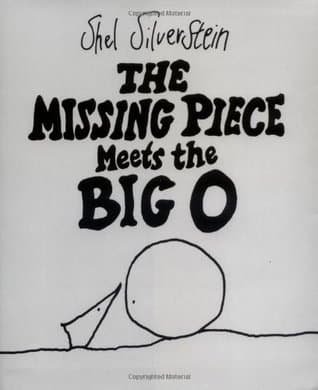
Shel Silverstein (1981)
Genre
Children's / Young Adult
Reading Time
15 min
Key Themes
See below
Sign in to track this book
A lonely wedge's search for completion turns into a journey of self-discovery, as it learns that true belonging comes from rolling independently, like the 'Big O'.
The story starts with the Missing Piece, a small, wedge-shaped object with a chip on its side, sitting alone. It feels incomplete and lonely, believing its purpose is to be part of something larger. It waits, day after day, for something to come and take it somewhere, to make it whole. Its existence is defined by this lack, and its only desire is to find its place within a larger entity, hoping this union will bring it joy. It cannot move alone, highlighting its helplessness and reliance on an outside force for its journey.
Eventually, something rolls by. This object is large and circular, but it has a gap. The Missing Piece, hopeful, tries to fit into the gap. However, it discovers it is not the right shape; it's too big or too small, or the angle is wrong. The object rolls away, leaving the Missing Piece disappointed but not entirely discouraged. This first failure sets a pattern for its early attempts, showing how hard it is to find a perfect fit and the differences between itself and the various objects it meets.
The Missing Piece continues its search, meeting many other objects. Some roll too fast, others too slow. Some are too pointy, others too round. It tries to fit with all of them, sometimes trying to squeeze into an opening, other times trying to stretch to fill a void. Each attempt fails, leaving the Missing Piece feeling more and more disheartened. These repeated rejections highlight its ongoing incompleteness and the growing frustration of its unfulfilled desire to belong. The world seems full of things that are almost right, but never quite.
Feeling more overlooked and desperate, the Missing Piece tries a new approach. It starts to sing. Its songs are sad, reflecting its longing and loneliness. It hopes that by making noise, it will attract an object meant for it, one that will hear its plea and recognize its unique shape. The singing is a passive form of action, still relying on an outside force to complete its journey, but it shows a shift from silent waiting to active (though mournful) signaling.
Occasionally, a bird or butterfly, attracted by its shape or perhaps its singing, picks up the Missing Piece. However, they soon realize it's not a berry or a flower and drop it. These brief moments of being lifted offer fleeting hope, only to be dashed when the creatures realize their mistake. These encounters further emphasize the Missing Piece's unique nature and its inability to serve a conventional purpose, reinforcing its status as an anomaly and its continued isolation.
As the Missing Piece is dropped by birds or rolls down hills, it gets chipped and broken more. Its initial single chip becomes multiple cracks and imperfections. These physical damages show the emotional toll of its long search and repeated disappointments. Each new break makes it even less likely to fit perfectly with any object, adding another layer of despair to its already challenging quest. It begins to wonder if it's becoming too damaged to ever find its place.
One day, the Missing Piece meets a large, perfectly round circle—the Big O. Unlike the other objects, the Big O has no gap, no missing part. It is complete. The Missing Piece, by now very tired, approaches it, still hoping this might be the one. It presents itself, ready to try and fit, ready to sing its sad song if needed. This encounter is different because the Big O doesn't seem to need anything, challenging the Missing Piece's main idea about its own purpose.
The Big O, noticing the Missing Piece, explains that it doesn't have a missing piece. It is perfectly whole and rolls by itself. It then gently advises the Missing Piece that it cannot be 'the missing piece' for the Big O, nor can it simply wait to be picked up. Instead, the Big O suggests that the Missing Piece should try to roll on its own, encouraging it to develop its own agency and find its own path to wholeness. This is a turning point, changing the Missing Piece's perspective.
Inspired by the Big O's words, the Missing Piece tries to roll. However, because of its irregular, wedge-like shape and the chips it has accumulated, it finds it incredibly difficult. It tumbles, flops, and scrapes, unable to roll smoothly like the Big O. Its attempts are clumsy and frustrating, showing the challenges of its current form. It falls and bumps, realizing that rolling alone is much harder than it imagined, and perhaps even painful.
Despite the initial difficulty, the Missing Piece keeps trying. It tries again and again, tumbling and rolling. With each roll, it slowly begins to wear down its sharp edges and rough spots. The bumps and tumbles, once painful, now help its transformation. Over time, its irregular shape starts to smooth out, becoming more rounded. It's a slow, hard process, but the continuous movement gradually reshapes it, making it more circular and more able to roll smoothly alone.
Finally, after much effort and countless rolls, the Missing Piece has worn itself into a perfect circle. It is no longer a 'missing piece' but a complete, self-sufficient entity. It now rolls smoothly and easily, just like the Big O it once met. It has found its own wholeness, not by fitting into another, but by transforming itself through its own journey and effort. The story ends with the newly formed 'Big O' rolling off, full of joy and independence, having achieved self-completion.
The Protagonist
Transforms from a passive, incomplete entity into a self-sufficient, whole circle through its own effort and perseverance.
The Supporting
Remains constant, serving as an unchanging symbol of self-sufficiency and wisdom.
The Supporting
Remain static, serving as obstacles or temporary sources of hope for the Missing Piece.
The Mentioned
No specific arc, as their roles are incidental and brief.
The main theme is finding completeness not through outside approval or by fitting into someone else's life, but by developing one's own identity and inner strength. The Missing Piece initially believes its purpose is to fill a void in another, spending its life searching. Only when the Big O suggests it 'roll on its own' does the Missing Piece begin the hard process of self-transformation. Its journey of rolling and wearing down its own edges shows the effort needed to become a self-sufficient and whole individual, illustrating that true completeness comes from within. The final image of the Missing Piece, now a perfect circle, rolling joyfully alone, strongly conveys this message.
“You can't roll if you're a missing piece.”
The book shows life as a continuous journey of learning and growth, even through pain and struggle. The Missing Piece's quest is not just about finding a match, but about understanding itself. Its repeated failures to fit with various objects and the physical damage it gets from falling and being dropped are crucial to its development. These experiences, though painful, ultimately reshape it. 'Rolling on its own' is a metaphor for actively engaging with life's challenges and letting those experiences mold one into a more complete and capable being. The story emphasizes that the journey itself, with all its trials, leads to deep self-discovery.
“And it rolled. It rolled and it rolled and it rolled.”
Initially, the Missing Piece is dependent, waiting passively for something else to complete it. It cannot move alone and defines its existence only in relation to others. The Big O shows the opposite, true independence. The turning point happens when the Big O encourages the Missing Piece to let go of its dependent mindset and take action. The Missing Piece's struggle to roll independently, followed by its eventual success, highlights the effort and resilience needed to move from dependence to self-reliance. The story promotes the idea that genuine fulfillment comes from being able to navigate life on one's own terms, rather than constantly seeking outside support or completion.
“Why don't you roll yourself?”
While not directly about romantic love, the book subtly explores relationship dynamics. The Missing Piece's initial desire is to 'fit' with another, implying a belief that love or companionship means finding someone to complete a perceived lack. However, the story suggests a more mature understanding: that a healthy relationship (or self-relationship) does not involve one party 'filling' another's emptiness. The Big O, being whole, does not need a missing piece. The Missing Piece's transformation implies that one must become whole oneself before truly engaging with the world, suggesting that real connection comes from two complete entities, rather than two incomplete ones trying to make each other whole.
“I am not a missing piece. I am a something that is rolling by myself.”
Giving human characteristics and emotions to inanimate objects.
Shel Silverstein uses personification to make the abstract concepts of incompleteness, longing, and self-discovery relatable. The Missing Piece experiences loneliness, sadness, hope, and determination. It sings songs, attempts to fit, and learns to roll. This device allows readers, particularly younger ones, to empathize with the object's emotional journey and understand complex psychological states through simple, tangible representations. The Big O, too, is personified with wisdom and self-awareness.
A story that can be interpreted to reveal a hidden meaning, typically a moral or political one.
The entire narrative functions as an allegory for the human search for identity, purpose, and self-fulfillment. The 'missing piece' represents anyone feeling incomplete or searching for their place. The 'somethings' represent potential partners, careers, or external sources of happiness. The 'Big O' symbolizes a state of self-actualization and wholeness. The journey of rolling and rounding out is an allegorical representation of life's struggles and the transformative power of perseverance and self-reliance in achieving inner completeness.
The use of objects or ideas to represent deeper meanings.
Key symbols include the 'missing piece' itself, symbolizing incompleteness and a perceived lack. The 'Big O' symbolizes wholeness, self-sufficiency, and inner peace. The act of 'rolling' symbolizes active engagement with life, progress, and the process of self-creation. The 'chips and breaks' the Missing Piece sustains symbolize the emotional scars and hardships encountered on its journey. The transformation from a jagged piece to a smooth circle symbolizes personal growth and achieving self-acceptance.
The repeated use of words or phrases for emphasis or rhythm.
Silverstein uses repetition, particularly in describing the Missing Piece's attempts to fit and its eventual rolling. Phrases like 'it tried to fit,' 'it rolled and it rolled and it rolled' emphasize the continuous effort and the passage of time. This repetition not only creates a rhythmic, almost meditative quality to the prose but also highlights the perseverance required for the Missing Piece's transformation, reinforcing the idea that profound change often comes from sustained, repeated effort.
“It was a missing piece. And it was lonesome. So it set off in search of a whole.”
— Introduction of the missing piece and its motivation.
“It found many different kinds of wholes. But none of them were quite right.”
— The missing piece encounters various shapes that don't fit.
“Some were too big. Some were too small. Some were too square. Some were too pointy.”
— Description of the unsuitable wholes.
“And some were just plain boring.”
— The missing piece's subjective assessment of some wholes.
“It kept on rolling. And it kept on singing its song: 'Oh, I'm looking for my missing piece...'”
— The missing piece's persistent journey and its characteristic song.
“Then one day the missing piece met a Big O.”
— The introduction of the second main character.
“'You're a missing piece,' said the Big O. 'I am a Big O.'”
— The initial interaction and identification of each character.
“'I'm looking for my missing piece so I can roll,' said the missing piece.”
— The missing piece explains its goal to the Big O.
“'You don't need a missing piece to roll,' said the Big O. 'You can roll by yourself.'”
— The Big O introduces a new perspective to the missing piece.
“The missing piece tried to roll. But it couldn't.”
— The missing piece's initial attempt to roll on its own.
“So it sat there and watched the Big O roll. It rolled so beautifully. Effortlessly.”
— The missing piece observes the Big O's natural ability.
“The missing piece began to change. It rounded its edges. It smoothed its corners.”
— The missing piece starts to transform itself after observing the Big O.
“And one day, it too was a Big O. And it rolled away by itself.”
— The missing piece achieves its own wholeness and independence.
“Sometimes it rolled fast. Sometimes it rolled slow. Sometimes it tumbled over.”
— Description of the newly transformed piece's rolling journey.
“But it was rolling. And it was singing. And it was happy.”
— The concluding state of the former missing piece.
Ready to see how well you understood this book? Take our interactive quiz with 10 questions.
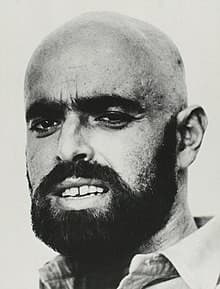
Biography coming soon.

Dan Gemeinhart
4.5

Kate O'Hearn
4.4

Jeanne Birdsall
4.4

Jen Wang
4.4
Wendelin Van Draanen
4.3

John Marsden
4.3

Chris Van Allsburg
4.3
Jennifer A. Nielsen
4.2