“The wind was picking up now, and the clouds were gathering. It was going to be a wild night.”
— Early in the story, as Maude and her brother are on the run.

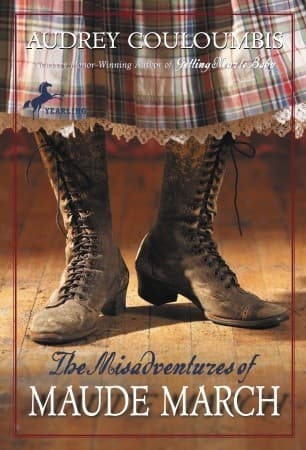
Audrey Couloumbis (2006)
Genre
Children's / Historical Fiction / Young Adult
Reading Time
320 min
Key Themes
See below
Sign in to track this book
Eleven-year-old Sallie and her sister Maude flee their cruel guardians, beginning an unexpected journey through the Wild West where Sallie learns about adventure and sisterhood as Maude becomes a 'wanted woman' in their unfolding reality.
Eleven-year-old Sallie March and her older sister, Maude, are left at the Denver Home for Wayward Children by their Aunt and Uncle, the Putteringhams. The Putteringhams, who took them in after their parents' deaths, claim they can no longer afford to care for the girls, though they seem to want to avoid responsibility. Sallie, a reader of dime novels, immediately distrusts their new home and the stern matron, Mrs. Meriwether. Maude, more quiet but just as determined, tries to adjust, but both sisters quickly realize their new life will involve strict rules, hard work, and little affection. This sudden change sets the stage for their future rebellion and escape.
Life at the Denver Home for Wayward Children is harsh. Mrs. Meriwether enforces a strict routine of chores, small meals, and no room for individuality or joy. Sallie finds comfort in secretly reading her dime novels, imagining herself as a frontier hero, while Maude quietly endures, protecting Sallie when she can. The sisters see other children being mistreated and realize that escaping is their only choice if they want any freedom or happiness. Their shared hardship strengthens their bond, making them a united front against the orphanage's oppression. This period solidifies their resolve to find a better life, no matter the risks.
The breaking point comes when Mrs. Meriwether tries to separate the sisters, planning to send Maude to work as a servant in a distant home. Desperate to stay together, Maude and Sallie create an escape plan. Under cover of darkness, they slip out of the orphanage, taking only a few belongings and Sallie's treasured dime novels. Their escape is dangerous, but their determination to remain together fuels their courage. They head west, aiming for the open frontier, a place Sallie has only read about in her adventure stories, hoping to find freedom and a new life away from their guardians' control.
After their escape, Maude and Sallie manage to get passage on a wagon train heading further west. They pretend to be traveling alone to meet their father, a common enough story on the frontier. The journey is difficult, filled with dust, hunger, and constant threats from both nature and other travelers. Sallie, despite her imagination, struggles with the harsh realities of frontier life, which are less romantic than her dime novels. Maude, always practical, takes charge of their survival, showing a quiet strength Sallie had not fully recognized. They learn to adapt quickly, finding food and staying alert, deepening their reliance on each other.
While stopping in a small, rough frontier town, Maude and Sallie find themselves in danger. A group of drunk men in a saloon accost them, mistaking them for easy targets. Maude, always protective of Sallie, confronts them. In the struggle, one of the men becomes aggressive, threatening Sallie. Maude, in self-defense, shoots and kills the man. The town becomes chaotic, and the sisters are forced to flee, now truly outlaws with a dead man on their hands. This event changes them from runaway orphans to wanted fugitives, altering their path forever.
News of the saloon incident spreads quickly, exaggerated by frontier newspapers. Maude is called 'Maude March, the Outlaw Queen,' a dangerous and ruthless woman. Sallie is horrified by the distorted portrayal of her sister, knowing Maude acted in self-defense. They are now on the run, pursued by lawmen and bounty hunters eager for the reward. The sisters must constantly move, using disguises and their wits to avoid capture. Sallie, despite the fear, finds a strange excitement in their outlaw status, seeing echoes of her dime novel heroes, while Maude carries the heavy burden of their notoriety.
Life on the run is a constant struggle. Maude and Sallie travel through desolate lands, sleeping outside and often going hungry. They meet various people: some helpful, some suspicious, and some dangerous. They learn to trust their instincts and rely only on each other. Maude's quiet resourcefulness and Sallie's quick thinking become essential. Sallie continues to compare their situation to her Western stories, but the reality is much harsher and more dangerous than any fiction. They develop a reputation, not always negative, among some who respect their independence and courage.
As their notoriety grows, a determined Pinkerton detective, Agent Finch, is assigned to track down Maude March. Finch is intelligent and persistent, a formidable opponent who slowly finds their trail. The sisters become aware of his pursuit, adding more tension to their already uncertain existence. They have several close calls, narrowly escaping capture, which highlights the constant danger they face. Finch's presence shows the seriousness of their situation, reminding them that their freedom is always at risk and that the law is a relentless force.
During their flight, Maude and Sallie find a small, isolated ranch run by a kind, elderly couple, the O'Malleys, who offer them shelter and work without asking many questions. For a short time, the sisters experience a semblance of normal life, enjoying regular meals, a safe bed, and genuine human connection. Sallie even starts to teach Maude to read better. This break is a precious time, allowing them to heal and reflect. However, the shadow of their past and the threat of capture remain, making them aware that this peace cannot last.
Agent Finch, having carefully tracked their movements, finally catches up to Maude and Sallie at the O'Malley ranch. A tense standoff occurs, with Finch attempting to arrest Maude. Sallie, fiercely loyal and protective, tries to intervene, using her quick wit and knowledge of the law (from her reading) to argue for her sister's innocence. The O'Malleys, having grown fond of the girls, also try to protect them. The confrontation is full of emotion and danger, as Maude faces the consequences of her past actions and Sallie tries to save her sister from prison.
During the standoff with Agent Finch, Maude, realizing the danger Sallie is in, makes a heartbreaking decision. She offers to surrender to Finch, but only if he promises to ensure Sallie's safety and arrange for her to be placed in a safe, reputable home, not another orphanage. Maude's selfless act shows her deep love and protectiveness towards her younger sister, prioritizing Sallie's future over her own freedom. This moment powerfully demonstrates her character, proving that her actions were always driven by need and love, not malice.
Following Maude's surrender, Agent Finch, impressed by Maude's character and Sallie's intelligence, keeps his word. Sallie is placed in a good home, where she finally has stability and the chance for an education. Though heartbroken by the separation from Maude, Sallie carries their adventures and Maude's bravery in her heart. She continues to read and write, eventually writing their true story, correcting the sensationalized newspaper accounts. Sallie's narrative voice frames the entire book, providing an authentic account of their misadventures, ensuring Maude's true character is remembered, and solidifying their bond as one that transcends physical separation.
The Protagonist
Sallie transforms from a naive, bookish girl into a resilient and self-aware young woman who understands the difference between fictional heroism and real-life bravery.
The Protagonist
Maude evolves from a quiet, protective sister into a legendary figure, accepting the sacrifices required to ensure Sallie's future.
The Antagonist
Remains a static antagonist, representing the oppressive forces the girls escape.
The Supporting
Transforms from a strict lawman into a more empathetic figure who recognizes the nuances of justice beyond the letter of the law.
The Mentioned
Their role is static, serving only as the initial impetus for the plot.
The Supporting
They provide temporary support and demonstrate kindness, without a personal arc.
The Mentioned
No personal arc; serves as a plot catalyst.
Sallie's love for dime novels is central to the story, shaping how she sees the world and copes with hardship. Her imagination helps her find heroism and adventure even in dangerous situations, though she eventually learns the difference between fictional romance and harsh reality. The book is framed as Sallie's own 'true story,' showing her reclaiming the narrative from sensationalist newspapers. This theme explores how stories can both inspire and mislead, but ultimately empower people to understand events. For example, Sallie often compares their escapes to scenes from 'Buffalo Bill's Wild West Adventures,' finding courage in these parallels.
“I knew what a hero was, all right, from my dime novels, and Maude was a hero, even if the papers did call her an outlaw.”
The strong bond between Sallie and Maude is the emotional heart of the novel. Their loyalty to each other drives all their actions, from escaping the orphanage to Maude's final sacrifice. They are each other's only family, and their shared experiences create an extraordinary connection. Maude's quiet protectiveness and Sallie's fierce devotion show the strength found in family ties, especially when facing hardship. Their commitment to staying together, even when it means breaking the law, highlights their deep affection and mutual reliance. The entire journey shows their unwavering bond.
“We were sisters, and that meant we were stuck together, come what may. No orphanage, no lawman, no wild west could ever change that.”
The novel explores the difference between what is legally right and what is morally just. Maude's actions, especially the saloon shooting, are legally criminal, yet the story clearly shows them as acts of self-defense and protection. The sensationalized newspaper accounts further distort the truth, creating a 'wanted' image that does not reflect Maude's true character. Agent Finch's eventual understanding and compassion show that true justice sometimes requires looking beyond the law to the intent and circumstances behind actions. The girls' flight is a search for a justice that the established legal system fails to provide.
“The papers called her a villain, but I knew the truth. Sometimes, what the law says ain't what's right.”
While Sallie's dime novels romanticize the West, the sisters' experiences show the brutal and unforgiving nature of frontier life. They face hunger, exposure, danger from bad people, and the constant threat of capture. The journey is far from the glamorous adventures Sallie reads about, forcing both girls to quickly adapt and grow up. This theme contrasts idealized ideas with the gritty truth, showing that survival often depends on resilience, resourcefulness, and a strong will to endure. The landscape itself becomes a character, both beautiful and merciless, testing their limits.
“The West wasn't all galloping horses and shining heroes. It was dust and hunger, and folks who'd just as soon shoot you as look at you.”
The story is told by an older Sallie March looking back on her childhood adventures.
The entire novel is narrated by an older Sallie March, recounting her and Maude's adventures years later. This device allows for a mature reflection on past events, providing insight and wisdom that young Sallie wouldn't have possessed. It also establishes Sallie as the ultimate authority on their 'true story,' directly challenging the sensationalized accounts of the newspapers. The retrospective view allows for foreshadowing and a deeper emotional resonance, as the narrator understands the long-term impact of their experiences.
Sallie's collection of Western dime novels influences her perception and serves as a constant point of reference.
Sallie's treasured dime novels serve as a continuous motif and a crucial framing device. They inform her understanding of heroism, adventure, and the Wild West, creating a lens through which she initially interprets their experiences. This device highlights the contrast between idealized fiction and harsh reality. While the novels provide comfort and inspiration, they also demonstrate Sallie's eventual maturation as she learns the difference between a fictional hero and a genuinely brave person like Maude. Her reading habits are integral to her character and how she processes their journey.
Public perception of Maude as an outlaw is shaped by exaggerated media accounts.
The sensationalized newspaper articles and 'wanted' posters depicting Maude as a ruthless outlaw are a significant plot device. They create the external conflict of their flight from the law and highlight the theme of justice versus public perception. These exaggerated accounts serve as a stark contrast to the truth of Maude's character and actions, emphasizing the unreliability of media and the power of narrative to shape reputations. The sisters' struggle is not just against the law, but against the false story being told about them.
The untamed American West acts as both a refuge and a source of peril.
The vast and challenging landscape of the American Frontier is more than just a backdrop; it's a character in itself. It provides the sisters with places to hide and opportunities for self-reliance, but also subjects them to extreme weather, scarcity, and lawlessness. The frontier's untamed nature pushes the girls to their limits, forcing them to develop resilience and resourcefulness they wouldn't have otherwise. It symbolizes both freedom and danger, embodying the raw, unpredictable reality of their journey.
“The wind was picking up now, and the clouds were gathering. It was going to be a wild night.”
— Early in the story, as Maude and her brother are on the run.
“Being an outlaw wasn't about being bad; it was about being free.”
— Maude's reflection on her new life and the perception of outlaws.
“Sometimes you just had to make your own way, even if it wasn't the way anyone expected.”
— Maude's growing independence and determination.
“A good story always had a bit of truth, and a bit of a lie, mixed in just right.”
— Maude's musings on storytelling and reputation.
“The world was bigger than she had ever imagined, and full of people who didn't care about rules.”
— Maude's expanding worldview as she encounters different characters.
“Fear was a cold companion, but it could also sharpen your senses.”
— Maude's internal struggle with fear and its effects.
“Family wasn't always blood. Sometimes it was the people who stood by you when no one else would.”
— Maude's realization about the bonds she forms with her companions.
“Every lock had a key, and sometimes you just had to make your own.”
— Maude's problem-solving approach to difficult situations.
“The past was a shadow, but it could still trip you up if you weren't careful.”
— Maude reflecting on the consequences of her past actions.
“There was a certain kind of bravery in admitting you were scared, but doing it anyway.”
— Maude's internal monologue about facing danger.
“A reputation could grow like a wildfire, whether you wanted it to or not.”
— Maude observing how her notoriety spreads.
“Sometimes the safest place was right in the middle of the danger.”
— Maude's strategic thinking in a perilous situation.
“The world had a funny way of giving you what you needed, even if it wasn't what you thought you wanted.”
— Maude's reflection on the unexpected turns in her journey.
“Home wasn't a place, it was a feeling, a sense of belonging.”
— Maude's evolving understanding of what home means to her.
Ready to see how well you understood this book? Take our interactive quiz with 10 questions.
Dan Gemeinhart
4.5
Kate O'Hearn
4.4

Jeanne Birdsall
4.4

Jen Wang
4.4
Wendelin Van Draanen
4.3

John Marsden
4.3

Chris Van Allsburg
4.3
Jennifer A. Nielsen
4.2