“If you have no intention of loving or being loved, then the whole journey is pointless.”
— The old doll tells Edward this after he has been lost and broken, emphasizing the central theme of love.

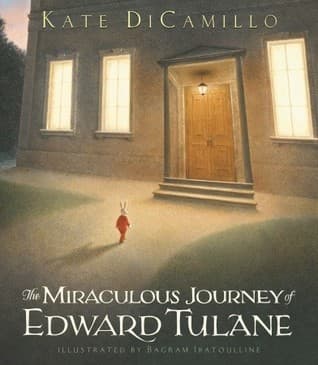
Kate DiCamillo (2006)
Genre
Fantasy / Children's / Young Adult
Reading Time
90 min
Key Themes
See below
Sign in to track this book
A vain china rabbit named Edward Tulane embarks on an unexpected, decades-long journey of loss and love after falling overboard, ultimately discovering that even the most fragile heart can learn to truly care.
Edward Tulane, a handsome china rabbit, lives in a grand house on Egypt Street, owned by a girl named Abilene Tulane. Abilene gives Edward custom-made clothes, winds his gold watch, and makes sure he is comfortable. Edward, however, is vain and self-centered, caring little for Abilene's affection or the love of her grandmother, Pellegrina. He listens to Pellegrina's stories, especially one about a princess who loves no one and is turned into a warthog, but he does not understand their meaning about the need for love. Edward's life is one of luxury, without real emotion or connection, a contrast to the journey he will take.
Abilene and her family go on an ocean liner, taking Edward along. While Abilene plays with Edward on deck, two rambunctious boys, Martin and Amos, take Edward from her. During their struggle, Edward falls overboard into the ocean. He sinks slowly, his china body heavy, eventually landing on the seabed. This moment marks a shift in Edward's life, from pampered idleness to helplessness and isolation. He lies on the ocean floor for 180 days, observing marine life, experiencing time in a new way, and starting to feel loneliness.
After months at the bottom of the ocean, Edward is scooped up by a fisherman's net. He is brought aboard the fishing boat and then taken to the home of the fisherman, Lawrence, and his wife, Nellie. Nellie, seeing the beautiful china rabbit, is happy and treats him as a companion. She names him Susanna and dresses him in a small dress, placing him on a shelf in her kitchen. Edward, despite the change in his name and clothes, begins to feel a glimmer of warmth from Nellie's affection. He observes their simple, loving life, a contrast to his past, and starts to experience the comfort of being cared for.
Nellie's adult daughter, Lolly, visits her parents. Disapproving of her mother's attachment to the china rabbit, Lolly takes Edward from his shelf and dumps him into the outdoor garbage can. Edward experiences the shock of being discarded like trash, a fall from his previous positions of adoration and comfort. He is then taken with the rest of the refuse to a landfill, where he lies buried under garbage, feeling forgotten and alone, a feeling he had never truly understood before his journey began.
Buried in the landfill, Edward is eventually found by a stray dog named Lucy. Lucy brings him to her owner, Bull, a kind hobo. Bull, seeing the rabbit's fine craftsmanship, decides to keep him. He names Edward again, restoring his original name, and treats him with respect and affection. Edward travels with Bull and Lucy by hopping freight trains, seeing the vastness of the American land and experiencing a life of freedom and companionship. He listens to Bull's stories and songs, feeling a sense of belonging and love for the first time, realizing the meaning of shared hardship.
Edward's journey with Bull and Lucy ends when they are discovered by a railroad worker. Bull and Lucy escape, but Edward is left behind, picked up by a lonely old woman who hangs him as a scarecrow in her garden. He endures the weather and the indignity, feeling the pain of separation from his hobo family. Later, a farmer finds Edward and gives him to his young son, Bryce. Bryce, in turn, takes Edward to his sick younger sister, Sarah Ruth.
Bryce brings Edward to his sister, Sarah Ruth, a young girl with a terminal illness. Sarah Ruth immediately embraces Edward, treating him with love and tenderness. She cradles him, talks to him, and shares her food with him, finding comfort and joy in his presence despite her suffering. Edward, in turn, feels a powerful love for Sarah Ruth, his heart aching with concern for her fragile life. This period changes Edward, as he learns to love deeply and selflessly, experiencing the vulnerability and pain that come with such devotion.
Sarah Ruth eventually dies, leaving Bryce heartbroken. In his grief, Bryce lashes out at Edward, blaming the china rabbit for his sister's death. He throws Edward against a tree, shattering his head. Edward experiences not only physical pain but also the emotional pain of being broken and discarded by someone he loved. This act of violence, born from Bryce's sorrow, leaves Edward in despair, believing he is beyond repair and that his ability to love and be loved is forever lost.
Bryce, feeling remorseful, takes Edward's shattered pieces to a doll mender named Lucius Clarke. Lucius, a skilled craftsman, repairs Edward's head, giving him new eyes and a renewed appearance. During his time in the doll mender's shop, Edward is placed on a shelf with other dolls, many of whom have also been broken and repaired. He overhears their stories, learning about resilience and the possibility of mending. Edward feels hope and anticipation, realizing that being broken does not mean the end, but can be a start to a new beginning.
After his repair, Edward stays in Lucius Clarke's shop for many years. He sits on a shelf among other dolls, observing customers, and listening to the stories of the dolls and the doll mender. During this long period of waiting, Edward learns patience and develops a deeper understanding of the world. He thinks about his past experiences, realizing how each encounter, joyful or painful, has shaped him. He wants to be loved again, but now understands that love requires an open heart and a willingness to be vulnerable, a lesson he learned from Pellegrina's story and his own journey.
One day, an old woman and a young girl enter Lucius Clarke's shop. Edward, from his shelf, observes them. As the old woman speaks, he recognizes her. He realizes that the old woman is Abilene, his first owner, now grown old. The young girl with her is Abilene's daughter. Edward's heart, which had been broken and mended, now beats with surprise, longing, and hope. He desperately wishes to be chosen by them, to reunite with the person who first owned him, now that he finally understands love.
Abilene's daughter, noticing Edward, is drawn to him. Abilene, recognizing the unique craftsmanship and the familiar sadness in his eyes, encourages her daughter to choose him. The young girl, sensing a connection, decides to buy Edward. As Edward is taken from the shelf and embraced by the girl, he feels a sense of homecoming. He is back with the family he started with, but he is a changed rabbit. His heart, once cold and self-serving, is now open and capable of deep, unconditional love, a result of the journey he took. He has learned to love, to lose, and to love again, fulfilling Pellegrina's prophecy.
The Protagonist
Edward transforms from a selfish, unfeeling object into a deeply empathetic and loving being, capable of both giving and receiving affection. He learns that love involves vulnerability and loss.
The Supporting
Abilene grows up and eventually, as an adult, indirectly reunites with Edward, showing her enduring connection to him.
The Supporting
She remains a static, wise figure, serving as a catalyst for Edward's journey and a source of profound, albeit initially unheeded, wisdom.
The Supporting
She offers Edward a brief period of gentle care and introduces him to a different kind of love.
The Supporting
He provides Edward with a profound experience of shared hardship and unconditional companionship, teaching him about loyalty and belonging.
The Supporting
She serves as a loyal companion to Bull and Edward, representing steadfast friendship.
The Supporting
She provides Edward with his most transformative experience of love, teaching him profound empathy and the pain of loss.
The Supporting
He experiences immense grief and remorse, demonstrating the destructive power of sorrow but also the capacity for seeking repair.
The Supporting
He acts as a healer and restorer, giving Edward a physical and symbolic fresh start, and a place to reflect.
The main theme of the novel is Edward's journey from a cold, self-absorbed object to a being capable of deep love. Each encounter, from Abilene's adoration to Nellie's gentle care, Bull's companionship, and Sarah Ruth's selfless affection, helps soften Edward's heart. The pain of loss, particularly Sarah Ruth's death, further deepens his understanding that love includes vulnerability and sorrow. By the end, Edward's ability to love is his most cherished quality, showing that love is a transformative force that shapes identity and purpose.
“If you have no love in your heart, you are a warthog.”
Edward's journey includes repeated instances of loss: being thrown overboard, discarded in the garbage, separated from Bull and Lucy, and the death of Sarah Ruth. These experiences of separation and grief, though painful, are important for Edward's development. They make him confront his own fragility, appreciate the love he once took for granted, and understand the deep connection between love and sorrow. His brokenness, both physical and emotional, leads to his repair and a deeper capacity for empathy and compassion.
“How many times, Edward, will you have to be broken before you believe?”
Throughout his travels, Edward experiences many different 'homes' — from Abilene's grand house to the ocean floor, Nellie's kitchen, Bull's freight car, a scarecrow's pole, and Sarah Ruth's humble shack. Each home, temporary as it is, offers a different lesson about belonging. Edward learns that home is not a physical place but a feeling of connection and acceptance found in the hearts of those who love him. His desire for a permanent home becomes a desire for a place where he can truly give and receive love, ending in his reunion with a grown-up Abilene.
“He was learning that the world was an expansive and sometimes lonely place. And that was the truth.”
Despite repeated difficulties, including being lost, discarded, and physically broken, Edward never entirely loses hope. His journey shows resilience, the ability to endure suffering and still want connection. Even when shattered, Edward finds himself in the care of a mender, symbolizing the possibility of healing and renewal. His long wait in the doll mender's shop teaches him patience and reinforces the idea that even after the deepest despair, a new beginning is always possible, as long as one's heart remains open.
“Someone will come for you, but first you must open your heart.”
Edward's physical travels mirror his emotional and spiritual development.
Edward's miraculous journey across land and sea is a direct metaphor for his internal transformation. Each new location and owner represents a stage in his emotional development, exposing him to different facets of human experience – from luxury to hardship, from unrequited love to profound loss. The physical distance he travels and the diverse people he encounters directly correlate with the emotional distance he covers from his initial state of cold self-absorption to his ultimate capacity for deep love.
A prophetic fairy tale that foreshadows Edward's fate and central lesson.
Pellegrina's dark fairy tale about a princess who loves no one and is consequently transformed into a warthog serves as a crucial plot device. It acts as a direct prophecy and a moral lesson for Edward, though he initially fails to grasp its meaning. The story sets the stage for his journey by highlighting the very flaw he needs to overcome – his inability to love. Its haunting presence throughout the narrative reminds both Edward and the reader of the central theme and the stakes involved in his transformation.
Physical damage and repair symbolize emotional pain and healing.
The repeated damage to Edward's china body, culminating in his shattering after Sarah Ruth's death, serves as a powerful symbol for his emotional pain and the breaking of his hardened heart. His subsequent repair by Lucius Clarke, with new eyes and a mended head, symbolizes his emotional healing, his renewed perspective, and his capacity to love again. The physical mending directly reflects the mending of his spirit and his ability to open his heart after profound loss.
A symbol of Edward's initial vanity and later, a reminder of his past and the passage of time.
Edward's gold watch is initially a symbol of his vanity and pampered existence with Abilene. It represents his superficial value and the structured, unchanging nature of his early life. As he loses it and experiences the passage of time in different ways (like 180 days on the ocean floor), the watch becomes a subtle reminder of his past and the profound changes he undergoes. Its absence emphasizes his detachment from his former self, while its memory underscores the journey he has taken through time and experience.
“If you have no intention of loving or being loved, then the whole journey is pointless.”
— The old doll tells Edward this after he has been lost and broken, emphasizing the central theme of love.
“You must be filled with expectancy. You must be awash in hope. You must wonder who will love you, whom you will love next.”
— Edward reflects on his transformation from a selfish toy to one open to love and connection.
“Edward Tulane was a china rabbit who thought very highly of himself.”
— Opening line introducing Edward's initial arrogance and self-absorption.
“Once, in a house on Egypt Street, there lived a rabbit who was made almost entirely of china.”
— The story's beginning, setting the stage for Edward's journey and origins.
“He was loved by a little girl named Abilene, but he did not know how to love her back.”
— Describes Edward's relationship with his first owner, highlighting his emotional detachment.
“The stars shone cold and bright. They were as distant and uncaring as Edward himself.”
— Edward feels lonely and disconnected during his journey, mirroring his inner state.
“Open your heart. Someone will come. Someone will come for you.”
— Advice given to Edward by a kind character, encouraging him to remain hopeful.
“I have been loved, Edward told the stars. So? said the stars. What difference does that make?”
— Edward questions the value of love after experiencing loss and hardship.
“Edward felt the whole world turn dark and cold. He felt as if he were falling, falling, falling.”
— Edward's despair after being separated from a loved one, showing his emotional depth.
“You are like us, Edward. You are lost. And you are waiting to be found.”
— Other toys or characters relate to Edward's journey of being lost and seeking belonging.
“He learned to listen. He learned to hope. He learned to love.”
— Summarizes Edward's growth throughout his miraculous journey.
“The rabbit was very handsome. He had a wardrobe of exquisite clothes and a pocket watch.”
— Highlights Edward's material possessions and vanity early in the story.
“Edward did not care for the stars. He did not care for the ocean. He did not care for anything but himself.”
— Illustrates Edward's initial self-centeredness before his journey changes him.
“Someone will come for you, but first you must open your heart.”
— Repeated motif encouraging Edward to be vulnerable to find love and connection.
Ready to see how well you understood this book? Take our interactive quiz with 10 questions.

Biography coming soon.







