“Miracles are not contrary to nature, but only contrary to what we know about nature.”
— A character reflects on the nature of miracles in the story.

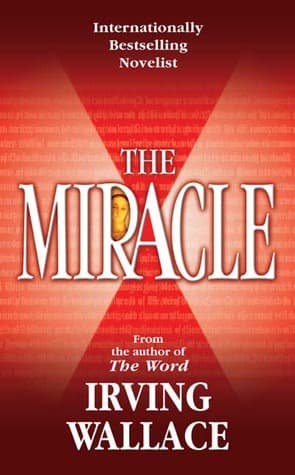
Irving Wallace (1984)
Genre
Thriller / Fantasy / Spirituality / Mystery / Romance
Reading Time
600 min
Key Themes
See below
Sign in to track this book
At Lourdes, a skeptical journalist, a desperate young woman, a reluctant celebrity, and a dying American converge during the Virgin Mary's promised miracle cure, each with their own hopes and secrets, on a collision course with a truth more complex than divine intervention or simple fraud.
The novel begins with Pope Gregory XVII's announcement: the Virgin Mary will appear at Lourdes, France, on August 15th, the Feast of the Assumption, to perform a single, provable miracle. This news shocks the world, exciting the faithful and drawing doubt from secular society. The Vatican wants to revive faith in a skeptical age, but the announcement's unique nature also creates great pressure and scrutiny. Preparations start at Lourdes, overseen by Monsignor Marco Vespucci, as millions of pilgrims and observers prepare to visit the small French town, each hoping for a miracle or trying to prove it false.
Among the millions coming to Lourdes are four main characters. Ken Clayton, a young American with a rare, incurable blood disease, has stopped standard medical treatment, desperately hoping for a miraculous cure. Edith Moore, an Englishwoman who claims to have been miraculously cured at Lourdes years ago, is now an unwilling celebrity, troubled by her past and the responsibility of her 'miracle.' Gisele Dupree, a young French woman working at Lourdes, hates the town and dreams of leaving it, even if it means doing something drastic. Liz Finch, a cynical American journalist, arrives determined to expose the entire event as a fraud, believing it is a massive manipulation by the Church.
Ken Clayton, despite his initial doubts, becomes more involved in the intense atmosphere of Lourdes. He befriends Father Bernard, a local priest, and starts to truly hope for a cure, even as his health worsens. Meanwhile, Edith Moore is constantly approached by pilgrims seeking advice and comfort, and by the media, who want to revisit her story. She feels immense pressure to be the perfect 'miracle recipient,' but beneath her calm exterior, she has doubts and a deep personal secret about her past 'cure' that she fears will be revealed. Her inner conflict grows as August 15th approaches.
Gisele Dupree, stuck in Lourdes and unhappy with her situation, becomes more desperate to leave. She sees the upcoming event as her best chance for a dramatic escape, possibly involving theft or even violence, to fund a new life elsewhere. She subtly manipulates those around her, including her lover, Jacques, to help her plans. At the same time, Liz Finch, the investigative journalist, begins her search for any proof of a hoax. She interviews skeptics, former employees, and some of the 'miraculously' cured, hoping to find inconsistencies or outright lies that would discredit the Vatican's announcement and the entire Lourdes phenomenon.
Monsignor Marco Vespucci, the Vatican official in charge of the Lourdes preparations, starts to find unsettling facts about the Pope's announcement. He learns that the Pope's declaration of the Virgin Mary's return is not based on divine revelation, but on a secret, high-tech operation run by a hidden Vatican committee. This committee, led by Cardinal Leone, plans to use advanced holographic projections and psychological manipulation to create the illusion of a miracle. They believe a manufactured miracle is needed to restore faith in a secular world. Vespucci is horrified by this deception and struggles with his conscience.
As August 15th gets closer, Monsignor Vespucci tries to find a way to expose Cardinal Leone's plan without harming the Church. He tells a few trusted people, but the forces protecting the secret are strong. Meanwhile, Liz Finch, through constant investigation, starts to put together pieces of evidence that suggest a complex deception. She notices unusual equipment being installed, hears rumors of strange events, and begins to suspect that the 'miracle' might be a technologically advanced illusion rather than a divine act. Her investigation puts her in danger from those who want to keep the secret.
On the night before August 15th, Lourdes is full of anticipation. Millions of pilgrims fill every space, their hopes and prayers clear. Ken Clayton's condition worsens, but his faith remains strong. Edith Moore fights her inner struggles, thinking about revealing her secret. Gisele finishes her escape plan, intending to use the event's chaos. Monsignor Vespucci makes a final, desperate attempt to contact the Pope directly, but Cardinal Leone's security stops him. The plotters, confident in their technology, activate the detailed holographic projection system and prepare to carry out their grand deception, believing they are acting for humanity's and the Church's greater good.
At the set time on August 15th, as millions watch, the Virgin Mary appears in the sky above the Grotto of Massabielle, a stunning holographic projection. The crowd is filled with awe and devotion. However, just as the 'miracle' is peaking, a major malfunction happens. Gisele Dupree, in her desperate attempt to create a distraction for her escape, accidentally causes a series of events, including a small explosion or power surge, that makes the advanced holographic equipment short-circuit and fail dramatically. The projection flickers, distorts, and then disappears, showing the elaborate machinery and projectors behind the illusion to the shocked crowd and the world.
The exposure of the hoax throws Lourdes into chaos. The initial awe turns to shock, then to anger and despair among the pilgrims. Liz Finch, having seen the malfunction, immediately broadcasts the truth to the world, providing clear proof of the Vatican's deception. Monsignor Vespucci, now free from the plotters' control, also publicly confirms the fraud, detailing Cardinal Leone's plan. The revelation shocks the Catholic Church and global society, causing a crisis of faith, large protests, and demands for accountability. The Pope, truly believing he was acting on divine guidance, is devastated and must face the huge consequences.
Afterward, Cardinal Leone and his co-conspirators are disgraced and face serious punishment. Gisele Dupree's escape plans fail, and she faces justice. Liz Finch earns journalistic praise but struggles with the ethics of exposing such a big deception. Edith Moore, finally free from her made-up past, reveals her own 'miracle' was a wrong diagnosis, finding peace in honesty. Most importantly, Ken Clayton, despite the exposed hoax, experiences a real, unexplainable remission from his fatal disease. This true, personal miracle, happening outside the Vatican's plan, offers a moving contrast to the manufactured event, suggesting that faith and hope can still bring about wonders beyond human control.
The Protagonist
From a dying skeptic, he transforms into a man of profound faith, ultimately experiencing an authentic, personal miracle.
The Supporting
From a reluctant icon living a lie, she finds liberation and peace by revealing the truth about her past.
The Supporting/Antagonist
Driven by desperation to escape, her actions inadvertently expose the Vatican's deception, leading to her downfall.
The Protagonist/Supporting
From a cynical reporter seeking a scoop, she becomes the primary instrument for revealing a global deception, grappling with the profound impact of her revelations.
The Supporting
From a devout leader convinced of divine revelation, he faces the devastating truth of a manufactured miracle, leading to a profound crisis of faith and authority.
The Supporting
From a loyal Vatican official, he becomes a courageous whistleblower, exposing a devastating deception within the Church.
The Antagonist
From a powerful manipulator confident in his ability to control faith, he is ultimately exposed and disgraced.
The Supporting
Remains a steadfast source of genuine faith and comfort amidst the unfolding deception.
The Mentioned
Becomes an unwitting pawn in Gisele's desperate schemes.
The main theme is the conflict between true spiritual faith and planned deception. The Vatican's plan to create a 'miracle' questions if a manufactured event can inspire real belief or if it ultimately weakens faith itself. Ken Clayton's personal journey to a real miracle, separate from the hoax, shows that true faith comes from within, not from public display. Cardinal Leone's actions contrast with the sincere devotion of Pope Gregory XVII and Father Bernard, showing different ways belief can be interpreted and manipulated.
“What is faith, if it must be engineered by mortal hands?”
The novel explores what a 'miracle' is. Is it a divine act, a psychological event, or a wrong medical diagnosis? Edith Moore's story of a 'cure' that was a mistake, and Ken Clayton's sudden recovery after the hoax, challenge common definitions. The Vatican's attempt to stage a miracle raises the question of whether a 'miracle' can be real if humans create it with technology. The book suggests that true miracles often happen in quiet, personal ways, rather than through large, public shows.
“Sometimes, the greatest miracle is not what we see, but what we refuse to see.”
The search for and revealing of truth are important. Liz Finch, the journalist, wants to expose fraud, playing the role of the skeptical investigator. Monsignor Vespucci's moral struggle leads him to become an insider who reveals the Church's deception. The public's reaction to the exposed hoax—from awe to anger—shows the deep impact of truth, even when it destroys comforting ideas. The theme questions the responsibility of those in power to be truthful and what happens when that trust is broken.
“The truth, once unleashed, has a way of sweeping all illusions before it.”
The book looks at how people deal with and are affected by powerful organizations like the Vatican. Gisele Dupree's desperate attempts to leave Lourdes show her fight against her circumstances and the town's influence. Ken Clayton's personal faith grows independently of the institutional schemes. Monsignor Vespucci's challenge to Cardinal Leone shows individual conscience going against authority. The story suggests that while organizations have great power, individual choices, beliefs, and even accidents can change large institutional plans.
“Even the mightiest institutions are ultimately shaped by the flawed, hopeful hearts of individuals.”
Hope and desperation are strong motivators for many characters. Ken Clayton's hope for a cure brings him to Lourdes, while Gisele Dupree's desperation drives her risky plans for escape. The millions of pilgrims arriving at Lourdes share a desperate hope for healing or spiritual comfort. The Vatican itself, through Cardinal Leone, acts out of a desperate hope to revive faith worldwide. This theme shows how these strong emotions can lead to both deep acts of faith and deep acts of deception.
“Hope, for the dying, is a fragile, potent drug.”
The central event that drives the entire narrative.
The Pope's unprecedented announcement of the Virgin Mary's return to Lourdes on a specific date serves as the primary inciting incident. It sets in motion all character journeys, creates global tension, and provides the framework for the clash between faith, science, and deception. This announcement is both a plot catalyst and a symbol of the Vatican's attempt to control and manipulate spiritual belief, creating an urgent ticking clock for the unfolding conspiracy and the individual character arcs.
The scientific method used to create the illusion of a divine miracle.
This advanced technology is the core of Cardinal Leone's plan. It functions as the 'how' behind the 'miracle,' revealing the scientific and secular underpinnings of what is presented as a spiritual event. The detailed descriptions of its setup and eventual malfunction provide a tangible, logical explanation for the seemingly impossible, serving as a plot twist and the ultimate evidence of the hoax. It symbolizes the conflict between science and religion, and the hubris of trying to engineer faith.
The story is told through the eyes of several diverse characters.
The novel uses an interweaving narrative structure, following Ken, Edith, Gisele, and Liz (and to a lesser extent, Vespucci and Leone) simultaneously. This allows the reader to experience the event from various angles: the hopeful pilgrim, the disillusioned 'miracle' recipient, the desperate local, the cynical journalist, and the internal Vatican players. This device builds suspense, provides comprehensive insight into the societal impact of the event, and highlights the subjective nature of truth and belief, leading to a richer, more complex understanding of the central conflict.
The fixed date of August 15th creates intense narrative urgency.
The specific date of August 15th for the Virgin Mary's appearance functions as a relentless 'ticking clock.' This device builds immense suspense as the characters' individual plots—Ken's deteriorating health, Gisele's escape plan, Liz's investigation, and Vespucci's race against the conspirators—all converge on this single, pivotal moment. It heightens the stakes, forcing rapid developments and dramatic confrontations as the deadline looms, ensuring a fast-paced and engaging narrative towards the climax.
A real-world pilgrimage site infused with fictional intrigue.
Using the real-world, highly symbolic location of Lourdes adds authenticity and immediate recognition for the reader. The historical significance and existing reverence associated with Lourdes lend credibility to the premise of a miracle, making the subsequent exposure of the hoax even more impactful. The contrast between the genuine faith of the pilgrims and the secret manipulation within its sacred spaces amplifies the novel's themes of faith, deception, and the commercialization of spirituality. The detailed descriptions of the grotto and the town immerse the reader in the atmosphere.
“Miracles are not contrary to nature, but only contrary to what we know about nature.”
— A character reflects on the nature of miracles in the story.
“Faith is the substance of things hoped for, the evidence of things not seen.”
— Discussed in a spiritual conversation between characters.
“In every mystery, there is a truth waiting to be uncovered.”
— A detective character ponders the central mystery.
“Love is the greatest miracle of all, for it transforms the ordinary into the extraordinary.”
— A romantic moment between two main characters.
“The line between reality and fantasy is thinner than we dare to believe.”
— A philosophical discussion about the events unfolding.
“Sometimes, the most profound truths are hidden in the simplest of acts.”
— A character realizes a key clue in the mystery.
“Fear is the enemy of faith, and doubt is its shadow.”
— A spiritual leader advises a struggling character.
“In the heart of danger lies the seed of revelation.”
— During a tense, thrilling scene in the plot.
“Romance is not just a feeling; it is a journey of two souls intertwining.”
— Reflection on the developing relationship in the story.
“The unknown is not to be feared, but to be explored with an open heart.”
— A character embraces the fantastical elements of the plot.
“Every mystery solved unveils a new layer of the human spirit.”
— After a breakthrough in the investigative plotline.
“In the silence of contemplation, the whispers of miracles can be heard.”
— A moment of quiet reflection by a main character.
“Thrill is not in the chase, but in the discovery of what lies beyond.”
— A character describes the excitement of the unfolding events.
“True love defies logic, embracing the mysteries of the heart.”
— A romantic declaration amidst the story's conflicts.
“The spiritual and the material worlds are not separate, but intertwined in every miracle.”
— A thematic insight shared in a key scene.
Ready to see how well you understood this book? Take our interactive quiz with 10 questions.
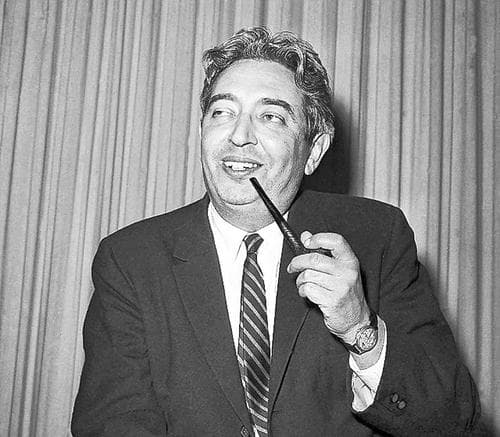
Biography coming soon.







