“The future has already happened.”
— A core concept of precognitive justice.

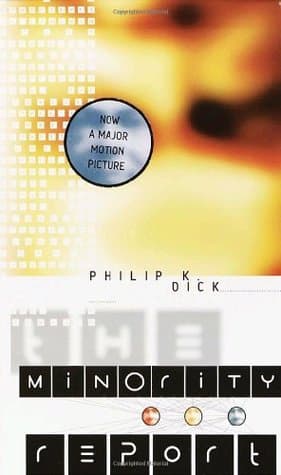
Philip K. Dick (1998)
Genre
Thriller / Mystery / Science Fiction
Reading Time
90 min
Key Themes
See below
Sign in to track this book
In a future where crimes are stopped before they start, the system's creator is accused by his own invention, forcing him to outwit fate to prove his innocence.
Commissioner John Anderton, the aging creator of the Precrime system, lives in a future where murder is rare. His system uses three 'precogs'—mutant humans with abilities to see the future—who float in a nutrient bath, their minds creating reports of future crimes. These reports are analyzed, and potential criminals are arrested before they can act, then placed in detention camps. Anderton is proud of his system's success. He is preparing for its expansion, supported by the federal government but viewed with suspicion by some, including his younger deputy, Ed Witwer, who is being prepared to replace him. Anderton considers the system's paradox: people are punished for crimes they haven't committed, based on a future that can change.
While showing Witwer the Precrime facility, Anderton sees a new report. To his horror, the precogs' card bears his own name as a future murderer, with Leopold Kaplan identified as the victim. The system he designed now points to him. Anderton is shocked; he has never met Kaplan and has no reason to kill him. Witwer, caught between disbelief and duty, must arrest his superior. Anderton, knowing the system's reliability, realizes he must escape to prove his innocence, a concept that challenges Precrime's very foundation.
Anderton, despite his shock, acts quickly. He evades Witwer and security forces within Precrime headquarters, using his detailed knowledge of the building. He knows that once a Precrime report is issued, the system relentlessly pursues. His escape directly challenges Precrime's authority and perceived perfection. As he flees into the city, he becomes a wanted man, the very person his system was designed to stop. The irony is clear to him; he is now a 'pre-criminal,' hunted by the organization he founded, forced to face the moral implications of his work from the perspective of the accused.
Anderton believes there must be a flaw, a differing vision among the precogs. He knows that sometimes, due to slight changes in brain activity, one precog might have a slightly different vision of the future than the other two. This 'minority report' could offer an alternative timeline where he doesn't commit the murder, invalidating the primary report. His wife, Lisa, who works within Precrime, secretly helps him, providing access codes and information. Anderton's desperate search for this elusive minority report becomes his only focus, as it represents his only hope of proving his innocence and undermining Precrime's seemingly fixed nature.
Anderton eventually finds Leopold Kaplan, the man he is predicted to kill. Kaplan is a retired general, a charismatic figure leading a political movement against the Precrime system, advocating for its end. Kaplan reveals that he orchestrated the entire situation to discredit Precrime. He knew that by provoking Anderton, he could force the system to predict a crime involving its own creator, exposing what he sees as its flaws and potential for manipulation. Kaplan intends to use his own predicted murder, and Anderton's subsequent arrest, as a martyr event to rally public opinion against Precrime, believing the system's reliability is its greatest weakness.
Anderton eventually gets the three original precog reports. He finds there isn't a simple majority and minority report. Instead, there are three distinct, but related, reports. The first two predict him killing Kaplan. The third report, however, shows him *not* killing Kaplan, but only if he knows about the first two reports and tries to avoid the murder. This shows that the future is not fixed, but a dynamic interplay of potential outcomes influenced by knowledge and free will. Anderton realizes the 'minority report' is not a simple denial, but a conditional outcome based on his awareness.
The three reports present Anderton with a difficult philosophical problem. If he doesn't kill Kaplan, the Precrime system appears flawed, possibly leading to its collapse and a return to widespread crime. If he does kill Kaplan, he confirms the system's accuracy, but at the cost of his own freedom and life. He realizes that Kaplan's plan used this paradox: by making Anderton aware of the prediction, Kaplan forced him into a situation where any action he takes either validates Precrime's accuracy through his guilt or invalidates it through his innocence, both outcomes serving Kaplan's anti-Precrime agenda. Anderton is trapped by the very knowledge of his predicted future.
Anderton, understanding that Kaplan has successfully manipulated the system to expose its weakness, decides he must act. He realizes that if he doesn't kill Kaplan, the Precrime system will be discredited, and society's delicate balance will collapse, leading to chaos and a return to murder. He sees that Kaplan's agenda, while aiming to free individuals from predestination, would ultimately harm the greater good. With a heavy heart, Anderton confronts Kaplan. Despite his desire to remain innocent, he is forced into a corner where the only way to save Precrime, and society, is to fulfill the prophecy.
In a final confrontation, Anderton shoots and kills Leopold Kaplan. This act immediately validates the initial Precrime report that predicted his guilt. Witwer and other Precrime officers, who have been tracking Anderton, arrive moments after the murder, witnessing the prophecy's fulfillment. Anderton surrenders without resistance, his face showing grim resignation. He has sacrificed his freedom and his life to preserve the Precrime system, believing it to be the lesser of two evils. His arrest confirms the system's accuracy, but at a personal cost that highlights the difficult ethical problems at its core.
Anderton is taken into custody and interned, like all other pre-criminals. The Precrime system, validated by his sacrifice, continues to operate, ensuring a low crime rate. However, the system's inherent paradoxes remain. Anderton's case, while confirming the precogs' ability, also showed how awareness of the future can change it, or even compel it. Witwer, now set to take over Anderton's role, inherits not just the system, but its profound ethical questions. The story ends with the Precrime system intact, but the moral ambiguity surrounding free will versus predestination, and the cost of preventing crime, lingers, a reminder of Anderton's unwilling sacrifice.
The Protagonist
Anderton transforms from an unwavering proponent of Precrime to its unwilling sacrifice, forced to embody its central paradox to preserve it. He sacrifices his freedom to validate the system he created.
The Supporting
Witwer grows from a respectful subordinate to a determined, albeit conflicted, pursuer of Anderton, eventually becoming the heir to Precrime's leadership and its inherent dilemmas.
The Supporting
Lisa transitions from a supportive wife within the system to an accomplice, driven by love and a belief in her husband's innocence, challenging the system's authority.
The Antagonist
Kaplan remains steadfast in his anti-Precrime convictions, acting as the catalyst for the story's central conflict and ultimately sacrificing himself to expose what he perceives as the system's flaws.
The Supporting
The precogs remain static in their function, serving as the constant, yet sometimes subtly variable, source of future predictions that drive the entire narrative.
This is the story's main philosophical problem. The Precrime system works because it assumes the future is knowable and preventable. People are punished for crimes they are 'about to commit,' implying a fixed universe. However, Anderton's case challenges this by showing that knowing the future can change it. The 'minority report' shows that a person's awareness of a predicted event can lead them to choose a different path, proving free will exists. Yet, Anderton's final act of killing Kaplan to save Precrime suggests a tragic form of predestination, where even an act of free will is compelled by the system's larger needs. The story makes the reader question whether true free will can exist when the future is already 'known.'
“''But the precogs are seldom wrong. We get three reports; if they agree, then the report is solid. We've been using the system for thirty years, and we've had no errors.''”
The story explores the ethical cost of perfect security. Precrime has almost eliminated murder, creating a seemingly ideal society free from violent crime. However, this peace comes at the cost of individual freedom and the right to be presumed innocent until proven guilty. People are detained and punished for thoughts and intentions, not actions. Anderton's personal sacrifice highlights this price: he must commit a murder to preserve a system that prevents murder, becoming a victim of the very peace he created. The story forces a consideration of whether absolute safety justifies losing basic human rights and the potential for a system to be manipulated or to create its own injustices.
“''It is an ethical, a moral, and a religious question. The human element, the free will element, is the factor that negates the whole concept of Precrime.''”
The story questions the nature of justice when crimes are predicted rather than committed. The idea of 'pre-crime' redefines guilt and punishment. Is it fair to imprison someone for an act they haven't yet performed? The system, designed by Anderton, assumes a fixed future and absolute guilt. However, the minority report introduces uncertainty, suggesting that the future is not unchangeable and that 'guilt' depends on one's awareness and choice. Precrime's legal framework is a rigid structure that struggles to handle the complexities of human consciousness and intent, leading to a system that, while effective, is morally difficult and potentially oppressive.
“''The law, however, is clear. The precogs are infallible. What they foresee, happens.''”
Kaplan's plan to discredit Precrime by manipulating Anderton's predicted crime highlights manipulation and the power of propaganda. Kaplan uses the system's reliability against itself, showing how public opinion and political goals can be swayed. He aims to create a 'martyr' event—his own death at the hands of Precrime's creator—to turn public opinion against the system. This shows how information, even future information, can be used as a weapon. The story suggests that even in a society governed by objective predictions, political maneuvering and control of the narrative can still significantly influence societal outcomes and the fate of powerful institutions.
“''I intend to use my predicted murder, and your subsequent arrest, as a martyr event to rally public opinion against Precrime.''”
A law enforcement system that uses precognitive mutants to prevent crimes before they occur.
The Precrime System is the central plot device, driving the entire narrative. It functions by analyzing data from three 'precogs' who foresee future crimes. This system is presented as both a utopian solution to crime and a dystopian infringement on individual liberties. Its perceived infallibility is the foundation of the society's order, but it also creates the paradox that fuels the plot. The system's rules and limitations, particularly the concept of the 'minority report,' are crucial to Anderton's quest and the ultimate resolution. It serves as a lens through which the story explores themes of free will, justice, and the cost of security.
Three mutant humans (Mike, Donna, Jerry) with the ability to see into the future.
The precogs are the biological engine of the Precrime system. Their existence and unique abilities are the catalyst for the entire plot. Their visions, transcribed onto punch cards, are the 'proof' of future crimes. The fact that there are three of them, and that their visions can sometimes differ, introduces the crucial 'minority report' concept, which Anderton seeks. They are depicted as non-sentient tools, raising ethical questions about their exploitation. Their limited communication and enigmatic nature contribute to the mystery surrounding the predicted crime and the ambiguity of the future.
A dissenting precog vision that offers an alternative future, challenging the majority prediction.
The 'minority report' is a critical narrative device that introduces ambiguity and possibility into the seemingly deterministic world of Precrime. It refers to a situation where one of the three precogs has a vision that differs from the other two. Anderton's desperate search for his own minority report drives much of the plot, as it represents his only hope for proving his innocence and discrediting the system's prediction. The revelation that there are three distinct reports, not just one majority and one minority, complicates this device, showing that the future is not a simple binary, but a complex, conditional outcome influenced by knowledge and choice.
The inherent contradiction where knowing the future can alter the future, or even compel it.
The time paradox is an overarching plot device, inherent in the very concept of Precrime. The system's purpose is to prevent a future event by acting on foreknowledge. However, this very act of intervention, or even the knowledge itself, can change the predicted future. Anderton's case is the ultimate embodiment of this paradox: his awareness of the predicted murder forces him into a situation where he either validates the system by committing the crime or invalidates it by not doing so, both outcomes being part of a larger manipulated future. This device forces characters and readers to grapple with the philosophical implications of predestination versus free will.
“The future has already happened.”
— A core concept of precognitive justice.
“We're not punishing a man for what he's done, but for what he's going to do.”
— Anderton explaining the system of Precrime.
“The machine isn't God. It's just a machine.”
— Anderton contemplating the fallibility of the precogs.
“There was no way to prove he hadn't done it, only that he hadn't done it yet.”
— Anderton's predicament after being flagged by Precrime.
“A minority report. The other two precogs disagreed with the third.”
— The central mystery of conflicting precognitive data.
“The commission of a crime, as it was understood, was a product of a chain of events, a causal sequence.”
— Explanation of how crimes are predicted.
“It was better to be a free man in a free world, even if it meant a greater risk of crime.”
— A reflection on the trade-off between safety and freedom.
“The Precrime system was perfect. It had to be. Otherwise, the whole thing fell apart.”
— The inherent fragility of a system built on absolute certainty.
“He knew that the precogs were not infallible. No human being or machine was.”
— Anderton's growing doubt about the system he helped create.
“The whole purpose of Precrime was to prevent crime, not to punish it.”
— The stated goal of the Precrime organization.
“What if the precogs were wrong? What if they were deliberately wrong?”
— Anderton's paranoia and questioning of the system's integrity.
“He had to find the minority report. It was his only hope.”
— Anderton's desperate search for evidence to clear his name.
“The logical conclusion was that a man, aware of his future, could alter it.”
— A key philosophical implication of the story.
“Sometimes the precogs saw an event that would occur only if they saw it.”
— The complex paradox of precognition and self-fulfilling prophecies.
Ready to see how well you understood this book? Take our interactive quiz with 10 questions.
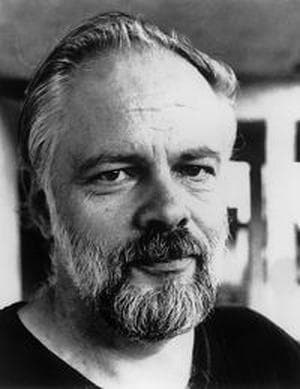
Philip Kindred Dick, often referred to by his initials PKD, was an American science fiction writer. He wrote 44 novels and about 121 short stories, most of which appeared in science fiction magazines during his lifetime. His fiction explored varied philosophical and social questions such as the nature of reality, perception, human nature, and identity, and commonly featured characters struggling against elements such as alternate realities, illusory environments, monopolistic corporations, drug abuse, authoritarian governments, and altered states of consciousness.







