BookBrief
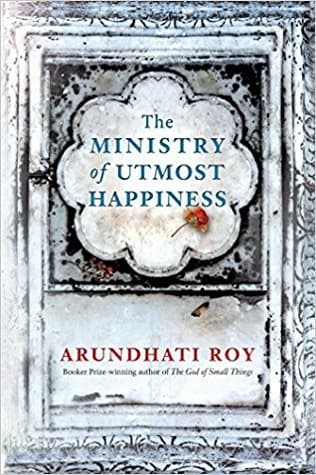
The Ministry of Utmost Happiness cover
Archivist's Choice

The Ministry of Utmost Happiness

Arundhati Roy (2017)

Genre

Literary Fiction / Historical Fiction

Reading Time

12 Minutes

Key Themes

See below

Track Your Reading

Sign in to track this book

Synopsis

Arundhati Roy's "The Ministry of Utmost Happiness" weaves together the lives of an eclectic cast of characters across decades and diverse landscapes of India, from the bustling streets of Old Delhi to the conflict-ridden Kashmir Valley. At its heart is Anjum, a hijra who finds a unique sanctuary in a Delhi graveyard, and S. Tilottama, a mysterious and elusive woman whose life intertwines with three men and a foundling baby. The narrative explores themes of identity, love, loss, and resistance against a backdrop of political turmoil, social injustice, and the search for belonging among those marginalized by society. It's a sprawling, multi-layered story that ultimately celebrates the resilience of the human spirit and the power of unconventional families.
Difficulty
Medium
Pacing
Slow
Mood
Thought-provoking, melancholic, hopeful, expansive, poignant

Plot Summary

The Graveyard and Its Denizens

The novel opens with Anjum, a hijra (transgender woman) born Aftab, living in a graveyard in Old Delhi. After a traumatic experience in Gujarat, where she witnessed horrific violence during a communal riot, Anjum leaves the Khwabgah, the traditional hijra commune. She seeks solace among the graves, gradually transforming a derelict tomb into a guest house, 'Jannat Guest House and Funeral Services.' This attracts a diverse community of outcasts, including beggars, disabled individuals, and other marginalized people. Her chosen family in the graveyard gives her a unique sense of belonging and purpose, contrasting sharply with the societal rejection she often faces. The graveyard becomes a sanctuary where the living and the dead coexist, and where lines between life, death, and gender blur.

Aftab's Early Life and Transformation

Aftab's early life is shown, revealing his birth as intersex and the confusion and shame it brought his family. His mother initially tries to raise him as a boy, but Aftab feels a deep pull towards a feminine identity. He eventually runs away and finds refuge in the Khwabgah, the hijra community, where he becomes Anjum. This section details the rituals, camaraderie, and struggles within the hijra world, highlighting both the support and the harsh realities its members face. Anjum's journey to self-acceptance and her embrace of her identity as a hijra are key to understanding her later choices and her empathy for other marginalized people.

The Arrival of Miss Jebeen

One night, a baby girl is found abandoned on a pavement near the graveyard, wrapped in a blanket. Anjum, moved by compassion, takes the baby in, naming her Miss Jebeen. The baby's arrival brings a new dimension to Anjum's life and the graveyard community, symbolizing innocence, hope, and new beginnings amidst decay. Miss Jebeen becomes a focal point of their collective affection and care, solidifying the unconventional family Anjum has built. Her adoption of Jebeen is an act of radical love and defiance against a society that often discards its most vulnerable members.

Tilottama's Enigmatic Past

The story then introduces S. Tilottama, an enigmatic and independent woman, an architect and activist. Her past connects with three men: Musa Yeswi, a Kashmiri separatist; Naga, a journalist; and Biplab Dasgupta, an intelligence officer. The narrative explores their shared history, particularly their student days, and the web of love, loyalty, betrayal, and political idealism that binds them. Tilottama's character is presented through fragmented memories and perspectives, highlighting her elusive nature and her impact on these men's lives. Her story links to the political unrest in Kashmir and broader themes of conflict and displacement.

Kashmir: Love, Betrayal, and Conflict

The narrative frequently returns to Kashmir, exploring the deep and tragic connection between Tilottama and Musa Yeswi. Musa, once a student radical, becomes a prominent figure in the Kashmiri separatist movement. Their love story is set against the brutal backdrop of the insurgency, marked by violence, disappearances, and the presence of the Indian military. Tilottama's visits to Kashmir, often under dangerous circumstances, show her commitment to Musa and her struggle to understand the complex political situation. This section portrays the human cost of conflict, the erosion of trust, and the power of love in times of extreme adversity.

Naga and Biplab's Roles

Naga, a journalist, and Biplab Dasgupta, an intelligence officer, represent different facets of the state and its engagement with the Kashmir conflict. Naga's journalism often leads him into dangerous situations, while Biplab's role involves surveillance and manipulation. Both men are infatuated with Tilottama, and their relationships with her are tense, marked by jealousy and unresolved desires. Their professional lives intersect with the political turmoil, highlighting the moral compromises and ethical dilemmas faced by those in power. Their perspectives offer contrasting views on patriotism, justice, and truth.

The Search for Miss Jebeen's Mother

Tilottama, driven by journalistic instinct and a personal connection, begins to investigate Miss Jebeen's origins. Her investigation uncovers a heartbreaking story linked to the Kashmir conflict, revealing the baby's mother, a young woman named Sana, and her tragic fate. This quest connects the seemingly disparate worlds of Old Delhi and Kashmir, showing how personal lives link to larger political events. Tilottama's determination to uncover the truth about Jebeen's parentage shows her compassion and her commitment to seeking justice for conflict's voiceless victims.

The Intersecting Paths

As Tilottama's investigation progresses, her path crosses with Anjum's. Miss Jebeen becomes the link between these two seemingly unrelated women, bringing them together in the graveyard. The convergence of their stories emphasizes the novel's theme of interconnectedness and the idea that love and compassion can bridge social and geographical divides. Their initial interactions, marked by caution and curiosity, evolve into shared understanding and mutual respect. This meeting symbolizes the coming together of different forms of marginalization and resistance, united by the child's innocent presence.

The Ministry of Utmost Happiness

Anjum renames her graveyard guest house 'The Ministry of Utmost Happiness,' an ironic title that reflects her philosophy of finding joy and community amidst sorrow and neglect. The name itself becomes a symbol of defiance and hope, suggesting that even in the most unlikely places, happiness can be cultivated. The 'Ministry' offers sanctuary to those rejected by mainstream society, providing a space where their identities are affirmed and their humanity recognized. It is a place where the broken can find solace, mend, and build new lives, embodying the novel's message of resilience and the power of chosen families.

Reunion and Resolution

Towards the novel's conclusion, many of the disparate characters, including Tilottama, Musa, Naga, Biplab, and various others from society's margins, find themselves, directly or indirectly, connected to Anjum's graveyard. The 'Ministry of Utmost Happiness' becomes a symbolic gathering place, a temporary utopia where different narratives converge. While not all conflicts are resolved, and past wounds remain, there is a sense of shared humanity and a fragile, yet deep, peace. The ending emphasizes the power of love, connection, and the creation of alternative communities in a world fractured by violence and injustice, leaving a hopeful, albeit bittersweet, impression.

Principal Figures

Anjum (formerly Aftab)

The Protagonist

Anjum transforms from a confused child to a confident hijra, then, after trauma, builds a unique sanctuary and family, demonstrating profound resilience and unconditional love.

S. Tilottama (Tilo)

The Protagonist

Tilo evolves from a passionate student to a haunted, yet determined, activist and truth-seeker, ultimately finding a fragile sense of purpose in protecting Miss Jebeen and bearing witness to injustice.

Musa Yeswi

The Supporting

Musa transforms from an idealistic student to a hardened, yet deeply soulful, separatist leader, forever shaped by the violence and loss in Kashmir.

Naga

The Supporting

Naga grapples with his journalistic ethics and personal desires, witnessing the Kashmir conflict and his own role within it, without fully resolving his internal conflicts.

Biplab Dasgupta (Biplab)

The Supporting

Biplab navigates the moral compromises of his intelligence work, forever haunted by his unrequited love for Tilottama and the violence he is part of, without significant redemption.

Miss Jebeen

The Supporting

As an infant, Jebeen's arc is primarily symbolic, representing hope, the future, and the power of chosen families to nurture life amidst societal brokenness.

Zakir Mian

The Supporting

Zakir Mian remains a steadfast and loyal companion to Anjum, providing stable support within the ever-changing landscape of the graveyard.

Ustad Kulsoom Bi

The Supporting

Kulsoom Bi serves as a constant, traditional anchor for Anjum's early life, representing the enduring wisdom and structure of the hijra community.

Themes & Insights

The Ministry of Outcasts and Chosen Families

The novel explores chosen families and communities formed by those rejected or marginalized by mainstream society. Anjum's graveyard, 'The Ministry of Utmost Happiness,' is a sanctuary for hijras, the disabled, the poor, and all those deemed 'unfit.' This theme highlights the resilience of human connection and love's power to create belonging in unlikely places. It suggests that true happiness and meaning can be found not in conventional structures, but in radical acceptance and mutual support among the broken.

How to tell a shattered story? By slowly becoming everybody. No? By slowly becoming everything. By slowly becoming everything that it is not.

Narrator

Identity and Transformation

A central theme is the exploration of fluid and evolving identities, particularly through Anjum's journey from Aftab to a hijra. The novel challenges rigid notions of gender, nationality, and belonging. Characters constantly redefine themselves in response to personal experiences, political upheavals, and societal pressures. This theme examines the internal and external struggles of self-discovery, emphasizing that identity is not fixed but a continuous process, often forged in defiance of societal expectations and classifications.

She was a woman. She was a man. She was a woman. She was a man. She was a woman. And then she was Anjum.

Narrator

Love, Loss, and Political Violence

The novel weaves personal love stories with the backdrop of political violence, particularly in Kashmir and during the Gujarat riots. It illustrates how conflict shatters lives, families, and communities, leaving deep scars. The love between Tilottama and Musa, and Anjum's compassionate response to suffering, contrast with the pervasive violence. This theme highlights the human cost of political extremism, the arbitrary nature of death, and the persistent, yet fragile, power of love and memory to resist erasure in the face of immense loss.

The Ministry of Utmost Happiness is at once an aching love story and a decisive remonstration.

Narrator

The Nature of Truth and Storytelling

Roy challenges conventional linear narratives and objective truth, presenting a fragmented, multi-voiced story that reflects the world's complexity. The novel questions who tells a story, whose truth is prioritized, and how history is constructed. Through its non-linear structure and shifting perspectives, it suggests that truth is often subjective, elusive, and multifaceted, requiring empathy and openness to multiple viewpoints. Storytelling itself is an act of resistance, a way to reclaim narratives and give voice to the marginalized.

How to tell a shattered story? By slowly becoming everybody.

Narrator

Resistance and Resilience

Despite the presence of violence, prejudice, and loss, the novel is about human resilience and various forms of resistance. Anjum's creation of the 'Ministry,' Tilottama's search for truth, and the spirit of the Kashmiri people exemplify a refusal to surrender. This theme celebrates quiet acts of defiance, the courage to live authentically, and the hope for a more just and compassionate world, even when facing seemingly insurmountable odds.

For this reason, they are as steely as they are fragile, and they never surrender.

Narrator

Plot Devices & Literary Techniques

Non-linear Narrative Structure

A fragmented timeline and shifting perspectives.

The novel employs a non-linear narrative, jumping back and forth in time and between different characters' perspectives. This fragmented structure mirrors the 'shattered story' it aims to tell, reflecting the fractured realities of its characters and the complex, interconnected nature of their lives. It allows Roy to gradually reveal information, build suspense, and create a rich tapestry of experiences, challenging the reader to piece together the full picture and question the notion of a single, coherent truth.

Symbolism of the Graveyard

A place of death transformed into a haven of life.

The graveyard where Anjum establishes her 'Ministry of Utmost Happiness' is a potent symbol. Initially a place of death and decay, it transforms into a vibrant community, a sanctuary for outcasts, and a space where the living and the dead coexist. It represents the idea that life, hope, and belonging can flourish in the most unexpected and neglected places, challenging conventional perceptions of what constitutes 'home' or 'happiness.' It also blurs the lines between life and death, suggesting continuity and the enduring presence of memory.

Interconnectedness of Characters

Seemingly disparate lives eventually converge.

A key device is the gradual revelation of how the lives of seemingly disparate characters—Anjum, Tilottama, Musa, Naga, Biplab, and even Miss Jebeen—are intricately connected. These connections are often revealed through shared histories, political events, or the innocent presence of a child. This device emphasizes the novel's theme of universal humanity and how individual fates are intertwined with larger social and political forces, demonstrating that no one exists in isolation.

Shifting Point of View

Multiple perspectives offer a kaleidoscopic view.

The narrative frequently shifts its point of view, moving between omniscient narration, internal monologues, and the perspectives of various characters. This kaleidoscopic approach allows Roy to explore the complexity of events and relationships from multiple angles, preventing a singular interpretation of truth. It fosters empathy by immersing the reader in different subjective experiences and highlights the inherent biases and limitations of any single viewpoint, enriching the novel's exploration of identity and conflict.

Critical analysis

Notable Quotes

Quiz

Test Your Knowledge

Ready to see how well you understood this book? Take our interactive quiz with 10 questions.

10
Questions
~5
Minutes
?
Best Score

Key Questions (FAQ)

The Ministry of Utmost Happiness is a sprawling novel that journeys through various landscapes of India, from Old Delhi to Kashmir and Central India. It tells the stories of diverse characters, including Anjum and a mysterious woman named S. Tilottama, whose lives are shaped by love, hope, and the complexities of the world.

About the author

Arundhati Roy

Suzanna Arundhati Roy is an Indian author best known for her novel The God of Small Things (1997), which won the Booker Prize for Fiction in 1997 and became the best-selling book by a non-expatriate Indian author. She is also a political activist involved in human rights and environmental causes.