“One can't go on living in the past, whatever that past was. It's a waste of the only life we have.”
— Arthur Rowe's internal reflection on moving past his experiences.

Graham Greene (1943)
Genre
Thriller / Historical Fiction / Mystery
Reading Time
240 min
Key Themes
See below
Sign in to track this book
In wartime London, a man haunted by a mercy killing wins a cake at a fête, only to find himself plunged into a conspiracy of Nazi spies and betraying forces.
Arthur Rowe, a man haunted by the mercy killing of his terminally ill wife, attends a village fête in the countryside, seeking peace away from Blitz-torn London. He wins a cake in a guessing game, a prize he later realizes was intended for someone else. During the fête, he overhears a conversation that seems harmless but starts a chain of unsettling events. An elderly woman, Mrs. Bellairs, tries to discreetly give him a different cake, but Rowe, confused, sticks with his prize. This incident is his entry into a sinister world of espionage, as the cake contains microfilm, and he becomes a target for a Nazi spy ring operating in wartime Britain.
Intrigued by the odd circumstances surrounding the cake, Rowe decides to investigate. He attends a spiritualist seance hosted by a Mrs. Prentice, hoping to find answers. During the seance, a man named Willi Hilfe is present, whom Rowe recognizes from the fête. The seance turns violent when shots are fired, killing Mrs. Prentice. Rowe himself is wounded but manages to escape. He realizes he is no longer an innocent bystander but directly involved in a dangerous game. The incident confirms his suspicion that the fête and the cake were part of a larger, more menacing conspiracy, and that his life is in danger.
After the shooting at the seance, Rowe is convinced he is being hunted. He makes his way back to London, seeking refuge and trying to understand who is after him and why. He attempts to contact the police but finds himself caught in a web of deceit, where even those who seem to be on his side might be compromised. He meets Anna Hilfe, Willi's sister, who is initially suspicious of him but eventually becomes his confidante and ally. Their shared predicament brings them closer, as they both try to put together the fragments of the conspiracy. Rowe's paranoia grows as he realizes the enemy's reach extends far beyond the quiet village fête.
Rowe, disoriented and suffering from a traumatic head injury, begins to experience amnesia and hallucinations, particularly about his wife's death. He is eventually admitted to a private asylum, 'The Ministry of Fear,' run by Dr. Forester and Dr. Travers. He believes he is being treated for a nervous breakdown, but the asylum is a front for the spy ring, used to interrogate and manipulate individuals who stumble upon their operations. While there, he meets a sympathetic patient, Dr. Travers, who is an undercover agent for British intelligence. Rowe's memories are tampered with, and he is fed false information, deepening his confusion about his past and his current predicament.
Anna Hilfe, concerned about Rowe's disappearance and suspicious of the asylum, manages to visit him. She realizes he is being held against his will and that the institution is not what it seems. With her help, Rowe escapes the asylum. As his memories slowly begin to return, fragments of the conspiracy become clearer. He recalls details about the fête, the cake, and the individuals involved. He also remembers the true circumstances of his wife's death, confirming his guilt but also providing an anchor to his fractured identity. His escape is a turning point, as he moves from being a passive victim to an active participant in uncovering the spy ring.
Rowe and Anna, now working together, decide to track down Willi Hilfe, believing he holds key information about the spy ring and its leader. Their pursuit takes them across London, leading them into dangerous encounters and near-misses. They discover that Willi is involved with the enemy and is a ruthless operative. Along the way, they encounter various members of the spy network, including the Mrs. Bellairs, who reveals herself to be a cold and calculating agent. The lines between friend and foe become blurred, and Rowe struggles with his returning memories and the moral ambiguities of the war.
Rowe and Anna finally corner Willi Hilfe, leading to a tense confrontation. Willi, under pressure, reveals more about the spy network and its true leader. They discover that the mastermind behind the entire operation is a Dr. Forester, who had been posing as the director of the asylum. The revelation is shocking, but the danger escalates when Willi attempts to betray them. In a desperate struggle, Willi is killed. This event affects Anna, who must confront her brother's villainy. Rowe, despite his returning memories, still struggles with trust and his own perception of reality.
With Willi dead, Rowe and Anna gather the remaining pieces of the puzzle. They realize that Dr. Forester is the true head of the spy ring, using his position at the asylum as a cover for his operations. They manage to gather enough evidence to expose him. In a dramatic confrontation, Forester's true identity and his sinister role are revealed. The British intelligence agents, who had been lurking in the background, finally move in to dismantle the network. Rowe, though still grappling with his past, finds a sense of purpose in having helped to bring down the enemy.
The Nazi spy ring is broken up, and Dr. Forester is apprehended. The immediate threat is neutralized, but the experience leaves scars on both Arthur Rowe and Anna Hilfe. Rowe is still haunted by the memory of his wife's death and the trauma of his ordeal. His amnesia is largely resolved, but the psychological impact remains. Anna is left to grieve her brother, Willi, and reconcile herself with his betrayal. The war continues, and while they have played a part in a small victory, the larger conflict rages on. Their relationship, forged in fear and danger, offers a glimmer of hope amidst the darkness.
The Protagonist
Rowe transforms from a guilt-ridden, passive victim to an active participant in dismantling a spy ring, finding a fragile sense of purpose and acceptance of his past.
The Supporting
Anna evolves from a guarded and suspicious woman to a trusting and courageous ally, confronting her family's dark secrets and finding love amidst chaos.
The Antagonist
Willi remains a committed and dangerous antagonist throughout, ultimately meeting a violent end due to his treachery.
The Antagonist
Forester maintains his deceptive facade until his ultimate unmasking as the orchestrator of the espionage network.
The Supporting
Mrs. Bellairs is revealed to be a cold and cunning operative, her initial benign appearance a stark contrast to her true nature.
The Supporting
Travers's true role as a British agent is gradually revealed, as he works to aid Rowe and expose the spy network.
The Mentioned
Her brief appearance and subsequent murder serve to trigger significant plot developments and heighten the sense of danger.
The Supporting
Digby's initial helpfulness gives way to his revelation as an enemy agent, deepening Rowe's sense of betrayal.
Arthur Rowe's guilt over the mercy killing of his wife is central to the novel. This guilt makes him vulnerable to manipulation and contributes to his initial passivity. His amnesia, while a plot device, also represents his psychological struggle to escape his past. The journey through the espionage plot forces him to confront his actions and ultimately accept them, not as an act of evil, but of love. His fight against the Nazi spies becomes a form of penance, and his survival a fragile redemption, allowing him to find a new purpose and even love with Anna.
“One could bear guilt, but not the memory of a love that was a crime.”
Rowe's amnesia is a significant thematic element, forcing him to reconstruct his identity from fragmented memories and external clues. The spies exploit his memory loss, feeding him false narratives to control him. This theme explores how memory shapes who we are and the fragility of self in the face of trauma and manipulation. As Rowe slowly recovers his memories, he not only recalls the plot details but also grapples with the truth of his past, including his wife's death, leading to a more complete, albeit painful, understanding of himself.
“He tried to remember, but the past was a wall, smooth and impenetrable.”
Greene explores how evil can appear in ordinary people and settings. The spy ring operates not just in shadowy alleyways but at a village fête, in a spiritualist's parlor, and within a respectable asylum. Characters like Mrs. Bellairs and Dr. Forester appear benign, even kindly, yet are ruthless agents of a dangerous ideology. This theme shows the insidious nature of fascism and espionage, suggesting that the greatest threats often come from within, disguised in the everyday fabric of society, making them all the more terrifying.
“It was difficult to believe that this kindly, gentle old woman was part of the machinery of fear.”
The novel creates an atmosphere of paranoia and disorientation, largely through Rowe's subjective experience. His amnesia, coupled with the constant threat and betrayal, makes it impossible for him to distinguish friend from foe, or reality from delusion. The London Blitz provides a chaotic backdrop, mirroring Rowe's internal state and the breakdown of social order. This theme emphasizes the psychological toll of war and espionage, where trust is a luxury and every encounter is a trap, leaving characters constantly on edge and questioning their perceptions.
“The world was a house of mirrors, and he was lost in it.”
Amidst the darkness of war and espionage, the love between Arthur Rowe and Anna Hilfe offers a glimmer of hope and humanity. Their relationship is forged through shared danger and mutual trust, providing a contrast to the pervasive betrayal and violence. Rowe's act of mercy killing his wife, though a source of guilt, was also an act of compassion, hinting at his capacity for love. This theme suggests that even in the most brutal circumstances, human connection and empathy can endure, offering a fragile sense of peace and a reason to fight for survival.
“He had killed his wife out of love, and now, in this terrible world, he was finding love again.”
Rowe's memory loss as a catalyst for plot and character development.
Arthur Rowe's amnesia, resulting from a head injury, is a central plot device. It not only creates suspense and mystery, as Rowe (and the reader) must piece together the events, but also serves a deeper psychological purpose. It allows Greene to explore themes of identity, guilt, and the reconstruction of self. The spy ring exploits Rowe's memory loss, manipulating his perceptions and feeding him false information, making him a vulnerable and disoriented protagonist. As his memories return, the plot unfolds, and Rowe confronts his past, both personal and political.
The seemingly innocuous object that triggers the entire plot.
The cake won by Arthur Rowe at the fête acts as a classic MacGuffin. It is an object of seemingly little intrinsic value (a cake) that contains vital secret information (microfilm) and serves to drive the entire plot forward. Its true contents and significance are initially unknown to Rowe, but it makes him a target and sets off the chain of events. The cake's ordinary nature, contrasted with its extraordinary importance, perfectly encapsulates the theme of the banality of evil and how danger can lurk in the most unexpected places.
A seemingly benevolent institution used as a front for malevolent activities.
The private asylum, ironically named 'The Ministry of Fear,' is a significant plot device. It functions as a deceptive setting, appearing to be a place of healing and care, but actually serving as a covert interrogation and manipulation center for the Nazi spy ring. This device highlights the theme of how evil can infiltrate and corrupt institutions of trust. It also serves to further disorient Rowe, blurring the lines between sanity and madness, and making him question his own perceptions and reality while under the control of Dr. Forester.
The constant bombing of London reflecting internal and external chaos.
The ongoing London Blitz is more than just a historical setting; it functions as a powerful atmospheric and thematic device. The constant threat of bombing, the destruction, and the pervasive fear mirror Arthur Rowe's internal chaos, his guilt, and his psychological breakdown. The external world is as fragmented and dangerous as Rowe's fractured memory. It heightens the sense of paranoia and makes the spy ring's actions seem even more insidious, operating amidst the already present terror and confusion of wartime Britain, exploiting the very chaos they contribute to.
“One can't go on living in the past, whatever that past was. It's a waste of the only life we have.”
— Arthur Rowe's internal reflection on moving past his experiences.
“Innocence always calls mutely for protection when we would be so much wiser to guard ourselves against it: innocence is like a dumb leper who has lost his bell, wandering the world, spreading contagion.”
— Rowe's cynical observation about innocence and its dangers.
“Hate is a kind of love, too, because it's passionate. If you don't care, then you're dead.”
— A character's philosophical take on the nature of hate and passion.
“The sense of being watched, of being followed, clung to him like a smell.”
— Rowe experiencing paranoia as he is pursued.
“It was impossible to believe in peace, or in safety, or in anything but the immediate, terrifying present.”
— Rowe's state of mind during the Blitz and his dangerous situation.
“There was a kind of beauty in the destruction, in the raw gashes of the bombs, the twisted girders, the sky showing through what had been roofs.”
— Description of London during the Blitz.
“He had a sense of being perpetually on the edge of something, a precipice or a discovery, he couldn't tell which.”
— Rowe's feeling of uncertainty and impending revelation.
“Memory was a strange thing, a kind of dark attic where things were stored, some clear and bright, others shrouded in dust and cobwebs.”
— Rowe reflecting on his fragmented memories.
“The truth was not a single, clear light, but a collection of shadows, shifting and deceiving.”
— Rowe's struggle to understand the complex conspiracy.
“One felt oneself to be a tiny chip of wood in a vast, unpredictable current.”
— Rowe's feeling of powerlessness against larger forces.
“There was no cure for anything, only a temporary anaesthetic.”
— A cynical view on life's problems and solutions.
“The greatest cruelty is to have one's hope kindled and then snuffed out.”
— A reflection on the pain of dashed hopes.
“He felt like a man walking through a landscape of paper, where everything might tear or crumble at a touch.”
— Rowe's fragile mental state and the precariousness of his world.
“Fear was a smell, a taste, a constant companion.”
— Description of the pervasive presence of fear in Rowe's life.
Ready to see how well you understood this book? Take our interactive quiz with 10 questions.
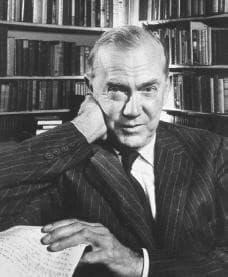
Henry Graham Greene was an English writer and journalist regarded by many as one of the leading English novelists of the 20th century.







