“Everything about him was large, except his voice. That was as soft as new felt.”
— Nellie describes Johannes Brandt upon their first meeting.

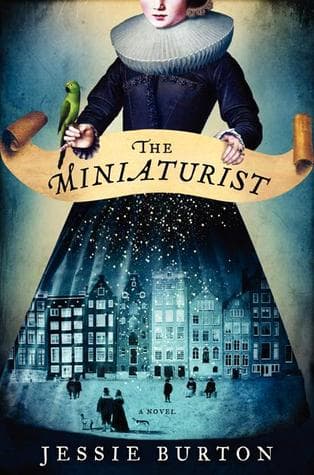
Jessie Burton (2014)
Genre
Fantasy / Historical Fiction / Mystery
Reading Time
480 min
Key Themes
See below
Sign in to track this book
In 17th-century Amsterdam, a young bride's miniature dollhouse becomes a prophetic mirror of her opulent yet secretive new life, revealing the dangerous truths hidden within her wealthy merchant husband's household.
Eighteen-year-old Nella Oortman travels from her rural home to Amsterdam in 1686 to marry Johannes Brandt, a wealthy merchant, whom she barely knows. Upon arrival at the grand Brandt house, she is met not by her husband, but by his austere and unwelcoming sister, Marin. Johannes eventually appears, kind but distant, and their first interactions are awkward and formal. Nella quickly feels isolated in the opulent but rigid household, navigating the watchful eyes of Marin, the quiet disapproval of the servants Cornelia and Otto, and the absence of her husband, who is often away on business or secluded in his study.
As a wedding gift, Johannes presents Nella with a large, intricately crafted cabinet house—a miniature replica of their own home. Nella is initially perplexed by the unusual gift, expecting something more conventional. Johannes instructs her to furnish it, suggesting she commission a miniaturist. This gift becomes Nella's initial focus and her only real connection to her new husband's world. It offers a distraction from the household's cold atmosphere and Marin's constant scrutiny, and she begins to view it as a project that might help her understand her new life and husband better.
Nella places an order with a local miniaturist to create tiny furnishings for her cabinet house. The miniaturist, whose identity remains hidden, begins sending not only the requested items but also unsolicited, uncannily accurate miniatures that seem to foreshadow real-life events within the Brandt household. These include a miniature of Johannes's dog, items reflecting Marin's secret life, and even a tiny cradle. Nella becomes increasingly unnerved and fascinated by the miniaturist's intimate knowledge of their lives, feeling both watched and guided by this unseen artisan.
Through the miniaturist's clues, Marin's erratic behavior, and her own observations, Nella uncovers a shocking secret: Marin, a staunchly religious and unmarried woman, is pregnant. Nella also learns that Marin has been conducting a clandestine affair with Frans Meermans, a baker. This revelation shatters Nella's perception of Marin and the rigid piety of the Brandt household, exposing a hypocrisy that underlies their carefully constructed lives. The discovery complicates Nella's feelings towards Marin, shifting from resentment to a hesitant understanding and concern.
Nella discovers that Johannes is engaged in a highly dangerous and illicit sugar trade with the West Indies, a business venture that puts the family's reputation and fortune at immense risk in conservative Amsterdam. Furthermore, she slowly uncovers the truth about Johannes's hidden homosexuality when she finds him with another man, Jack Philips. This revelation explains his emotional distance from Nella and his peculiar relationship with Marin, revealing the profound secrets he has been keeping from the world and the dangers he faces in a society intolerant of such differences. His business dealings and personal life are intertwined in their illegality.
Frans Meermans, Marin's lover and a business associate of Johannes, feeling slighted and financially threatened by Johannes's dealings, betrays him to the authorities. He provides information about Johannes's homosexuality, a severe crime in 17th-century Amsterdam. Johannes is subsequently arrested for sodomy, bringing immense scandal and ruin upon the Brandt family. This act of betrayal by Meermans is a direct consequence of the various secrets and illicit activities within the household, highlighting the unforgiving nature of their society.
Marin, already weakened by the stress and scandal surrounding Johannes's arrest, goes into premature labor. She dies during childbirth, leaving behind a baby girl, Thea. Before her death, Marin reveals to Nella that she named the baby after her and Johannes's mother, signifying a continuation of their family line and a plea for Nella to protect the child. This tragic event burdens Nella with the responsibility of caring for the infant and managing the household amidst its crumbling reputation and financial distress, profoundly shifting her role within the family.
Johannes undergoes a public trial for sodomy. Despite Nella's desperate attempts to find evidence and support for him, the strict laws and moral judgments of Amsterdam's court lead to his conviction. He is sentenced to death, a brutal and public punishment for his perceived sin. His execution serves as a stark reminder of the unforgiving nature of their society and the severe consequences of defying its rigid norms, leaving Nella and the household utterly devastated and facing an uncertain future without its patriarch.
Following Johannes's death, Nella, with the help of Otto and Cornelia, takes charge of the Brandt household and its remaining affairs. Displaying an unexpected strength and resolve, she decides to continue Johannes's illicit sugar trade to secure the family's financial future and provide for baby Thea. This decision marks a significant transformation for Nella, from a naive bride to a resourceful and determined woman willing to defy societal expectations and engage in dangerous ventures to protect her newfound family.
As Nella navigates her new responsibilities, she receives one final, crucial miniature from the enigmatic miniaturist: a tiny, intricately crafted cradle with baby Thea inside. This final delivery is accompanied by a note that reveals the miniaturist's true identity: Nella's own sister, Petronella, who had been secretly following Nella's life in Amsterdam. This revelation explains the miniaturist's uncanny knowledge and deep understanding of the Brandt household's secrets, bringing a sense of closure and a profound personal connection to the mysterious events.
With the miniaturist's identity revealed and the immediate threats addressed, Nella fully embraces her new life. She raises Thea as her own, manages the illicit sugar trade with Otto and Cornelia, and finds strength in her independence. The once naive country girl has transformed into a resilient woman, navigating the complexities of Amsterdam society on her own terms, fiercely protecting her family's legacy and future. The ending suggests a quiet triumph of adaptation and survival against the backdrop of a rigid and unforgiving world.
The Protagonist
Transforms from an innocent, isolated bride into a strong, independent woman who defies societal norms to protect her family.
The Supporting
His secrets are gradually revealed, leading to his tragic downfall and execution, which serves as a catalyst for Nella's transformation.
The Supporting
Her rigid exterior crumbles as her secrets are exposed, leading to her tragic death in childbirth and a surprising act of trust towards Nella.
The Supporting
Remains largely unseen, acting as a catalyst and guide, until her identity is revealed, providing a personal connection to the supernatural elements.
The Supporting
Develops from a watchful servant to a trusted and indispensable member of Nella's inner circle, helping her manage the household and business.
The Supporting
Remains a steadfast and loyal protector, transitioning his allegiance and expertise to Nella after Johannes's death, becoming a crucial partner in her new life.
The Antagonist
His initial illicit relationship with Marin and business dealings with Johannes culminate in his treacherous act, leading to the Brandt family's downfall.
The Supporting
His role is to reveal Johannes's true identity and the depth of his hidden life, becoming a tragic figure caught in the societal intolerance.
The novel is full of secrets, from Johannes's homosexuality and illicit trade to Marin's pregnancy and the miniaturist's true identity. These hidden truths drive the plot, create suspense, and ultimately lead to the Brandt family's unraveling. The strictures of 17th-century Amsterdam society force characters to live double lives, showing the destructive power of enforced conformity and the lengths people go to protect their inner worlds. Nella's journey is one of uncovering these layers of deception, both within her new home and within herself.
“There is nothing hidden that will not be revealed.”
Seventeenth-century Amsterdam, while outwardly prosperous and pious, is a society riddled with hypocrisy and extreme intolerance. The novel exposes the double standards where wealth can buy influence but not freedom from moral judgment. Johannes's execution for sodomy, Marin's secret pregnancy, and Nella's eventual engagement in illicit trade all show the harsh consequences of diverging from strict religious and social norms. The city's glittering surface hides a dark underbelly of judgment and unforgiving laws.
“In this repressively pious society where gold is worshipped second only to God, to be different is a threat to the moral fabric of society, and not even a man as rich as Johannes is safe.”
The theme of appearance versus reality is central to the narrative, especially through the symbol of the cabinet house. The grand Brandt house appears to be a bastion of wealth and piety, but it conceals a web of forbidden desires, illicit dealings, and deep unhappiness. Characters like Marin project an image of severity that belies her hidden vulnerability. The miniaturist's creations often reveal the true, hidden nature of things, forcing Nella and the reader to look beyond the surface and question what is truly real.
“The house was a stage, and they were all players, performing their parts with practiced ease.”
Nella's journey is a strong exploration of feminine agency in a patriarchal society. Initially a passive bride, she gradually develops strength, resourcefulness, and independence as she confronts the challenges of her new life. Marin, despite her tragic end, also shows a fierce, albeit misguided, form of agency in pursuing her desires. The novel champions women's ability to adapt, survive, and even thrive by defying expectations and forging their own paths in a world designed to limit them.
“I am Nella Oortman, and I will not be broken.”
The miniaturist's prophetic gifts introduce a strong element of fate into the story, as her creations often foreshadow events. However, the characters' choices and reactions to these premonitions, particularly Nella's, suggest a struggle between predetermined destiny and the exercise of free will. Nella actively tries to change outcomes based on the miniaturist's clues, highlighting the tension between accepting one's fate and striving to alter it, ultimately suggesting that while some events are unavoidable, how one responds shapes their destiny.
“Sometimes, the smallest things are the most powerful.”
A miniature replica of the Brandt house, symbolizing the family's secrets.
The cabinet house serves as a central metaphor for the Brandt family itself. It represents the meticulously crafted, outwardly perfect facade that hides a world of secrets and illicit activities within. As Nella furnishes it, she simultaneously uncovers the hidden truths of the real house. It acts as a bridge between the mundane and the mysterious, allowing the miniaturist to communicate her ominous predictions and giving Nella a tangible way to engage with her new, confusing reality. It highlights the theme of appearance versus reality.
Tiny, prophetic objects that mirror and foreshadow events.
The miniaturist's creations are a key plot device, driving the mystery and suspense. These unsolicited miniatures—a cradle, Johannes's dog, items related to Marin's secrets—serve as omens and clues, revealing intimate details of the Brandt household that no outsider should know. They function as a supernatural element, raising questions about fate and free will, and compelling Nella to investigate the secrets around her. Their uncanny accuracy pushes the plot forward and forces characters to confront their hidden lives.
The mysterious, anonymous miniaturist who seems to know all.
The miniaturist, as an unseen and anonymous figure for most of the novel, functions as a powerful plot device. Her mysterious presence creates an atmosphere of constant surveillance and psychological tension within the Brandt household. She acts as an omniscient, almost god-like figure who guides Nella and exposes truths, forcing characters to confront their deceptions. Her anonymity allows for the buildup of suspense and speculation, ultimately leading to the impactful reveal of her true identity, which ties directly into Nella's personal history.
Johannes's illicit business that symbolizes risk and forbidden desires.
Johannes's illicit sugar trade from the West Indies is a significant plot device. It provides the financial foundation for the Brandt family's wealth but also represents their vulnerability and the dangerous risks Johannes takes. Symbolically, sugar, a luxurious and sought-after commodity, mirrors the forbidden desires and secrets that run through the household. Its illegality and the vast sums involved contribute to the financial pressures and betrayals that ultimately lead to Johannes's downfall, and later, Nella's unexpected agency as she takes it over.
“Everything about him was large, except his voice. That was as soft as new felt.”
— Nellie describes Johannes Brandt upon their first meeting.
“You are a woman, Nella. You are a mystery. You are a house of secrets.”
— Cornelia says this to Nella, highlighting her growing complexity.
“The world is a stage, and we are merely players. But some of us have better costumes than others.”
— The Miniaturist sends a message, hinting at societal roles.
“Some men keep secrets in the dark, and some men keep them in plain sight.”
— Nella reflects on the nature of secrets among the men in her life.
“She felt as if she were a doll in a doll's house, her fate predetermined, her movements watched.”
— Nella's growing sense of entrapment within the Brandt household.
“There are some things that cannot be unseen, Nella. And some things that cannot be unspoken.”
— Marin gives Nella a cryptic warning.
“He held the world in his hands, but he could not hold his own life.”
— Nella's realization about Johannes's hidden struggles and powerlessness.
“The miniaturist did not merely copy; she created. She knew what was coming.”
— Nella's dawning understanding of the miniaturist's uncanny ability.
“Grief, she realised, was a house with too many rooms.”
— Nella's internal reflection on the complexity of her sorrow.
“You are like the city, Nella. Full of hidden canals and secret passages.”
— A character describes Nella's evolving and mysterious nature.
“The miniaturist was not a person, but a force. A force that saw the truth.”
— Nella's final understanding of the miniaturist's role.
“Sometimes, the smallest things hold the biggest truths.”
— A general reflection on the significance of the miniatures.
“Amsterdam was a city built on secrets, and so was her new home.”
— Nella observes the secretive nature of both the city and the Brandt house.
“She had come to Amsterdam a girl, and she would leave a woman, hardened and wise.”
— Nella's internal monologue reflecting on her transformation.
Ready to see how well you understood this book? Take our interactive quiz with 10 questions.

Biography coming soon.







