“We can't choose our brothers and sisters, any more than we can choose our parents, or our country. But to be born is to be a part of the human race.”
— Reflecting on family bonds and shared humanity.


George Eliot (2021)
Genre
Historical Fiction
Reading Time
293 min
Key Themes
See below
Sign in to track this book
Maggie Tulliver, a spirited woman in Victorian England, navigates sibling loyalty and social rebellion, always longing for a love her brother Tom cannot return.
The novel begins by introducing Maggie Tulliver, a highly imaginative, passionate, and somewhat rebellious young girl, and her older brother Tom, who is more practical, conventional, and less academic. They live with their parents, Mr. and Mrs. Tulliver, and their aunt and uncle Glegg, at Dorlcote Mill on the River Floss. Maggie deeply loves Tom but often disagrees with him because of her impulsive nature and his strict sense of right and wrong. Their early interactions show the basic differences in their personalities. Maggie often gets into trouble, and Tom often judges her or feels annoyed by her. Mr. Tulliver, though fond of Maggie, often prefers Tom, believing him more capable of managing the mill in the future, a traditional expectation of the time.
Tom is sent away to school, first to Mr. Stelling, a clergyman who overestimates his teaching skills, and then later to an apprenticeship. Maggie, despite her intellectual curiosity, is mostly left to herself, reading books and often feeling misunderstood. Meanwhile, Mr. Tulliver, an honest but stubborn man, gets involved in a costly lawsuit with a wealthy and influential neighbor, Mr. Wakem, over a perceived insult and a dispute about water rights for the mill. His pride and stubbornness lead him to reject good advice from his wife's relatives, the Dodsons and Gleggs, making his financial problems worse. This lawsuit becomes a major turning point for the Tulliver family, hinting at their coming ruin.
The lawsuit ends with Mr. Tulliver's defeat and financial ruin. He has to declare bankruptcy, and the Dorlcote Mill, along with all their possessions, is sold to pay his debts. To the family's bitter shame, their enemy, Mr. Wakem, buys the mill. This devastating loss crushes Mr. Tulliver, leaving him paralyzed by a stroke and deeply bitter. The family must move into a smaller, rented house, and their social standing drops significantly. Tom, now grown, feels a strong responsibility to restore the family honor and repay his father's debts. He carries this burden with grim determination, further strengthening his strict sense of duty.
After their financial ruin, Maggie's life becomes more isolated and difficult. She is denied the formal education she wants, and her intellectual and emotional needs are largely unmet. She finds temporary comfort in books, especially those about self-denial and spiritual purity, such as Thomas à Kempis's 'The Imitation of Christ.' This time marks a deep internal struggle for Maggie as she tries to balance her passionate nature with a desire for self-control. Her attempts to suppress her desires and fit into social expectations often clash with her natural impulsiveness, leading to inner conflict and more misunderstanding from her family, especially Tom.
During this difficult time, Maggie reconnects with Philip Wakem, Mr. Wakem's son, whom she had known as a child. Philip, a sensitive and intelligent young man, is physically disabled and often lonely. He has a deep affection for Maggie, seeing and appreciating her intellect and spirited nature in a way few others do. They meet in secret, sharing books and ideas, forming a bond that gives Maggie intellectual companionship and emotional support. However, their relationship is difficult because of the strong hatred between their fathers, especially Mr. Tulliver's unchanging hatred for Mr. Wakem, making their connection forbidden.
Tom returns home, having worked hard and saved money to start repaying his father's debts. He has become a stern and financially smart young man, driven by a strong sense of family honor. When he discovers Maggie's secret meetings with Philip Wakem, Tom is furious. He sees the relationship as a betrayal of their father and a stain on the family's honor, given the ongoing hostility with the Wakems. He confronts Maggie, forcing her to promise to give up Philip and end all ties. Maggie, torn between her love for Philip and her deep loyalty to Tom and her family, reluctantly agrees, feeling the weight of her brother's judgment and the social expectations placed on her.
Maggie takes a job as a governess away from home, hoping to find some independence and escape her family's declining situation. However, she finds the work isolating and unfulfilling, and her passionate nature is not suited to the routine and emotional restraint required. During her time there, she meets Stephen Guest, a charming and wealthy young man who is engaged to her cousin, Lucy Deane. Stephen is immediately drawn to Maggie's unusual beauty and spirited intelligence, attracted to her in a way he is not to the more conventional Lucy. This meeting sets the stage for a dangerous attraction that will further complicate Maggie's life.
Maggie returns to St. Ogg's to stay with her cousin Lucy Deane, who is engaged to Stephen Guest. Stephen, a man of considerable charm and social standing, clearly shows his attraction to Maggie. Despite her strong moral compass and her loyalty to Lucy, Maggie feels increasingly drawn to Stephen's magnetic personality and the promise of an easy, stimulating life he represents. She struggles internally, fighting her conscience and her growing feelings for Stephen. Philip Wakem, still in love with Maggie, watches this developing attachment with sadness and worry, recognizing the potential for heartbreak and scandal.
During a boating trip on the Floss, Maggie and Stephen find themselves alone, carried further downstream than intended. In a moment of strong emotional vulnerability and mutual attraction, Stephen convinces Maggie to continue with him, essentially running away. Maggie, overwhelmed and confused, is swept away by his passion and the desire for a different life, though she has serious doubts. The next morning, realizing the irreversible nature of her actions and the devastation it would cause Lucy and her family, Maggie refuses to marry Stephen and insists on returning home. However, the news of their elopement has already spread, ruining her reputation and bringing great shame upon the Tulliver family.
Upon her return to St. Ogg's, Maggie faces widespread condemnation and social rejection. Her family, especially Tom, refuses to forgive her, believing she has brought irreparable disgrace upon them. Tom, strict in his moral code, casts her out, forbidding her from returning to the family home. Lucy, though heartbroken, struggles to reconcile her love for Maggie with her betrayal. Philip Wakem, despite his own pain, is the only one who tries to offer understanding and support, but even his efforts are limited by social judgment. Maggie finds herself completely alone, shunned by almost everyone she knows, an outcast in her own community.
A great flood covers the River Floss, threatening St. Ogg's and the surrounding areas. Maggie, despite being an outcast, bravely takes a boat to rescue her estranged brother, Tom, who is still at the mill. She finds him there, and in the face of immediate danger, their deep childhood bond reappears. All past resentments and judgments are momentarily forgotten as they cling to each other, carried by the strong currents. In a poignant and tragic moment, as the floodwaters rage, their small boat is capsized by a floating piece of machinery. The siblings drown together, their bodies found clasped in a final embrace, showing the lasting, complex, and ultimately unbreakable nature of their sibling love, even in death.
The Protagonist
Maggie strives for intellectual and emotional fulfillment, often clashing with societal norms and her family's expectations, ultimately achieving a tragic reconciliation with her brother.
The Protagonist/Antagonist (at times)
Tom matures from a conventional boy into a dutiful but rigid man, dedicated to restoring family honor, eventually reconciling with Maggie in death.
The Supporting
Philip offers Maggie intellectual and emotional solace, enduring unrequited love and the pain of her choices with quiet dignity.
The Supporting
Stephen's impulsive attraction to Maggie leads to a scandalous elopement, revealing his self-centeredness despite his genuine affection.
The Supporting
Mr. Tulliver's pride and stubbornness lead to his family's financial ruin and his own physical and emotional decline.
The Supporting
Mrs. Tulliver endures family hardships with a focus on domestic concerns and appearances, never fully grasping Maggie's inner life.
The Supporting
Lucy experiences profound heartbreak due to Maggie and Stephen's actions, demonstrating her gentle nature and capacity for forgiveness.
The Antagonist/Supporting
Mr. Wakem's legal and financial actions lead to the Tullivers' ruin, creating a lasting animosity.
This theme explores the constant conflict within Maggie Tulliver between her passionate desires for love, knowledge, and self-expression, and her sense of duty to her family, social expectations, and moral principles. Maggie often finds herself in situations where she must choose between personal happiness and sacrificing her own well-being for others. For example, her giving up Philip Wakem because of Tom's insistence and her struggle with her attraction to Stephen Guest while being loyal to Lucy, show this tension. Ultimately, her desire for connection and self-fulfillment often clashes with the strict duties imposed by her family and community, leading to deep internal and external conflict.
“A man's affections and desires are like the rivers of a country, that keep an irresistible course.”
The novel examines the complexities of sibling love, especially between Maggie and Tom. Their bond is deep and lasting, yet constantly tested by their differing personalities, expectations, and moral codes. Tom's strict sense of honor and duty often clashes with Maggie's impulsive nature and emotional needs, leading to misunderstanding, judgment, and ultimately, separation. Their relationship reflects the larger family dynamics, where love mixes with resentment, pride, and the weight of inherited problems. The tragic ending emphasizes the unbreakable, though often painful, nature of their connection, suggesting that despite all conflicts, their bond is fundamental.
“Family likeness has often a whimsical way of repeating itself, but it is not always a pleasant thing to see a long-known family face in the middle of a crowd, and be obliged to turn away from it.”
George Eliot critically explores how restrictive Victorian society was, especially for women. Maggie's intellectual hopes and emotional intensity are constantly frustrated by the limited chances available to women at her time. Women were mainly expected to be domestic, submissive, and uphold social rules. Her attempts to pursue knowledge or find fulfilling relationships outside conventional norms are met with severe judgment and social rejection, as seen after her elopement with Stephen. The novel shows how society punishes those who stray from established gender roles and moral codes, particularly women, regardless of their intentions or inner struggles.
“A woman's lot is made for her: she may make her own misery, but she can't make her own happiness.”
The theme of inherited burdens and the lasting influence of the past is clear throughout the novel. Mr. Tulliver's pride and the ruinous lawsuit affect his children's lives for a long time, especially Tom, who dedicates himself to restoring the family's honor and repaying debts. Maggie, too, is bound by her father's hostility toward the Wakems, preventing her from openly pursuing her love for Philip. The past—family feuds, financial misfortunes, and deep-seated prejudices—constantly shapes the characters' current choices and limits their future, showing how individuals are often constrained by circumstances and legacies beyond their control.
“Our lives are determined by the past, as the river's course is determined by its banks.”
Hints at future events, especially tragedy and character fates.
Eliot uses foreshadowing extensively to build suspense and emphasize the tragic inevitability of certain events. The opening description of the Floss, with its powerful and sometimes destructive nature, hints at the eventual flood that claims Maggie and Tom. Mr. Tulliver's stubbornness and his legal battles foreshadow the family's financial ruin. Maggie's impulsive nature and her internal struggles are repeatedly shown to lead her into difficult situations, subtly preparing the reader for her eventual social downfall and the tragic resolution. This device emphasizes the novel's realist approach, suggesting that character traits and circumstances often lead to predictable, though lamentable, outcomes.
Represents life's flow, destiny, change, and destructive power.
The River Floss is a pervasive and powerful symbol throughout the novel. Initially, it represents the continuity of life, the source of the Tullivers' livelihood (the mill), and a place of childhood freedom and joy for Maggie and Tom. However, it also symbolizes the uncontrollable forces of nature and destiny, reflecting the changing fortunes and emotional currents of the characters' lives. In its final manifestation as a devastating flood, the Floss becomes a symbol of overwhelming, destructive power, bringing about the tragic end but also a final, poignant reconciliation between Maggie and Tom, washing away all past conflicts in a shared fate. It embodies both life-giving and life-taking aspects.
Symbolizes family heritage, stability, and the impact of social change.
Dorlcote Mill is more than just a setting; it symbolizes the Tulliver family's heritage, their social standing, and their financial stability. For Mr. Tulliver, it represents his identity and his legacy for Tom. The loss of the mill signifies the family's ruin, their fall from grace, and the disruption of a traditional way of life. When Mr. Wakem acquires it, the mill becomes a symbol of the family's humiliation and the enduring bitterness of the feud. Its eventual destruction in the flood, along with the Tullivers, reinforces its symbolic connection to their fate, highlighting the fragility of human institutions against natural and social forces.
Reveals characters' thoughts and feelings directly, blending narrator's and character's voice.
Eliot frequently employs internal monologue and free indirect discourse to delve deeply into the psychological states of her characters, particularly Maggie. This allows the reader direct access to Maggie's complex thoughts, her moral struggles, her desires, and her self-reproach, making her a highly empathetic and nuanced character. By blurring the lines between the narrator's voice and the character's thoughts, Eliot provides intimate insight into Maggie's internal conflicts, such as her battle between duty and desire or her intellectual yearnings. This technique is crucial for understanding the motivations and emotional turmoil that drive Maggie's actions and shape her tragic destiny.
“We can't choose our brothers and sisters, any more than we can choose our parents, or our country. But to be born is to be a part of the human race.”
— Reflecting on family bonds and shared humanity.
“It seems to me we can never give up longing and wishing while we are thoroughly alive. There are certain things we feel to be beautiful and good, and we must hunger for them.”
— Maggie's enduring hope and desire despite hardships.
“What are we but the prisoners of our own ideas?”
— A philosophical musing on the limitations of perception and belief.
“The great problem of the world is to get rid of the world's errors.”
— A general observation on societal progress and overcoming ignorance.
“There is no despair so absolute as that which comes with the first moments of our terrible insight, when we realize that we have made a mistake that cannot be undone.”
— Maggie's realization of the consequences of her choices.
“A man's delight in his wife is not that she is supremely lovely, but that she is his.”
— Tom's possessive affection for Maggie, in a broader sense.
“Character is not a thing of circumstance, but a thing of choice.”
— A reflection on moral agency and personal responsibility.
“We are all of us born in moral stupidity, and the world is a schoolmaster who whips us into knowledge.”
— A cynical view on human nature and the learning process.
“The only way to make the past not hurt is to make it not matter.”
— Maggie's struggle to overcome past grievances and move forward.
“The strongest principle of growth lies in human choice.”
— Emphasizing the power of individual decisions in shaping destiny.
“It is a rare gift to see the common good, and to desire it with such fervour as to make it one's own.”
— Commenting on altruism and selfless dedication.
“The world is full of unconfessed tragedies.”
— A somber observation on hidden suffering and unspoken pain.
“One can't eat one's cake and have it too.”
— A common idiom used to describe the impossibility of having two mutually exclusive benefits.
“The greatest good we can do our country is to be good ourselves.”
— A call for individual moral responsibility as a form of patriotism.
Ready to see how well you understood this book? Take our interactive quiz with 10 questions.
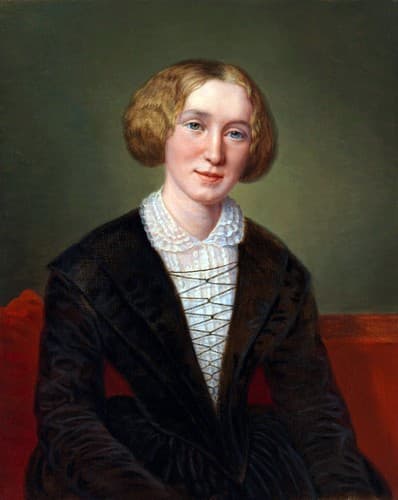
Mary Ann Evans, known by her pen name George Eliot, was an English novelist, poet, journalist, translator, and one of the leading writers of the Victorian era. She wrote seven novels: Adam Bede (1859), The Mill on the Floss (1860), Silas Marner (1861), Romola (1862–63), Felix Holt, the Radical (1866), Middlemarch (1871–72) and Daniel Deronda (1876). Like Charles Dickens and Thomas Hardy, she emerged from provincial England; most of her works are set there. Her works are known for their realism, psychological insight, sense of place and detailed depiction of the countryside.







