“There was no such thing as an easy birth, but sometimes there was a quick one.”
— Molly reflects on the realities of childbirth in the mountains.

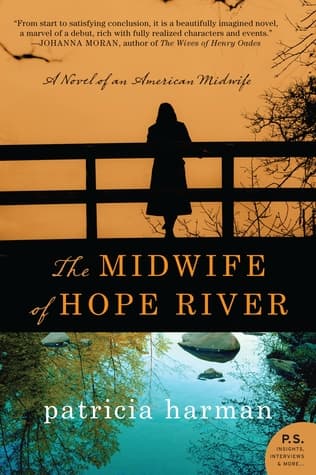
Patricia Harman (2012)
Genre
Historical Fiction / Romance
Reading Time
9-10 hours
Key Themes
See below
Sign in to track this book
In Depression-era Appalachia, a resourceful midwife battles disease, the KKK, and her past to bring hope and new life to a struggling community.
Patience Murphy, a recent nursing school graduate and trained midwife, arrives in the remote, poor town of Hope River, West Virginia, during the Great Depression. She carries a secret and a forged identity, fleeing a traumatic past. Guided by her mentor, Mrs. Kelly, who started the midwifery practice in Hope River, Patience is determined to serve the community's great need for medical care, especially for pregnant women. She quickly faces the harsh realities of rural life: extreme poverty, poor sanitation, widespread disease, and deep distrust from some mountain residents towards outsiders and modern medicine. Her first interactions are cautious as she tries to prove herself and gain the trust of the wary residents.
Patience immediately begins her work, handling challenging deliveries with few resources. Her first patients include the poor Maybelle and the demanding Mrs. Perkins, whose difficult birth tests Patience's skills. She meets the local doctor, Dr. Blum, who sees her with a mix of suspicion and respect, representing the medical community's doubt about midwives. Patience's kindness and skill slowly begin to win over some residents, but the mountain people's traditions and use of folk remedies often conflict with her medical training. She also starts to learn about the social dynamics and hidden prejudices within the isolated community.
The Ku Klux Klan's presence becomes clear in Hope River and nearby areas. Patience sees their intimidation and the fear they create, especially targeting Black families and anyone seen as an outsider or 'different.' She worries about her friend and helper, Bitsy, a young Black woman, and her family. The Klan's actions escalate, including threats, violence, and cross burnings, creating constant tension and danger. Patience, with her own secrets and outsider status, feels vulnerable to their scrutiny and potential anger, making her work even more risky.
As Patience continues her work, she gradually earns the trust of more families. She becomes close friends with Bitsy, who is her assistant and confidante. She also starts to connect with Daniel, a kind and quiet local man who works in the mines and respects her dedication. Their growing affection offers Patience hope and comfort amid the harsh realities of her life. These relationships are important for her emotional well-being and for her acceptance into the tight-knit community, helping to ease the isolation she has felt since arriving and the burden of her past.
A severe flu epidemic sweeps through Hope River, overwhelming the small community. Patience works tirelessly, nursing the sick, delivering babies to ailing mothers, and often being the only medical professional for miles. The epidemic highlights the severe lack of resources and medical knowledge in the region, and Patience's skills are pushed to their limits. She sees great suffering and loss, and the experience takes a heavy toll on her. During this crisis, she works more closely with Dr. Blum, and their professional respect grows as they face the challenge together, saving lives and comforting the dying.
Beyond physical ailments, Patience often confronts deep-seated prejudices and superstitions. She meets resistance to modern medical practices, with many families preferring traditional folk remedies, sometimes with tragic results. Racial prejudice, fueled by the Klan, is a constant threat. Patience often defends Bitsy and other Black families from discrimination. She also deals with the stigma around unwed mothers and children born out of wedlock, handling delicate situations with kindness. Her work is not just about delivering babies but also about challenging ignorance and advocating for the vulnerable.
As Patience settles into Mrs. Kelly's old house and practice, she learns more about her mentor's life. Through old journals, letters, and talks with long-time residents, Patience learns about Mrs. Kelly's struggles, her dedication to the community, and the challenges she faced in starting the midwifery practice. This discovery deepens Patience's understanding of her own role and the legacy she continues. The insights into Mrs. Kelly's past provide comfort and guidance, strengthening Patience's commitment to Hope River and helping her feel more connected to the place and its history.
Patience is called to a difficult and dangerous delivery, far in the mountains, during a harsh winter storm. The mother is in severe distress, and the baby is breech. With no other medical help and conditions worsening, Patience must rely solely on her skills and courage. The scene is full of tension and fear, pushing Patience to her physical and emotional limits. Her success in saving both mother and baby strengthens her reputation as a skilled and dedicated midwife, earning her more respect and gratitude from the community, even those who were initially skeptical.
The Klan's escalating violence directly threatens Bitsy and her family. Their home is damaged, and they face direct threats. At the same time, Daniel, Patience's love interest, becomes a target because of his involvement in union activities at the mines, which the Klan opposes. Patience is torn between protecting those she cares about and maintaining her secret. The danger forces her to confront the reality of the Klan's power and the vulnerability of those who oppose them, strengthening her resolve to fight for justice and protect her friends, even at great personal risk.
As Patience's life in Hope River becomes more connected with the community, her past begins to catch up with her. Through events, including a chance meeting or the arrival of someone from her past, her true identity as Sarah and the traumatic reasons she took on a new life are gradually revealed. The revelation tests her relationships, especially with Daniel and Bitsy. She must confront the shame and fear she has carried and decide whether to trust those around her with the truth, risking rejection or further danger.
After the Klan's actions directly harm someone close to her, Patience, along with Daniel and other brave members of the Hope River community, decides to take a stand. They work together to expose the Klan's activities and members, often at great personal risk. This involves gathering evidence, seeking help from authorities, or directly confronting the perpetrators. The community's collective effort to resist the Klan shows their strength and unity, proving that even in the face of terror, working together and being brave can succeed, leading to a turning point in the fight against injustice.
With the Klan's threat lessened and her past acknowledged, Patience finds a sense of belonging and peace in Hope River. She has not only established herself as an important midwife but has also found love and a true community. The town, though still facing economic hardship, begins to heal and look towards a better future. Patience accepts her new identity and her role, committing to staying and continuing her work. The story ends with Patience looking forward, having found redemption, purpose, and a home where she is truly loved and accepted, marking a new beginning for both her and Hope River.
The Protagonist
Patience transforms from a fugitive burdened by guilt and fear into a confident, integrated member of the Hope River community, finding love and acceptance by confronting her past.
The Supporting
Bitsy grows in confidence and agency, becoming an essential partner to Patience and a symbol of resilience against racial injustice.
The Supporting
Daniel becomes a steadfast partner to Patience, offering unwavering support and a vision of a stable future.
The Supporting
Dr. Blum's initial skepticism towards midwives evolves into a professional respect and collaboration with Patience.
The Mentioned
Though deceased, Mrs. Kelly's legacy guides and inspires Patience, shaping her path in Hope River.
The Antagonist
The Klan's presence escalates to direct violence, forcing the community to unite and confront their terror.
The Supporting
Maybelle's successful delivery helps establish Patience's reputation and trust in the community.
The Supporting
Mrs. Perkins's difficult birth serves as a significant test for Patience, ultimately solidifying her reputation as a skilled midwife.
The novel shows the strength of the human spirit when facing great hardship. Characters like Patience, Bitsy, and the whole Hope River community endure extreme poverty, widespread disease, racial prejudice, and the terror of the Klan. Despite these difficulties, they continue to strive for survival, hope, and dignity. Patience's dedication to her calling, even when exhausted and in danger, shows this theme. The community's ability to come together and support one another, especially during the flu epidemic and against the Klan, shows their collective strength and refusal to be defeated by their circumstances. This resilience highlights the lasting power of human will to overcome.
““There was always another baby, another mother, another life waiting to be ushered into the world. And as long as there was life, there was hope.””
Despite initial distrust and the isolating nature of mountain life, the novel stresses the importance of community and human connection. Patience, an outsider with a hidden past, gradually becomes a part of Hope River, finding belonging and love. The relationships she forms with Bitsy, Daniel, and her patients give her emotional support and a sense of purpose. The community's response to crises, such as the flu epidemic or the Klan's threat, shows how shared hardship can create strong bonds and lead to collective action. This theme highlights that even in the worst times, mutual support and kindness can create a powerful sense of belonging and strength.
““In this place, where life was often brutal and short, the simple act of holding a new baby, surrounded by caring hands, was a miracle that bound them all together.””
The presence of prejudice and injustice is a main theme, appearing in many forms. Racial prejudice, shown by the terrifying presence and actions of the Ku Klux Klan, directly affects Bitsy and other Black families, highlighting the systemic racism of the era. There is also prejudice against midwives from the established medical community (initially from Dr. Blum), and general suspicion towards outsiders like Patience. The novel also touches on the social stigma around unwed mothers and children. These injustices highlight the challenges Patience faces not just as a medical professional but as an advocate for the vulnerable and a fighter against ignorance and hatred. The theme explores the destructive power of prejudice and the courage needed to confront it.
““Fear was a poison, she knew, and the Klan spread it like a disease, infecting minds and hearts.””
Patience's journey is deeply rooted in themes of redemption and forgiveness. Fleeing a traumatic past under a new identity, she carries great guilt and shame. Her dedication to midwifery in Hope River is, in part, an act of penance, a way to make up for her perceived wrongs and find meaning after suffering. As she becomes more integrated into the community and faces her past, she learns to forgive herself and receives forgiveness and acceptance from those around her. This theme explores the healing power of service, self-acceptance, and the capacity for others to offer grace, allowing Patience to find peace and a new beginning.
““She had run from her past, but perhaps, in this forgotten valley, she could finally outrun the shame and build a future worth living.””
As a midwife, Patience is constantly involved in the cycle of life and death, especially in a time and place where both are very present. The novel contrasts the miracles of childbirth with the harsh realities of death from disease, accidents, and violence. Patience sees the fragility of life, especially during the flu epidemic and in dangerous mining conditions, but also the lasting hope and joy that new life brings. This theme highlights the midwife's unique role at the start of existence, celebrating life's perseverance amid suffering and the importance of each birth as a sign of hope and renewal in a challenging world.
““Every birth was a miracle, a small defiance against the harshness of the world, a promise that life would go on.””
Patience operates under an assumed name to escape a traumatic past.
Patience's hidden identity as 'Sarah' and her traumatic past serve as a central plot device, creating suspense and driving her character's internal conflict. This secret dictates her cautious interactions, her fear of exposure, and her initial emotional distance from others. The gradual revelation of her past provides key turning points, explaining her motivations and adding depth to her character. It also creates external conflict as the threat of her past catching up to her looms, impacting her relationships and her sense of security in Hope River.
The story is told through Patience's eyes, providing intimate access to her thoughts and feelings.
The novel is narrated from Patience Murphy's first-person perspective, allowing readers to experience the harsh realities of Hope River, her internal struggles, and her emotional journey directly. This device creates a deep sense of empathy for Patience, making her fears, compassion, and resilience palpable. It also limits the reader's knowledge to what Patience observes and understands, building suspense around her past and the unfolding events in the community. Her voice is central to establishing the authentic tone and emotional core of the narrative.
Patience's midwife bag symbolizes her professional identity and connection to her mentor.
Patience's worn obstetric bag, inherited from Mrs. Kelly, serves as a powerful symbol. It represents her professional identity, her skills, and her commitment to her calling. More importantly, it is a tangible link to her mentor, Mrs. Kelly, embodying the legacy of care and compassion that Patience is carrying on. The contents of the bag – the instruments, remedies, and journals – are not just tools but reminders of her purpose and the knowledge passed down to her. It grounds her in her role and is a constant companion in her journey.
Patience discovers and reads her mentor's old journals.
Patience's discovery and reading of Mrs. Kelly's old journals serve as a crucial plot device. These entries provide exposition about the history of Hope River, the challenges of midwifery in the region, and insights into Mrs. Kelly's own life and character. For Patience, the journals are a source of guidance, comfort, and connection to her predecessor, helping her to understand the community and her place within it. They also allow the author to weave in historical details and context without breaking the primary narrative flow, enriching the reader's understanding of the setting and its past.
“There was no such thing as an easy birth, but sometimes there was a quick one.”
— Molly reflects on the realities of childbirth in the mountains.
“The mountain taught you patience, and it taught you to be prepared.”
— Molly's observations about living in the Appalachian mountains.
“Every life was a miracle, no matter how it started.”
— Molly's deep belief in the value of every new life.
“Fear was a powerful thing, but hope was stronger.”
— Molly considers the emotional struggles of her patients and herself.
“You couldn't save everyone, but you had to try.”
— Molly's internal struggle with the limitations of her skills and resources.
“A woman's body knew what to do if you let it.”
— Molly's philosophy on natural childbirth and trusting the female body.
“The mountains held secrets, and sometimes they gave them up grudgingly.”
— Molly's contemplation of the hidden lives and histories in Hope River.
“Love found a way, even in the harshest places.”
— A reflection on the enduring power of love amidst hardship.
“Sometimes the best medicine was simply a kind word and a warm hand.”
— Molly's approach to comforting and caring for her patients.
“Prejudice was a sickness, and it spread faster than any fever.”
— Molly's observations on the racial and social prejudices she encounters.
“Every scar told a story, and some stories were best left untold.”
— Molly's thoughts on physical and emotional scars and past traumas.
“A midwife didn't just deliver babies; she delivered hope.”
— Molly's understanding of her role beyond just the medical aspects.
“You learned to make do with what you had, or you didn't make it at all.”
— Molly's practical approach to resourcefulness in a remote area.
“The past was a shadow you carried, but it didn't have to define your future.”
— Molly's internal struggle with her own past and her efforts to build a new life.
Ready to see how well you understood this book? Take our interactive quiz with 10 questions.

Biography coming soon.







