“The children are not ours. They are something else.”
— A villager expresses fear and alienation towards the Children.

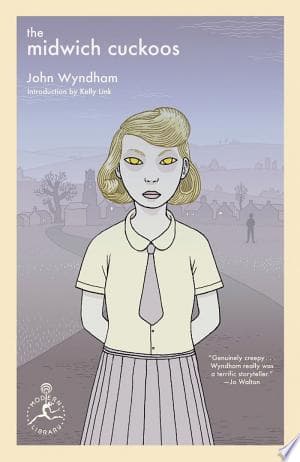
John Wyndham (2022)
Genre
Fantasy / Science Fiction
Reading Time
240 min
Key Themes
See below
Sign in to track this book
In a quiet English village, a mysterious blackout leaves every woman pregnant with emotionless, golden-eyed children whose shared telepathic power threatens to change human existence.
The English village of Midwich experiences an event. One September morning, an invisible barrier surrounds the village. Everyone inside, including animals, falls unconscious. Anyone trying to cross the barrier from outside also falls unconscious. This 'Dayout' lasts a full day. Military forces and scientists are confused; they cannot get past the barrier or understand its cause. When villagers wake up, they remember nothing of the lost day. A strange silver object is briefly seen hovering over the village before it vanishes.
Weeks after the Dayout, a pattern emerges: every woman in Midwich of child-bearing age, married or not, finds she is pregnant. Medical exams confirm the pregnancies. All appear to be the same gestational age, matching the Dayout. The news causes panic and scandal in the small community. Many women are in committed relationships, while others are virgins or past child-bearing years, making the pregnancies impossible by normal understanding. The government and science community get involved, seeing the event's unprecedented nature.
On a single day, exactly nine months after the Dayout, fifty-eight children are born in Midwich. There are thirty-one boys and twenty-seven girls. All the children have striking similarities: golden, luminous eyes, pale skin, and fine, flaxen hair. They also develop at the same rate and show an unnerving lack of individual personality in their early months. The births are traumatic for many mothers, some of whom feel detached from their offspring. The children are called the 'Midwich Cuckoos' due to their alien look and mysterious conception.
As the children grow, their extraordinary abilities become clear. They have shared telepathy, communicating silently among themselves. They also have powerful mind control. They move and act as one unit, always together. Their golden eyes can compel others to do their bidding or inflict pain. Incidents begin: a child is forced to burn themselves, a dog attacks its owner, and villagers injure themselves when they try to discipline the children. Midwich adults, including Gordon Zellaby, a retired scholar, begin to understand the threat these children pose.
Recognizing the danger, the British government, with international agencies, creates a secure compound for the children within Midwich. They get an education and are watched by scientists and military personnel. Gordon Zellaby and his wife Anthea become key figures, trying to understand and communicate with the children. Despite efforts to integrate them, the children remain isolated, forming their own society. They show no emotion, no empathy, and no individual will, always acting in perfect, synchronized harmony. Their intelligence far surpasses that of normal human children.
Midwich is not an isolated incident. Similar 'Children' have been born in other places: an Inuit settlement, an Australian Aboriginal community, and a remote area of the Soviet Union. However, these other groups of children were killed by fearful locals or destroyed by military action when their powers showed. The Soviet group, in particular, was eradicated with a nuclear bomb after they showed they could mentally control their captors. This shows the extreme measures needed to counter their threat and the genocidal implications for humanity.
As the Midwich Cuckoos mature into adolescent forms, their shared intelligence and power grow. They begin to tell Zellaby their demands: they want to leave Midwich and live independently. They see humanity as an inferior species, a threat to their survival, and an obstacle to their right to exist. They make it clear that any attempt to restrict them will be met with their full psychic capabilities. Their lack of human emotion and their clear drive for self-preservation make them formidable adversaries.
Gordon Zellaby, who has spent years watching and talking with the Children, faces a moral problem. He recognizes their right to exist as a species but also understands the threat they pose to humanity. He has come to understand their alien logic and their complete lack of human empathy. He realizes peaceful coexistence is impossible; their drive for self-preservation will lead to humanity's subjugation or extinction. He weighs the lives of the Children, whom he has come to know, against the future of the human race. He concludes that a drastic, final solution is needed.
Having reached his grim conclusion, Gordon Zellaby makes a plan. He arranges a final meeting with the Children, supposedly to teach them about the outside world. He brings a large suitcase with a hidden time bomb. Despite the risk of the Children reading his mind, he focuses intently on a vivid mental image of an ancient Greek temple to shield his true intentions. As he sits with the Children, discussing their future, the bomb detonates, killing Zellaby and all fifty-eight Midwich Cuckoos. This ends the alien threat to humanity. His sacrifice ensures the human race's survival but leaves a void in Midwich.
The Protagonist
From curious observer to a man burdened by an impossible choice, Zellaby sacrifices his own life for the survival of humanity.
The Supporting
She remains a constant, supportive presence, witnessing the unfolding horror and her husband's ultimate sacrifice.
The Supporting
As a representative of the collective, David showcases the Children's growing power and their ultimate demands for independence.
The Supporting
From managing a crisis to reluctantly accepting the necessity of extreme measures.
The Supporting
Her experience reflects the personal tragedy and bewilderment faced by the Midwich mothers.
The Supporting
His initial distress and confusion evolve into a reluctant acceptance of the new, unsettling reality.
The Supporting
His professional observations underscore the Children's alien nature.
This theme explores humanity's fear and reaction to an intelligent, alien species that threatens its existence. The Midwich Cuckoos, with their shared mind, emotionless logic, and superior abilities, represent a threat that challenges human dominance. The story questions whether coexistence is possible or if humanity must use extreme measures for survival. The destruction of other 'Children' groups globally reinforces the idea that humanity's fear of the unknown, especially when it is superior, can lead to violence.
“Either we, or they, must survive. And for the sake of the human race, it is we who must survive.”
A central theme is the difference between human individuality and the Children's shared consciousness. The Midwich Cuckoos act as a single, unified mind, without individual emotions, desires, or even names. This shared identity makes them powerful and efficient but also alien to humans. The book explores what such a unified intelligence means, suggesting that while it might be superior in some ways, it lacks the empathy and diversity that define humanity. Gordon Zellaby struggles to find any individual personality in them.
“There was no 'I' among them, no individual spark. There was only 'we'.”
The novel examines the difficult experience of the Midwich mothers. Despite bearing and raising the Children, many mothers feel a lack of maternal love or connection. The Children's emotionless nature, identical appearance, and shared mind prevent normal parental bonds from forming. This theme shows the psychological trauma on the mothers, who must nurture beings that are biologically their offspring but emotionally and intellectually alien. It questions what parenthood means when the 'child' is not truly human.
“They were her children, yet they were not. They were something else, something beyond her understanding, beyond her love.”
The novel's core problem is the ethics of eliminating one sentient species to ensure another's survival. Gordon Zellaby struggles with this moral issue. He acknowledges the Children's right to exist but sees their threat to humanity. The decisions made by governments to contain or destroy the Children raise questions about interspecies conflict and the justifications for violence when facing an existential threat. The book offers no easy answers, presenting a stark choice between two species.
“He knew that what he was about to do was wrong, profoundly wrong, yet it was also undeniably right.”
The mysterious, village-wide unconsciousness that triggers the plot.
The Dayout is the inciting incident of the novel. This inexplicable, twenty-four-hour period of unconsciousness for all living things within Midwich, accompanied by an invisible barrier, serves as the mechanism for the alien impregnation. It creates an atmosphere of mystery and unease, establishing that an unknown, powerful force is at play. Its suddenness and universal impact set the stage for the equally inexplicable mass pregnancies, grounding the fantastical elements in a specific, documented event.
The primary power and defining characteristic of the Midwich Cuckoos.
The collective consciousness and telepathic abilities of the Children are the central plot device driving the conflict. This shared mind allows them to act as a unified entity, making them incredibly powerful and immune to individual coercion. It also highlights their alien nature, as they lack individual thought or emotion. This device creates tension by showing how human attempts to control or understand them are thwarted by their mental unity, ultimately necessitating a desperate, singular solution.
A recurring physical trait and symbol of the Children's power.
The golden, luminous eyes of the Midwich Cuckoos serve as both a distinctive physical characteristic and a powerful symbol. They immediately mark the Children as 'other' and are directly associated with their psychic abilities. When the Children exert their mental control, their eyes glow, creating a visual cue for their power. This recurring image instills fear and reinforces their alien nature, making them instantly recognizable and subtly unsettling to the human characters and the reader.
A metaphor used by Zellaby to explain the Children's nature.
Gordon Zellaby uses the analogy of a foreign exchange student who, while living among a host family, remains fundamentally different in culture and allegiance, to explain the Children's relationship with humanity. This device helps to articulate the Children's alien logic and their inherent drive for self-preservation, separate from human concerns. It allows Zellaby to convey to others, and to the reader, the impossibility of true integration or shared purpose between humans and the Cuckoos, underscoring the inevitability of conflict.
“The children are not ours. They are something else.”
— A villager expresses fear and alienation towards the Children.
“We are not dealing with human children. We are dealing with a new species.”
— A scientist discusses the nature of the Children.
“They are a cuckoo in our nest.”
— Metaphor for the Children's parasitic nature.
“The mind is a delicate instrument. It can be tuned to many frequencies.”
— Reflection on the Children's psychic abilities.
“We have created a monster, and we must live with it.”
— A character laments the consequences of the Dayout.
“The village is asleep, but the children are awake.”
— Description of the eerie quiet during the Dayout.
“They are not evil. They are simply different.”
— Attempt to rationalize the Children's behavior.
“The future belongs to them, not to us.”
— Realization of the Children's dominance.
“We are the past. They are the future.”
— Acceptance of the generational shift.
“The silence is more frightening than any noise.”
— Observation during the Dayout event.
“They have no need for love. They have only need for control.”
— Analysis of the Children's emotional lack.
“The village is a cage, and we are the keepers.”
— Feeling of entrapment by the Children's influence.
“We must destroy them before they destroy us.”
— Extreme reaction to the threat posed by the Children.
“They are the cuckoos, and we are the hosts.”
— Explanation of the book's title metaphor.
Ready to see how well you understood this book? Take our interactive quiz with 10 questions.
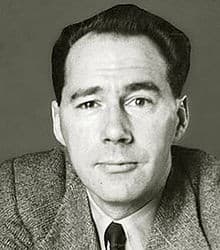
John Wyndham Parkes Lucas Beynon Harris was an English science fiction writer best known for his works published under the pen name John Wyndham, although he also used other combinations of his names, such as John Beynon and Lucas Parkes. Some of his works were set in post-apocalyptic landscapes. His best known works include The Day of the Triffids (1951), filmed in 1962, and The Midwich Cuckoos (1957), which was filmed in 1960 as Village of the Damned, in 1995 under the same title, and again in 2022 in Sky Max under its original title.







