“The feeling of a new pair of socks is a brief, almost subliminal pleasure, but it's one that I think about a lot.”
— Reflecting on small, everyday comforts and their significance.

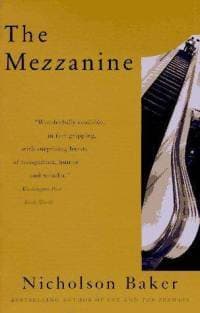
Nicholson Baker (1988)
Genre
Literary Fiction
Reading Time
120 min
Key Themes
See below
Sign in to track this book
"The Mezzanine" turns a simple escalator ride into a funny, detailed journey through the hidden ideas behind shoelaces, milk cartons, and our everyday existence.
Howie, the narrator, rides an escalator up to his office after his lunch break. He just bought new shoelaces. This simple event starts a chain of observations, memories, and thoughts. His mind immediately goes to the practical aspects of shoelaces: their material, how they fray, different ways to tie them, and subtle brand differences. This focus on shoelaces sets the tone for the novel, where everyday objects become starting points for deep and often funny self-reflection. He considers the history and development of shoelaces, their daily importance, and the small annoyance of them failing, all while the escalator carries him up.
As Howie continues his escalator ride, his mind turns to milk cartons. He closely examines their design, the different types of spouts and openings, and how their packaging has changed over time. This leads him to a clear memory of his childhood, specifically the small milk cartons served in school cafeterias. He remembers the ritual of opening them, the taste of the milk, and the small frustrations of a leaky carton or a difficult flap. This memory has a warm, nostalgic feeling, making the simple milk carton a symbol of childhood and the small, important details that shape our early lives. He compares the different milk carton spouts he has seen, thinking about their practical and visual qualities.
Howie's attention shifts to drinking straws, prompted by an unspoken connection. He considers the various forms straws have taken, from simple straight plastic ones to flexible, bendable types. He thinks about how they are used, their role with certain drinks, and the subtle pleasure of using them. His thoughts extend to the environmental impact of plastic straws, showing a current concern, yet he also appreciates their cleverness. He describes how a straw works, the feeling of drinking through one, and small annoyances like a straw that is too short or too wide. This seemingly small subject becomes another way for his detailed and analytical mind to explore.
A common office experience, using a public restroom, leads to a detailed comparison between electric hand dryers and paper towels. Howie carefully weighs the pros and cons of each, considering hygiene, efficiency, and environmental impact. He questions claims of better sanitation for hot air blowers, dissecting the scientific principles (or lack thereof) behind such statements. He remembers having damp hands after using ineffective dryers and the satisfying absorbency of a good paper towel. This section shows his tendency to apply strict, almost scientific, scrutiny to everyday things, revealing the complex thought processes behind even the simplest choices.
Howie's thoughts move to the common office stapler. He considers different designs, from heavy-duty models to smaller personal staplers, and ponders the ideal stapler for various tasks. He likes the satisfying 'thwack' of a working stapler and the frustration of a jammed one. He looks into how stapling works, the different staple sizes, and the small improvements that have made the device better over time. This seemingly ordinary office tool becomes a subject of detailed analysis, highlighting the often-overlooked design and engineering in everyday objects. He even considers the emotional connection one might have to a reliable stapler.
Umbrellas become the next focus of Howie's thoughts. He examines their different forms, from small collapsible models to large, strong golf umbrellas. He considers how well they work against rain, how easily they break in wind, and the social rules for using them in crowded places. He recalls times when umbrellas broke, were lost, and the small victory of having one ready during an unexpected rain shower. This exploration includes the cultural importance of umbrellas, their role in fashion, and the simple elegance of their design. He questions why some umbrellas are spring-loaded and others manual, and the specific sound of rain hitting an umbrella canopy.
In a more philosophical turn, Howie lists what he sees as the 'eight most important advances in a human life.' These are not grand societal achievements, but personal developmental milestones, starting with basic skills like learning to tie shoes. He describes how these skills are learned, the small victories they represent, and their combined effect on a person's independence and ability. This section helps explain human progress on a small scale, emphasizing the importance of seemingly minor achievements. It supports the novel's theme of finding deep meaning in the everyday. He considers the moment each skill is mastered, the feeling of accomplishment, and how they build on each other.
Howie reflects on his typical workday, especially the importance of the lunch break. He considers how people spend their lunch hours, their food choices, and the brief rest from office work. His recent trip to buy shoelaces during lunch shows how these breaks are used for personal errands, demonstrating the mix of personal and professional life. He thinks about the psychological importance of breaking up the day, the anticipation of lunch, and the return to work afterward. This section gives context for his current escalator ride, connecting his abstract thoughts to the concrete reality of his job and daily schedule.
Howie's mind returns to office supplies, looking beyond staplers to include pens, paper clips, and even the feel of different types of paper. He appreciates the tactile qualities of these objects, their subtle design variations, and their essential roles in the daily workings of an office. He considers the satisfying click of a retractable pen, the smooth glide of a well-inked ballpoint, and the helpful organization provided by paper clips. This section reinforces his careful attention to detail and his ability to find beauty and philosophical depth in the most ordinary items, making them more than just tools. He even considers the history and development of these items.
As the escalator ride ends, Howie steps off onto the mezzanine floor, physically returning to work. However, his thoughts continue. His arrival at his destination does not stop his stream of consciousness; instead, it suggests that these complex thought processes are a constant part of his life. The novel ends with Howie back at his desk, but the reader understands that his mind will keep dissecting, analyzing, and finding wonder in every detail around him, turning the ordinary into the extraordinary. The new shoelaces are now on his feet, a tangible reminder of his journey.
The Protagonist
Howie's character arc is not one of external change, but rather an internal deepening of his unique way of perceiving the world, affirming the richness of his inner life.
The novel's main idea is that deep insights, complex thoughts, and rich experiences can be found in the most common and overlooked parts of daily life. Howie's detailed thoughts on shoelaces, milk cartons, and office supplies show how close observation and self-reflection can make the trivial extraordinary. For example, his detailed analysis of milk carton spouts (plot summary section 2) or the relative benefits of hand dryers versus paper towels (plot summary section 4) raises these everyday items to subjects of philosophical study, revealing the intricate design and human interaction within them. The book suggests that true richness lies not in grand events, but in carefully appreciating small details.
“What was a shoelace, after all, but a little rope for your shoe?”
Memory plays a key role in Howie's thoughts, often starting his observations. Ordinary objects frequently trigger clear memories of his childhood and past experiences, adding layers of personal history to the present. The milk cartons, for instance, take him back to school cafeterias and the specific sensory details of his youth (plot summary section 2). This nostalgic view allows Howie to link his current perceptions with his early years, showing how our past continues to shape how we see the world. Remembering is not just passive recall but an active process of re-evaluating and finding new meaning in old experiences.
“I was thinking about milk cartons, which I guess I hadn't thought about for a long time.”
Howie's story shows an almost obsessive attention to detail and a thorough exploration of seemingly small subjects. This theme highlights the human ability to deeply engage with specific topics, often examining every possible aspect. His careful breakdown of shoelace materials, tying methods, and historical context (plot summary section 1) or the various designs of staplers (plot summary section 5) demonstrates this. This obsession is not shown as a flaw but as a unique way of experiencing and understanding the world, revealing the hidden complexities and design choices in everyday objects. It celebrates sustained, focused thought on a single subject.
“The mind, after all, is a collection of curiosities.”
The novel explores the large difference between Howie's rich, complex inner world and the seemingly ordinary external reality of his office job and escalator ride. While he moves physically from one point to another, his mind travels vast intellectual areas, looking into history, philosophy, and personal memory. The entire 'action' of the book happens during a brief escalator ride (plot summary section 1), yet it feels like a long journey because of the depth of his thoughts. This theme highlights that a person's most important experiences and adventures often happen internally, separate from their physical surroundings, and that the richness of one's mind can transform any situation.
“The outside world was just a suggestion.”
The narrative mimics the unfiltered flow of Howie's thoughts.
The entire novel is presented as an unbroken stream of consciousness, directly reflecting Howie's internal monologue as he rides an escalator. There are no traditional chapters, dialogue, or external plot points in the conventional sense. This device allows the reader direct access to Howie's mind, following his associative leaps from one thought to another, often triggered by a single word or object. It creates an intimate and immersive experience, blurring the lines between observation, memory, and philosophical reflection, and perfectly capturing the meandering yet deeply analytical nature of his thought process.
Ordinary objects are subjected to intense, exhaustive scrutiny.
This device involves Howie's tendency to select a seemingly insignificant object (shoelaces, milk cartons, hand dryers) and subject it to an almost exhaustive, forensic analysis. He explores its history, design, function, social implications, and personal memories associated with it, often dissecting every minute detail. This hyper-focus elevates the mundane, revealing unexpected complexities and prompting philosophical questions about design, utility, and human interaction with the physical world. It's a key mechanism for the novel's humor and its central theme of finding profundity in the everyday, turning a simple object into a springboard for extensive intellectual exploration.
Howie's thoughts frequently wander, connecting disparate ideas.
Howie's narrative is characterized by frequent digressions, where one thought or observation leads him associatively to another, often seemingly unrelated, topic. A thought about shoelaces might lead to a memory of childhood, which then leads to a reflection on the design of milk cartons, and so on. This device mimics the natural, non-linear flow of human thought, demonstrating how the mind makes connections between disparate ideas and memories. It creates a rich, layered narrative that constantly expands its scope, allowing Howie to explore a vast range of subjects and insights within a confined physical setting and time frame.
The entire story unfolds within the narrator's mind.
The novel is presented almost entirely as Howie's internal monologue. There is no external dialogue, no interaction with other characters (though they are occasionally mentioned), and the 'action' is purely mental. This device provides an unfiltered, intimate look into Howie's unique consciousness, allowing the reader to experience his observations, memories, and philosophical musings directly as they occur. It emphasizes the richness of the inner world and the idea that significant 'events' can unfold entirely within one's mind, independent of external circumstances or conventional plot structures, making the narrator's thoughts the primary vehicle for the story.
“The feeling of a new pair of socks is a brief, almost subliminal pleasure, but it's one that I think about a lot.”
— Reflecting on small, everyday comforts and their significance.
“I like the way a paper towel absorbs water, the way it changes color as it takes on the liquid.”
— Observing the mundane process of a paper towel absorbing liquid.
“It's odd, the things you remember. A particular brand of paperclip, the way a stapler sounds.”
— Musing on the seemingly random details that stick in one's memory.
“The whole world is a kind of mezzanine, a place between two floors, between two states of being.”
— A broader philosophical reflection on the nature of existence and transition.
“The act of tying one's shoelaces is a small, intricate ballet.”
— Describing the routine action of tying shoelaces with detailed observation.
“I wonder if anyone else in the elevator is thinking about the physics of the elevator itself.”
— Inside an elevator, contemplating the shared but unacknowledged experience of its mechanics.
“There's a certain satisfaction in peeling a sticker off something without tearing it.”
— Noting the small, precise triumphs of daily life.
“The way a plastic straw bends when you bite it, the memory of that slight give.”
— Recalling a specific tactile sensation related to a common object.
“Why do we keep things? Why do we value things that are essentially worthless?”
— Pondering the human tendency to accumulate and value possessions.
“The sound of a fluorescent light humming, a low, almost imperceptible drone.”
— Focusing on a subtle, ambient sound in an office environment.
“Every object has a history, a story that it could tell if only we knew how to listen.”
— Attributing a hidden narrative to inanimate objects.
“The particular way a paper clip holds papers together, its springiness, its metallic coolness.”
— Detailed observation of the physical properties and function of a paper clip.
“It's not just about what you see, but what you *notice*.”
— Emphasizing the distinction between passive viewing and active observation.
“The brief, almost imperceptible moment of friction when a key slides into a lock.”
— Focusing on a very specific, fleeting sensory detail of a common action.
Ready to see how well you understood this book? Take our interactive quiz with 10 questions.
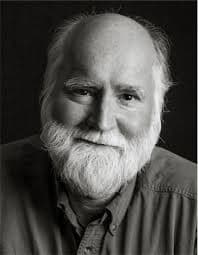
Biography coming soon.







