“My brother is dead. The Arab. The one your author killed. The one who has no name.”
— Musa's brother directly addressing the reader/narrator about the unnamed victim in 'The Stranger'.

Genre
Literary Fiction
Reading Time
150 min
Key Themes
See below
Sign in to track this book
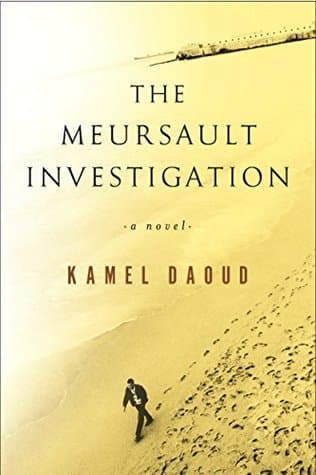
Seventy years after Camus's murder on an Algerian beach, a brother's monologue reclaims the erased identity of 'the Arab,' giving him a name, a story, and a voice to confront colonialism, faith, and the shadow of a literary classic.
The novel opens with Harun, an elderly Algerian man, addressing an unseen listener in a bar in Oran. He immediately identifies himself as the brother of 'the Arab' killed by Meursault in Albert Camus's *The Stranger*. Harun expresses his lifelong burden of this anonymity and his desire to reclaim his brother's story. He reveals that his brother's name was Musa and recounts their childhood in a small village, emphasizing the impact of Musa's death on their mother, who never recovered. Harun criticizes Camus for reducing Musa to an unnamed victim and begins to piece together his own version of the events on the beach, driven by a need for recognition and justice for his family's forgotten tragedy.
Harun describes Musa's life, portraying him as a quiet, observant young man, somewhat detached from the family's traditional life. He describes Musa's work on the docks and his encounter with Meursault on the beach. Harun reconstructs the scene, emphasizing the heat and the blinding sun, but also Musa's passivity and the casual nature of Meursault's act. He speculates on Musa's thoughts and feelings in his final moments, giving him an inner life that Camus denied. Harun notes the lack of any real investigation or justice for Musa, underscoring the colonial disregard for Arab lives, a theme that runs through his entire narrative.
Harun describes his mother's grief after Musa's death. She became a reclusive figure, obsessed with Musa's memory, searching for his body and maintaining a shrine in their home dedicated to him. Harun explains how her sorrow consumed their lives, shaping his own childhood and forcing him into the role of her sole companion. He feels both love and resentment towards her, as her unending mourning prevented him from fully living his own life and created an oppressive atmosphere of loss and silence. Her refusal to move on influenced Harun's later quest for justice.
Harun recounts his childhood spent in Musa's shadow, constantly reminded of the brother he barely knew but whose absence loomed large. He describes the family's poverty and society's indifference to their plight. Harun's mother's grief isolated them, and Harun felt lonely and an urgent need to escape the weight of Musa's ghost. He details how he learned to navigate a world that seemed to ignore his family's pain, fostering a resentment against the French colonialists and the narrative that erased his brother. This period shaped his identity as a survivor and an avenger.
Harun moves to the period of Algerian independence, expressing the initial hopes that came with liberation from French rule. He describes the jubilation and the promise of a new society. However, his tone shifts to one of disappointment. He laments how the new Algerian government failed to live up to its ideals, becoming corrupt and oppressive. He feels that the spirit of true freedom and justice, which should have honored the sacrifices made, was squandered. This political disappointment mirrors his personal frustration with the lack of justice for Musa, reinforcing his cynicism.
In a confession, Harun reveals that he, too, killed a Frenchman during the Algerian War of Independence. He recounts the event, emphasizing the chaotic and vengeful atmosphere of the time. Unlike Meursault, Harun's act was deliberate, born of anger and a desire for retribution, though he admits the victim was a random target. He describes the aftermath, his escape, and the internal conflict he experienced. This parallel murder is a direct response to Meursault's crime, an act of mirroring that complicates the moral landscape and shows the cyclical nature of violence and the search for meaning.
Harun describes the psychological burden of being the sole keeper of Musa's true story. He explains how this responsibility has shaped his entire life, making him a solitary figure, constantly reliving the past. He sees himself as a living archive, tasked with correcting a historical injustice. He grapples with the reliability of memory, acknowledging that his narrative is his own construction, yet asserting its essential truth. He feels compelled to give Musa a voice, a name, and a history, even if it means confronting his own complicated relationship with the past and storytelling itself, which he views as a form of survival.
Throughout his monologue, Harun confronts and critiques Albert Camus's *The Stranger*. He condemns Meursault's indifference and Camus's decision to leave Musa unnamed, arguing that it shows the colonial dehumanization of Arabs. Harun challenges the existentialist themes of the novel, suggesting that Meursault's 'absurdity' is a luxury afforded to the colonizer, while for the colonized, life is a constant struggle for recognition and dignity. He expresses a desire not to replace Camus's masterpiece but to complement it, offering the missing perspective and demanding that the silenced voices be heard, creating a more complete historical record.
Harun expresses loneliness, a feeling that has intensified with age. He describes his broken relationships, his lack of family, and his inability to connect deeply with others due to the weight of his past. He is a man haunted by ghosts—Musa, his mother, and the Frenchman he killed. He repeatedly articulates a longing for death, not out of despair, but as a final release from memory and the endless cycle of vengeance and storytelling. He seeks a quiet end, a peace that has eluded him throughout his turbulent life, hoping that his narrative will grant him this ultimate rest.
As his monologue closes, Harun reflects on truth and fiction, acknowledging that his story is his truth, forged from memory, anger, and love. He reiterates his desire for Musa to be remembered and for his own story to be heard. He leaves the listener with a sense of unresolved ambiguity, questioning justice, the cyclical patterns of violence, and the power of narrative. Harun's final words emphasize his exhaustion and his readiness to surrender to oblivion, having finally given voice to the silence that defined his brother's death and his own tormented existence. The identity of the listener remains a mystery.
The Protagonist
Harun transforms from a silent keeper of a hidden truth into a vocal narrator, finally giving voice to his brother and confronting his own past, ultimately seeking release from his lifelong burden.
The Central, but absent, character
Musa's arc is posthumous; he is resurrected from anonymity and given a name, history, and dignity through Harun's storytelling.
The Supporting
Her arc is one of unceasing grief; she never recovers from Musa's death, symbolizing the lasting wound of colonial violence.
The Antagonist
Meursault's arc is static as presented by Harun; he remains the indifferent killer, though his actions are re-contextualized and condemned.
The Mentioned/Implied
The listener's arc is one of passive reception; they are transformed by hearing Harun's story.
The Mentioned
His arc is limited to being a victim whose death contributes to Harun's complex moral landscape.
The novel is about the power of storytelling to shape truth and identity. Harun's entire monologue is a counter-narrative, directly challenging Camus's *The Stranger* by giving a name, history, and voice to the 'Arab' victim. Harun states that 'a dead man who has no name is not dead,' highlighting how anonymity erases existence. His detailed recounting of Musa's life and death, and his own experiences, shows his belief that narratives are not just stories but acts of justice and remembrance. He seeks to correct a historical injustice through his own voice and memory, proving that history is always contested.
“A dead man who has no name is not dead, he's just an absence. He's a hole. And it's a hole that I want to fill.”
The lasting wounds of French colonialism are central to the novel. Harun describes the dehumanization of Arabs under colonial rule, shown by Musa's nameless murder and the lack of justice. He critiques the colonial view that made his people invisible. Beyond liberation, Harun expresses disappointment with independent Algeria, lamenting its corruption, religious fundamentalism, and failure to live up to the ideals of freedom and justice. This reflects the broader post-colonial experience of many nations, where the promise of self-rule often gives way to new forms of oppression, leaving a bitter taste for those who fought for independence. The novel suggests that the psychological scars of colonialism run deep, even after political freedom is achieved.
“Seventy years later, I'm still trying to avenge my brother. Not against the French, no, but against the language that killed him.”
Grief and memory are intertwined with Harun's identity. His life is defined by his brother's absence and his mother's pervasive grief. He is a living archive of Musa's memory, which he carries as both a burden and a duty. This constant engagement with the past prevents him from fully living in the present, leading to solitude. Harun's identity is linked to his role as Musa's brother and the teller of his story. He struggles with the subjective nature of memory, acknowledging his own biases, yet asserting the emotional truth of his narrative. His quest is not just for justice, but for a coherent identity formed from the fragments of a traumatic past.
“I've spent my life giving a name to the one who didn't have one, and now I want to take back the name I was given.”
The novel explores the cyclical and often absurd nature of justice and violence. Harun's critique of Meursault's 'absurdity' highlights the privilege of the colonizer to feel detached, while for the colonized, life is a constant struggle for meaning and recognition. His own act of killing a Frenchman during the war is a complex parallel, showing how violence begets violence and how the search for justice can lead to mirroring the very acts one condemns. The novel questions whether true justice is ever achievable, or if it merely perpetuates a cycle of retribution, leaving all parties scarred and disappointed. Harun's desire for death reflects his weariness with this unending cycle.
“I was killing him to make up for my brother's death, to give him a weight, a name, a body. He was the one who was nameless, now. The victim.”
Harun's subjective and emotionally charged account of events.
Harun is an unreliable narrator, openly acknowledging that his story is his personal truth, shaped by seventy years of grief, anger, and memory. He reconstructs Musa's life and death, filling in gaps and speculating on motives, presenting a highly subjective interpretation of events. This device forces the reader to critically engage with his narrative, questioning the nature of truth and the power of individual perspective. It mirrors the unreliability of Meursault's own account in *The Stranger*, highlighting that all history is filtered through a subjective lens, especially when dealing with traumatic events and colonial injustices.
Direct engagement with Camus's *The Stranger* as a foundational text.
The novel is a direct conversation with Albert Camus's *The Stranger*, functioning as both a sequel and a critical response. Harun constantly references Meursault, his actions, and Camus's narrative choices. This intertextuality allows Daoud to re-examine a classic of Western literature from a post-colonial perspective, exposing its inherent biases and silences. The metafictional aspect is evident in Harun's self-awareness as a storyteller, his critique of how stories are told, and his explicit attempt to write a counter-narrative, making the act of storytelling itself a central theme and plot device.
Harun's continuous, uninterrupted address to an unseen listener.
The entire novel is presented as a single, extended monologue delivered by Harun in a bar. This form creates an intimate, confessional tone, drawing the reader directly into Harun's mind and his flow of consciousness. It allows for digressions, repetitions, and shifts in time, mimicking the natural rhythm of thought and memory. The absence of dialogue from the listener emphasizes Harun's isolation and his desperate need to finally speak his truth without interruption, making the reader a silent confidant and witness to his deeply personal and politically charged narrative.
Parallel events and characters reflecting each other's experiences.
The novel employs extensive mirroring, most notably between Meursault and Harun. Harun's act of killing a Frenchman during the war directly parallels Meursault's murder of Musa, forcing a comparison between the two acts of violence and their motivations. Musa and the unnamed Frenchman Harun kills also serve as doubles, both becoming anonymous victims. This device complicates the moral landscape, blurring the lines between victim and perpetrator, and suggesting that violence and suffering are cyclical, often leading individuals to repeat the very acts they condemn. It challenges simplistic notions of good and evil.
“My brother is dead. The Arab. The one your author killed. The one who has no name.”
— Musa's brother directly addressing the reader/narrator about the unnamed victim in 'The Stranger'.
“For a long time I’ve wanted to write, to put words on paper, to reclaim my brother from the oblivion into which your author cast him.”
— Musa's initial motivation for telling his story to the narrator.
“Meursault killed an Arab, my brother, and he never even gave him a name. He gave him an ocean, a beach, a sun, and two or three palm trees, but never a name.”
— Musa criticizing Camus's portrayal of the victim.
“His crime was to deprive a man of his name, and the most serious crime of all is to deprive a man of his life.”
— Musa reflecting on the dual injustice of the killing and the lack of identity.
“I’m not a believer, I’m a man who believes in men. And in women, too, of course.”
— Musa explaining his personal philosophy, contrasting with religious belief.
“The problem with your author is that he wrote a book, and then he left. He left us with the book, and with the crime.”
— Musa discussing Camus's legacy and the unresolved issues of 'The Stranger'.
“I often think about that murder, the one he committed, and the one I committed. It’s a strange symmetry, isn’t it?”
— Musa drawing parallels between Meursault's crime and his own act of violence later in life.
“The desert is a book written by God, and the sea is a book written by man.”
— Musa reflecting on the natural world and human constructs.
“To exist is to have a name. To be remembered is to be named.”
— Musa emphasizing the importance of a name for identity and memory.
“I want to be the one who tells the story, not the one who is told.”
— Musa asserting his agency in narrating his family's history.
“A country is not just a piece of land, it’s also a story, a language, a memory.”
— Musa reflecting on the complex nature of national identity.
“It’s easier to kill a man when he doesn’t have a name. It’s easier to forget him too.”
— Musa highlighting the dehumanizing effect of anonymity.
“Perhaps the only way to speak of the dead is to invent them.”
— Musa contemplating the act of creation and remembrance when dealing with the past.
“The past is a foreign country. They do things differently there. But the past is also here, in our blood, in our names, in our silences.”
— Musa reflecting on the enduring presence of history.
Ready to see how well you understood this book? Take our interactive quiz with 10 questions.
Biography coming soon.







