“Evil is not a thing. It is a choice. A choice made over and over again until it becomes a habit.”
— Father Brophy's contemplation on the nature of evil in relation to human actions.

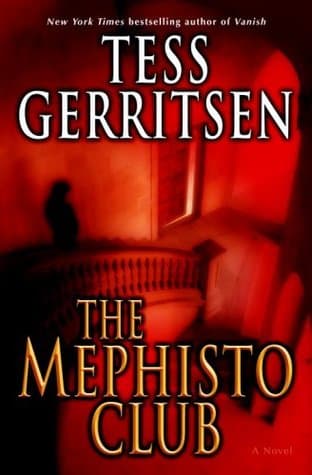
Tess Gerritsen (2006)
Genre
Thriller / Mystery
Reading Time
7-8 hours
Key Themes
See below
Sign in to track this book
A secretive society of historians studying evil becomes entangled with a gruesome killer, pulling medical examiner Maura Isles and detective Jane Rizzoli into a maze of ancient evil and modern murder.
On Christmas Eve, medical examiner Dr. Maura Isles is called to a gruesome scene: Father Daniel Brophy's housekeeper, found crucified upside down in her Boston apartment. The victim's hands and feet are pierced with nails, and her body is drained of blood. A pentagram is carved into her abdomen. Detective Jane Rizzoli, heavily pregnant and on maternity leave, joins the investigation due to the disturbing nature of the crime and her past experiences with ritualistic killings. Initial suspects include local cults or satanic groups, but the intricate details suggest a more sophisticated killer. Maura and Jane quickly realize this is not an isolated incident but the first in a series of planned, biblically-inspired murders.
The victim's connection to Father Brophy, a scholar of ancient languages and a member of 'The Mephisto Club,' becomes a focus. The Mephisto Club is a secretive society of academics who study the history of evil. Father Brophy introduces Maura and Jane to the club's leader, Professor Anthony Sansone, a charismatic but enigmatic figure. Sansone and other members offer their expertise, interpreting the cryptic clues at the crime scenes, which appear linked to ancient demonic lore and early Christian persecution. While Sansone seems helpful, his intense interest in the cases and detailed knowledge of obscure rituals make Rizzoli suspicious.
A second victim is found, mirroring another historical martyrdom. This victim, a young man, is in a similar ritualistic pose, strengthening the theory of a serial killer with deep knowledge of religious history. The killer leaves symbols and Latin phrases that baffle police but are recognizable to Mephisto Club members. Maura, intrigued, spends more time with the club, especially Sansone, who seems to decipher the killer's messages. Jane, however, remains wary, sensing an underlying agenda within the club and questioning their motives for 'assisting' the police.
As more victims appear, each death echoing a historical persecution or demonic legend, Jane Rizzoli's unease with Professor Sansone and the Mephisto Club grows. She notices Sansone's almost gleeful fascination with the murder details and his possessive attitude toward Maura. Jane begins to suspect the club's 'help' might be a way to control the investigation or an intellectual game for them. Her instincts, honed by years with violent criminals, tell her something is wrong. She confides in her husband, Gabriel Dean, but struggles to explain her apprehension, as Sansone's alibis and public persona are perfect.
Maura Isles, often more comfortable with the dead than the living, becomes captivated by the intellectual discussions and ancient lore presented by the Mephisto Club. She is drawn to Professor Sansone's intellect and his ability to see connections where others see only chaos. Her professional objectivity begins to waver as she spends more time with the club members, attending their late-night meetings and reading their forbidden texts. This immersion creates a rift between her and Jane, who sees Maura's involvement as dangerous and unprofessional. Maura, however, believes understanding the killer's mindset requires understanding the evil the club studies.
The murders become more brutal and complex. The killer, now seemingly aware of the police's progress and the Mephisto Club's involvement, begins to target people loosely connected to the investigation or the club. This shift suggests a more personal motive or a desire to create fear. The stakes are raised, and Jane Rizzoli feels an urgent need to protect Maura, whose closeness to Sansone and the club puts her in danger. The police force is stretched, and the lack of conventional clues makes the case frustrating, leading to pressure from superiors and the public.
A breakthrough occurs when a hidden message or overlooked artifact is found, pointing to an older, darker lineage behind the killings. The murders are not random acts by a disturbed person but are tied to a centuries-old vendetta or a secret society's historical mission to eliminate perceived evil or heresy. This revelation changes the investigation, turning it from a hunt for a modern serial killer into a pursuit of someone enacting an ancient, personal, and organized agenda. The Mephisto Club's knowledge of historical persecutions suddenly becomes terrifyingly relevant, suggesting they might know more than they admit.
Jane Rizzoli's suspicions about Professor Sansone lead to a direct confrontation. She presents him with her evidence and theories, accusing him of orchestrating or being involved in the murders. Sansone, however, skillfully deflects her accusations, turning them back on her or offering plausible, if unsettling, explanations. The tension between them reaches a breaking point. It is revealed that Sansone and certain Mephisto Club members are not just studying evil but actively engaging with it, believing themselves to be inheritors of an ancient order dedicated to 'purifying' society. Maura, caught in the middle, must choose between her loyalty to Jane and her intellectual fascination with Sansone. She realizes the true extent of his manipulation.
As the truth unravels, Maura Isles finds herself in danger. She realizes Sansone's true, sinister intentions and his connection to the killer. He views her as a potential convert to his twisted ideology or a sacrifice for his grand design. Maura is lured into a trap, becoming the next intended victim in the killer's elaborate, historically-themed ritual. Jane Rizzoli, now fully understanding Sansone's depravity and the immediate threat to her friend, launches a desperate rescue mission. She races against time, using her instincts and fragmented clues to find Maura, knowing any delay could be fatal.
The novel's climax takes place at a remote, historically significant location—an old church or a forgotten catacomb—chosen by the killer for its symbolic meaning. Jane Rizzoli, with help from her husband Gabriel Dean and trusted officers, tracks Maura to this eerie setting. There, they find Maura on the verge of being sacrificed in a macabre ritual. A violent confrontation follows between Jane, her team, and the killer, who is revealed to be a fanatical disciple acting under Sansone's influence, or perhaps Sansone himself in a shocking twist. The battle is fierce, leading to the killer's downfall and Maura's narrow escape, but not without deep psychological scars.
Afterward, the immediate threat is neutralized, and the killer is caught or killed. Maura Isles is rescued, traumatized but alive. Professor Sansone's true role in the murders is exposed, revealing him as a manipulative mastermind who used the Mephisto Club to further his dark agenda. While the specific crime is solved, the novel leaves lingering questions about the nature of evil, the seductive power of intellectualism gone wrong, and the Mephisto Club's continued influence. The experience deeply affects both Maura and Jane, leaving them to grapple with the disturbing reality that some forms of evil are not easily contained or understood, and that the line between study and participation can be dangerously thin.
The Protagonist
Maura begins as intellectually detached but becomes deeply entangled in the Mephisto Club's world, forcing her to confront the seductive dangers of pure intellectualism and the reality of human evil.
The Protagonist
Jane struggles with the physical limitations of pregnancy while fighting to protect her friend and bring a complex, historically rooted killer to justice, reaffirming her trust in her instincts.
The Antagonist
Sansone's true nature as a manipulative orchestrator of the killings is gradually revealed, exposing his intellectual curiosity as a cover for a profound and dangerous obsession.
The Supporting
Brophy begins as a seemingly neutral helper but becomes increasingly conflicted as he grapples with the dark truths revealed about his club and its leader.
The Supporting
Dean consistently provides a stable and supportive presence for Jane, acting as her anchor in a tumultuous investigation.
The Supporting
Frost consistently provides technical support and a steady presence, learning to navigate the increasingly disturbing nature of the crimes.
The Supporting
Perrault's character deepens the historical mystery, suggesting a generational tie to the events unfolding.
The Antagonist
The killer's identity and true motivations are gradually uncovered, revealing them to be a fanatic driven by ancient beliefs and modern manipulation.
The novel explores various aspects of evil: historical, religious, psychological, and intellectual. It asks if evil is inherent, a product of human nature, or learned. The Mephisto Club's study of evil shows its seductive power when viewed academically, without empathy. The ritualistic murders force characters like Maura and Jane to confront evil not as an abstract concept but as a tangible, brutal force enacted by seemingly rational people. The historical context of the murders suggests evil is cyclical, often re-emerging in new forms but with old roots, as seen in the reenactment of early Christian persecutions.
““Evil is not a thing. It is an absence. And in that absence, anything can flourish.””
This theme examines how the pursuit of knowledge, especially in dark subjects, can become a dangerous obsession. Maura Isles is initially drawn to the Mephisto Club's intellectual rigor and their understanding of history and obscure texts. However, the club, through Professor Sansone, shows how intellectual curiosity can turn into a detached fascination with suffering and violence, blurring ethical lines. The novel suggests that studying evil without a moral compass can lead to its perpetration, as the club members' academic interest in historical atrocities eventually leads to real-world reenactment.
““Knowledge is power, Dr. Isles. But power, untempered by conscience, is a dangerous thing.””
The story constantly pits the rational, scientific worldview against ancient beliefs, religious dogma, and supernatural interpretations. Maura, a scientist, struggles to reconcile the seemingly occult nature of the crimes with her logical framework. Jane, while not overtly religious, relies on her instincts, which often clash with the academic theories of the Mephisto Club. Father Brophy further complicates this theme, representing faith within scholarly inquiry. The novel explores how faith, whether in God or ancient lore, can motivate extreme actions, and how skepticism, while important, can sometimes blind one to deeper truths.
““Some things, Jane, defy logic. And those are the things that terrify us the most.””
A central theme is how historical injustices and persecutions can fuel a desire for vengeance across generations. The killer's actions are not random but mimic ancient forms of martyrdom and retribution, particularly those suffered by early Christians. This suggests a deep-seated, perhaps inherited, sense of grievance. The Mephisto Club's focus on these historical events, combined with Sansone's manipulation, indicates that the past is not truly past, but can be resurrected and re-enacted by those who believe they are correcting ancient wrongs or fulfilling a historical destiny. This theme highlights the lasting power of historical trauma and the dangers of allowing it to fester.
““The past is never dead. It’s not even past.””
Misleading clues or suspects designed to divert the investigation.
The novel utilizes red herrings extensively, particularly in the initial stages of the investigation. The first victim's connection to Father Brophy and the Mephisto Club immediately paints the club members, especially Sansone, as suspicious. Their deep knowledge of obscure rituals and their almost detached fascination with evil make them prime candidates for being the killer or directly involved. These red herrings serve to complicate the investigation, make the reader question everyone, and ultimately heighten the shock when the true perpetrator and their precise relationship to Sansone are revealed. The intellectual nature of the club members also makes their 'help' ambiguous, appearing helpful but potentially self-serving.
The use of religious and occult symbols to create atmosphere and guide the killer's actions.
The murders are replete with biblical and demonic symbolism. Victims are found in poses mimicking Christian martyrs, with pentagrams carved into their bodies, and cryptic Latin phrases left at crime scenes. This symbolism is not merely decorative; it is integral to the killer's motivation and method. It provides a historical and ideological framework for the crimes, drawing on ancient texts and legends to create a sense of profound, almost supernatural, evil. This device also serves to involve the Mephisto Club, whose expertise in these areas is crucial for interpreting the clues, further blurring the lines between academic study and criminal involvement.
A clandestine organization with hidden motives, driving the central conflict.
The Mephisto Club is a classic secret society, functioning as a central plot device. Its existence and activities are shrouded in mystery, and its members possess specialized, often obscure, knowledge. The club serves multiple purposes: it provides the intellectual backdrop for the crimes, offers a pool of potential suspects, and acts as a means for Professor Sansone to manipulate both the investigation and Dr. Maura Isles. The club's very nature—a group dedicated to studying evil—creates an inherent tension and moral ambiguity, constantly raising questions about their true intentions and the fine line between intellectual curiosity and dangerous obsession.
Elements that make the reader question the perceptions or motives of certain characters.
While not a single unreliable narrator, the novel subtly employs elements that make the reader question the perceptions and trustworthiness of characters, particularly Professor Sansone and, at times, Maura Isles. Sansone's charisma and intellectual prowess make him initially appear helpful, but his true motives are veiled, making him an unreliable source of information. Maura's intellectual fascination with the club sometimes clouds her judgment, leading her to overlook Jane's warnings and making her a 'less reliable' interpreter of events from Jane's perspective. This device keeps the reader on edge, constantly re-evaluating alliances and motives.
“Evil is not a thing. It is a choice. A choice made over and over again until it becomes a habit.”
— Father Brophy's contemplation on the nature of evil in relation to human actions.
“The past is never truly dead. It just waits for the right moment to rise up and bite you.”
— Detective Jane Rizzoli reflecting on the lingering impact of old cases and personal histories.
“Sometimes the greatest monsters are not found in the shadows, but in the most ordinary of places.”
— Maura Isles considering the hidden darkness within seemingly normal individuals.
“We all carry our own devils inside us. The trick is to keep them chained.”
— A character's internal struggle with their darker impulses.
“Knowledge can be a dangerous thing. Especially when it reveals truths you’d rather not know.”
— The consequences of uncovering disturbing information during the investigation.
“There are some secrets that should remain buried, for the good of all.”
— A character arguing for the suppression of certain historical or personal facts.
“Fear is a powerful weapon. It can make people do terrible things, or prevent them from doing anything at all.”
— Observation on the manipulative power of fear in human behavior.
“The line between faith and madness is often thinner than we'd like to believe.”
— The blurring of religious fervor and delusional thinking in the narrative.
“History has a way of repeating itself, not as a farce, but as a nightmare.”
— A reflection on the cyclical nature of violence and historical atrocities.
“Sometimes the only way to fight a monster is to understand what made it one.”
— Maura Isles' approach to forensic psychology and understanding perpetrators.
“Every family has its ghosts. Some just haunt more loudly than others.”
— The impact of a character's family history and inherited trauma.
“The greatest trick the Devil ever pulled was convincing the world he didn't exist. The second greatest was convincing us he was external.”
— A philosophical discussion on the source of evil, both external and internal.
“In the darkest corners of the human heart, true horror often resides.”
— A general observation on the psychological depth of the crimes investigated.
Ready to see how well you understood this book? Take our interactive quiz with 10 questions.

Biography coming soon.







