BookBrief
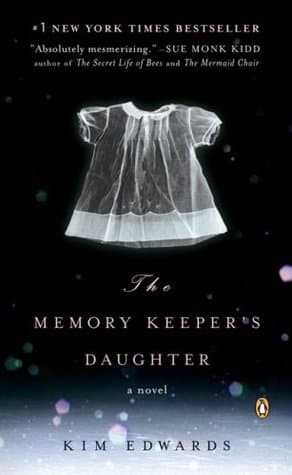
The Memory Keeper's Daughter cover
Archivist's Choice

The Memory Keeper's Daughter

Kim Edwards (2005)

Genre

Historical Fiction

Reading Time

800 min

Key Themes

See below

Track Your Reading

Sign in to track this book

A doctor's snap decision to institutionalize his newborn daughter with Down's Syndrome, unbeknownst to his wife, splinters his family into two separate lives, haunted by a secret that ripples across a quarter-century.

Synopsis

On a snowy night in 1964, Dr. David Henry delivers his own twins. His son, Paul, is healthy, but his daughter, Phoebe, has Down's Syndrome. Believing he is protecting his wife, Norah, from heartbreak, David tells his nurse, Caroline, to take Phoebe to an institution and keep her existence a secret. However, Caroline cannot abandon the baby and instead flees to another city to raise Phoebe as her own daughter. The novel spans 25 years, following the parallel lives of these two families. Norah grapples with unending grief over the supposed death of her daughter, which creates a growing chasm in her marriage to David and leaves Paul feeling isolated. Meanwhile, Caroline dedicates her life to raising Phoebe, providing her with love and opportunities, while shielding her from the truth of her parentage. As Paul grows up and begins to question his family's unspoken sadness, and Phoebe blossoms into an independent young woman, the secret begins to unravel, leading to a near revelation and, ultimately, the emotional unveiling of the truth, forcing all characters to confront the consequences of David's decision and forge a new beginning.
Reading time
800 min
Difficulty
Medium
Pacing
Moderate
Mood
Melancholy, Thought-provoking, Emotional, Reflective
✓ Read this if...
You enjoy character-driven stories about family secrets, ethical dilemmas, and the long-term impact of a single decision.
✗ Skip this if...
You prefer fast-paced thrillers or stories with clear-cut heroes and villains, as this book explores complex moral gray areas.

Plot Summary

The Fateful Birth

On a snowy night in 1964, Dr. David Henry and his pregnant wife, Norah, are stranded by a blizzard. David delivers their twins. Their son, Paul, is born healthy. Their daughter, Phoebe, is born with Down Syndrome. Overwhelmed by fear for Norah's fragile heart and a desire to spare her pain, David tells his nurse, Caroline Gill, to take Phoebe to a distant institution for children with disabilities. He instructs her to tell Norah the baby died at birth. This quick decision, made under immense pressure, starts events that will define everyone's lives for decades.

Caroline's Choice

After leaving the Henrys' home, Caroline Gill drives towards the institution with baby Phoebe. Along the way, she changes her mind, unable to abandon the vulnerable infant. She decides to defy Dr. Henry's orders and raise Phoebe as her own. Caroline flees their city, leaving behind her fiancé and her old life. She moves to Pittsburgh, finds a new job, and begins to build a life for herself and Phoebe, determined to give the child a loving home and the best possible care, despite the significant challenges.

Norah's Unending Grief

Norah Henry is devastated by the news of her daughter's death. She experiences deep and lasting grief, which affects her marriage to David and her relationship with their son, Paul. Unaware of David's secret, Norah struggles to move past the tragedy, often feeling a deep, unexplained emptiness. Her sorrow creates emotional distance between her and David, as he carries the heavy burden of his lie, unable to truly comfort her without revealing the truth, which he believes would destroy her.

A Divided Life

Dr. David Henry lives with guilt and regret over his decision to give Phoebe away. He dedicates himself to photography, often focusing on landscapes and capturing beauty, perhaps as an escape or a way to process his internal turmoil. He constantly struggles with the secret, which slowly damages his relationship with Norah. He sees her pain but cannot alleviate it, trapped by his own deception. His attempts to compensate for his actions often appear as controlling behavior or emotional withdrawal, further isolating him from his family.

Phoebe's Childhood

Phoebe grows up in Pittsburgh, cherished and protected by Caroline Gill, who becomes her mother in every sense but biological. Caroline works tirelessly to provide for Phoebe, ensuring she receives the best education and support available for children with Down Syndrome. Phoebe is a bright, affectionate child, thriving under Caroline's devoted care. Caroline's friend, Al, a truck driver, also becomes a significant father figure in Phoebe's life, offering her love and stability, creating a supportive and unconventional family unit.

Paul's Isolation

Paul Henry, the healthy twin, grows up in a household overshadowed by his parents' unresolved grief and emotional distance. He feels the weight of his mother's sorrow and his father's guardedness, leading him to develop a quiet, observant personality. Paul often feels overlooked, as his parents are consumed by their separate burdens. He finds solace in music, especially the guitar, which becomes an outlet for his emotions and a way to connect with others, forging his own path amidst the unspoken tensions at home.

Caroline's Sacrifices

Caroline Gill dedicates her life to Phoebe, giving up personal relationships and professional ambitions to focus entirely on her daughter's needs. She faces societal prejudices and the challenges of raising a child with Down Syndrome with determination. Caroline prioritizes Phoebe's education, social integration, and happiness, even moving to find better opportunities and support for her. Her love for Phoebe is fierce and unconditional, a powerful, selfless force throughout Phoebe's life, showing the deep bond between them.

The Photography Exhibition

Years later, David Henry's photography gains recognition, leading to an exhibition of his work. Norah, seeking a new direction, takes an interest in art and begins working at a gallery. One day, a woman named Caroline Gill attends David's exhibition, recognizing him. This encounter is brief and tense, a silent acknowledgment of their shared secret. The exhibition features a striking photograph of a young girl with Down Syndrome, taken by David years prior, which deeply affects Norah, stirring a subconscious longing for the daughter she believes she lost.

Paul's Journey to Self-Discovery

As an adult, Paul Henry pursues a career in music, finding success as a guitarist. His experiences lead him to travel and meet various people, including a woman named Rosemary, who becomes his partner. Paul becomes increasingly aware of the unresolved sadness within his family and begins to subtly question the past, particularly the circumstances surrounding his twin sister's death. He feels a deep, unarticulated longing for something missing, driving him to seek a more profound connection and understanding of his origins.

Phoebe's Independence

Phoebe grows into a young woman, working at a library and participating in social activities. She falls in love with Robert, another young man with Down Syndrome, and they dream of a life together. Caroline, while supportive, struggles with the idea of Phoebe's increasing independence and the potential for a deeper relationship. Phoebe asserts her desire for a normal life, including marriage and living with Robert, showing her resilience and capacity for love, pushing Caroline to confront her own fears for Phoebe's future.

A Near Revelation

Over the years, the weight of David's secret becomes almost unbearable. There are moments when he comes close to confessing to Norah, particularly during times of marital strain or deep sadness. He even begins to write letters to Caroline, expressing his regret and longing for Phoebe, though he never sends them. Each time, fear of destroying Norah and his family holds him back, reinforcing his isolation and deepening the rift between him and his wife, perpetuating the lie that has defined their lives.

The Truth Unveiled

David Henry suffers a heart attack. On his deathbed, he finally reaches out to Caroline, asking her to bring Phoebe to him. Caroline, after years of silence, brings Phoebe to see her biological father. Norah is present, and as David gasps his last breaths, she finally learns the shocking truth about Phoebe's birth and David's lifelong deception. The revelation shatters Norah, but also brings a complex mixture of grief, anger, and a profound, unexpected connection to the daughter she believed lost. Paul also learns of his twin sister's existence.

Norah and Phoebe's Reunion

In the aftermath of David's death and the revelation, Norah processes decades of deception and loss. Despite the initial shock and anger, she is drawn to Phoebe. Caroline, now free of her secret burden, helps their connection. Norah begins to spend time with Phoebe, slowly building a relationship with the daughter she never knew she had. It is a tentative but ultimately loving reunion, allowing Norah to finally grieve the lost years and embrace the unexpected joy of having Phoebe in her life, finding a measure of healing.

Paul's Acceptance

Paul Henry, initially stunned by the revelation of his twin sister, quickly embraces Phoebe. He feels an immediate, deep connection to her, a sense of completeness he hadn't realized was missing. He also forms a bond with Caroline, understanding the immense sacrifice she made. Paul's acceptance of Phoebe helps to bridge the long-standing emotional gaps within his family, offering a path towards healing and a new, expanded understanding of love and family. He finds a sense of peace and belonging that had eluded him for years.

A New Beginning

The novel concludes with the Henry and Gill families navigating their new reality. While the past cannot be undone, the truth has brought a complex form of liberation and healing. Norah, Paul, Caroline, and Phoebe begin to build a future together, acknowledging the pain and the love that intertwine their lives. Phoebe finds her place within both families, surrounded by love and acceptance. The secret is finally out, allowing for genuine connection and the possibility of a more honest and integrated future for everyone.

Principal Figures

Dr. David Henry

The Protagonist/Antagonist

David begins as a loving husband who makes a morally ambiguous decision out of fear, and spends his life isolated by guilt, ultimately seeking a final, desperate reconciliation before his death.

Norah Henry

The Protagonist

Norah starts as a loving wife and mother who is shattered by loss, slowly rebuilding her life around her grief, only to discover the shocking truth and ultimately find a path to healing and connection.

Caroline Gill

The Protagonist

Caroline transforms from a responsible nurse into a devoted, selfless mother, dedicated to raising Phoebe, enduring personal sacrifices and the burden of a secret, finally achieving peace when the truth is revealed.

Phoebe Henry

The Protagonist

Phoebe grows from a beloved child into a resilient young woman who seeks independence and love, ultimately connecting with her biological family and finding her place within an expanded circle of love.

Paul Henry

The Supporting

Paul navigates a childhood marked by his parents' emotional distance, finding his own path through music, and eventually embracing the truth of his family's past and connecting with his twin sister.

Al

The Supporting

Al remains a constant, supportive presence in Caroline and Phoebe's lives, embodying steadfast friendship and paternal love.

Rosemary

The Supporting

Rosemary acts as a catalyst for Paul's self-reflection and supports him through the eventual revelations about his family.

Robert

The Supporting

Robert provides Phoebe with a loving partnership and helps her assert her desire for independence and a future life together.

Themes & Insights

The Weight of Secrets and Deception

The novel explores how a single secret can warp lives and relationships over decades. David Henry's lie about Phoebe's death creates a barrier between him and Norah, leading to a marriage defined by unspoken sorrow and emotional distance. His guilt isolates him, while Norah's unresolved grief keeps her trapped. Caroline Gill also carries the burden of the secret, though her motivation is love rather than fear. The truth, when it finally emerges, brings both pain and a chance for healing. It shows that deception, even with good intentions, ultimately causes more harm than good. For example, David's photography often captures landscapes, perhaps reflecting the vast, silent space his secret creates.

He understood then that the world was not solid, but was made of pieces, and that this was the thing he had to remember, to tell his son.

Narrator about David Henry

Maternal Love and Sacrifice

This theme is embodied by Caroline Gill, who makes sacrifices to raise Phoebe. She gives up her fiancé, her career aspirations, and her old life to provide Phoebe with unconditional love and care. Her fierce protectiveness and devotion show the depths of maternal instinct, regardless of biological ties. Norah's enduring grief for her 'lost' daughter also highlights a biological maternal longing, even when the child's existence is a mystery. The novel contrasts Caroline's active, selfless mothering with Norah's passive, grieving mothering, showing different facets of this powerful bond.

She would be Phoebe's mother. She would simply be.

Narrator about Caroline Gill

Identity and Belonging

The characters grapple with who they are and where they belong. Phoebe, growing up with Down Syndrome, navigates societal perceptions while asserting her own desires for independence and love. Paul, living in the shadow of his parents' unspoken grief, struggles to define himself and understand his family's past, eventually finding a sense of belonging with his twin sister. Norah, too, searches for meaning and identity beyond her grief. The novel suggests that true belonging comes from acceptance, both of oneself and of one's family, in all its complex forms, as seen when Phoebe is finally integrated into her biological family.

He had always felt as if there was something missing, a space in his own life, a twin absence.

Narrator about Paul Henry

The Nature of Family

The book challenges traditional definitions of family, presenting two distinct yet interconnected family units. The Henrys are bound by blood and a devastating secret, while Caroline, Phoebe, and Al form a family based on love, choice, and shared experience. The novel argues that family is not solely determined by biology but by love, commitment, and the willingness to care for one another. The ending sees these two families merge, demonstrating that love can transcend conventional structures and overcome past deceptions to create a new, expanded understanding of kinship. The bond between Caroline and Phoebe is as real, if not more so, than the biological ties.

Family was not a matter of blood alone, but of the heart.

Narrator

Grief and Loss

Grief is a central, pervasive theme, particularly for Norah. Her unresolved sorrow over Phoebe's supposed death affects her life and marriage. David also experiences a different kind of grief — the loss of his own integrity and the daughter he gave away. The novel explores the long-term psychological impact of unacknowledged or unexpressed grief, showing how it can fester and create emotional distance. The eventual revelation of Phoebe's existence brings Norah's grief to a head, allowing her to finally process her loss and embrace a different kind of healing, emphasizing that true healing requires confronting the truth.

The memory of a child Norah had never known, a child who had never lived, was a ghost in their house.

Narrator

Plot Devices & Literary Techniques

The Secret

Dr. Henry's decision to conceal Phoebe's existence.

The central plot device is Dr. David Henry's secret decision to give away his daughter, Phoebe, and tell his wife she died. This single act of deception drives the entire narrative, creating suspense, emotional distance between characters, and shaping their individual paths. The secret acts as both a barrier and a catalyst, preventing genuine connection within the Henry family while simultaneously fostering a unique, loving family for Phoebe. Its eventual revelation serves as the climax, forcing all characters to confront their past and redefine their relationships.

Parallel Narratives

Alternating perspectives between the Henrys and Caroline/Phoebe.

The novel uses parallel narratives, alternating between the lives of Dr. David and Norah Henry and their son Paul, and the lives of Caroline Gill and Phoebe. This device allows the reader to witness the consequences of David's decision from both sides: the silent suffering and emotional decay of the Henry family, and the loving, challenging upbringing of Phoebe. This juxtaposition heightens the emotional impact and emphasizes the profound, yet unknown, connection between the two families, building anticipation for their inevitable convergence.

Photography as Symbolism

David Henry's hobby of photography.

David Henry's passion for photography serves as a significant symbolic plot device. His photographs, often of landscapes or solitary figures, reflect his inner turmoil, his desire to capture and control moments, and his inability to truly see or acknowledge the truth in his own life. Photography becomes his outlet for unspoken emotions and a way to create a 'perfect' world that contrasts with the messy reality of his secret. A specific photograph of a girl with Down Syndrome, taken by David, later becomes a poignant clue for Norah, hinting at the buried truth.

The Twins' Connection

The innate, almost psychic bond between Paul and Phoebe.

Despite being separated at birth and unaware of each other's existence, Paul and Phoebe share an almost mystical connection as twins. Paul often feels a vague sense of 'something missing' or a 'twin absence,' which subtly guides his life and decisions, particularly his choice of music. This subtle, inherent bond underscores the profound and undeniable connection of family, suggesting that some ties transcend physical separation and even conscious knowledge, making their eventual reunion feel both fated and deeply satisfying.

The Blizzard

The extreme weather conditions during Phoebe's birth.

The blizzard that traps David and Norah and forces David to deliver his own twins acts as a powerful plot device. It isolates them, creating an extraordinary and high-pressure situation that directly contributes to David's impulsive and fateful decision. The extreme weather symbolizes the chaos and overwhelming circumstances surrounding Phoebe's birth, highlighting the sense of urgency and desperation that led David to make a choice he would regret for the rest of his life. It sets the tone for the 'storm' of secrets and emotions that follows.

Critical analysis

Notable Quotes

Every life has a measure of sorrow, and sometimes it's the very things we thought would bring us the most joy that bring us the most. But a good life isn't one where there's no sorrow; it's one where there's enough joy to make the sorrow bearable.

David Henry reflecting on his life and choices, particularly his decision regarding his daughter.

He knew then that there were some feelings that had no words, that could not be contained in the small, tidy boxes of language.

David Henry struggling to articulate his complex emotions and the weight of his secret.

The greatest danger, perhaps, was not in the things they knew, but in the things they thought they knew.

A general observation about the nature of perception and misunderstanding within families.

It was as if the world, which had been so carefully constructed, had suddenly shattered into a thousand pieces.

Norah's reaction to the truth about her daughter, the secret David kept.

Memory, he thought, was a living thing, a river that changed its course, that sometimes deepened and sometimes grew shallow.

David Henry contemplating the nature of memory and how it shifts over time.

Some secrets, once told, could never be untellable.

The irreversible nature of David's secret and its impact on his family.

The past was not a dead thing, but a living presence, constantly reshaping the present.

A reflection on how past actions and decisions continue to influence current lives.

What was lost could not be found, but it could be remembered.

Themes of loss and the enduring power of memory.

There was a particular kind of loneliness that came from being surrounded by people who didn't know the most important thing about you.

David Henry's internal struggle with the isolation caused by his secret.

Perhaps all families were a collection of secrets, some small, some vast, some harmless, some deadly.

A broader reflection on the hidden complexities within family dynamics.

He understood then that sometimes the deepest love was the one that demanded the most sacrifice.

David's justification for his actions, believing he was acting out of love.

The truth, when it finally came, was a slow, painful unfolding, not a sudden revelation.

The gradual process of Norah and Paul discovering the extent of the lies.

It was not the things he did, but the things he didn't do, that haunted him most.

David's regret over his inaction and the paths not taken.

There were certain moments in life, he thought, when the future tilted, and everything changed.

David reflecting on the pivotal moment of his daughter's birth and his decision.

Quiz

Test Your Knowledge

Ready to see how well you understood this book? Take our interactive quiz with 10 questions.

10
Questions
~5
Minutes
?
Best Score

Key Questions (FAQ)

Dr. David Henry faces the immediate ethical dilemma of what to do with his newborn daughter, Phoebe, who has Down's Syndrome. Believing he is protecting his wife, Norah, from heartbreak and a difficult life, he makes the unilateral decision to tell Norah their daughter died and asks his nurse, Caroline, to take the baby to an institution, thereby severing Phoebe from her biological family.

About the author