“What is to be will be.”
— Spoken by Michael Henchard early in the novel, reflecting his fatalistic view.

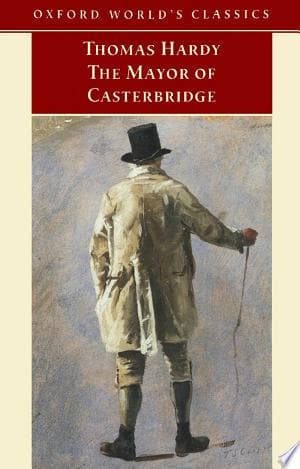
Thomas Hardy (2008)
Genre
Literary Fiction / Historical Fiction
Reading Time
12-15 hours
Key Themes
See below
Sign in to track this book
A man's drunken choice to auction his wife and child at a country fair echoes for two decades, forcing him to face a past he tried to bury as the Mayor of Casterbridge.
The story begins with Michael Henchard, a young, jobless hay-trusser, his wife Susan, and their infant daughter Elizabeth-Jane, walking toward the Weydon Priors fair. In a drunken rage, Henchard decides to sell his family. He publicly offers Susan and Elizabeth-Jane to the highest bidder. A sailor named Newson, passing through, agrees to buy them for five guineas. A furmity-seller sees the deal. Susan, after some hesitation and regret, leaves with Newson, believing the sale is legal. Henchard, sober, feels deep regret and vows to stop drinking for twenty-one years, the length of his age at the time of the sale.
Eighteen years pass. Susan Henchard, now a widow, and her daughter Elizabeth-Jane Newson (who thinks Newson was her father) arrive in the busy town of Casterbridge. Susan's last wish is to find Michael Henchard, driven by duty and perhaps some lingering feeling, to fix the past. They discover that Michael Henchard has become the highly respected and wealthy Mayor of Casterbridge, a successful corn merchant, and a leader in the community. His change from impulsive hay-trusser to the town's most important citizen is remarkable, a sign of his ambition and his vow.
Susan, recognizing Henchard, first keeps her identity secret. She and Elizabeth-Jane rent rooms in Casterbridge and watch him quietly. Eventually, Susan sends Henchard a letter, telling him she and Elizabeth-Jane are there. Henchard, shocked and deeply shamed by his past, decides to acknowledge them, but insists on secrecy to protect his name. He publicly courts Susan, pretending they are meeting for the first time, and later remarries her, making Elizabeth-Jane his legal daughter in Casterbridge's eyes. This act is an attempt to make up for his past sin and keep his social standing.
Around the time of Susan's return, a young, smart, and modern Scottish man named Donald Farfrae arrives in Casterbridge. He impresses Henchard with his knowledge of new farming methods, especially a way to fix spoiled corn. Henchard sees Farfrae's talent and offers him a job as his manager. Farfrae quickly becomes essential, updating Henchard's business and winning the affection of the townspeople, including Elizabeth-Jane. However, Farfrae's growing popularity and different personality soon clash with Henchard's traditional, impulsive, and sometimes harsh nature, starting their future rivalry.
Despite their first friendship, Henchard's possessive and jealous side begins to show. He resents Farfrae's growing influence and the town's admiration for him. More importantly, he notices the growing affection between Farfrae and Elizabeth-Jane, which increases his insecurity. Their different business styles, Henchard's reliance on instinct versus Farfrae's scientific methods, cause problems. A big disagreement over a public event, where Farfrae's chosen entertainment is preferred over Henchard's, makes their conflict worse. Henchard, in a fit of anger, fires Farfrae, a decision he soon regrets.
Tragedy occurs when Susan falls ill and dies. Before her death, she writes a letter for Henchard, to be opened on Elizabeth-Jane's wedding day. However, Henchard, in his grief, finds and reads the letter early. The contents shock him: Susan reveals that the Elizabeth-Jane he has been raising is not his biological daughter. His true daughter, also named Elizabeth-Jane, died soon after the sale. Susan, out of sadness and a wish for company, raised Newson's daughter as her own, giving her the same name. This news shatters Henchard's already fragile sense of self and purpose, making him feel even more alone.
Adding to Henchard's troubles, Lucetta Le Sueur, a beautiful and stylish woman with whom Henchard had an affair years ago in Jersey, arrives in Casterbridge. She inherited money and comes to town, at first to discreetly ask about Henchard, as she has his letters from their affair. Henchard, seeing a chance to marry a rich woman and secure his future, proposes to Lucetta. However, Lucetta is more attracted to the charming and successful Donald Farfrae. Despite her initial agreement to marry Henchard, she falls in love with Farfrae, creating a complex love triangle and further involving Henchard in his past.
Lucetta ultimately rejects Henchard and secretly marries Donald Farfrae, much to Henchard's bitter anger. Farfrae, with Lucetta's money, starts his own successful corn business, directly competing with Henchard. Henchard's business fortunes rapidly decline due to bad investments, poor decisions, and Farfrae's better methods. His twenty-one-year vow of sobriety also ends, and he starts drinking again, further harming his reputation and judgment. The town, once admiring Henchard, now increasingly favors Farfrae, clearly reversing their positions.
Henchard's fall speeds up when the old furmity-seller from Weydon Priors, now a poor beggar, arrives in Casterbridge. During a public court session where Henchard is serving as a magistrate (though his term as mayor has ended), she recognizes him and drunkenly exposes the scandalous sale of his wife and child eighteen years earlier. This public revelation completely destroys Henchard's carefully built image and his remaining social standing. Lucetta, deeply upset by the exposure of her link to Henchard's past, and fearing her own letters to him will be revealed, tries to hide her distress, but the damage is done.
Casterbridge prepares for a visit from a Royal person, an event that shows the social hierarchy and public morality. During the celebrations, Henchard's old letters to Lucetta, revealing their past affair, are found by a group of townspeople. In a cruel act of public shame, they organize a 'Skimmington Ride' - a strange parade with figures of Henchard and Lucetta - through the streets of Casterbridge. The sight of this public mockery, exposing her secret past, is too much for Lucetta. Already fragile, she collapses and dies soon after, driven to her death by the town's harsh judgment.
Just as Henchard tries to rebuild his life and fix his relationship with Elizabeth-Jane, Newson, Elizabeth-Jane's true father, unexpectedly returns to Casterbridge. He has come back to claim his daughter, having heard of Susan's death. Henchard, fearing he will lose Elizabeth-Jane completely, first lies and tells Newson that she is dead. However, his lie is eventually found out, and Newson confronts him. Devastated by the loss of Elizabeth-Jane's affection and facing complete social rejection, Henchard leaves Casterbridge, a broken man, wandering the countryside in despair.
Elizabeth-Jane eventually marries Donald Farfrae, finding happiness and stability. Henchard, living a lonely and poor life, makes one last attempt to reconnect with Elizabeth-Jane on her wedding day, bringing her a caged goldfinch as a gift. However, she rejects him, still hurt by his past lies and the pain he caused. Henchard, accepting his fate, retreats further into isolation. He is later found dead in a lonely cottage, having left a will asking that he not be mourned, remembered, or even named after his death. This is a final sign of his deep despair and self-punishment.
The Protagonist/Tragic Hero
Henchard begins as an impulsive, self-destructive man who achieves success through penance, only to be undone by his inherent flaws and the re-emergence of his past, leading to a tragic, lonely end.
The Deuteragonist/Moral Compass
From a passive, innocent girl subjected to others' decisions, Elizabeth-Jane matures into a wise, self-reliant woman who finds peace and happiness.
The Antagonist/Rival/Love Interest
Farfrae rises from a traveling stranger to the most respected and successful man in Casterbridge, eventually marrying Elizabeth-Jane and embodying the future of the town.
The Supporting
Susan returns to Casterbridge to seek reconciliation and stability, but her death and the revelation of her secrets propel the plot forward and deepen Henchard's tragedy.
The Supporting
Lucetta seeks to escape her past with Henchard and secure a respectable future with Farfrae, but her secrets are exposed, leading to her tragic death by public shaming.
The Supporting
Newson appears at the beginning, disappears, and returns at the end to reclaim his daughter, inadvertently sealing Henchard's fate.
The Mentioned
Her brief appearances bookend Henchard's rise and fall, serving as a constant reminder and ultimate exposer of his past.
Hardy explores how much human lives are set by fate or shaped by personal choices. Henchard's first impulsive act of selling his family seems to lead to a tragic life, with every later attempt to make amends or escape his past failing. He often blames his troubles on 'destiny' or 'bad luck.' Yet, his downfall also comes from his character flaws: his pride, jealousy, impulsiveness, and inability to change. The novel suggests a complex interaction where initial choices create lasting effects, but personal nature and social pressures also play a big part. For example, Henchard's decision to fire Farfrae is a direct act of free will with serious results, yet he often feels an unseen force guiding his ruin.
“''What is to be will be,' said he. 'And what is not to be won't be, so it's no use to bother about it.'”
The novel clearly shows how past actions, especially moral wrongs, can relentlessly haunt a person and shape their future. Henchard's act of selling his wife and child is the core sin that affects his entire life. Despite his rise to power and his attempts to make amends, the secret keeps coming back through Susan, the furmity-seller, and Lucetta's letters. The past is not just a memory, but an active, inescapable force that ultimately dismantles Henchard's carefully built life, proving that some sins cannot be fully outrun or forgiven, especially when society remembers them for a long time.
“''I am to be a man of my word,' said Henchard. 'And I am. But I'm not a man of my past. That's what I am not.'”
The novel highlights how fragile social standing is and how much reputation matters in Victorian society. Henchard's whole adult life in Casterbridge is a performance to keep his image as a respectable, successful man, hiding his scandalous past. His fear of exposure drives many of his decisions, such as his secret remarriage to Susan. The public exposure by the furmity-seller and the 'Skimmington Ride' show the powerful impact of public opinion and the lasting damage to one's social credit. Lucetta's death, too, is a direct result of her fear for her reputation. The novel shows how a man's worth can be instantly taken away when his perceived respectability is shattered.
“''A man's past is not like a book, to be closed at will. It is the very ground he stands upon, and it will rise up through him.''”
The conflict between old ways and new ideas is a main theme, shown by the rivalry between Michael Henchard and Donald Farfrae. Henchard represents the traditional, intuitive, and often impulsive way of doing business and living, relying on experience and gut feelings. Farfrae, on the other hand, embodies modernity, scientific methods, and rational efficiency. His introduction of new farming techniques and his charming, progressive outlook quickly make him popular and successful, eventually overshadowing Henchard. This theme reflects the wider societal changes happening during the Victorian era, where industrialization and scientific progress challenged established customs and hierarchies, leaving those unable to adapt, like Henchard, behind.
“''His was a nature that could not be improved in its essential build by any process of cultivation.''”
The various relationships in the novel mix love, duty, and intentional or accidental deception. Henchard's initial 'sale' of Susan is a betrayal, but her return is motivated by duty and a lingering connection. Their remarriage is a practical arrangement to make Elizabeth-Jane legitimate and protect Henchard's reputation, rather than a renewed love. Elizabeth-Jane's entire life is based on a lie about her parents. Lucetta's relationship with Henchard is a secret affair she tries to hide, leading to more deception in her marriage to Farfrae. These linked elements show the moral compromises characters make and the emotional cost of living with falsehoods, often leading to tragic outcomes for everyone involved.
“''It was not until the end of the first year of his remarriage that he began to comprehend the full meaning of his position.''”
Henchard's 21-year vow to abstain from alcohol.
After selling his wife and child in a drunken stupor, Michael Henchard swears an oath to abstain from alcohol for twenty-one years, the exact duration of his age at the time of the sale. This oath is a powerful symbol of his remorse and his determination to change. It frames his rise to success, as his period of sobriety directly correlates with his prosperity and respectability. Its expiration, precisely as his fortunes begin to decline, marks a symbolic return to his original, flawed nature and serves as a major turning point, allowing him to succumb to his weaknesses once more and accelerating his downfall.
Susan's letter revealing Elizabeth-Jane's true parentage.
Before her death, Susan writes a letter intended for Michael Henchard, to be opened on Elizabeth-Jane's wedding day, revealing that the Elizabeth-Jane he knows is not his biological daughter. Henchard, in his grief, reads it prematurely. This device is a classic example of dramatic irony and deferred revelation. It not only shatters Henchard's understanding of his relationship with Elizabeth-Jane but also removes a key motivation for his actions (his desire to atone for his 'true' daughter's supposed death). The timing of its discovery amplifies the tragedy, adding another layer of despair to Henchard's already crumbling life.
A public shaming ritual using effigies.
The Skimmington Ride is a traditional, brutal form of public shaming where effigies of individuals accused of moral transgression (often adultery) are paraded through the town. In the novel, this device is used to publicly humiliate Lucetta and Michael Henchard, exposing their past affair to the entire town. It serves as a powerful symbol of Victorian society's harsh judgment and the devastating consequences of violating social norms. The ride directly causes Lucetta's collapse and subsequent death, demonstrating the destructive power of gossip and public scorn on fragile reputations and individuals, and further isolating Henchard.
Nature's reflection of human fortunes and emotions.
Hardy frequently uses descriptions of the weather and agricultural seasons to mirror the emotional state and fortunes of his characters, particularly Michael Henchard. Good harvests and favorable weather often coincide with Henchard's periods of prosperity and hope, while storms, blighted crops, and harsh winters reflect his despair, financial ruin, and personal turmoil. For example, a sudden hailstorm ruins Henchard's corn, directly contributing to his financial woes. This device reinforces the theme of fate and humanity's vulnerability to external forces, drawing parallels between the unpredictable nature of the land and the unpredictable twists of human destiny.
“What is to be will be.”
— Spoken by Michael Henchard early in the novel, reflecting his fatalistic view.
“A man's opinion of himself is the only stable point in him.”
— A general observation made by the narrator about human nature, particularly relevant to Henchard's pride.
“The truth is a thing that sometimes flies about in the air for twenty years or more, before it at last settles on the ground.”
— Narrator's comment on the slow revelation of secrets and consequences.
“Happiness is but a rare episode in this world.”
— A melancholic reflection by the narrator on the general human condition.
“He knew what good butter was, and what bad butter was. And that was all he knew.”
— A description of Henchard's practical, unrefined knowledge in contrast to more educated characters.
“Character is fate.”
— A recurring theme and a direct statement by the narrator, linking Henchard's personality to his downfall.
“To be loved to madness -- such was her great desire.”
— Describing Lucetta Templeman's romantic aspirations and her pursuit of affection.
“He was a man who could not be content to let well alone.”
— A common criticism of Henchard's impulsiveness and inability to manage his own affairs peacefully.
“Some things are not for women to know.”
— Henchard's dismissive attitude towards Elizabeth-Jane's curiosity, reflecting patriarchal views of the time.
“The greatest misfortune of the world is that there are too many people in it.”
— A cynical remark made by a minor character, reflecting a bleak view of society.
“He had not known how to love her until he had lost her.”
— Henchard's realization of his true feelings for Elizabeth-Jane after her departure.
“When a man is out of luck, he is out of everything.”
— A fatalistic observation about the pervasive nature of misfortune once it begins.
“He was a man of fine, if rugged, honour.”
— A description of Henchard's complex moral code, which, despite his flaws, included a sense of integrity.
“The past was not to be got rid of so easily.”
— A reflection on the enduring impact of past actions and decisions on the present.
Ready to see how well you understood this book? Take our interactive quiz with 10 questions.
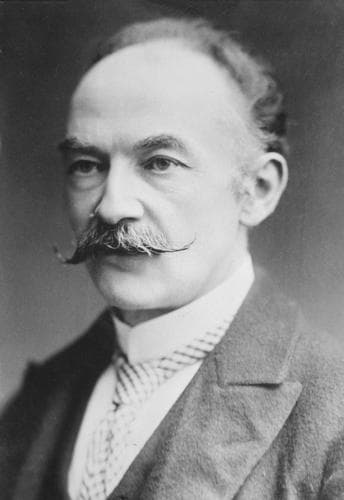
Thomas Hardy was an English novelist and poet. A Victorian realist in the tradition of George Eliot, he was influenced both in his novels and in his poetry by Romanticism, including the poetry of William Wordsworth. He was highly critical of much in Victorian society, especially on the declining status of rural people in Britain, such as those from his native South West England.







