“There are two sides to every question, and I am on the side of the devil.”
— The Master (James Durie) declares his allegiance to the darker side of human nature.

Robert Louis Stevenson (1889)
Genre
Historical Fiction
Reading Time
9-12 hours
Key Themes
See below
Sign in to track this book
After the Jacobite Rebellion, the charming and cruel Master of Ballantrae causes destruction across continents, harming his brother, his wife, and everyone else he meets.
The story begins in 1745, during the Jacobite Rebellion. The Durie family of Durrisdeer — the old Lord Durrisdeer, his sons James (the Master of Ballantrae) and Henry, and their household — faces a choice: which son will join Bonnie Prince Charlie's forces and which will stay to protect the family estate. This strategy aims to safeguard the family regardless of the rebellion's outcome. James, the charismatic older son, insists on going, despite Henry's willingness to sacrifice himself. Henry, the younger, less appealing, and more dutiful brother, remains at home with their father and the estate manager, Ephraim Mackellar, who narrates much of the story. The Master's departure is a grand, dramatic event, leaving Henry feeling overshadowed and resentful.
After the defeat at Culloden, news arrives that the Master of Ballantrae has died. The family mourns, though Henry's grief is complicated by relief and a heavy sense of responsibility. He becomes the heir and eventually marries his cousin Alison Graeme, to whom the Master had been loosely promised. Henry, naturally sad and careful, feels increasingly burdened by the estate's debts, which the Master had secretly accumulated with lavish spending before leaving. He works hard to restore the family's finances, but his brilliant, supposedly martyred brother's shadow hangs over his life and marriage, making him feel constantly inadequate.
Years after his supposed death, James Durie, the Master of Ballantrae, returns to Durrisdeer, very much alive. His reappearance causes chaos in the household. He is charming and witty, but also ruthless and cruel, especially towards Henry. James says he survived Culloden and had been living abroad, involved in various schemes and pirate adventures. He immediately tries to reclaim his old position and torment Henry, subtly undermining his authority, making fun of him in front of his wife and father, and demanding money to pay off his old debts. The Master's presence poisons the atmosphere, creating distance between Henry and Alison, and worsening Henry's already fragile mental state.
The Master's constant torment and financial demands push Henry to his limit. One night, fueled by drink and years of suppressed anger, Henry confronts James. Their argument grows into a desperate duel by moonlight in the garden. Henry, despite his inexperience, wounds James badly. Believing he has killed his brother, Henry is filled with horror and regret. However, James survives, though he is seriously injured. The duel strengthens the brothers' hatred for each other and leaves Henry a marked man, forever haunted by trying to kill his brother. The family, especially Alison, is horrified, and Henry's reputation suffers, while James gains a strange kind of sympathy.
After the duel, the Master, still recovering, leaves Durrisdeer again, with his loyal but sinister Irish servant, Burke. Though physically absent, James continues to bother Henry. He sends agents, like the despicable Mr. Bally, to demand money from Henry, threatening to expose Henry's role in the duel and further ruin his reputation. Henry, desperate to protect his family and name, continues to pay, draining the estate. These financial burdens and the constant threat of the Master's return or exposure of his past misdeeds keep Henry in a state of anxiety and despair, deepening his bitterness.
Years pass, and Henry's life at Durrisdeer becomes unbearable. The constant financial demands from the Master's agents, combined with his own internal torment and the growing coldness from his family, push him to the edge. The estate is heavily mortgaged, and Henry, now frail and prematurely aged, decides to leave Scotland. He learns the Master has gone to the American colonies, supposedly involved in a scheme to find hidden treasure. Henry, with Mackellar and his young son, Alexander, begins a desperate journey across the Atlantic, determined to find James and end his destructive influence, even if it means his own destruction.
Henry, Mackellar, and Alexander arrive in the American colonies and, after much difficulty, find the Master at a remote wilderness outpost. James is with a group of smugglers and adventurers, including the French-Canadian forest runner, Chew. The Master is involved in a questionable venture, seemingly looking for treasure hidden by a former French official. The reunion between the brothers is full of tension. Henry has visibly deteriorated, while James, though still charming, shows signs of his wild life. The remote and harsh environment increases the sense of danger and the brothers' simmering animosity.
The Master, wanting to secure the rumored treasure, reluctantly lets Henry and his group join their expedition. The search for the treasure in the rugged American wilderness is hard and dangerous, with encounters with hostile natives and the constant threat of starvation. During this time, the Master continues his psychological torture of Henry, though the harsh conditions sometimes force an uneasy truce. Henry, however, remains focused on his goal: to finally confront James and end his destructive influence. The physical difficulties reflect the emotional torment, pushing both brothers to their limits.
After the treasure is supposedly found (though its true nature is unclear), the Master suddenly collapses and dies. His death is believed to be from exhaustion, the harsh conditions, and perhaps a deeper physical decline. Mackellar, the dutiful and observant servant, is present at his death. Despite his relief, Mackellar carefully ensures James's body is properly buried, according to his final, somewhat strange, wishes. He believes that with the Master's death, the long nightmare for the Durie family is finally over, and Henry can find peace from his brother's harmful influence. The solemn burial in the wilderness marks a grim end to James's troubled life.
In a terrible twist, the Master's body, which had been buried for a short time, is dug up by his loyal servant, Burke, who tries to revive him using some unknown method. To the astonishment and fear of those watching, James Durie briefly stirs and opens his eyes. This shocking 'resurrection,' however brief and incomplete, is the final blow for Henry. The sight of his brother, seemingly returned from the dead, shatters his already fragile mind and physical health. Overwhelmed by years of torment and this ultimate horror, Henry collapses and dies almost immediately from a heart attack, finally giving in to the psychological burden his brother caused. The Master then truly dies, leaving both brothers dead in the American wilderness.
With both brothers dead, Mackellar, the only surviving adult of the Durie party, takes charge. He and young Alexander, Henry's son, return to Scotland. The Durrisdeer estate, once proud, is now heavily indebted and broken, largely because of the Master's extravagant habits and Henry's desperate attempts to appease him. The direct male line of the Durie family ends with the deaths of James and Henry. Mackellar, though relieved of the Master's immediate presence, carries the heavy burden of seeing the tragic destruction of the family he served. The story concludes with a somber thought on the lasting power of evil and the devastating results of brotherly hatred.
The Antagonist
From a charming but selfish young man, he devolves into a purely malevolent force, dying a lonely and unlamented death in the wilderness.
The Protagonist
Starts as a dutiful but resentful brother, becomes increasingly bitter and obsessed, and ultimately succumbs to the psychological torment inflicted by James.
The Supporting
Remains steadfast in his duty and loyalty, witnessing the complete destruction of the family he served.
The Supporting
Initially a loving wife, she becomes increasingly conflicted and cold towards Henry due to her unresolved feelings for James.
The Supporting
From a proud patriarch, he becomes a broken old man, dying in despair over his sons' feud.
The Supporting
Remains utterly loyal to the Master from beginning to end, even beyond death.
The Supporting
A child witness to the family's destruction, he is left to inherit a ruined name and estate.
The Mentioned
No specific arc, serves as a recurring instrument of the Master's torment.
The Supporting
No specific arc, serves as a foil and witness to the Master's final schemes.
The novel shows how one truly evil person, James Durie, can ruin an entire family and estate. The Master's evil is not just physical violence; it is a hidden psychological torment that grows and spreads. His selfishness, charm, and lack of conscience systematically break Henry's sanity, poison his marriage to Alison, and lead to the downfall of the Durie name and fortune. Mackellar's narration consistently points to James's 'infective influence,' showing how his presence drains life and goodness from Durrisdeer, leaving only bitterness and despair. The Master's evil is a destructive force that consumes everything.
“For years it was plain Henry had a terror of the Master. It was not his fault if he had been born with a weaker nature, and he had suffered for it, God knows, by a lifetime of misery. But the Master had come back, and had found a way to torture him anew.”
At its heart, the book explores the destructive nature of an extreme rivalry between brothers. The initial sibling dynamic, with James as the favored, charismatic older brother and Henry as the dutiful, overshadowed younger, quickly turns into a bitter, all-consuming hatred. The Master deliberately torments Henry, enjoying his brother's suffering and wanting to reclaim what he sees as his birthright. Henry, in turn, develops an obsessive, murderous hatred for James, which consumes his life and leads to his death. The duel in the garden and the final confrontation in the wilderness are high points of this deep-seated animosity, showing how such a powerful, destructive bond can lead to mutual ruin.
“He knew he was despised by the Master, and he hated him; he knew he was despised by his own father, and he hated him; he knew he was despised by his wife, and he hated her. And he hated himself most of all.”
Stevenson examines the complexities of good and evil through James and Henry. James embodies pure, unrepentant evil, hidden by charm and wit, making him appealing yet frightening. Henry, though aiming for goodness and duty, is slowly corrupted by the Master's influence, driven to desperation and murderous intent. The novel suggests that even a 'good' man can be pushed to commit evil acts when tormented relentlessly. The story questions if evil is inherent or a corrupting force, and how hard it is for virtue to survive against a truly malicious will. Henry's own moral decline makes a simple good-vs-evil distinction unclear.
“I have been as good a brother as I could; but I have been an ill man, and I have done ill deeds.”
The theme of appearance versus reality is central, especially concerning the Master of Ballantrae. James is outwardly charming, witty, and captivating, making him loved by his father and, to some extent, Alison. However, beneath this polished exterior is a ruthless, selfish, and amoral individual. Conversely, Henry, who appears sullen and uncharismatic, is in fact diligent and responsible. The novel constantly contrasts James's captivating facade with his true, destructive nature, and Henry's perceived inadequacy with his underlying goodness and suffering. Mackellar's narration, though biased, tries to expose the truth behind the Master's beguiling appearance, revealing the devastating reality of his character.
“He was a man of a most winning exterior, and, what is more dangerous, of a most winning mind.”
The novel shows how the past, especially the Master's actions and reputation, affects the Durie family's present and future. James's initial debts, his presumed death, and his later return all tie Henry to a past he cannot escape. The family's legacy, once proud, is damaged by the Master's extravagance and the resulting feud. The narration itself, told through various accounts, emphasizes the lasting impact of past events and how hard it is to escape a family's history of conflict and ruin. Even after the brothers' deaths, the legacy of their hatred continues to haunt the Durrisdeer estate.
“The house of Durrisdeer was like a ship that has been dismasted, and now lies rolling in the trough of the sea, with her cargo shifted and her crew in despair.”
The story is primarily told through the subjective accounts of various characters, especially Mackellar.
The novel employs a framed narrative structure, with the bulk of the story attributed to the memoir of Ephraim Mackellar, the loyal family factor. This primary narration is occasionally interspersed with fragments from other sources, such as the journal of Mr. Rankeillor (the lawyer) and the Master's own letters. This device allows Stevenson to present a multifaceted, yet inherently biased, perspective on the events. Mackellar, as a devoted servant to Henry and a moralistic observer, shapes the reader's perception of the Master as an unequivocally evil figure, while also highlighting Henry's suffering. The use of multiple, sometimes conflicting, accounts adds depth and ambiguity, forcing the reader to interpret the truth amid subjective viewpoints.
A recurring motif of the Master's miraculous survival and reappearance, driving the plot's central conflict.
The Master's initial 'death' at Culloden and his subsequent, shocking return years later is a pivotal plot device. It not only sets the main conflict in motion but also establishes James as a larger-than-life, almost supernatural figure, whose malevolent influence cannot be easily escaped. This device is repeated in a more macabre fashion at the very end when his body briefly stirs after burial, serving as the final, fatal shock to Henry. This 'resurrection' motif elevates James beyond a mere mortal antagonist, giving him an almost demonic quality that relentlessly haunts Henry and drives the narrative forward through escalating tension and despair.
A MacGuffin that drives the plot to the American wilderness and brings the brothers to their final confrontation.
The 'hidden treasure' in the American wilderness serves as a significant MacGuffin. While its actual existence and value remain somewhat ambiguous, the pursuit of it provides the primary motivation for the Master to travel to the colonies and, crucially, for Henry to follow him. This device allows the setting to shift dramatically from the Scottish estate to the exotic and dangerous American frontier, intensifying the atmosphere and isolating the characters. The treasure itself is less important than its function in bringing the brothers together for their ultimate, fatal confrontation, symbolizing the elusive and destructive pursuits that define the Master's life and Henry's obsession.
The family estate as a reflection of the family's moral and financial decline.
The Durrisdeer estate itself serves as a powerful symbol throughout the novel. Initially, it represents the family's pride, heritage, and stability. However, as the Master's influence takes hold, the estate becomes a physical manifestation of the family's moral and financial decay. It is burdened by debt, its atmosphere poisoned by strife, and its resources drained by James's demands and Henry's desperate attempts to appease him. By the end, with the family line effectively extinguished and the estate in ruin, Durrisdeer symbolizes the complete destruction wrought by the fraternal hatred and the Master's corrupting power, leaving behind a hollow shell of its former glory.
A pivotal event that physically manifests the brothers' psychological warfare and irrevocably changes their relationship.
The moonlight duel between James and Henry is a critical plot device. It is the physical culmination of years of psychological torment and suppressed hatred, a moment where Henry finally snaps and directly confronts his tormentor. The duel's immediate aftermath, with James gravely wounded and Henry believing him dead, irrevocably alters their relationship and Henry's mental state, marking him as a 'murderer' in his own mind and in the eyes of some. This event escalates the conflict beyond mere psychological warfare into a realm of direct, violent confrontation, setting the stage for the increasingly desperate and tragic events that follow in the latter half of the novel.
“There are two sides to every question, and I am on the side of the devil.”
— The Master (James Durie) declares his allegiance to the darker side of human nature.
“I have been a sore burden to you this many a day.”
— The Master acknowledges the trouble he has caused his brother Henry.
“It is a strange thing how a man's life may be twisted by a single word.”
— Reflection on how fate can be altered by a single decision or utterance.
“I have been a man of many sorrows, but I have never been a coward.”
— The Master asserts his bravery despite his troubled life.
“The world is full of a number of things, I'm sure we should all be as happy as kings.”
— A somewhat ironic comment on the potential for happiness in life.
“He that is down need fear no fall.”
— A proverb-like statement about resilience in adversity.
“I have been a wanderer upon the earth, and have no home.”
— The Master reflects on his rootless and exiled existence.
“It is a fine thing to be a gentleman, but it is a finer to be a man.”
— Commentary on the value of true character over social status.
“The devil is not so black as he is painted.”
— Suggests that evil is often exaggerated or misunderstood.
“I have loved you better than you have loved me.”
— The Master claims a deeper affection in his relationship with Henry.
“There is no such thing as a moral or an immoral book. Books are well written, or badly written.”
— A statement on the nature of art and morality (though often misattributed to Oscar Wilde, it appears in this context).
“The world is so full of a number of things, I'm sure we should all be as happy as kings.”
— A repeated, slightly varied line emphasizing the irony of human discontent.
“I have been a fool, but I am not a knave.”
— The Master distinguishes between foolishness and dishonesty.
“It is a poor heart that never rejoices.”
— A saying about the importance of finding joy in life.
Ready to see how well you understood this book? Take our interactive quiz with 10 questions.
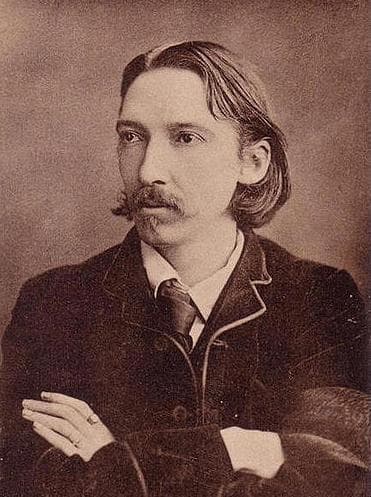
Robert Louis Stevenson was a Scottish novelist, essayist, poet and travel writer. He is best known for works such as Treasure Island, Strange Case of Dr Jekyll and Mr Hyde, Kidnapped and A Child's Garden of Verses.







