“Manuscripts don't burn.”
— Voland's assertion to Margarita after she expresses despair over the burned manuscript.

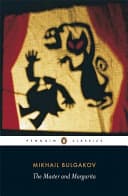
Mikhail Bulgakov (2007)
Genre
Fantasy / Historical Fiction
Reading Time
13-15 hours
Key Themes
See below
Sign in to track this book
When the Devil, a gun-toting, vodka-swilling cat, and their crew bring supernatural chaos to 1930s Moscow, a woman makes a deal with evil to find her vanished lover.
The novel starts at Moscow's Patriarch Ponds. Mikhail Berlioz, chairman of the literary association MASSOLIT, and the poet Ivan Bezdomny are discussing that Jesus Christ did not exist. A mysterious foreign man, who calls himself Voland, joins them. He shares a detailed story of Pontius Pilate and Jesus's crucifixion, saying he saw it. He then predicts Berlioz will soon die by decapitation by a Komsomol girl. This comes true when Berlioz slips and a tram runs him over. Ivan sees this, becomes sure Voland is the devil, and tries to chase him. Voland's strange group, including a giant black cat named Behemoth, stops him. Ivan ends up in a psychiatric hospital.
In the psychiatric hospital, Ivan Bezdomny tries to understand the strange events of the day. He tells his story to Dr. Stravinsky, who says he has schizophrenia and suggests a calming bath. Later, Ivan meets another patient, an unnamed man called 'the Master.' The Master says he was a brilliant writer who wrote a novel about Pontius Pilate. The literary establishment and critics rejected it, which led to his mental breakdown and the burning of his manuscript. He tells Ivan about his love for Margarita, who supported him, and how he now believes his novel is gone and his life ruined.
Voland and his group take over the Variety Theatre. Korovyov and Behemoth host a 'black magic' performance. During the show, they make money appear from nowhere, which rains on the audience. It turns into paper or labels shortly after. They also offer women new fashionable clothes, which disappear when they go outside. The audience's greed, vanity, and superficiality are exposed and made fun of. The master of ceremonies, Arkady Apollonovich Sempleyarov, tries to expose the 'trickery,' but Korovyov humiliates him publicly by revealing details of his private life. The show ends in chaos. The theatre director, Styopa Likhodeyev, was sent to Yalta by Voland earlier. The financial director, Rimsky, barely escapes a vampiric Hella.
Nikanor Ivanovich Bosoy, the chairman of the housing cooperative where Berlioz lived, is visited by Korovyov. Korovyov offers to rent Berlioz's apartment to Voland. Korovyov pays him with foreign currency, which Nikanor Ivanovich reluctantly takes. However, he soon finds that the rubles in his pockets become foreign currency, specifically dollars, which is illegal to have. Scared, he tries to get rid of them but is caught by agents who accuse him of currency speculation. He is arrested and, like Ivan, ends up in the psychiatric hospital, where he has strong hallucinations of Korovyov and a talking cat, making reality even more confusing for him.
Margarita Nikolaevna, the Master's secret lover, lives a comfortable but unfulfilled life with her wealthy husband. Her only real happiness came from her relationship with the Master and his novel. After the Master disappeared and was thought to be mad, Margarita feels deep sadness and longing, believing he is dead or left her. One day, in a park, she meets Azazello, a member of Voland's group. He offers her a magic cream. He promises that if she uses it, she will get her youth and beauty back, and, more importantly, have a chance to see the Master again. But she must agree to host Voland's annual Spring Ball.
Margarita, desperate to find the Master, puts on Azazello's cream. She instantly becomes a beautiful, naked witch, regaining her youth and gaining the ability to fly. Before the ball, she gets revenge on Latunsky, the literary critic who wrote the harshest review of the Master's novel. She flies to his apartment building, smashing windows and causing general trouble, scaring the residents. Her flight over Moscow gives her a freeing view of the city. She then meets Azazello again, who takes her to Voland's apartment, which is now a strange, ever-growing space.
Margarita arrives at Voland's apartment, where she is introduced to him and his group. She is asked to be the hostess for Voland's Great Ball, an annual event where the souls of sinners and historical figures from different times come from hell to honor Satan. Naked and wearing only a heavy chain, Margarita spends hours greeting an endless line of murderers, traitors, and other condemned souls, including famous figures like Messalina and Caligula. Despite being tired and uncomfortable, she stays calm, earning Voland's respect and fulfilling her part of the deal, all while hoping to be reunited with the Master.
After the ball, Voland offers Margarita one wish. Though she could ask for her own happiness or revenge, her selfless love for the Master wins out, and she asks for his return. To her great joy, the Master appears, looking the same but still in his hospital gown. He expresses his disbelief, still thinking his novel is gone. Voland, amused, produces the burned manuscript, saying, 'Manuscripts do not burn.' The Master and Margarita are reunited, but their happiness is brief as Voland says their earthly lives are not truly over and he has more plans for them.
Throughout the main story, the tale of Pontius Pilate and Yeshua Ha-Notsri (Jesus) unfolds at the same time, told by Voland and later read by Ivan and the Master. This part details Pilate's inner struggle and his unwilling choice to condemn Yeshua to death, even though he knew Yeshua was innocent and wise. Pilate is troubled by Yeshua's words and feels great guilt and loneliness for two thousand years. The Master's novel ends with Pilate's suffering on a moonlit path, always wanting to talk with Yeshua. This story contrasts with the corruption in Moscow.
Voland, after seeing the Master and Margarita's strong love, decides their future. He determines that they do not deserve 'light' (heaven) but deserve 'peace' (a form of eternal rest and companionship). Azazello gives them poisoned wine, killing them in their sleep. Their bodies are found, and authorities start an investigation into the strange events in Moscow. However, Voland and his group arrange their escape from Moscow, disappearing in a dramatic show of magic and destruction, leaving behind a confused and shocked city.
The Master and Margarita, now spirits, join Voland and his group on a final, mystical flight through the moonlit land. Their earthly forms are gone, and they travel toward their eternal home. During this journey, Voland frees Pilate, letting him finally walk and talk with Yeshua on the moonlit path, ending his two-thousand-year suffering. The Master and Margarita are led to a beautiful, peaceful place, a house where they can be together forever, and the Master can keep writing, free from the world's judgments. They find their ultimate comfort and calm.
Moscow is confused after Voland's departure. The authorities struggle to explain the many disappearances, the currency changes, and the general chaos. Many characters affected by Voland's mischief are left traumatized or in mental care, trying to make sense of their experiences. Ivan Bezdomny, after leaving the asylum, stops writing poetry and becomes a professor of history and philosophy. He is forever changed by meeting Voland and the Master. Every year, on the spring full moon, he remembers the events at Patriarch Ponds and the Master's story, thinking about the mysteries he saw.
The Antagonist
Voland remains largely unchanged, serving as a catalyst for other characters' arcs and a cosmic arbiter of justice. He ultimately grants the Master and Margarita their eternal 'peace'.
The Protagonist
The Master goes from despair and artistic defeat to finding eternal peace and validation for his work, reunited with Margarita.
The Protagonist
Margarita transforms from a despairing, earthly woman into a powerful witch and ultimately finds eternal peace and reunion with her beloved Master.
The Supporting
Ivan transforms from a dogmatic, official poet into a more thoughtful, contemplative professor, forever haunted by the supernatural events he witnessed.
The Supporting
Pilate endures two millennia of torment for his moral failing, ultimately finding release and peace through the Master's novel and Voland's intervention.
The Supporting
Yeshua remains a steadfast figure of truth and compassion, influencing Pilate's eternal fate and embodying spiritual light.
The Supporting
Korovyov remains a consistent trickster figure, ultimately revealing his true, more somber demonic form upon departure.
The Supporting
Behemoth remains a chaotic and humorous figure, transforming into a more serious, though still cat-like, demon upon departure.
The Supporting
Azazello remains a consistent enforcer, transforming into a more serious, winged demon upon departure.
The Mentioned
Berlioz's arc is cut short by his sudden death, serving as a shocking introduction to Voland's powers and the novel's supernatural elements.
The Supporting
Bosoy's greed leads to his comical torment and eventual confinement, a victim of Voland's chaotic justice.
The novel changes common ideas of good and evil. While Voland is the Devil, his actions often bring a kind of justice, punishing the corrupt and hypocritical, and rewarding the pure-hearted like the Master and Margarita. The story of Pontius Pilate and Yeshua directly looks at the moral duty of people to stand for truth, even when facing political pressure. Pilate's suffering for his cowardice shows the lasting effects of moral failures, while Yeshua's goodness shows the power of truth and forgiveness. The Muscovites' small faults are exposed, showing that 'evil' can appear in everyday human corruption.
“'What would your good do if evil did not exist, and what would the earth look like if shadows disappeared from it?'”
The Master's persecution for his novel about Pilate directly addresses artistic freedom and censorship under a harsh government. His work, called 'anti-religious' and 'foreign,' is rejected and causes his mental breakdown. The novel supports the lasting power of truth and real art, famously stating, 'Manuscripts do not burn,' meaning true art cannot be destroyed. Voland's help ensures that the Master's work, which speaks to universal truths, is saved and recognized. This contrasts with the superficial and politically driven literature of MASSOLIT.
“'Manuscripts don't burn.'”
The strong love and loyalty between the Master and Margarita are at the novel's emotional center. Margarita's deep devotion makes her make a deal with the Devil, go through the horrors of the Great Ball, and sacrifice her own immediate desires for the Master's well-being. Their love goes beyond earthly suffering and even death, becoming a powerful, saving force. This idea is compared to the more superficial relationships and selfish desires of many Muscovite characters. It shows love as a deep and changing power that can last against everything.
“'Love leaped out in front of us like a murderer in an alleyway, and struck us both at once! This is how lightning strikes, this is how a Finnish knife strikes!'”
Bulgakov makes fun of the bureaucratic, materialistic, and rigid nature of 1930s Soviet Moscow. Through Voland and his group's actions, the novel shows the widespread corruption, greed, self-importance, and small arguments of literary figures, housing officials, and ordinary citizens. The characters' focus on possessions, their willingness to accuse others, and their fear of authority are strongly ridiculed. The supernatural events remove the pretense of socialist realism and show the underlying absurdity and moral decay, demonstrating how easily order can fall into chaos when human nature is flawed.
“'They're people like any other people, but they've been spoiled by the housing problem.'”
Voland's visit to Moscow is mostly about delivering a kind of cosmic justice. He punishes those who are corrupt, vain, greedy, or cowardly (Berlioz, Nikanor Ivanovich, the critics) and rewards those who are pure of heart, selfless, and truly artistic (the Master and Margarita). His justice is often dramatic, funny, and deeply unsettling, but it balances things in a world where official justice is often random or unfair. Pilate's final release after two thousand years of suffering also speaks to a form of ultimate, though long-delayed, punishment and redemption.
“'Everything will be as it should be, that's how the world is built.'”
A parallel narrative that provides moral and thematic counterpoint
The novel features a continuous, interwoven narrative about Pontius Pilate and Yeshua Ha-Notsri, written by the Master. This 'novel within a novel' serves several crucial functions: it provides a timeless moral and philosophical counterpoint to the contemporary Moscow narrative, exploring themes of truth, cowardice, and responsibility. It also validates the Master's artistic genius, as Voland himself acknowledges its profound truth. The Pilate story acts as a key to understanding the larger themes of good and evil, and ultimately, its completion brings peace to Pilate and the Master.
The supernatural intrudes upon and exposes the mundane reality of Moscow
Bulgakov masterfully blends fantastical and supernatural elements (the Devil's arrival, talking cats, flying witches, disappearing money) into the otherwise mundane, bureaucratic reality of 1930s Moscow. This device creates a sense of the absurd and the uncanny, challenging the rationalist, atheist ideology of Soviet society. The magical elements are not merely decorative; they serve to expose the hypocrisy, greed, and moral failings of the Muscovites, acting as a catalyst for chaos and a vehicle for Voland's unique brand of justice. It highlights the irrationality lurking beneath the surface of a supposedly rational world.
Humorous ridicule used to criticize Soviet society and human foibles
Satire and irony are pervasive throughout the novel, used to mock and criticize various aspects of Soviet society, including its bureaucracy, censorship, official atheism, and the materialistic tendencies of its citizens. Voland and his retinue, through their elaborate pranks and pronouncements, expose the absurdity and hypocrisy of the Muscovite characters. The contrast between the characters' self-importance and their actual moral failings is frequently highlighted through ironic situations and dialogue. This device allows Bulgakov to deliver sharp social commentary while maintaining a darkly comedic tone.
The traditional antagonist acts as a force for justice and truth
Instead of being a purely destructive force, Voland (the Devil) acts as a moral arbiter and a catalyst for justice. He punishes the corrupt, the greedy, and the dishonest, while showing compassion and a unique form of reward to the pure-hearted, like the Master and Margarita. This subversion of the traditional role of the Devil allows Bulgakov to explore complex ethical questions and to critique the prevailing social order, suggesting that true evil lies not in the supernatural, but in the everyday moral failings of humanity. Voland's actions, though often violent and chaotic, ultimately serve a higher, if unconventional, purpose.
“Manuscripts don't burn.”
— Voland's assertion to Margarita after she expresses despair over the burned manuscript.
“Cowardice is the most terrible of vices.”
— Pontius Pilate's internal reflection and later his final thought.
“Everything will be correct, the world is built on that.”
— Voland's philosophical statement to Margarita.
“What would your good do if evil did not exist, and what would the earth look like if shadows disappeared from it?”
— Voland's question to Levi Matvei, highlighting the necessity of balance.
“For some reason, people always imagine that the darker the forces, the more primitive they are.”
— Voland's observation on human misconceptions about evil.
“You spoke as if you denied the existence of shadows or evil, but think: where would your good be if there were no evil?”
— Voland's challenge to Matthew Levi.
“He did not deserve light, he deserved peace.”
— Levi Matvei's message from Jesus about the Master's fate.
“Never talk to strangers.”
— Berlioz's warning to Bezdomny, ironically just before his fatal encounter with Voland.
“There are no evil people, there are only unhappy people.”
— A phrase attributed to Yeshua Ha-Notsri, reflecting his compassionate view.
“The most important thing is to be honest with yourself.”
— A general theme in Yeshua's teachings, emphasizing inner truth.
“Every department has a right to its own opinion. But in the end, it must be correct.”
— Voland discussing bureaucracy and ultimate truth.
“The apartment house at Sadovaya, 302-bis, was so famous because of its extraordinary inhabitants.”
— Opening description of the 'unclean' apartment.
“You are a writer, aren't you? So you should know that everything is possible in the world.”
— Voland's taunt to Berlioz, challenging his rationalistic worldview.
“One must agree that it is not pleasant to live in a world where everything is determined by chance.”
— Voland's argument for a guiding force, even if it is evil.
Ready to see how well you understood this book? Take our interactive quiz with 10 questions.
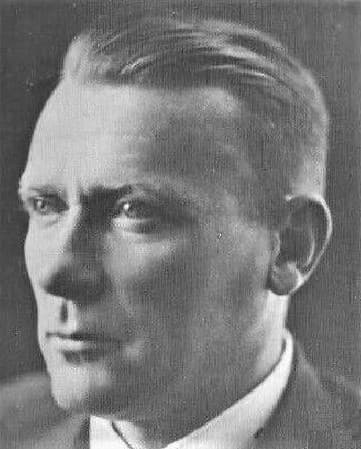
Mikhail Afanasyevich Bulgakov was a Russian, later Soviet writer, medical doctor, and playwright active in the first half of the 20th century. He is best known for his novel The Master and Margarita, published posthumously, which has been called one of the masterpieces of the 20th century.







