BookBrief
The Masque of the Red Death cover
Archivist's Choice

The Masque of the Red Death

Edgar Allan Poe (1922)

Genre

Fantasy / Mystery

Reading Time

12 Minutes

Key Themes

See below

Track Your Reading

Sign in to track this book

Prince Prospero's desperate attempt to outrun the Red Death leads him and his masked revelers into a fatal confrontation with the plague's embodiment within his colorfully decorated abbey.

Synopsis

Prince Prospero, along with a thousand wealthy nobles, retreats to a secluded, opulent abbey to escape the 'Red Death,' a gruesome plague ravaging the land. After months of isolation, Prospero hosts a lavish masquerade ball within seven uniquely colored rooms of his fortress. The revelry is abruptly interrupted by the appearance of a mysterious, uninvited guest, costumed as a victim of the Red Death itself. This ominous figure moves through the distinct chambers, bringing an eerie silence and dread that culminates in a chilling confrontation, forcing the Prince and his guests to confront the very mortality they sought to evade.
Difficulty
Medium
Pacing
Moderate
Mood
Eerie, macabre, reflective, foreboding, mysterious

Plot Summary

The Red Death's Reign

The story begins with the Red Death, a terrible plague that has ruined the country. Its symptoms are gruesome: sharp pains, sudden dizziness, heavy bleeding from the pores, and death within half an hour. The plague spreads fast and is very deadly, causing widespread panic and depopulation. Society is chaotic, with no cure or way to stop it. This grim situation sets the stage for Prince Prospero's extreme actions. The rich and powerful are just as vulnerable as the poor, showing that death affects everyone, which is the main conflict of the story.

Prince Prospero's Retreat

As the Red Death spreads, Prince Prospero takes a drastic step. He gathers a thousand friends and courtiers, all healthy and cheerful, and retreats with them into one of his fortified abbeys. The abbey's walls are high and strong, with iron gates welded shut from the inside once everyone is in. This symbolizes an attempt to shut out the outside world and its suffering, creating an artificial safe place. Prospero intends to escape the plague entirely, believing that by isolating themselves, they can avoid death and continue their lives of pleasure, undisturbed by the grim reality outside.

The Abbey's Interior

Inside the abbey, Prospero provides every luxury: jesters, performers, dancers, musicians, beauty, and wine. He created a world meant to banish all thoughts of the Red Death. The interior is decorated according to his unique, perhaps mad, taste. The focus is on elaborate pleasure. This creation of an artificial paradise shows Prospero's denial and his attempt to control his environment. He believes that by surrounding himself with beauty and pleasure, he can wall off the grim reality of the plague, both physically and psychologically, for himself and his guests.

The Seven Rooms

Months into their isolation, Prince Prospero hosts a grand masquerade ball. The party is held in a suite of seven rooms, each decorated and lit in a single, distinct color: blue, purple, green, orange, white, violet, and finally, black with scarlet windows. These rooms are arranged in an irregular way, making it impossible to see from one end of the suite to the other. This design creates a sense of mystery and disorientation. Guests move through these rooms, each color creating a different mood, forming a maze-like environment for their elaborate celebration, a world designed for escape and illusion.

The Black Room's Terrors

The seventh and final room is unique and unsettling. It is draped in black velvet, and its windows are a deep blood-red, creating a somber atmosphere. In this room stands a gigantic ebony clock. Every hour, the clock chimes with a loud, unusual, and solemn sound that briefly silences the orchestra and makes the dancers pause. This interruption reminds everyone of the passage of time and their mortality. Few of the partygoers dare to enter the black room, sensing its dread, making it a focal point of unease.

The Midnight Intruder

At midnight, as the ebony clock chimes its twelve solemn notes, a new masked figure appears. This figure is unlike any other, with a costume that goes beyond Prospero's usual boundary-pushing taste. The figure is tall and thin, covered from head to foot in grave clothes. Its mask resembles a corpse's stiff features, and most horrifyingly, its clothing is stained with the scarlet marks of the Red Death. This chilling apparition instantly silences the music and stops the party, casting fear over everyone.

Prospero's Fury

Prince Prospero and his guests are at first paralyzed by fear and disgust. However, Prospero's anger quickly overcomes his terror. He is outraged by the intruder's boldness and the gruesome costume, seeing it as an insult to his hospitality and a mockery of their attempt to escape death. He demands to know the masked figure's identity, declaring that they must be seized, unmasked, and then hanged at sunrise from the castle walls. Prospero's command is met with hesitation from his guests, who are too terrified to approach the spectral figure, showing the deep fear the Red Death inspires.

The Chase Through the Rooms

Despite Prospero's furious command, no one dares to seize the terrifying figure. The masked intruder, with slow, measured steps, walks through the seven colored rooms, moving steadily from the blue room towards the black. As the figure passes, terror sweeps through the crowd, and no one dares to stop it. Enraged and ashamed by his guests' inaction, Prospero grabs a dagger and rushes after the figure, pursuing it through the colorful, eerie chambers. This chase symbolizes a confrontation with the inevitable, as Prospero, the master of the revels, directly challenges the embodiment of death.

Prospero's Demise

Prospero pursues the masked figure into the black room. Just as he reaches the figure, standing ominous and still beneath the ebony clock, Prospero cries out and drops his dagger onto the black carpet. He falls and dies almost instantly. The guests, finally emboldened by the Prince's fall, rush forward to unmask the intruder. To their horror, they find no tangible form beneath the grave-shroud and corpse-mask. The realization dawns upon them that they have been confronted by the Red Death itself, a chilling embodiment of the plague they sought to escape.

The End of the Revelry

With the unmasking revealing only empty air, the guests finally understand the true, horrifying identity of the intruder. The Red Death has entered their sanctuary. One by one, the partygoers succumb to the plague, falling in the blood-stained halls of their masquerade. The fires go out, the ebony clock stops ticking, and the music dies. Darkness and decay engulf the abbey, and the Red Death holds complete control over all. The story ends with the plague's full triumph, showing the futility of human attempts to escape mortality, regardless of wealth or power.

Principal Figures

Prince Prospero

The Protagonist

Prospero begins as a figure of defiant control, attempting to wall off death, but ultimately succumbs to the very force he sought to escape, demonstrating the futility of his efforts.

The Red Death (Masked Figure)

The Antagonist

The Red Death appears as a silent, terrifying intruder and ultimately triumphs over all human defiance, asserting its 'illimitable dominion'.

The Guests

The Supporting

They begin in joyous revelry, transition to fear and paralysis, and ultimately succumb to the Red Death, mirroring Prospero's fate.

Themes & Insights

The Inevitability of Death

This is the main theme, shown by the Red Death's ability to enter Prospero's fortified abbey. Despite careful planning, wealth, and denial, death finds its way. The masked figure representing the Red Death is a constant reminder that mortality cannot be escaped or outwitted. The story ultimately states that death is an indiscriminate force, overcoming all human attempts to defy or ignore it, regardless of social status or physical barriers. The final scene, where all partygoers die, confirms this theme.

And Darkness and Decay and the Red Death held illimitable dominion over all.

Narrator

The Folly of Escapism and Denial

Prince Prospero's actions show escapism and denial. He believes he can wall himself and his chosen few off from the plague, ignoring the suffering world outside. The lavish masquerade and the isolated abbey are his attempts to create an artificial reality where death does not exist. However, this denial is useless. The Red Death's arrival at the party shows that ignoring a problem does not make it disappear. The story criticizes the idea that one can simply shut out harsh realities, especially those as fundamental as mortality.

The external world could take care of itself. In the meantime it was folly to grieve, or to think.

Narrator (describing Prospero's mindset)

Social Class and Inequality

The story highlights social class differences and the illusion that wealth can provide immunity. Prince Prospero gathers 'a thousand hale and hearty friends from among the knights and dames of his court,' leaving common people to die from the Red Death outside. This creates a sharp contrast between the suffering masses and the privileged few trying to isolate themselves in luxury. However, the Red Death ultimately proves to be a great equalizer, showing that wealth and status offer no true protection against the universal experience of mortality.

No pestilence had ever been so fatal, or so hideous. Blood was its Avatar and its seal—the redness and the horror of blood.

Narrator

The Power of Art and Artifice (and its limits)

Prospero's abbey shows elaborate artifice and his unique artistic vision. The seven colored rooms, the extravagant costumes, and the constant entertainment are all designed to create a world of fantasy and distraction. This artifice is powerful enough to momentarily distract guests from their fears. However, the Red Death's intrusion shows the limits of art and human ingenuity in controlling or transcending fundamental realities. The carefully built world of beauty and pleasure ultimately crumbles in the face of an inescapable truth, proving artifice to be merely a temporary veil.

There were buffoons, there were improvisatori, there were ballet-dancers, there were musicians, there was Beauty, there was wine.

Narrator

Plot Devices & Literary Techniques

Symbolism of the Seven Rooms

Each room represents a stage of life or psychological state.

The seven colored rooms are highly symbolic. Moving from east to west, they represent the progression of life towards death, or perhaps the stages of human experience. The blue room (birth/innocence) transitions through purple, green, orange, white, and violet, culminating in the black room (death). The unsettling arrangement, preventing a clear view from end to end, mirrors the obscured path of life and the unknown future. The colors themselves evoke various moods and psychological states, with the black room and its scarlet windows serving as the ultimate, inescapable destination, representing mortality itself.

The Ebony Clock

A constant, ominous reminder of time and mortality.

The gigantic ebony clock in the black room serves as a powerful symbol of the inexorable passage of time and the approach of death. Its hourly chimes are so loud and solemn that they momentarily halt the music, the dancing, and the laughter, casting a pall over the revelry. This interruption forces the guests to confront, however briefly, their mortality and the limited time they have. The clock is a persistent, mechanical reminder that despite their attempts at escapism, time continues to march on, bringing them closer to their inevitable end, foreshadowing the arrival of the Red Death at midnight.

Allegory

The entire story functions as a moral or philosophical allegory.

The Masque of the Red Death is widely interpreted as an allegory. Prince Prospero represents humanity's futile attempt to escape death through wealth, power, and denial. The fortified abbey symbolizes the artificial barriers humans erect against unpleasant realities. The Red Death itself is the personification of mortality, an inescapable force that ultimately claims everyone, regardless of their status or efforts to evade it. The story teaches a moral lesson about the universality and inevitability of death, suggesting that no amount of privilege or illusion can truly protect one from their ultimate fate.

Gothic Atmosphere and Setting

Establishes a mood of dread and decay.

Poe masterfully uses Gothic elements to create a pervasive atmosphere of dread and foreboding. The isolated, fortified abbey, with its labyrinthine and bizarrely decorated rooms, contributes to a sense of claustrophobia and psychological unease. The descriptions of the Red Death's gruesome symptoms, the midnight appearance of the masked figure, and the ultimate triumph of decay all build a macabre and terrifying mood. The winding corridors and the lack of natural light within the abbey enhance the sense of entrapment and the impending doom that hangs over the revelers, characteristic of Gothic fiction.

Critical analysis

Notable Quotes

Quiz

Test Your Knowledge

Ready to see how well you understood this book? Take our interactive quiz with 10 questions.

10
Questions
~5
Minutes
?
Best Score

Key Questions (FAQ)

The Masque of the Red Death is a short story by Edgar Allan Poe about Prince Prospero, who attempts to escape a deadly plague by sealing himself and his nobles within his abbey. They hold a masquerade ball in seven uniquely colored rooms, but their revelry is interrupted by the arrival of a mysterious figure resembling the plague itself.

About the author

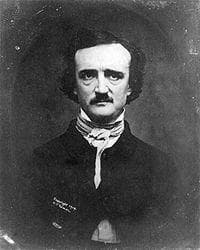
Edgar Allan Poe

Edgar Allan Poe was an American writer, poet, editor, and literary critic who is best known for his poetry and short stories, particularly his tales of mystery and the macabre. He is widely regarded as a central figure of Romanticism in the United States, and of American literature. He was one of the country's earliest practitioners of the short story, and is considered the inventor of the detective fiction genre, as well as a significant contributor to the emerging genre of science fiction. He is the first well-known American writer to earn a living through writing alone, resulting in a financially difficult life and career.