“It was a lovely evening. The two rockets stood in the night, their metal gleaming under the light of a single, immense moon.”
— Describing the initial arrival of humans on Mars.

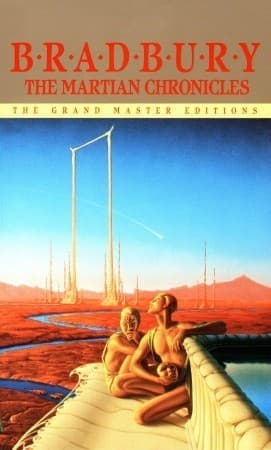
Ray Bradbury (1949)
Genre
Fantasy / Science Fiction
Reading Time
240 min
Key Themes
See below
Sign in to track this book
Humanity's dreams and fears meet the ancient, psychic world of Mars, as Earth's settlers colonize a planet that reflects their deepest desires and anxieties.
In January, the usually cold Ohio weather suddenly becomes warm and spring-like for a few hours. This unusual weather is caused by the heat and energy from a rocket launching from Earth, likely heading to Mars. The brief, surprising summer delights the townspeople, who go outside to enjoy the unexpected warmth and marvel at the strange event. The scene sets a dreamlike tone for human space travel, suggesting the big changes it will bring, both to Earth and beyond, as humanity reaches for the stars.
Ylla, a Martian woman, has vivid, telepathic dreams of two Earth astronauts, Nathaniel York and his companion, arriving on Mars. Her dreams are very detailed, showing their appearance, their rocket, and their songs, which she finds beautiful. Her husband, Yll, becomes increasingly suspicious and jealous of these dreams, sensing a threat to their traditional Martian life and his marriage. Despite Ylla's claims that they are only dreams, Yll, a practical and possessive Martian, takes his ancient, green weapon and goes hunting. He returns later, having shot down the arriving Earth rocket and killed the astronauts, including Nathaniel York, before they could make contact. This prevents Ylla's imagined romance and protects his Martian way of life.
Captain Williams and his three-man crew arrive on Mars, expecting to be celebrated as explorers. However, the Martians they meet, including Mr. K and Mrs. K (who resemble Yll and Ylla from the previous story), see them as hallucinations or mentally ill people. Because of their telepathic abilities, Martians often project their own thoughts and desires onto others, leading them to believe the Earthmen are just products of their imagination or escaped patients from a mental institution. The Martians see Williams and his crew as a manifestation of their repressed desires, like clowns or beloved dead relatives. Eventually, the Martians, unable to understand their perceived delusions, place the entire Earth expedition in a Martian asylum, treating them as harmless but delusional patients. The Martians, in their mistaken diagnosis, kill the crew.
Captain John Black and his crew land on Mars and find a perfectly rebuilt, ideal American town from their own past. They are greeted by long-lost relatives and friends who look exactly as they did on Earth, seemingly alive and well. The crew is filled with joy and nostalgia, believing they have somehow returned to Earth or found a miraculous paradise. However, this is a telepathic trap set by the Martians. The Martians, sensing the Earthmen's deep loneliness and desire for home, create these perfect illusions. Each crew member is led to a house where their 'family' waits. In the middle of the night, the Martian 'relatives' return to their true forms and kill the unsuspecting Earthmen, burying them in the Martian soil. Captain Black realizes the deception too late, as he is killed by his 'brother' and 'parents,' becoming another victim of Mars's subtle yet deadly resistance to colonization.
Captain Wilder leads the fourth expedition, which includes the cynical archaeologist Spender and the practical Biggs. Spender quickly becomes fascinated with Martian culture, its cities, and its philosophy, feeling a strong connection to the dying civilization. He begins to reject his human identity and adopt the Martian way of life, becoming increasingly critical of his crew's destructive and disrespectful attitudes toward Martian artifacts. After a tense argument, Spender kills several crew members, including Biggs, to protect the remaining Martian cities from further damage. Wilder, understanding Spender's reasons but bound by duty, eventually confronts and kills Spender. Before his death, Spender asks Wilder to protect Mars, urging him to wait fifty years before allowing more colonization, a request that weighs heavily on Wilder.
Benjamin Driscoll, a quiet and somewhat frail settler, arrives on Mars with a deep sense of loneliness and a desire to make a lasting mark. He is bothered by Mars's barren, red landscape and longs for Earth's greenness. Driven by this longing and a desire to fight the pervasive loneliness, Driscoll takes on a huge task: he begins planting millions of tree seeds across the Martian landscape. He works tirelessly, enduring the harsh conditions and the skepticism of others. One morning, after a night of heavy rain, Driscoll wakes to a surprising sight: the entire Martian landscape has transformed overnight into a green, oxygen-rich forest. The trees have grown to maturity in a single night, fundamentally changing the Martian environment and making it more hospitable for human life, showing one man's will and nature's power.
After successful terraforming and the elimination of the Martian population (mainly due to chickenpox brought by earlier expeditions), humanity begins a massive, uncontrolled colonization of Mars. Rockets arrive constantly, like a swarm of locusts landing on new ground. Thousands of people pour onto the planet, quickly building towns and cities that imitate those they left behind on Earth. They bring their culture, architecture, flaws, and dreams, rapidly turning Mars into a copy of Earth. The Martians are gone, and their ancient cities are ignored, repurposed, or destroyed to make way for human expansion. This chapter shows the relentless, almost thoughtless, nature of human expansion and colonization, emphasizing Mars's rapid and profound change into a 'second Earth,' without its original inhabitants and unique character.
Tomas Gomez, an Earthman driving his truck through the Martian desert, stops for the night. He meets Muhe Ca, a Martian, seemingly from a different era, riding a sand ship. They both see each other, but each perceives the other as a ghostly, translucent figure. They try to communicate, describing their worlds and cultures, but their realities do not align. Gomez sees a dead Martian city, while Muhe Ca sees a vibrant, living Martian civilization. Each believes the other is a spectral illusion, a remnant of a past era. They part ways with a sense of wonder and confusion, realizing they are experiencing different timelines or dimensions of Mars simultaneously. The encounter highlights the theme of perception, the impermanence of existence, and the sad irony of two intelligent species occupying the same space but at different points in time.
William Stendahl, a rich and unusual literary enthusiast, has fled Earth because of its harsh censorship and book-burning policies. On Mars, he carefully builds a replica of the House of Usher from Edgar Allan Poe's story, complete with robots, elaborate traps, and strange illusions. He invites Mr. Garrett, a government censor from Earth, and other officials to his mansion, claiming it shows the power of imagination. Stendahl's true goal is revenge. He systematically lures his guests into various grim scenarios, like classic horror literature, ultimately leading them to their deaths within the house's elaborate mechanisms. The mansion then sinks into a corrosive Martian sea, taking Stendahl and his robots with it, a final, dramatic act of defiance against censorship and a celebration of forbidden art.
In 2026, a fully automated, advanced house in Allendale, California, continues its daily routine, preparing meals, announcing the time, and doing chores. The house is clean but eerily empty. The story slowly reveals that its human residents – a family – were incinerated in a nuclear blast, leaving only their silhouettes burned onto the exterior wall. The house, unaware of the apocalypse, continues to function, serving phantom meals and announcing appointments to non-existent people. A family dog, thin and dying, briefly enters the house before dying from radiation sickness. The story ends with a fire, caused by a falling tree branch, that slowly consumes the house, which frantically tries to save itself. The house's final, desperate efforts to survive, next to humanity's complete absence, show the fragility of human civilization and the indifference of nature and technology.
William Thomas, along with his wife and three sons, escapes a nuclear war on Earth by flying their private rocket to Mars. They settle by a Martian canal, bringing only essential supplies and a few personal items. William tells his children that they are not on a picnic, but are permanently moving to Mars to escape Earth's destruction and start a new, better civilization. He destroys their rocket, symbolizing a complete break from their past. The next morning, William tells his sons they will see the 'Martians.' He takes them to the canal, where they see their own reflections in the water. This moment means they are the new Martians, tasked with preserving humanity's best qualities and building a new future on the red planet, free from the mistakes of their ancestors.
The Supporting
Ylla's arc is brief and tragic, moving from contented dreaming to fearful apprehension, culminating in her husband's violent act to protect their way of life.
The Supporting
Yll remains largely static, acting as a protector of the status quo, his actions driven by fear and tradition.
The Supporting
Black's arc moves from confident explorer to a victim of psychological manipulation, realizing the truth moments before his death.
The Protagonist
Wilder evolves from a typical explorer to a more thoughtful, conflicted leader who grapples with the ethics of colonization and carries the burden of Spender's dying wish.
The Antagonist/Supporting
Spender transforms from a scholarly archaeologist into a radical preservationist and ultimately a martyr for Martian culture.
The Supporting
Driscoll's arc is one of quiet determination leading to a miraculous, planet-altering achievement, transforming both Mars and his own sense of purpose.
The Supporting
Gomez experiences a moment of profound, unsettling wonder that broadens his perception of Mars and existence itself, though he remains fundamentally unchanged.
The Antagonist
Stendahl transforms from a victim of censorship into a vengeful architect of poetic justice, ultimately perishing with his creation.
The Protagonist
William transforms from a concerned Earth father into the patriarch of a new Martian civilization, embodying hope for humanity's future.
Bradbury often criticizes humanity's colonizing impulse, showing it as destructive and often thoughtless. The first expeditions to Mars are met with Martian hostility, not from malice, but self-preservation, as seen in 'Ylla' where Yll kills the astronauts to protect his wife and culture. Later, human diseases like chickenpox destroy the Martians, making way for uncontrolled expansion in 'The Locusts,' where Earthmen quickly replicate their own flawed societies on the untouched Martian landscape. The destruction of Martian cities and artifacts, as Spender protests in 'And the Moon Be Still As Bright,' further highlights the disregard for native culture and history, framing human expansion as a type of cultural imperialism.
“The Martians were dead. They had died from the chicken pox and the measles which the First Expedition had brought over, and which, because of the Martians' lack of immunity, had swept through the native population like a firestorm.”
A strong theme is humanity's deep longing for home and the comfort of the familiar. This is most clearly shown in 'The Third Expedition,' where Martians use the astronauts' deep loneliness by creating perfect, illusionary copies of their hometowns and dead loved ones. The crew, overcome by nostalgia, willingly walks into their deaths. Even later, as Mars is colonized, humans immediately recreate Earth-like towns and social structures, showing a reluctance to truly adapt to or appreciate the alien world. The weight of Earth's memory is a constant pull, making it hard for humans to truly embrace a new future without recreating the past.
“The Earthmen stared. The town was not Martian. It was an American small town, with a drug store and a movie theatre and a grocery store.”
The chronicles explore both how easily civilizations can be destroyed and the persistent drive to create anew. The Martian civilization, old and wise, is easily wiped out by Earth diseases, showing its fragility against an unforeseen biological weapon. Conversely, Earth itself faces nuclear annihilation, leading to its own end in 'There Will Come Soft Rains' and prompting the desperate escape of families like the Thomases in 'The Million Year Picnic.' Yet, even with such devastation, the urge to survive and build anew is strong. Benjamin Driscoll's act of planting trees in 'The Green Morning' transforms Mars overnight, symbolizing life's powerful resilience, and the Thomas family's decision to become the 'new Martians' offers a hopeful, though cautious, vision of humanity's ability to learn and rebuild.
“There will come soft rains and the smell of the ground, / And swallows circling with their shimmering sound; / And frogs in the pools singing at night, / And trees just over the fence, but out of sight.”
Bradbury often blurs the lines between reality, illusion, and dream, especially through the Martians' telepathic abilities. In 'Ylla,' the Martian woman's dreams are so vivid they predict Earth's arrival. In 'The Earth Men,' Martians mistake the astronauts for lunatics or hallucinations, unable to see them as truly alien beings. The most striking example is 'Night Meeting,' where an Earthman and a Martian meet, each seeing the other as a translucent ghost from a different time, showing how individual perception shapes reality. This theme suggests that reality is subjective and that true understanding between different beings, or even within the same species, is very difficult, often leading to misunderstanding and tragedy.
“I see you, but you're like a ghost. I can almost see through you.”
Technology is a mixed blessing throughout the chronicles. Rockets allow humanity to reach Mars, offering escape and new beginnings, as seen with the Thomas family. However, the same technology is used for destructive purposes, bringing disease and allowing uncontrolled colonization. More subtly, the advanced, self-sufficient house in 'There Will Come Soft Rains' shows technology's ability for detailed service, yet its continued operation after human extinction highlights its ultimate indifference and the ironic futility when its creators are gone. In 'Usher II,' technology is used by Stendahl to carry out a vengeful, elaborate form of justice against censorship, showing its potential for both creative and destructive use, depending on human intent.
“The house was an altar with ten thousand attendants, big and small, for the gods who had gone away.”
Martian ability to project thoughts and create convincing realities.
The Martians' telepathic abilities are a central plot device, driving much of the early conflict and misunderstanding. They allow Martians to perceive Earthmen as hallucinations ('The Earth Men') or to create elaborate, irresistible illusions that exploit human longing ('The Third Expedition'). This device not only serves as a defense mechanism for the Martians but also highlights the subjective nature of reality and the profound differences in perception between species. It allows Bradbury to explore themes of psychological manipulation and the power of the mind, making the Martian threat less about physical force and more about mental vulnerability.
Repeated human voyages to Mars, each with distinct outcomes.
The structure of the book relies heavily on the motif of repeated expeditions to Mars. Each journey serves as a distinct narrative unit, illustrating different facets of human ambition, folly, and adaptation. The first expeditions meet with misunderstanding and death, establishing Mars as a dangerous, alien world. Subsequent waves of colonization show the systematic transformation of Mars. This episodic structure, centered around the journeys, allows Bradbury to cover vast stretches of time and numerous character perspectives, painting a comprehensive picture of the human-Martian encounter from initial contact to eventual human settlement and beyond.
Nuclear war on Earth as a catalyst for human migration to Mars.
The impending and eventual nuclear destruction of Earth serves as a crucial plot device, shifting the motivation for human presence on Mars from exploration and conquest to desperate survival. This global catastrophe provides a powerful external force that drives the later narratives, explaining the mass exodus ('The Locusts') and the ultimate hope for a new beginning for families like the Thomases ('The Million Year Picnic'). It also provides a stark contrast to humanity's destructive tendencies on Mars, implying that humanity carries its self-destructive nature with it, but also offers a chance for redemption on a new world.
The changing physical landscape of Mars due to human intervention.
The transformation of Mars's environment is a significant plot device that mirrors humanity's impact. Initially a barren, red world, Mars is gradually altered by human presence. Benjamin Driscoll's tree-planting in 'The Green Morning' is a miraculous act of terraforming, making the planet breathable and lush. This physical change reflects humanity's capacity for both creation and destruction. The subsequent paving over of Martian canals and the construction of Earth-like towns ('The Locusts') demonstrate a complete disregard for the original environment, highlighting the theme of human imposition and the loss of Martian identity.
“It was a lovely evening. The two rockets stood in the night, their metal gleaming under the light of a single, immense moon.”
— Describing the initial arrival of humans on Mars.
“The wind came up, a dry, hot wind that whispered of ages and dust and the ghosts of a billion forgotten things.”
— Evoking the ancient and desolate atmosphere of Mars.
“They were leaving the Earth to make a new life, and they were taking with them all the old failures, the old prejudices, the old hatreds.”
— Highlighting the human tendency to repeat mistakes, even in a new world.
“The Martians, when they did appear, seemed to be made of crystal and light.”
— Describing the ethereal and advanced nature of the native Martians.
“You can't erase a planet. You can't just take it away. It's always there, in the back of your mind.”
— A character reflecting on the indelible mark Earth leaves on its former inhabitants.
“Science has not yet taught us if madness is to be the end of all or if all is to be the end of madness.”
— A philosophical musing on the nature of humanity and its potential for self-destruction.
“An entire world, a Martian world, had been destroyed by men who had come to save it.”
— Lamenting the destructive impact of human colonization on Martian civilization.
“We've got to clean up this old planet, make it look like something. You can't just leave it lying around like a dirty shirt.”
— Humans asserting their dominance and desire to 'improve' Mars, often with disregard for its original state.
“They built their cities of crystal and their machines of song.”
— Describing the advanced and artistic civilization of the Martians.
“And the rockets were gone, and the cities were gone, and the men were gone, and the wind blew over the ruins.”
— A somber reflection on the impermanence of human endeavors and the return of Mars to its natural state.
“War. It was always war. A final, absolute, and total war.”
— Referring to the nuclear war on Earth that forces the last humans to flee to Mars.
“And the children looked at their reflections in the canal water, and they were Martians.”
— The final, poignant image of the surviving human families becoming the new Martians.
“There was a smell of rain and green things growing in the air, a smell of Earth.”
— A nostalgic moment for the colonists missing their home planet.
Ready to see how well you understood this book? Take our interactive quiz with 10 questions.
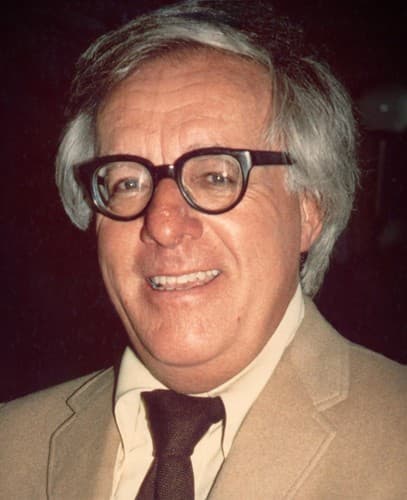
Ray Douglas Bradbury was an American author and screenwriter. One of the most celebrated 20th-century American writers, he worked in a variety of modes, including fantasy, science fiction, horror, mystery, and realistic fiction.







