“He had a job to do. He would do it.”
— Bond's internal resolve as he prepares for his mission.

Ian Fleming (1822)
Genre
Thriller / Mystery
Reading Time
180 min
Key Themes
See below
Sign in to track this book
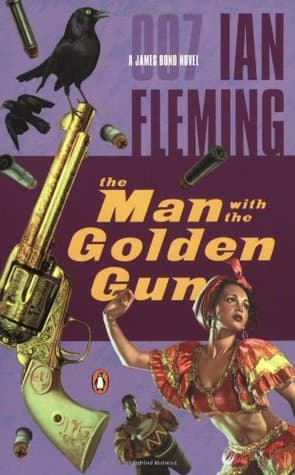
In the sweltering Jamaican heat, a brainwashed James Bond must outwit and eliminate the flamboyant, gold-gun-wielding assassin, Scaramanga, who has a golden bullet specifically engraved for 007.
Six months after his disappearance, James Bond reappears in London. He is brought before M, clearly suffering from amnesia and Soviet brainwashing. He attempts to assassinate M with a cyanide pistol, but M is wearing a special vest, and Bond is quickly subdued. Dr. Q'uang, a specialist, treats Bond. Through therapy and electric shock, Bond's memory is mostly restored, though he still has occasional blanks. To prove his loyalty and regain his '00' status, M assigns Bond a seemingly impossible mission: assassinate Francisco Scaramanga, 'The Man With The Golden Gun'.
M briefs Bond on Francisco 'Pistols' Scaramanga, a Cuban-born assassin who works for the highest bidder, but mainly for the KGB. Scaramanga is known for his signature golden gun and his meticulous killings, particularly of British Secret Service agents. He operates mainly in the Caribbean, involved in drug trafficking, industrial sabotage, and criminal enterprises. M explains that Scaramanga is currently in Jamaica, running a seedy hotel and brothel called 'The House of the Dead'. Bond's mission is to infiltrate Scaramanga's operation and eliminate him, restoring his reputation within MI6.
James Bond travels to Jamaica under the alias 'Mark Hazard,' a freelance security consultant. He is met by his old friend and MI6 Jamaica station chief, Superintendent M. F. Fraser. Fraser updates Bond on local intelligence regarding Scaramanga, confirming his base of operations at 'The House of the Dead' and his involvement with 'The Union'. Fraser also warns Bond about Scaramanga's ruthlessness. Bond's initial plan is to gain Scaramanga's trust by posing as a British gangster seeking to join his organization, hoping to get close enough for an assassination attempt.
Bond, as 'Mark Hazard,' goes to 'The House of the Dead,' a disreputable hotel and brothel on the outskirts of Kingston. He deliberately causes a disturbance, attracting the attention of Scaramanga's henchmen. After a brief scuffle, Bond is taken to Scaramanga, who is intrigued by the audacious Briton. Bond convincingly presents himself as a disgruntled former MI6 agent looking to switch allegiances and offers his expertise to Scaramanga. Scaramanga, always looking for new talent, decides to give Bond a chance, offering him a position within his organization.
Working under Scaramanga, Bond gains insight into the assassin's criminal network. He learns that Scaramanga is not just a freelance killer but a key player in a larger conspiracy orchestrated by 'The Union,' a powerful criminal syndicate. The Union's current objective is to destabilize the Jamaican sugar industry by sabotaging a major sugar factory and then buying up the distressed assets. Bond also discovers that Scaramanga is planning a major conference at 'The House of the Dead,' where he will meet with several high-ranking members of The Union and other international criminals. This conference gives Bond a chance to eliminate Scaramanga.
During his time with Scaramanga, Bond encounters Colonel Boris, a high-ranking KGB officer who arrives at 'The House of the Dead.' Bond recognizes Boris from past encounters and realizes that the KGB is involved in Scaramanga's operations. Boris's presence adds another layer to Bond's mission, as he must now deal with both Scaramanga and the formidable Soviet agent. Bond suspects that Boris is Scaramanga's handler and that the KGB is using Scaramanga to further their geopolitical interests in the Caribbean, particularly the destabilization of the pro-Western Jamaican government.
The conference of 'The Union' begins at 'The House of the Dead.' Various international criminals, drug lords, and saboteurs gather, all under Scaramanga's command. Bond observes the proceedings, gathering intelligence. However, Scaramanga, ever suspicious, begins to subtly test Bond's loyalty. He recounts details of Bond's 'Mark Hazard' persona, trying to trip him up. Bond maintains his cover, but the tension is clear. He knows his time to act is running short, as Scaramanga's suspicions are growing, and the golden bullet, inscribed with '007,' is undoubtedly prepared.
During a private moment, Scaramanga corners Bond and reveals that he knows Bond's true identity, having recognized him from past encounters. He confesses his admiration for Bond, seeing him as a worthy adversary, and proposes a duel. The two men agree to meet in an abandoned fairground, a surreal and desolate setting. Scaramanga, with his golden gun, and Bond, with his Walther PPK, face each other in a classic Western-style showdown. The tension is immense as they stalk each other through the dilapidated attractions, each waiting for the opportune moment to strike.
In the duel, Bond uses his cunning and resourcefulness. He uses the fairground's environment to his advantage, creating distractions and drawing Scaramanga into a trap. Scaramanga makes a crucial mistake, allowing Bond to get the upper hand. Bond fires his Walther PPK, striking Scaramanga. The Man With The Golden Gun falls, ending his reign of terror. Bond retrieves the golden bullet, confirming the '007' inscription, a chilling sign of Scaramanga's obsession. The mission is accomplished, and Bond's status within MI6 is fully restored.
With Scaramanga dead, Bond reports back to Fraser and then to M. The intelligence gathered from Scaramanga's operation helps disrupt 'The Union's' plans in the Caribbean. Bond, though successful, feels weary and reflective. The experience of being brainwashed and then forced to kill has taken its toll. He considers the nature of his work and the constant proximity to death. Despite the success, the mission is a stark reminder of the dangerous and morally ambiguous world in which James Bond operates, reinforcing his identity as an instrument of the state.
The Protagonist
Bond begins as a brainwashed, compromised agent and ends as a fully restored, albeit weary, 007, having successfully completed a seemingly impossible mission.
The Antagonist
Scaramanga rises as a formidable criminal mastermind and assassin, only to be brought down by Bond in a final duel.
The Supporting
M's trust in Bond is tested and ultimately reaffirmed through Bond's successful mission.
The Supporting
Fraser remains a constant and reliable presence, assisting Bond throughout the mission.
The Supporting
Boris acts as a secondary antagonist, representing the larger Soviet threat behind Scaramanga.
The novel explores James Bond's journey to redeem himself and prove his loyalty to MI6 after his brainwashing. His mission to assassinate Scaramanga is not just a strategic objective but a personal trial. He must overcome the psychological scars of Soviet conditioning and show that he is still a reliable agent. This theme is clear from the moment M gives Bond the mission, stating it's his 'last chance,' and ends with Bond's successful elimination of Scaramanga, restoring his '00' status. It highlights the internal conflict of a man whose identity was compromised and his need to reclaim it.
“"He knew that M had given him this mission not just to eliminate Scaramanga, but to eliminate the last vestiges of the Soviet poison from his own soul."”
Evil is personified in Francisco Scaramanga, who represents a calculated, almost artistic, form of villainy. His 'golden gun' and meticulous killings make him more than a simple thug. The novel looks at the psychology of a professional killer, examining what drives such individuals. Scaramanga's involvement with 'The Union' and the KGB shows how individual evil can be made worse by larger, organized forces. Bond's mission forces him to confront this evil directly, highlighting the contrast between his duty-bound killings and Scaramanga's mercenary depravity. The novel suggests that evil is not just destructive, but also seductive and self-perpetuating.
“"Scaramanga was not just a killer; he was an artist of death, and his canvas was the human body."”
Bond's mission relies on deception, as he assumes the identity of 'Mark Hazard' to infiltrate Scaramanga's organization. This theme is made more complex by Bond's recent brainwashing, which temporarily stripped him of his own identity. The novel explores the blurring lines between one's true self and the roles one plays, especially in espionage. Scaramanga himself operates under multiple guises, presenting a façade of a hotel owner while secretly orchestrating criminal enterprises. The climax, where Scaramanga reveals he knew Bond's true identity, shows the constant game of masks and reveals that defines their world.
“"In their world, names were fluid, identities were costumes, and truth was a weapon."”
Although set in the Caribbean, the novel is rooted in the Cold War. The KGB's involvement with Scaramanga and 'The Union' highlights the influence of the Soviet Union in global affairs, particularly their efforts to destabilize Western-aligned nations like Jamaica. Colonel Boris's presence reinforces the ideological struggle between East and West. Bond's mission, while personal, also serves a larger geopolitical purpose: to thwart Soviet-backed criminal activities that threaten British interests. The novel uses the exotic setting to show that the Cold War was a global struggle, fought not just on battlefields but in the shadows of international crime.
“"The invisible war, M had called it, fought with shadows and whispers, and sometimes, with a golden gun."”
Scaramanga's signature weapon, a symbol of his identity and lethal precision.
The golden gun is not just Scaramanga's weapon of choice; it is an extension of his persona. It symbolizes his wealth, his ruthlessness, and his unique brand of deadly artistry. The fact that it fires a golden bullet inscribed with '007' elevates it from a mere firearm to a direct challenge and a death warrant for Bond. This iconic weapon serves as a constant reminder of the threat Bond faces and raises the stakes of their inevitable confrontation.
Bond's temporary memory loss and Soviet conditioning, used to introduce his personal stakes.
Bond's amnesia and brainwashing serve as a critical plot device to re-establish his character and motivate his mission. It creates immediate personal stakes, as Bond must not only complete his mission but also prove his loyalty and regain his identity. This device also allows for a degree of vulnerability in Bond, making him less invincible and more relatable. It justifies M's assignment of a seemingly suicidal mission, framing it as a test of redemption for Bond.
Bond's use of the 'Mark Hazard' alias to infiltrate Scaramanga's organization.
The assumed identity of 'Mark Hazard' is a classic espionage trope, allowing Bond to gain access to the criminal underworld without revealing his true purpose. This device creates tension as Bond constantly has to maintain his cover and improvise. It also highlights Bond's skill as an infiltrator and his ability to adapt to dangerous situations. The eventual revelation of his true identity by Scaramanga heightens the drama and leads directly to the climactic duel.
“He had a job to do. He would do it.”
— Bond's internal resolve as he prepares for his mission.
“The trouble with women was that they were made to be loved, not understood.”
— Bond's reflection on his relationship with women, particularly Mary Goodnight.
“All criminals, even the most cold-blooded, had their little vanities.”
— Bond analyzing Scaramanga's character and potential weaknesses.
“He had always found that the best way to get rid of a temptation was to yield to it.”
— Bond's hedonistic philosophy on life and pleasure.
“The air was thick with the smell of cheap rum, stale sweat, and violence.”
— Describing the atmosphere of the seedy Jamaican bar where Bond meets Scaramanga.
“It was a mistake to think that the world was full of good and bad people. It was full of people.”
— Bond's nuanced view on morality and human complexity.
“A man who lived by the gun would die by the gun.”
— A classic adage that resonates with Scaramanga's fate.
“He recognized the symptoms of the hunter in himself – the heightened senses, the quickening pulse, the cold, calculating brain.”
— Bond's internal state as he stalks Scaramanga.
“There was no such thing as a perfect crime, only imperfect investigations.”
— Bond's professional insight into criminal activity.
“Death was an old acquaintance, a familiar shadow that often walked beside him.”
— Bond's detached acceptance of the constant danger in his life.
“He knew that he was on the edge of something big, something that would either make him or break him.”
— Bond's anticipation of the climactic confrontation.
“The greatest weapon in the world was the human mind.”
— Bond's belief in the power of intellect over brute force.
“He wasn't a hero. He was a professional. And professionals got the job done.”
— Bond's self-assessment, emphasizing his dedication to duty.
“The world was a dangerous place, and only the strong survived.”
— A recurring theme reflecting the harsh realities Bond operates within.
Ready to see how well you understood this book? Take our interactive quiz with 10 questions.
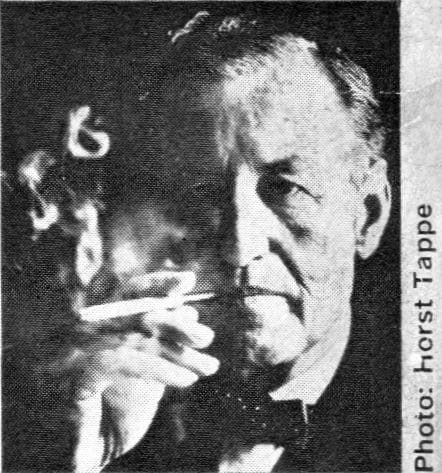
Ian Lancaster Fleming was a British writer, best known for his postwar James Bond series of spy novels. Fleming came from a wealthy family connected to the merchant bank Robert Fleming & Co., and his father was the Member of Parliament (MP) for Henley from 1910 until his death on the Western Front in 1917. Educated at Eton, Sandhurst, and, briefly, the universities of Munich and Geneva, Fleming moved through several jobs before he started writing.







