“He knew it for what it was: the old familiar fear, the one he’d been running from all his life.”
— Frankie Machine's internal struggle with his past and addiction.

Nelson Algren (2010)
Genre
Literary Fiction / Mystery
Reading Time
9-12 hours
Key Themes
See below
Sign in to track this book
In post-war Chicago, a morphine-addicted drummer with a 'golden arm' for cards fights his demons and a relentless past for a chance at a new life with an old flame.
Frankie Machine, a decorated World War II veteran, returns to his old neighborhood on Chicago's Division Street. He struggles with a severe morphine addiction he developed during the war. He lives with his wife, Sophie, who fakes paralysis to control him. Frankie works as a card dealer for the local crime group, run by 'Nifty Louie' Fomorowski. Frankie's nickname, 'The Man With the Golden Arm,' refers to his skill as a card dealer and his drug use. He dreams of becoming a professional drummer, a talent he has but rarely uses because of his addiction and current life. His attempts to stay clean are constantly hurt by his surroundings and Sophie's emotional demands.
Sophie Machine, in a wheelchair, uses her fake paralysis to control Frankie, making him feel guilty. She secretly fakes her condition, known only to her and her doctor, Dr. Schultz, who benefits from the lie. Meanwhile, Molly Novotny, Frankie's former lover, returns. Molly, a stripper who sees things practically, offers a way out of his current problems. She encourages Frankie's drumming dreams and offers him a chance at a cleaner, more stable life, away from drugs and gambling. Her presence contrasts sharply with Sophie's controlling influence, pulling Frankie in two directions.
During a high-stakes poker game that Frankie is dealing, a fight breaks out with a player named Domino, who accuses Frankie of cheating. Frankie's associate, Blackie, a local tough, steps in. In the struggle, Domino accidentally dies when he falls and hits his head. Blackie, afraid of the consequences, runs, leaving Frankie to take the blame. Panicked and high on morphine, Frankie also runs, becoming a wanted man. This event pulls Frankie deeper into the criminal world and makes his already difficult life worse, forcing him to leave Division Street and hide.
Frankie, now a fugitive, finds shelter with Molly Novotny. They move from one rundown apartment to another, trying to avoid the law while Frankie struggles with his worsening morphine addiction without a steady supply. Molly works hard to support them, often stripping to earn money. She tries to get Frankie to pursue his drumming, hoping it will give him an escape and purpose. Despite the constant fear of being found and Frankie's withdrawal, their bond grows. Molly is Frankie's last chance at a better life, a lifeline in his desperate escape from justice and his own destructive habits.
Detective Bednar, a dedicated but tired police officer, leads the Domino murder investigation. He systematically tracks Frankie's movements, interviewing people from Division Street. At the same time, Nifty Louie Fomorowski, the crime boss, also wants to find Frankie, fearing Frankie might involve him or expose the group's operations. Louie uses his network of informants and enforcers to track Frankie, adding another layer of danger to Frankie's desperate flight. Both the law and the underworld are closing in, putting immense pressure on Frankie and Molly as they try to start a new life.
As Frankie's morphine supply runs out, he experiences terrible withdrawal symptoms: tremors, hallucinations, and intense pain. Molly tries her best to help him, but his suffering is huge. Desperate for a fix, Frankie takes bigger risks, including breaking into pharmacies and stealing. His addiction becomes an all-consuming force, overriding his desire for a clean life with Molly. Each relapse pushes him further from his dreams and deeper into the cycle of dependency, showing the overwhelming power of his habit and how hard it is to escape its hold, even with Molly's loving support.
As the investigation grows, Sophie's fake paralysis starts to fall apart. Under pressure from Detective Bednar, and fearing exposure, she eventually tells Dr. Schultz she has been faking her condition. This reveal adds another layer of lies to Frankie's already complicated life. She also, whether on purpose or not, gives information that helps the police narrow their search for Frankie. Her actions, driven by fear, resentment, and a desire to keep control, ultimately lead to Frankie's capture, isolating him further and showing how destructive their relationship is.
Despite the constant threat of capture, Frankie, encouraged by Molly, gets a job playing drums in a small club under a false name. For a short time, he feels like his old self, finding comfort and purpose in his music. However, his addiction continues to bother him, making it hard to play consistently. Meanwhile, Sophie, driven by guilt and fear, begins to break down. Her 'paralysis' wavers, and the truth slowly becomes clear to those around her, including her neighbors and eventually the police, further exposing the lies that have trapped Frankie.
As the police search intensifies, Frankie and Molly are forced to move constantly, their money running low. Detective Bednar, relentless in his pursuit, gets closer to them. Frankie's addiction reaches a critical point, and he becomes more desperate and paranoid. The chase leads them through Chicago's grimy alleys and forgotten places, reflecting Frankie's inner turmoil. His 'golden arm,' once a sign of skill, now represents the chains of his addiction, making him vulnerable as he tries to outrun both the law and his own demons.
Frankie's escape ends when police corner him in a rundown building. Overwhelmed by withdrawal, exhaustion, and hopelessness, he makes a final, desperate attempt to escape. The pressure of the chase, guilt over Domino's death, and the crushing weight of his addiction are too much. In a moment of despair and clarity, realizing there is no escape from his situation or his inner demons, Frankie takes his own life. His death is a tragic end to his fight for a better life and freedom, leaving Molly to mourn and the Division Street underworld to continue its cycle of struggle.
The Protagonist
Frankie descends deeper into addiction and desperation, ultimately failing to escape his circumstances or his inner demons, leading to a tragic end.
The Supporting
Molly remains steadfast in her love and support for Frankie, even as his addiction consumes him, ultimately left to mourn his tragic end.
The Antagonist
Sophie's deception slowly unravels under police pressure, exposing her manipulation but ultimately failing to achieve her goal of keeping Frankie.
The Supporting
Louie remains a constant, watchful presence, ensuring his interests are protected, largely unaffected by Frankie's personal tragedy.
The Supporting
Bednar steadily closes in on Frankie, fulfilling his duty to bring the murderer to justice.
The Supporting
Blackie's impulsive actions trigger the central conflict and his subsequent flight leaves Frankie to face the consequences alone.
The Supporting
Sparrow remains a constant, albeit minor, presence in the Division Street underworld.
The Mentioned
Dr. Schultz's role is largely static, serving to expose Sophie's deception when pressured.
The novel deeply explores how morphine addiction controls Frankie Machine. His 'golden arm,' initially a skill, becomes a sign of his enslavement to the drug. The story carefully details his painful withdrawal, his desperate search for a fix, and how his addiction destroys his identity, relationships, and hopes. Each attempt at sobriety is defeated by the overwhelming physical and mental need, showing addiction's cyclical and self-destructive nature. This theme is key to Frankie's tragic story, as his addiction ultimately decides his choices and fate, despite his wish for a better life with Molly.
“A man could go to sleep and never wake up. He could go to sleep and never touch a needle again. He could go to sleep and never see Sophie again. He could go to sleep and never see Molly again. He could go to sleep and never see himself again. He could go to sleep and never see anything again.”
Manipulation and deception are common in the characters' lives, most clearly through Sophie Machine's fake paralysis. Her feigned illness is a strong tool to control Frankie, tying him to her with guilt and obligation. This deception not only traps Frankie but also shows how lies harm relationships. Other characters, like Nifty Louie, use subtle manipulation to keep power, and even minor characters engage in small cons. This theme points to a world where trust is rare, and people often use each other for survival or control, adding to the feeling of entrapment Frankie experiences.
“She was a woman who could make a man feel guilty for breathing.”
Frankie's journey is a desperate search for a better life, both from his past mistakes and from his addiction. Molly Novotny represents this hope, offering him a chance at a clean life, a stable relationship, and the opportunity to pursue his drumming. His brief moments of playing the drums are glimpses of a changed self, free from the vice and squalor of Division Street. However, his addiction, Sophie's manipulation, and the results of his actions continually pull him back down, making a better life an elusive and ultimately unreachable goal. The novel suggests that for some, escaping their circumstances is an impossible dream.
“He always had a feeling that if he could just get his hands on a set of drums, everything would be all right.”
The novel clearly shows the feeling of being trapped within a specific social and economic environment, especially the post-war Chicago slums of Division Street. Characters like Frankie, Molly, and Sparrow are products of their surroundings, seemingly unable to escape the cycle of poverty, crime, and despair. Frankie's attempts to break free are constantly blocked by outside forces—the crime group, the law, and the demands of those who depend on him—as well as his inner demons. The setting itself acts as a character, a suffocating force that dictates the limited choices available to its inhabitants, suggesting that individuals are largely shaped and confined by their social circumstances.
“Division Street was a street of no escape. Once you were on it, you stayed on it.”
Frankie often has brief moments where he believes he can escape his situation—through his drumming, his relationship with Molly, or even the temporary high of a drug. However, these moments are always short-lived, quickly overshadowed by the harsh realities of his addiction, the relentless pursuit by the law, and Sophie's manipulative hold. The novel suggests that true freedom is an illusion for those caught in the cycle of addiction and poverty. It highlights how external and internal forces work together to prevent real liberation. His escape from the law is a physical sign of his desire for freedom, yet he remains imprisoned by his own body and mind.
“He knew he was free, but he couldn't feel it.”
A symbolic nickname representing both skill and addiction.
Frankie's nickname, 'The Man With the Golden Arm,' serves as a powerful double entendre. On one hand, it refers to his exceptional dexterity as a card dealer, a skill that provides him with income (albeit illicit). On the other, and more tragically, it refers to his proficiency with a needle, symbolizing his crippling morphine addiction. This device highlights the duality of his character: his potential for greatness juxtaposed with his self-destructive tendencies. It becomes a metaphor for how his talents are simultaneously his livelihood and the instrument of his downfall, inextricably linking his skill to his vice.
A central deception used for manipulation and control.
Sophie's faked paralysis is a crucial plot device that drives much of Frankie's initial entrapment and guilt. This elaborate deception is not merely a character trait but a mechanism through which Sophie exerts absolute control over Frankie, exploiting his sense of duty and compassion. It prevents him from leaving her and pursuing a cleaner life with Molly. The slow unraveling of this lie, particularly under police scrutiny, adds tension and reveals the depths of Sophie's manipulation, while also contributing to Frankie's eventual desperate flight and tragic end. It's a symbol of the emotional and psychological burdens placed upon him.
The inciting incident that transforms Frankie into a fugitive.
The accidental death of Domino during a card game, for which Frankie is wrongly implicated, serves as the primary inciting incident of the novel's central conflict. This event immediately shifts Frankie's status from a struggling addict to a hunted fugitive, forcing him to abandon his life and go on the run with Molly. It escalates the stakes dramatically, introducing the element of the law's pursuit and intensifying the pressures on Frankie's addiction and his relationship with Molly. Without this event, Frankie's story would remain confined to his internal struggles, but the murder propels him into a desperate external flight.
A symbol of Frankie's lost potential and desire for redemption.
Frankie's talent and passion for drumming act as a recurring symbolic motif throughout the novel. His dreams of becoming a professional drummer represent his untapped potential, his artistic spirit, and his yearning for a life free from addiction and crime. Whenever he gets a chance to play, even briefly, it offers a glimpse of the man he could be, a moment of fleeting freedom and purpose. This device highlights the contrast between his aspirations and his grim reality, making his eventual downfall even more poignant as it signifies the death of his dreams and the triumph of his destructive habits.
“He knew it for what it was: the old familiar fear, the one he’d been running from all his life.”
— Frankie Machine's internal struggle with his past and addiction.
“A man without a habit ain't a man at all.”
— Spoken by a character reflecting on the nature of human behavior, often in the context of addiction.
“The needle was a friend, a lover, a betrayer.”
— Describing Frankie Machine's complex relationship with his drug addiction.
“Chicago was a city of perpetual twilight, a place where the sun always seemed to be setting on someone's hopes.”
— Algren's atmospheric description of the city and its effect on its inhabitants.
“He had a golden arm, but it was a golden arm that was always reaching for a fix.”
— A poignant description of Frankie's talent as a card dealer being overshadowed by his drug use.
“There were only two kinds of people in the world, the ones who got away with it and the ones who didn't.”
— A cynical observation about justice and morality in the urban underworld.
“Love was a word for things you never quite had, and always wanted.”
— Frankie's internal thoughts on the elusive nature of love in his life.
“The streets of Chicago had a way of swallowing you whole, leaving nothing but a faint echo.”
— Another vivid description of the city's oppressive and consuming nature.
“He was a man who lived on the edge of a razor, and the razor was getting dull.”
— Metaphorical depiction of Frankie's precarious existence and his declining state.
“Every man has a weakness, and if he don't, he ain't a man.”
— A character's philosophical take on human vulnerability, often used to rationalize their own flaws.
“The music was a wail, a plea, a promise of something better that never came.”
— Describing the jazz music in the clubs, reflecting the characters' unfulfilled hopes.
“You can't go home again, not really. Not when home ain't there no more.”
— Frankie's realization about the irreversible changes in his life and the past.
“He moved through the city like a ghost, seen by many, known by none.”
— Highlighting Frankie's isolation and his detached existence despite being in a bustling city.
“The dice were loaded, but not by him. They were loaded by life.”
— A reflection on the predetermined hardships faced by the characters, suggesting a lack of control over their fate.
Ready to see how well you understood this book? Take our interactive quiz with 10 questions.
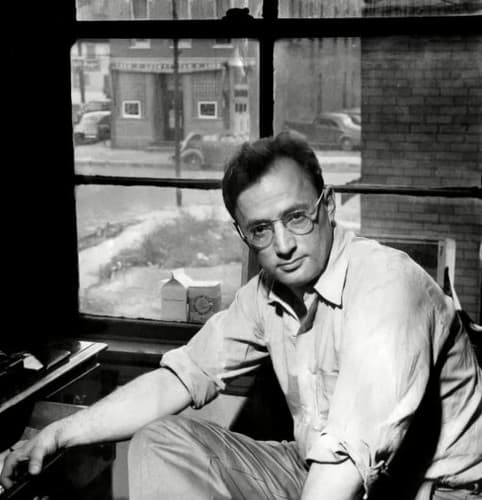
Nelson Algren was an American writer. His 1949 novel The Man with the Golden Arm won the National Book Award and was adapted as the 1955 film of the same name.







