“We have no King and we do not want one.”
— Daniel Dravot's declaration of intent for Kafiristan.

Rudyard Kipling (1890)
Genre
Historical Fiction
Reading Time
90-120 min
Key Themes
See below
Sign in to track this book
Two British adventurers con their way into becoming gods and rulers of a remote Kafiristan tribe, only to have their empire crumble when a woman discovers their mortal flesh.
The story begins with the narrator, a journalist, recounting his first meeting with Peachy Carnehan. Peachy, a former soldier, tries to blackmail the narrator after catching him on a train with an unregistered parcel. The narrator, intrigued by Peachy's boldness, helps him and later meets Peachy's partner, Daniel Dravot, also a former soldier. Both men are adventurous, cunning, and somewhat disreputable, always seeking new ways to get rich. They often visit the narrator, using his office as a meeting place and discussing their various, often questionable, ventures across India, showing their restless and ambitious natures.
One night, Peachy and Daniel visit the narrator and reveal their plan: to travel to Kafiristan, an uncharted and isolated region in Afghanistan, and become its kings. They believe the people there are simple and can be easily manipulated. They intend to bring twenty Martini-Henry rifles and ammunition, train a native army, and establish themselves as rulers, eventually exploiting the region's resources. They make the narrator witness and sign a 'Contract' outlining their agreement to share all spoils equally and to abstain from women and drink until they are established. The narrator is skeptical but intrigued by their audacity, providing them with maps and advice for their dangerous journey.
After getting their supplies and the narrator's reluctant blessing, Peachy and Daniel set off on their dangerous trip to Kafiristan. The narrator gives them a compass and some final words of caution. For a long time, there is no news of the two men. The narrator, busy with his work, occasionally thinks of them, wondering if they succeeded or died in the unforgiving mountains. Their absence creates suspense and mystery, emphasizing the extreme remoteness and danger of their chosen path. The narrator continues his life, assuming they are either dead or have simply disappeared into the unknown.
About a year later, a tattered, frostbitten, and injured Peachy Carnehan stumbles back into the narrator's office. He is barely recognizable, having lost fingers and toes to frostbite, and is in distress. He carries a grim memento: Daniel Dravot's severed, mummified head, still wearing a crown. Peachy demands brandy and begins to tell the story of their success and downfall in Kafiristan, a tale that moves between triumph and tragedy, astonishing the narrator with its detail and the improbability of their achievements.
Peachy explains how he and Daniel, after a brutal journey, reached Kafiristan. They first used their rifles to impress and subdue local tribes, quickly gaining military control. A key moment came when Daniel, by chance, showed a Masonic keystone, which the high priest recognized as a symbol of their ancient god, Sikander (Alexander the Great). Daniel's fair hair and blue eyes, combined with his authoritative manner and the discovery of other Masonic symbols, convinced the Kafiristanis that he was a divine descendant of Sikander. They were hailed as gods, and Daniel was crowned king, with Peachy as his loyal general.
Under Daniel and Peachy's rule, Kafiristan thrived. They trained an army, introduced more advanced weapons, and began to administer justice and collect tribute. The Kafiristanis revered Daniel as a god and a wise ruler, while Peachy handled the practicalities of governance and military command. They amassed wealth in gold and jewels, fulfilling their ambition. Daniel became more absorbed in his role, believing in his own divinity and the destiny to create a vast empire. Peachy, though enjoying the power, remained more grounded, observing Daniel's growing arrogance with a mix of admiration and unease, recognizing the danger of their position.
Daniel, despite their 'Contract' and Peachy's warnings, decides to marry a Kafiristani woman, believing it will solidify his divine lineage and secure his dynasty. During the wedding ceremony, the bride, terrified by the 'god' she is forced to marry, bites Daniel. When she draws blood, the Kafiristani priests and people realize Daniel is mortal, not a god. The illusion is shattered instantly. The Kafiristanis, feeling betrayed, turn on their former rulers with furious vengeance. This act of arrogance and breaking their vow proves to be the undoing of their empire.
The Kafiristanis, enraged by Daniel's proven mortality, immediately turn on the two men. Daniel and Peachy are pursued relentlessly. They try to escape, fighting bravely, but are overwhelmed by the numbers of their former subjects. Daniel is cornered on a rope bridge over a deep chasm. The Kafiristanis cut the ropes, sending Daniel falling to his death. Peachy, seeing his partner die, is captured, crucified between two pine trees, and left for dead. He endures torture, but is eventually cut down by some merciful tribesmen who remember his kindness, leaving him broken but alive.
After being cut down from the crucifixion, Peachy, severely injured and frostbitten, begins his difficult journey back to India. He suffers pain and hardship, losing fingers and toes to the extreme cold. He carries Daniel's severed head, a grim trophy and a constant reminder of their shared ambition and tragic end. His return shows his resilience and will to survive, even after enduring physical and emotional trauma. He eventually makes his way back to the narrator's office, a shadow of his former boastful self, seeking solace and an audience for his unbelievable tale.
After Peachy finishes his story, he collapses from exhaustion and his severe injuries. The narrator, deeply affected by the tale and the physical evidence of Daniel's mummified head, arranges for Peachy to be taken to a hospital. The next day, the narrator visits the hospital, only to find that Peachy Carnehan has died during the night, likely from the combined effects of his injuries, exposure, and exhaustion. The narrator is left alone with Daniel's crowned head and the gold and jewels Peachy brought back, tangible proof of an adventure so extraordinary it defies belief, yet is real. He keeps the crown and head as a solemn reminder of their impossible dream.
The Protagonist
He transforms from a cunning adventurer into a revered god-king, only to succumb to hubris and fall to his death as a mortal man.
The Protagonist/Narrator of the main plot
He begins as a roguish adventurer, becomes a powerful general, endures profound loss and suffering, and returns a broken but determined survivor to tell their tale.
The Frame Narrator/Supporting
He moves from a detached observer to a deeply affected witness burdened by the extraordinary truth of the adventurers' fate.
The Supporting
He initially validates Daniel's divine status based on ancient symbols, then leads the revolt upon discovering Daniel's mortality.
The Mentioned
Her brief appearance acts as the catalyst for the protagonists' downfall, exposing Daniel's mortality.
The story directly addresses imperialism and colonialism through Daniel and Peachy's actions. They enter an 'uncivilized' land with the intention of conquering, exploiting, and ruling its people, mirroring the historical context of British expansion. They bring Western technology (rifles) and impose Western systems of governance, believing themselves superior. Their success, though temporary, highlights how easily a technologically advanced power can dominate a less developed one. Their downfall is a cautionary tale about the limits and consequences of such arrogance, especially when cultural misunderstandings and perceived divine right clash with reality. For example, the Kafiristanis' initial reverence for Daniel as a god (Sikander) quickly turns to violent rejection once his mortality is exposed, showing the instability of rule based on deception and force.
“We have been all over India, and we have been partners to all kinds of games, but this great game is the last game we shall ever play, and it's the biggest.”
Ambition and arrogance are central to Daniel Dravot and Peachy Carnehan's downfall. Their initial ambition to become kings is bold but not destructive. However, Daniel's ambition turns into unchecked arrogance as he begins to believe in his own divinity and destiny. His decision to marry a Kafiristani woman, directly breaking their 'Contract' and ignoring Peachy's warnings, is the ultimate act of arrogance. This act reveals his mortal nature and shatters the illusion of his godhood, leading directly to their violent overthrow. The story suggests that while ambition can drive extraordinary achievements, unchecked pride and disregard for boundaries or agreements lead to ruin. Peachy, though ambitious, remains more grounded, recognizing the dangers of Daniel's growing self-delusion.
“We're Kings, and we'll have a Queen. I've been a King for a year—what's the good of a King that ain't got a Queen?”
The story explores how power is gained, maintained, and lost. Daniel and Peachy first gain power through military superiority (rifles), manipulation, and a lucky coincidence (Masonic symbols aligning with local religion). Their authority is initially absolute, based on the Kafiristanis' belief in Daniel's divinity. The story shows how fragile this authority can be when based on illusion. The moment Daniel's mortality is revealed, his power disappears instantly, leading to a violent rejection of his rule. This shows that true, lasting power often requires more than just force or deception; it requires genuine legitimacy, cultural understanding, or a shared belief system. The rapid shift from worship to violent rebellion highlights the volatile nature of power when its foundations are false.
“And when the priests saw that, they were afraid, and they said, 'He is Sikander!'”
Despite their roguish nature, the deep bond between Daniel Dravot and Peachy Carnehan is a strong theme. They are partners, bound by a shared past, a daring 'Contract,' and loyalty. Peachy consistently supports Daniel, even when disagreeing with his decisions, and stays by his side until Daniel's death. His agonizing journey back, carrying Daniel's severed head, shows this loyalty and brotherhood, transcending even death. While Daniel's arrogance ultimately dooms them, Peachy's commitment to their shared dream and to Daniel himself provides an emotional core to the story, showing the strength of their bond against all odds. Their 'Contract' represents this loyalty, which Daniel ultimately breaks.
“We have been all over India, and we have been partners to all kinds of games, but this great game is the last game we shall ever play, and it's the biggest.”
The story is told by a journalist who encounters the adventurers before and after their journey.
Kipling uses a frame narrative structure, where the main story of Daniel and Peachy's adventure is embedded within the narrator's personal encounters with them. This device serves several purposes: it grounds the fantastical tale in a believable reality, as the narrator, a journalist, provides a skeptical yet fascinated perspective. It also allows for the gradual revelation of information, building suspense. The narrator acts as a witness, lending credibility to an otherwise incredible story, and provides a moral compass through his observations. The frame also allows for a sense of historical context, placing the events within the broader British colonial experience in India.
A written agreement between Daniel and Peachy outlining their rules for conquest.
The 'Contract' is a formal, written agreement signed by Daniel and Peachy, witnessed by the narrator. It stipulates their shared goals, their commitment to abstain from women and drink until their kingdom is established, and their equal division of spoils. This document serves as a powerful symbol of their initial bond, their shared ambition, and their self-imposed rules. Its eventual breach by Daniel, particularly his decision to marry, is the direct catalyst for their downfall, highlighting themes of loyalty, discipline, and the consequences of broken vows. It underscores the idea that even self-proclaimed kings are bound by agreements.
Ancient symbols recognized by both Daniel and the Kafiristani priests.
The discovery of Masonic symbols (like the keystone) in Kafiristan, which Daniel Dravot also knows, is a critical plot device. It provides the 'divine' justification for Daniel's rule, as the Kafiristani priests interpret these symbols as proof of his connection to their god, Sikander (Alexander the Great). This coincidence fuels their ascent to power, but it is ultimately a misunderstanding. The Masonic symbols represent a shared, ancient heritage that transcends geographical boundaries, but in this context, they become a tool for manipulation and a foundation for a false godhood, highlighting themes of cultural interpretation and the arbitrary nature of belief.
The physical, mummified proof of Daniel's death and their adventure.
Peachy Carnehan's return with Daniel Dravot's severed, mummified head, still wearing its crown, serves as a powerful and gruesome plot device. It is the ultimate, undeniable proof of their incredible journey and tragic end. This tangible artifact transforms Peachy's fantastical tale from mere boastful recounting into a harrowing, verifiable truth. It also acts as a profound symbol of Daniel's hubris and downfall, a memento mori that underscores the fragility of power and life. For the narrator, it is a burden of truth, forcing him to confront the reality of an impossible adventure.
“We have no King and we do not want one.”
— Daniel Dravot's declaration of intent for Kafiristan.
“The only way to manage a native is to let him think he is managing you.”
— The narrator's cynical observation on dealing with the local population.
“Brothers, we are not here to fight, but to rule!”
— Daniel Dravot addressing the Kafiristanis, asserting their new role.
“Give a man a pipe he can smoke, give a man a horse he can ride, give a man a woman he can love, and his exuberancy is a joy to behold.”
— The narrator reflecting on the simple pleasures of life.
“Take all you can get and keep all you have.”
— Peachy Carnahan's practical, if amoral, advice.
“We'll be Kings, Peachy, you and me! Kings of Kafiristan!”
— Daniel Dravot's fervent declaration of their grand plan.
“A King's not a man, Peachy. He's a God.”
— Daniel Dravot explaining the perception of his new status to Peachy.
“There are no Ten Commandments in the Army.”
— Peachy Carnahan's justification for their less-than-moral actions.
“It's a great thing to be a King.”
— Daniel Dravot savoring his position as ruler of Kafiristan.
“The Lord God of Hosts is with us.”
— Daniel Dravot using religious rhetoric to solidify his authority.
“Every man has his price, and the price of a King is a good deal more than a common man.”
— An implicit understanding of the value of power and influence.
“We did not come here for money, but for power and glory.”
— Daniel Dravot clarifying their true motivations for the venture.
“He died a King, and that's more than most men can say.”
— The narrator's final reflection on Daniel Dravot's fate.
“You can't expect to run a country without a bit of blood.”
— Peachy Carnahan's brutal pragmatism regarding governance.
Ready to see how well you understood this book? Take our interactive quiz with 10 questions.
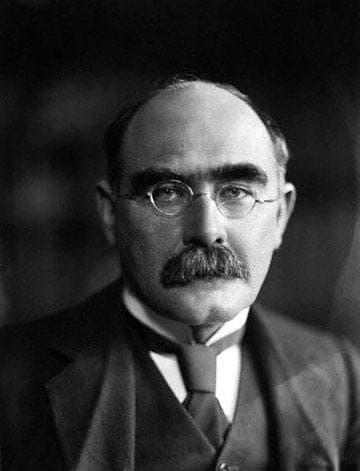
Joseph Rudyard Kipling was an English novelist, short-story writer, poet, and journalist. He was born in British India, which inspired much of his work.







