“There are some people who can't be helped. You can't help them. They are born to be, and they are.”
— Reflecting on the nature of certain individuals and their unchangeable paths.

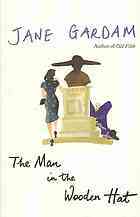
Jane Gardam (2009)
Genre
Literary Fiction / Historical Fiction / Relationships
Reading Time
240 min
Key Themes
See below
Sign in to track this book
Through the eyes of his free-spirited wife, Elisabeth, 'The Man in the Wooden Hat' reveals the hidden depths and sad complexities of the reserved lawyer Filth's life, showing a marriage shaped by wit, resilience, and unspoken currents beneath a proper facade.
The novel begins with Elisabeth, or Betty, thinking about her marriage to Edward Feathers, 'Filth,' in post-war Hong Kong. Their marriage is one of convenience and respect, not passionate love. It started after Betty, then a young woman working in a bookshop, met Filth, a rising lawyer. Filth is reserved and careful, a man shaped by his 'Raj orphan' childhood. Betty, in contrast, is more lively and less conventional. Their early years are marked by Filth’s dedication to his legal career and Betty's attempts to live as a lawyer's wife, a life often filled with social duties and a feeling of being different in the British expatriate community. Betty observes Filth's quiet intensity and the deep, unspoken hurt he carries from his childhood, while she deals with her own past and desires.
Filth's colleague, Terry Veneering, a charming and handsome lawyer, enters their lives, bringing a new energy. Terry is the opposite of Filth: outgoing, charming, and openly affectionate. Betty finds herself drawn to Terry's warmth and humor, which contrast sharply with Filth's reserved manner. Their interactions often happen during social gatherings and work events, where Terry's presence subtly highlights the emotional distance Betty sometimes feels from Filth. Betty's inner thoughts show a growing interest in Terry, a feeling of longing for a connection that Filth, despite his deep affection, seems unable to provide in the same way. The story hints at the growing emotional involvement that will deeply affect all three characters.
The unspoken attraction between Betty and Terry Veneering eventually leads to a secret affair. Their meetings are discreet, often happening when Filth is busy with his demanding legal cases or traveling for work. Betty is torn between her loyalty and affection for Filth and the intense emotional and physical connection she shares with Terry. The affair gives Betty a sense of passion and understanding she feels is missing from her marriage, offering a sharp contrast to Filth's carefully built emotional walls. This time is marked by Betty's inner conflict, guilt, and the excitement of forbidden love, as she manages her complex dual life, always aware of the chance of discovery and the terrible results it would bring.
As the affair continues, Betty finds the weight of secrecy increasingly heavy. Her inner thoughts show a deep sense of isolation and guilt, despite the joy and fulfillment she experiences with Terry. She observes Filth with a mix of love and regret, recognizing his steady devotion and honesty. The story explores the psychological impact of living a double life, as Betty tries to reconcile her actions with her identity as Filth's wife. The constant fear of being found out looms large, affecting her interactions with both men. She becomes good at separating her emotions, but the strain is clear in her reflections, showing the emotional cost of her choices and the complex web of deception she has woven around herself and her marriage.
The affair with Terry Veneering ends when Terry decides to leave Hong Kong. His departure is due to a mix of work opportunities elsewhere and perhaps a growing awareness that their secret relationship cannot last. Betty is devastated by his leaving, feeling a deep sense of loss and grief. The story clearly shows her heartbreak and the emptiness left by Terry's absence. This time marks a big turning point for Betty, as she must now face the reality of her choices and the future of her marriage without the passionate distraction of Terry. The end of the affair, though painful, forces Betty to rethink her life and her relationship with Filth.
After Terry leaves, Betty tries to resume her life with Filth, but the emotional landscape has changed for good. She carries the memory of her affair and the pain of Terry's absence, which subtly colors her interactions with Filth. While Filth remains his usual reserved self, Betty's view is now filled with a deeper understanding of emotional closeness and a lingering sense of unfulfilled longing. She continues to observe Filth's dedication to his work and his quiet loyalty to her, dealing with the guilt of her past actions. The story focuses on Betty's inner struggle to balance her past desires with her present reality, showing how her experiences lasting affect her view of love and marriage.
As years pass, Betty begins to suspect that Filth, despite seeming unaware, might have known about her affair with Terry Veneering all along. Filth never explicitly confirms this, but Betty interprets his subtle gestures, knowing glances, and occasional pointed remarks as proof of his silent understanding. This adds another layer of complexity to their relationship, creating an unspoken tension and a deep respect for Filth's quiet strength. Betty marvels at his capacity for forgiveness and his steady commitment to their marriage, despite her perceived betrayal. This unspoken knowledge becomes a testament to Filth's deep character and his unique way of showing love and loyalty.
After decades in the Far East, Filth and Betty eventually return to England for Filth's retirement. This move brings its own challenges, as they adapt to a new environment and a slower pace of life. Betty observes Filth's struggles with retirement, as the man once driven by his successful legal career finds himself without a clear purpose. Their life in England is quieter, marked by visits from old friends and the routines of an aging couple. The story continues to explore the details of their long marriage, showing their lasting companionship and mutual reliance, even as they face the physical and emotional changes that come with old age.
In her later years, Betty thinks deeply about her lifelong partnership with Filth. She recognizes the deep love and respect that support their marriage, despite its unusual beginnings and the challenges they faced. She understands that Filth's reserved nature came from his difficult upbringing, and that his quiet devotion was his truest form of affection. Betty's thoughts show a mature understanding of love, one that includes loyalty, companionship, and unspoken forgiveness. She acknowledges her own complexities and the choices she made, finally reaching a place of acceptance and appreciation for the unique bond she shared with Filth, realizing the depth of his character and the strength of their lasting connection.
Throughout her reflections, Betty often returns to 'the man in the wooden hat,' a phrase that sums up Filth's mysterious and stoic nature. The wooden hat symbolizes his carefully built facade, his emotional armor, and his steady sense of duty and propriety. Betty, having lived with him for decades, has come to understand the man beneath the hat — a man of deep honesty, quiet strength, and deep, if often unexpressed, love. Her thoughts on this image show her ultimate acceptance and admiration for Filth's unique character, recognizing that his reserved exterior hid a rich inner life and a lasting devotion that defined their shared existence, making him the anchor of her world.
The Protagonist
Betty evolves from a young woman seeking passion to a mature woman who understands the multifaceted nature of love and companionship, finding peace with her choices and her husband's quiet devotion.
The Supporting Character / Protagonist's Husband
While his core personality remains stoic, Filth's character is revealed through Betty's eyes as a man of immense quiet strength and unspoken understanding, demonstrating a deep capacity for love and forgiveness.
The Supporting Character
Terry serves as a catalyst for Betty's emotional awakening, challenging her perceptions of love and marriage before exiting her life, leaving a lasting impact.
The Mentioned / Supporting
His influence is primarily in Filth's backstory, shaping the man Betty comes to know and love.
The Mentioned / Supporting
Her character remains static, serving primarily as a silent witness and a symbol of the societal norms being transgressed.
The novel deeply looks at the many sides of love in a long marriage. Betty's relationship with Filth is built on respect, companionship, and unspoken understanding, rather than obvious passion. Her affair with Terry Veneering shows a different kind of love — one of intense desire and emotional fulfillment. The book suggests that love can appear in various forms and that a lasting partnership can survive even through betrayal and unspoken truths. Betty's thoughts on Filth's quiet devotion, despite her affair, reveal a deep understanding of commitment beyond typical romance, as when she considers Filth's possible knowledge of her infidelity and his continued loyalty.
“What was marriage? It was a lifetime of tiny, almost imperceptible shifts, an ocean of silence beneath the surface of conversation.”
The entire story is Betty's long reflection on her life, especially her marriage to Filth and her affair with Terry. Memory is shown not as a linear account but as a fluid, associative process, where past events are constantly re-evaluated through current understanding. Betty's detailed memories and inner thoughts help her piece together the meaning of her experiences, understand Filth's mysterious character, and come to terms with her own choices. This reflective structure highlights the subjective nature of truth and the ongoing process of understanding one's past, as she constantly revisits moments like the early days in Hong Kong or her final talks with Terry.
“Memory was a peculiar thing, a mosaic that shifted with every passing year, revealing new patterns, new depths.”
A main tension in the novel is the contrast between Filth's deep emotional reserve and Betty's more expressive, passionate nature. Filth's 'wooden hat' symbolizes his inability or unwillingness to openly show emotion, a trait deeply set from his 'Raj orphan' childhood. This emotional distance leads Betty to seek passion elsewhere with Terry Veneering, who offers a more immediate and clear connection. However, the novel ultimately elevates Filth's quiet, lasting love as a powerful and steady force, suggesting that true devotion does not always need obvious expression. Betty's eventual appreciation for Filth's stoicism, despite her longing for passion, highlights this theme.
“He was a man who communicated in silence, in gestures barely perceptible, but they were there, if you knew how to look.”
The setting of post-war Hong Kong for much of the novel highlights the theme of identity and belonging within the British expatriate community. Betty often feels like an outsider, observing the social rituals and unspoken rules of this world. Her personal struggles with faithfulness and self-discovery are set against a background of a community defined by its colonial status and strict social hierarchies. The novel explores how people create their identities in a foreign land, often carrying the psychological baggage of their home country while navigating new cultural environments. The phrase 'Filth' (Failed In London Try Hong Kong) also speaks to the temporary and sometimes rootless nature of this existence.
“We were all exiles of a sort, adrift on an ocean of tea and gin, pretending we were still in England.”
The entire story is told from Betty's perspective, looking back on her life.
The novel employs first-person retrospective narration, entirely from Elisabeth (Betty) Feathers's point of view. This allows for a deep dive into her internal world, her memories, and her evolving understanding of past events. By looking back, Betty can connect dots she couldn't see at the time, providing insights into Filth's character, her affair with Terry, and the complexities of her long marriage. This device emphasizes the subjective nature of memory and how meaning is constructed over a lifetime, allowing the reader to experience events through the filter of her accumulated wisdom and regret.
Betty's perspective is subjective, colored by her emotions and memory.
While Betty is largely honest in her recounting, her narration subtly features elements of an unreliable narrator. Her memories are shaped by her emotional state, her guilt, and her desire to understand her past actions. She interprets events and Filth's reactions through her own lens, which may not always be the objective truth. For example, her certainty about Filth's unspoken knowledge of her affair is her interpretation, never explicitly confirmed. This adds depth to her character and invites the reader to consider the nuances of memory and personal truth, making her reflections more human and relatable.
A recurring metaphor for Filth's emotional stoicism and constructed persona.
The 'wooden hat' is a powerful symbolic device that recurs throughout Betty's narrative. It represents Edward Feathers's (Filth's) carefully constructed emotional facade, his stoicism, and his inability to express deep feelings. It signifies his adherence to propriety and duty, a coping mechanism developed from his difficult childhood. For Betty, the 'wooden hat' is both a source of frustration and, ultimately, a symbol of his unwavering strength and integrity. It helps the reader understand the depth of Filth's character, even when his emotions remain unstated, and underscores the central theme of emotional reserve versus passion.
The contrasting personalities of Filth and Terry highlight different aspects of love.
The novel effectively uses the juxtaposition of Edward Feathers (Filth) and Terry Veneering to explore different facets of love and human connection. Filth represents quiet loyalty, stability, and enduring companionship, albeit with emotional distance. Terry embodies passion, immediate emotional connection, and charisma. By placing these two characters in direct contrast, particularly in their relationships with Betty, the narrative illuminates the complexities of her desires and the different needs a person might have within a lifelong partnership. This device allows for a nuanced exploration of what constitutes a fulfilling relationship and the compromises inherent in them.
“There are some people who can't be helped. You can't help them. They are born to be, and they are.”
— Reflecting on the nature of certain individuals and their unchangeable paths.
“The past is a foreign country; they do things differently there.”
— A well-known quote, used to reflect the generational and cultural differences between people and eras.
“I’m not a woman who thinks much about the future. I’m a woman who thinks about the present, and the past.”
— Betty's perspective on her own life and priorities, focusing on what has been and what is.
“Love is not a thing you can take off and put on like a hat. It's a thing that lives with you.”
— Betty's understanding of love's enduring and intrinsic nature within a person's life.
“He was a man who knew his own mind, and that was a rare thing, in a man.”
— Describing Betty's husband, Edward, and his strong sense of self.
“You don't just forget people. They stay with you, like ghosts.”
— The lingering presence of past relationships and individuals in one's memory.
“Life is what happens while you are busy making other plans.”
— A common sentiment, used to highlight the unpredictable nature of life's journey.
“It’s a funny thing, memory. It plays tricks on you. Makes you remember things that never happened, and forget things that did.”
— Betty's contemplation on the unreliable and selective nature of human memory.
“Marriage is a long conversation, interrupted by arguments.”
— A pragmatic and somewhat cynical view on the reality of long-term marital relationships.
“We all have our secrets. It’s what makes us interesting.”
— Acknowledging the hidden aspects of people's lives that contribute to their complexity.
“The older you get, the more you realise how little you know.”
— A reflection on the humility that comes with age and experience.
“Sometimes you have to make your own luck.”
— A statement about agency and proactive effort in shaping one's destiny.
“He had a way of looking at you, as if he knew everything, and nothing, all at once.”
— Describing the enigmatic and perceptive gaze of a character.
“You can never truly know another person, not really. Not even after all those years.”
— Betty's realization about the inherent unknowability of even the closest individuals.
Ready to see how well you understood this book? Take our interactive quiz with 10 questions.

Jane Mary Gardam is an English writer of children's and adult fiction. She also writes reviews for The Spectator and The Telegraph, and writes for BBC radio. She lives in Kent, Wimbledon, and Yorkshire. She has won numerous literary awards, including the Whitbread Award twice. She was appointed Officer of the Order of the British Empire (OBE) in the 2009 New Year Honours.







